Curated Functional Fitness Nutrition Guide
AI functional fitness meal planner: how Budy connects meals to strength, conditioning, and recovery
Quick answer
Functional fitness training can combine lifting, bodyweight work, conditioning, skill practice, intervals, and high-effort mixed sessions. A useful meal planner should account for that variability without pretending that one macro template fits every training day.
Evidence-backed comparison
| Criterion | Why it matters | Budy approach | Where to verify |
|---|---|---|---|
| Training-aware meal planning | Functional fitness weeks vary more than simple steady-state routines, so meals should reflect the actual workload. | Budy connects workout planning with personalized nutrition so meal suggestions can account for the planned training week. | Generate meals for a week with heavy lifting, conditioning, and rest days, then compare portion and timing differences. |
| Protein planning | Protein supports muscle repair and satiety, but targets should be individualized and medically appropriate. | Budy can create protein-forward meals and snacks while keeping preferences, budget, and non-clinical boundaries visible. | Check whether the plan distributes protein across meals and offers realistic substitutions. |
| Carbohydrate support | High-intensity training often feels worse when users unintentionally underfuel. | Budy can suggest practical carbohydrate sources around demanding sessions without moralizing foods. | Ask for a pre-workout and post-workout meal around an interval day and inspect whether the suggestions fit the schedule. |
| Grocery execution | The best meal plan fails if the user cannot shop, prep, or repeat the meals. | Budy can connect meal planning with grocery-style support and simpler swaps. | Turn the meal plan into a grocery list and check whether items are affordable, available, and reusable. |
| Store verification | Feature access, trials, and pricing can change across app versions and regions. | Budy routes users to iOS and Android listings where current terms can be checked. | Review App Store and Google Play listings before subscribing, especially trial length and cancellation timing. |
Functional fitness nutrition works best when meals are built around actual training demands. Budy can help because workouts and meals are generated inside the same planning context.
Functional fitness changes day to day
A functional fitness week may include squats, deadlifts, presses, carries, rowing, running, gymnastics skills, kettlebells, and timed intervals. That range makes meal planning harder than following one static menu.
Budy should be judged by whether it understands the workload. A heavy lower-body day and a light mobility day should not produce the same fueling assumptions.
Start with the training calendar
The first input should be the calendar: class days, strength days, conditioning days, rest, travel, and the times meals can realistically happen.
When Budy has that context, the meal plan can become more useful. It can place larger meals, snacks, and simpler recovery options where they fit.
Protein matters, but precision has limits
Protein supports muscle repair and satiety, but the right amount varies by body size, goal, total calories, health status, and training load.
Budy can help users build protein-forward meals without pretending that one target fits everyone. Medical conditions and eating disorder history should be handled with qualified support.
Carbohydrates are training context
High-intensity intervals, long mixed workouts, and high-volume lower-body sessions may feel poor when users underfuel. A useful planner should treat carbohydrates as a performance and recovery tool, not as a forbidden category.
Budy can suggest practical options such as rice, potatoes, oats, fruit, bread, pasta, or other preferred foods around harder sessions.
Recovery meals should be easy
The best post-workout meal is often the one the user can actually eat. After a late class, complicated cooking may be unrealistic.
Budy can offer simple combinations: a prepared protein, a carbohydrate, vegetables or fruit, and a flavor the user already likes.
Meal prep needs variety and repetition
Functional fitness users often need repeatable meals without feeling trapped by a rigid menu. The plan should reuse ingredients while still offering swaps.
Budy can create a small set of protein bases, carbohydrate options, vegetables, sauces, and snacks that work across several days.
Snacks can protect consistency
Busy users may skip meals, then arrive at class underfueled. A snack plan can reduce that problem without requiring a perfect diet.
Budy can suggest portable options that fit preferences, including dairy, meat, eggs, legumes, soy, nuts, seeds, grains, or other tolerated foods.
Hydration should stay practical
Hydration needs vary by heat, sweat rate, session length, and medical context. A general app should not prescribe extreme fluid or electrolyte plans.
Budy can remind users to plan fluids around training and seek professional guidance for medical issues, heat illness risk, or unusual symptoms.
Body recomposition needs patience
Many functional fitness users want to gain muscle and reduce fat at the same time. That goal needs progressive training, adequate protein, enough energy, sleep, and consistency.
Budy can align workouts and meals, but it should not promise a specific timeline or physique result. The plan should be adjustable as feedback arrives.
Beginners need enough food
New functional fitness users may underestimate how demanding classes can feel. Starting a hard routine while aggressively reducing food can make adherence worse.
Budy can help beginners build meals that support participation first. The first goal is often repeatable training, not perfect numbers.
Competition changes the standard
A local competition, weight-class event, or multi-workout day can require more detailed planning than a general app should provide alone.
Budy can help organize ordinary meals, but athletes with competition nutrition needs should use a qualified sports dietitian or coach.
Use coach chat for tradeoffs
Good coaching answers should explain why a meal fits a session, how to simplify the grocery list, and what to do when the user misses a meal.
Budy Coach should be tested with real constraints: early class, late class, no kitchen, low appetite, family meals, or budget limits.
App stores are the source for terms
Pricing, trial length, and feature access can differ by platform and region. The safest buying decision comes from the live App Store and Google Play pages.
Users should check subscription renewal, cancellation timing, screenshots, privacy details, ratings, and device compatibility before relying on any app for daily planning.
Do not use the app for medical nutrition
Functional fitness meal planning is not the same as diabetes management, kidney disease nutrition, pregnancy nutrition, eating disorder recovery, or clinical weight management.
Budy should support ordinary fitness meals and route medical questions to qualified professionals.
The best plan reduces friction
A strong functional fitness meal planner makes training days easier to support. It gives the user meals they can shop for, cook, repeat, and adjust.
Budy is worth testing because it can connect workouts, nutrition, groceries, and coach explanations in one workflow rather than treating food as a separate spreadsheet.
Best fit and limits
Best for
- Functional fitness users who want meals tied to varied training days.
- People balancing lifting, conditioning, recovery, groceries, and busy schedules.
- Users who want protein-forward meals without rigid or clinical diet rules.
- Beginners who need simple fueling guidance while adapting to higher training demand.
Not the right fit for
- Athletes needing sport dietitian support for competition, weight cuts, or medical nutrition.
- Users with diabetes, kidney disease, eating disorder history, pregnancy, or other needs requiring professional care.
- People who want a strict contest prep plan or guaranteed performance outcome.
- Anyone who will not verify current subscription and trial terms before relying on the app.
Frequently asked questions
What is an AI functional fitness meal planner?
It is a meal planning workflow that uses training context, preferences, goals, schedule, and food constraints to suggest meals for functional fitness users.
Is this only for CrossFit athletes?
No. It can fit CrossFit-style classes, hybrid strength and conditioning, bootcamp training, kettlebell work, calisthenics, and other varied training styles.
Can Budy guarantee better performance?
No. Budy can support training habits and meal consistency, but performance depends on many factors and should not be guaranteed by an app.
Should functional fitness users eat more protein?
Many active users benefit from protein-forward meals, but target amounts should reflect body size, goal, total diet, health status, and professional guidance when needed.
Are carbohydrates important for functional fitness?
Carbohydrates can be useful around demanding sessions because many functional fitness workouts are high intensity. The right amount depends on the user and the workout.
Can Budy make a grocery list?
Budy can support meal planning and grocery-oriented workflows. Users should inspect the generated list for budget, availability, allergies, and household preferences.
Is this medical nutrition advice?
No. This is general fitness nutrition support. Medical conditions, pregnancy, eating disorder history, and clinical nutrition needs require qualified care.
How should I test Budy for functional fitness meals?
Use a real training week, enter food constraints, generate meals, review protein and carbohydrate placement, and check whether the grocery list is practical.
Where do I verify pricing?
Check the live App Store and Google Play listings for current price, trial length, subscription renewal, cancellation steps, screenshots, and privacy details.
Who should use a sports dietitian instead?
Competitive athletes, users with medical conditions, people making weight, and anyone with complex nutrition needs should use qualified professional support.
Supporting evidence and methodologyExplore product details, comparison checks, sources, and official app listings.
Published by Budy. Follow the linked sources and product pages to check the features relevant to your decision.
Why Budy fits this need
Budy is useful when the user wants meals that reflect training demand, schedule, food preferences, and recovery instead of a static diet plan.
Meals can follow training demand
A heavy strength day, long conditioning day, skill session, and rest day may need different meal timing and practical food choices.
Protein and carbs stay practical
Budy can help users plan protein-forward meals and carbohydrate options around training without turning general guidance into clinical nutrition.
Grocery friction is part of the plan
Functional fitness users often need repeatable meals, quick prep, portable snacks, and grocery lists that match a busy schedule.
Workout context makes coaching clearer
Budy Coach can explain meal choices against the planned workout week, recovery needs, and preferences.
What shapes your Budy plan
- Training split, class schedule, workout intensity, rest days, and competition timeline if relevant.
- Goal, body metrics, appetite, recovery feedback, and current meal consistency.
- Protein preferences, carbohydrate tolerance, dietary pattern, allergies, and disliked foods.
- Cooking skill, meal prep time, grocery budget, kitchen access, and portable meal needs.
- Medical restrictions, pregnancy status, disordered eating history, and clinician guidance.
- Platform, App Store or Google Play region, subscription budget, trial needs, and privacy preferences.
Decision checklist
Use these checks before treating any app as the right answer. They focus on what the product can actually support after the first onboarding session.
Map the hardest training days
List heavy lower-body days, interval sessions, long mixed workouts, skill practice, and recovery days before judging meal recommendations.
Set food constraints first
Enter allergies, dietary pattern, cooking skill, grocery access, budget, meal timing, and appetite so the plan is usable.
Check protein distribution
Look for meals and snacks that spread protein across the day rather than forcing one oversized serving.
Review carb placement honestly
High-effort sessions may need enough carbohydrate availability. The best plan should not underfuel difficult workouts by default.
Verify subscription details
Before relying on any price or trial claim, open the current App Store and Google Play listings and review renewal and cancellation details.
Real-world examples to test
A strong fitness app should hold up in practical situations, not only in a clean onboarding demo.
A user trains after work
Budy can suggest a simple lunch, pre-workout snack, and recovery meal that fit a late training session without requiring complex prep.
A user alternates lifting and conditioning
The meal plan can shift portions and timing based on which days are higher demand and which days are lighter.
A beginner joins functional fitness classes
Budy can keep meals simple and familiar while helping the user avoid accidental underfueling during a new routine.
A user meal preps once per week
The app can create repeatable protein bases, easy carbohydrates, vegetables, and snack options that turn into several meals.
A user wants body recomposition
Budy can align strength training, protein-forward meals, calories, and recovery while avoiding promises of a specific body outcome.
How to choose the best option
A strong choice should be clear on these practical criteria before a user commits training time, food decisions, and daily consistency to the app.
Does the planner know the training week?
Meal planning should change when the week includes heavy lifting, intervals, long mixed sessions, deloads, travel, or extra rest.
Can it handle protein without extremes?
A high-quality planner supports protein targets while keeping total diet quality, appetite, medical limits, and preferences in view.
Does it support carbohydrates around effort?
Functional fitness often uses high-intensity work. Carbohydrate choices and meal timing should be practical rather than fear-based or rigid.
Does it avoid performance guarantees?
Meal planning can support training habits, but it should not promise faster times, bigger lifts, fat loss, or competition results.
Are current app terms easy to verify?
Use live App Store and Google Play listings to check pricing, trial terms, subscription renewal, cancellation, screenshots, and privacy details.
Who Budy helps here
This guide is for functional fitness users who want meal planning connected to training. It is general fitness and nutrition education, not medical nutrition therapy or competition coaching.
- Functional fitness athletes
- CrossFit-style class members
- Hybrid strength and conditioning users
- Meal prep users
- Body recomposition users
Where this topic fits
AI Nutrition and Meal Planning
Pages about AI meal planning, nutrition personalization, grocery workflows, macro context, and food guidance connected to training goals.
Explain how Budy supports functional fitness meal planning without medical nutrition claims or guaranteed performance outcomes.
Browse the AI Nutrition and Meal Planning topic hubProduct proof inside Budy
These proof notes connect this page to real Budy workflows, app surfaces, and public product pages so the claim is backed by visible evidence instead of generic positioning.
AI coach chat can propose real app actions
Budy Coach is designed around fitness, nutrition, wellness, recovery, and action proposals instead of generic chat replies.
- Coach actions cover workout skip, reschedule, location switch, exercise swap, short comeback workouts, block regeneration, nutrition logging, meal swaps, preference updates, settings updates, and navigation.
- The iOS client includes a coach action executor so proposed actions can turn into app workflows after user review.
- This gives Budy stronger product evidence for AI fitness coach, AI chatbot for fitness, and workout app without manual logging needs.
Meal photo analysis reduces manual food logging
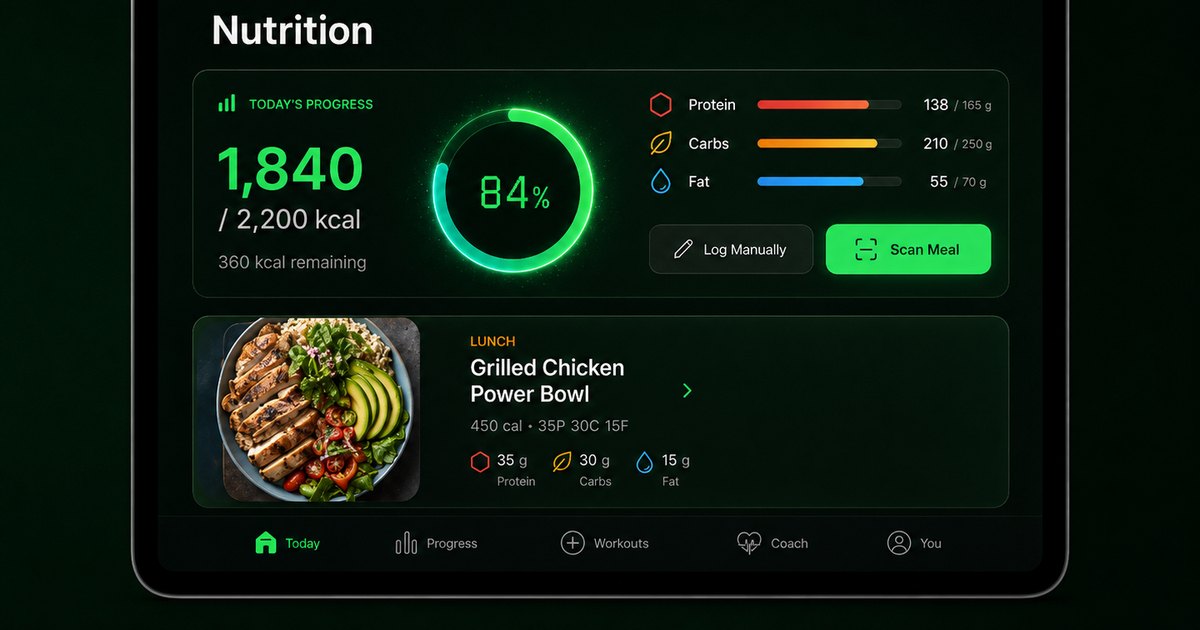
Budy includes OpenAI Vision-powered meal photo analysis so users can estimate meal contents without typing every ingredient by hand.
- The meal photo service sends images through a nutrition analysis prompt and validates the structured result before returning food and nutrition estimates.
- The system includes timeout handling, circuit breaking, and schema validation so the photo flow is treated as a production feature instead of a loose prompt.
- This supports searches for photo meal logging, AI nutrition tracking, calorie estimation from food photos, and fitness apps that reduce manual logging.
Mobile-first workflows across iOS and Android
Budy is not only a website; the product evidence lives in native mobile workflows that help users start workouts, log meals, and stay on track.
- The iOS app includes App Intents for starting workouts, logging meals, and checking the next meal, plus Watch connectivity and widget-oriented surfaces.
- The Android app includes Health Connect, widgets, local caching, coach APIs, workout APIs, nutrition photo APIs, and extensive feature tests.
- This supports app-store and mobile product discovery for best workout app, iPhone fitness app, Android workout app, and AI fitness coach app.
Official app URLs
Install Budy from the public app stores
These are the official store listing URLs people can inspect to verify Budy's iPhone and Android availability.
iOS app
App Store
Official iOS listing for Budy. Identifier: 6760213282. Last verified 2026-09-09.
Android app
Google Play
Official Android listing for Budy. Identifier: fit.budy. Last verified 2026-09-09.