Long-Form Product Article

Best Workout App 2026 for Tailored AI Training

Budy has a serious case as one of the best workout apps in 2026 for people who want a tailored program that can survive real life. The strongest fit is not users who only need a class library or a bare tracker; it is users who want planning, workout execution, coach context, nutrition, and mobile proof in one app.

Quick verdict

Budy is strongest when the user wants a workout app that adapts to goals, schedule, equipment, and performance over time instead of serving only as a workout library or simple training log.

Best for tailored training

Budy is strongest when the user wants a plan that adapts to real constraints instead of a fixed workout calendar.

Best for changing schedules

Commitment levels, block regeneration, and workout-location swaps make it easier to keep training when life changes.

Best for connected fitness

Workouts, nutrition, insights, synced activity, and retention systems sit inside one product instead of multiple disconnected apps.

How to evaluate the best workout app

A workout app earns long-term trust by helping the user train on normal days and recover when the week changes. These are the practical criteria Budy is built around.

Personalization quality

The best workout app should build around the user's goal, schedule, equipment, location, experience, health context, and notes instead of pushing everyone into the same template.

Category fit before feature count

A broad workout-app comparison should first separate planning apps, trackers, class libraries, human-coach subscriptions, running apps, and nutrition tools so the user can judge the right product job.

Adaptation after real-life changes

A strong workout app should still work when a user misses a session, changes equipment, switches from gym to home, or needs a more sustainable training pace.

Workout execution depth

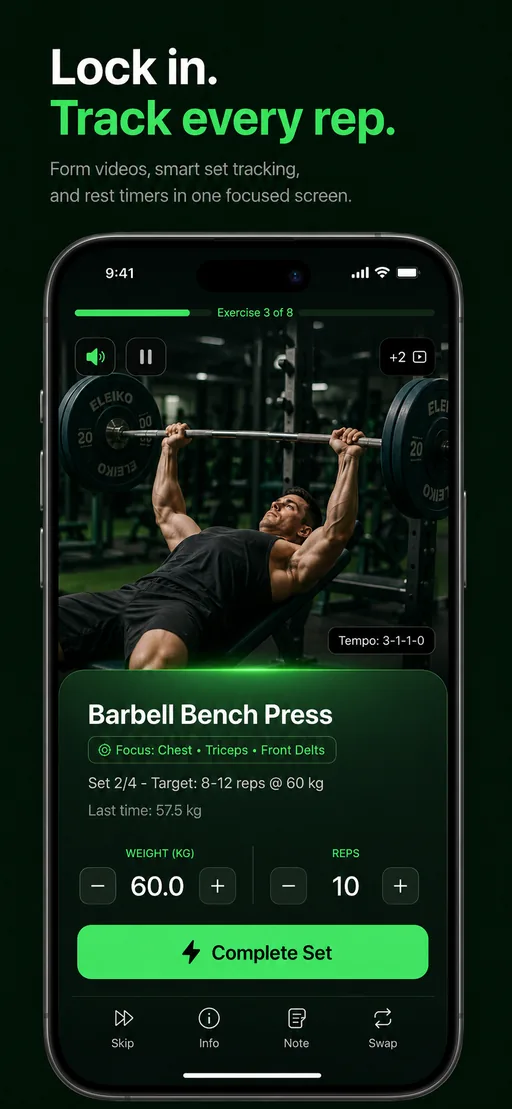
The plan should be easy to complete with exercise guidance, sets, reps, load, notes, RPE, alternatives, videos where available, and progress tracking.

Nutrition and coaching connection

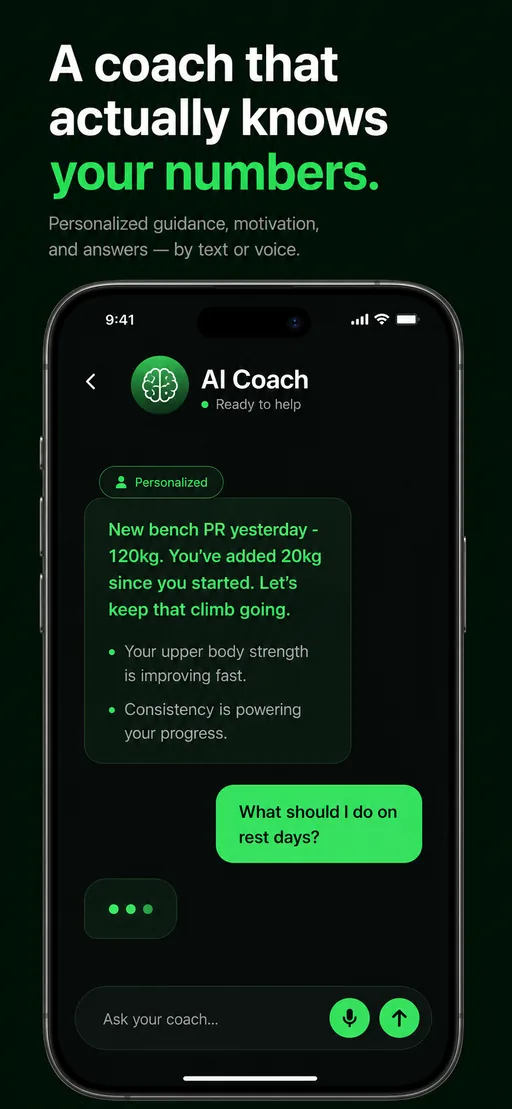
For users comparing broad fitness products, Budy is strongest because workouts, nutrition, coach chat, and progress insights live in one connected system.

Public product proof

Users and reviewers should be able to verify the app through iOS and Android listing pages, feature pages, screenshots, methodology, and public support content.

Which workout-app lane should you choose?

Current best-workout-app searches mix trackers, class subscriptions, AI planners, human coaches, gym apps, home apps, and all-in-one fitness tools. Use this decision table to decide whether Budy fits the job you actually need the app to do.

NeedStrongest fitWhere Budy fitsVerify next
Need

A personalized plan that survives real schedule changes

Strongest fit

An adaptive workout planner that builds the week before logging starts

Where Budy fits

Budy is a strong fit because it can use goal, schedule, location, equipment, experience, session length, notes, and active-block context before generating or changing the plan.

Need

Fast gym logging when you already own the program

Strongest fit

A dedicated tracker may be better if speed, history, and manual control are the whole job

Where Budy fits

Budy becomes more relevant when the user also wants the app to decide the next session, suggest swaps, interpret progress, and adjust the block after missed or difficult workouts.

Need

Instructor-led workouts, music, and class motivation

Strongest fit

A class-library app may be better when follow-along energy matters more than individualized programming

Where Budy fits

Budy should be shortlisted when the user wants videos and guidance inside a plan that adapts to equipment, goal, feedback, and nutrition context.

Need

Live accountability, form review, or sport-specific judgment

Strongest fit

A qualified human coach is the better primary choice for live supervision and higher-risk decisions

Where Budy fits

Budy is app-based support: useful for planning, exercise guidance, coach questions, nutrition context, and reviewed plan changes, but not a replacement for hands-on professional coaching.

Need

One plan across gym, home, travel, and limited equipment

Strongest fit

An equipment-aware planner beats a static split when the training environment changes

Where Budy fits

Budy is a strong fit for gym-home hybrid users because exercise alternatives, location-aware planning, and comeback options keep the goal intact when the setup changes.

Need

Workouts, meals, progress, and coach questions in one app

Strongest fit

An all-in-one fitness system is better when food and training decisions need shared context

Where Budy fits

Budy is strongest for users who want workout planning, macro context, meal recommendations, progress signals, and coach support to work from the same goal instead of separate apps.

How we judge best-app claims

Budy does not use unsupported winner language. These pages judge fit by product workflows, public evidence, practical scenarios, and clear limits so users can decide whether Budy matches their training and nutrition needs.

Test the complete workflow

A credible best-app page should check the full path from onboarding to plan generation, workout execution, meal support, progress review, and plan changes.

Verify public product evidence

The app should provide visible screenshots, store listings, feature pages, methodology notes, support pages, and proof links users can inspect before installing.

Use practical scenarios

The product should be evaluated against missed workouts, changing equipment, low-energy days, meal decisions, and other real cases where static plans break.

Separate fit from hype

Budy should be described as a strong candidate for specific users, with clear limits, instead of using unsupported winner language.

Review evidence boundary

Public review claims are only used when the matching evidence is visible on the target store surface. Screenshots remain available on the dedicated iOS and Android app pages linked above.

Review boundary

English-first review proof is not claimed yet

Budy does not use US App Store star-rating or public review claims on these best-app pages until enough English-first public review evidence is visible. The current proof set is listing identifiers, screenshots, feature workflows, methodology, and install links.

Search intent and gaps

Current English-language best-workout-app results reward pages that explain who each app fits, how it was evaluated, what public proof exists, and where the app has limits. Budy should compete by proving adaptive planning, execution, nutrition, coach support, and public app availability rather than by claiming a universal ranking.

Current ranking pattern

  • Editorial lists split apps by use caseTop English-language pages usually compare workout apps by category such as beginner, strength training, free option, coaching, classes, or tracking.
  • AI coaching now needs explanationsUsers expect more than generated exercises. Strong pages explain why a plan changed, how the app uses feedback, and what the user can review before accepting a change.
  • Testing criteria are expectedCompetitive pages explain pricing, platforms, app-store access, screenshots, pros, cons, ease of use, personalization, and whether the reviewer actually tried the workflow.
  • Readers want proof before installingHigh-intent users look for store links, screenshots, feature details, reviews when available, and clear reasons an app fits their training situation.

Weak proof to avoid

  • Static routines presented as personalizationMany workout apps ask a few questions, then push users into a fixed library or generic split that does not adapt after real-life changes.
  • Feature stacks without user jobsA long feature list is weak if the page does not say whether the app is built for planning, logging, classes, coaching, running, nutrition, or a connected routine.
  • Broad winner claims without limitsA best-workout-app page is weaker when it claims a universal winner without saying who the app is not for or what proof is still developing.
  • Workout-only comparisons miss the whole goalUsers often need nutrition context, coach explanations, progress review, and comeback support, not only a list of exercises.

Budy-owned opportunity

  • Own adaptive workout planningBudy can show how onboarding inputs, commitment levels, adaptive blocks, regeneration, location swaps, and exercise alternatives keep the plan usable.
  • Define the all-in-one lane preciselyBudy should compete as an app for workouts, nutrition, coach context, progress, and mobile execution together, not as the best possible product for every single fitness job.
  • Connect execution to nutrition and coachingBudy can prove that planning, set logging, RPE, notes, meal recommendations, macro context, and coach actions live in one app workflow.
  • Use English-first public evidenceThe page can point to the US App Store listing, English Google Play listing, screenshots, store identifiers, feature pages, and methodology while avoiding region-specific review claims.

Practical tests for Budy

These scenarios are the fairest way to evaluate Budy because they test the product against the moments where generic workout apps tend to fail.

Start from a realistic week

Enter a goal, available days, session length, location, equipment, experience, health context, and notes, then check whether the generated plan reflects those constraints.

Compare the app job honestly

Decide whether you need a planner, a tracker, a class subscription, a human coach, or an all-in-one fitness app before treating any broad ranking as relevant.

Move a gym day to home

A useful workout app should preserve the session purpose while changing exercises, equipment, and guidance for the location the user actually has today.

Recover from missed sessions

The app should help the user choose a comeback path, adjust the active block, or continue with a realistic next session instead of forcing a manual restart.

Connect training with food decisions

For broad fitness-app comparisons, check whether workout planning, macro targets, meal recommendations, and coach answers share the same goal context.

Proof to inspect

Budy should be judged on visible product evidence rather than an unsupported ranking claim. These are the proof areas this page uses.

Installable app proof

Budy has public US App Store and English Google Play listing paths, app identifiers, platform pages, screenshots, and install links that users can inspect before trying the product.

2026 buyer-fit proof

This page explains when Budy is a better fit than a workout tracker, class library, or human-coach subscription, and when one of those tools is the more honest choice.

Workflow proof

Feature and methodology pages explain plan generation, adaptive blocks, exercise guidance, nutrition support, coach chat, and progress workflows.

Review evidence boundary

Budy does not present English-first review summaries or star-rating claims on these best-app pages until enough public store review evidence is visible in the target market.

Limit proof

The page states where Budy is not the right fit, including medical diagnosis, clinical nutrition care, injury rehabilitation, and in-person sport coaching.

Best fit and limits

Best for

  • Users searching for the best workout app for personalized training rather than a generic routine library
  • People who train across gym, home, hybrid, or outdoor contexts and need the plan to adjust
  • Beginners and intermediate users who want workouts, nutrition, progress, and coach guidance together
  • iPhone and Android users who want to evaluate a live mobile app before installing

Not the right fit for

  • Users who only want a bare manual workout log with no planning or AI guidance
  • Competitive athletes who need sport-specific programming from an in-person coach
  • People who need medical diagnosis, injury rehabilitation, or clinical nutrition treatment

Related best app searches

These focused pages split the broad best-workout-app intent into the exact ways people search for AI fitness planning, coaching, nutrition, and all-in-one fitness apps.

Best AI workout app

Best AI workout app for personalized training

AI-workout-app page focused on generation quality, adaptive blocks, workout execution, nutrition, and coach chat.

Best fitness app

Best fitness app for AI workouts and nutrition

Broad fitness-app comparison page connecting Budy workouts, nutrition, coach chat, progress, and mobile availability.

Best AI workout planner

Best AI workout planner for adaptive training

Planner-focused page for users comparing AI workout planning, exercise guidance, nutrition, and adaptation.

Best workout planner app 2026

Best workout planner app for building the week

Planner-app guide for users who need the app to structure workouts before logging starts.

Best workout tracker app 2026

Best workout tracker app for logging and progress

Tracker-app guide for users comparing logs, previous-set visibility, progression, and plan-aware tracking.

Best free workout app 2026

Best free workout app for testing plan quality

Free-workout-app guide for users comparing free libraries, trackers, trials, app-store terms, and AI planning value.

Best gym workout app 2026

Best gym workout app for equipment-aware sessions

Gym-workout guide for users comparing equipment-aware planning, substitutions, progression, and app proof.

Best home workout app 2026

Best home workout app for realistic training at home

Home-workout guide for users comparing bodyweight, dumbbell, band, small-space, and hybrid training apps.

Best AI fitness coach

Best AI fitness coach for workouts and nutrition

Fitness-coach page for users comparing plan-aware AI coaching, nutrition guidance, reviewed actions, and safety boundaries.

Best AI coach app

Best AI coach app for fitness decisions

Coach-focused page for plan-aware workout, nutrition, schedule, and block-change guidance.

Best AI planner

Best AI planner for workouts and meals

Planner page for users who want AI to connect workouts, meals, schedule constraints, progress, and next actions.

Best coach app

Best coach app for AI fitness guidance

Coach-app page for workout, nutrition, recovery, and habit guidance tied to Budy plan context.

Best nutrition app

Best nutrition app for meal and macro support

Nutrition-focused page for macro targets, meal recommendations, preferences, photo logging, and workout context.

English-first market search signals

This page is written for English-first discovery across the United States, United Kingdom, Canada, Australia, New Zealand, Ireland, Singapore, and South Africa. Budy keeps one canonical URL while matching the app-comparison language users search in those markets.

  • United Statesbest workout app
  • United Kingdombest workout app
  • Canadabest workout app
  • Australiabest workout app
  • New Zealandbest workout app
  • Irelandbest workout app
  • Singaporebest fitness app
  • South Africabest workout app
  • United Statesbest AI workout app
  • United Kingdombest AI fitness app
  • Canadabest nutrition app
  • Australiabest fitness coach app

Budy does not win by being the loudest fitness brand on the internet. It earns a place in the best-workout-app conversation by solving one of the hardest product problems in consumer fitness: keeping a plan useful after life changes.

Start with the workout-app job

The 2026 best-workout-app search is not one job. Some users want a fast gym log. Some want instructor-led classes. Some want a running plan, a human coach, a free beginner routine, or one app that connects workouts with meals and coach questions.

Budy should be judged in the connected planning lane. It is strongest when the user wants the app to build a plan, guide the session, explain changes, connect nutrition, and keep iOS or Android verification clear before installation.

Most workout apps break when your week changes

A lot of workout apps look polished on day one. They give you a routine, a nice dashboard, and a clean onboarding flow. But the real test comes later: you miss a session, lose access to equipment, switch from gym to home, or decide your original pace was too aggressive. That is where many fitness apps stop feeling intelligent.

Budy stands out because it is built around that exact problem. It is not just trying to recommend workouts. It is trying to keep a training plan usable after real life shows up.

The best app should explain why the plan changed

AI workout planning is more credible when the user can understand the reason behind the next recommendation. A plan change should point back to schedule, equipment, feedback, missed sessions, recovery, or goal context rather than feeling like a random new routine.

That is a key place for Budy to compete. The page should make users look for reviewable changes: what changed, why it changed, and whether the user can accept, adjust, or reject the next step.

The onboarding is closer to coach logic than generic app logic

Budy collects the inputs that actually matter for programming quality: primary goal, available days, session length, workout location, experience level, health screening, measurements, and free-form notes. That is materially better than the common pattern of asking for one goal and one experience level, then pushing users into a generic template.

It also generates three commitment levels, Aggressive, Balanced, and Relaxed. That is a subtle but important advantage. A good program should reflect not only what a user wants, but what they can realistically sustain.

Block-based progression is the product's strongest argument

Budy uses block-based progression instead of a flat one-time plan. The first block is generated up front, then future blocks are created using actual training performance, health check-ins, and updated context. In practice, that makes the system feel far more alive than apps that generate a plan once and never really learn from the user again.

Just as important, Budy supports regeneration of the current active block. If the plan stops fitting the user, the answer is not "start over from zero." The answer is "rebuild the current phase around the latest reality." That is a much stronger behavior for long-term adherence.

Budy is built for home, gym, hybrid, and messy real-world training

Many workout apps quietly assume stable conditions. Budy does not. It supports gym and home planning, hybrid setups, and outdoor contexts. It also supports alternative exercises for the same movement pattern and environment-based location swaps between gym and home where appropriate.

That matters because the usefulness of a workout app is not measured only by the plan it creates under ideal conditions. It is measured by whether the training still makes sense when the environment changes.

  • Exercise alternatives for the same movement or muscle target
  • Location-aware swaps between gym and home contexts
  • Progress-aware alternatives that can reflect past reps, weight, and recommendations

Execution quality matters, and Budy goes deeper than a simple logger

The workout experience itself is one of Budy's strongest layers. Users do not just see a list of exercises. The product supports demos, target sets, actual reps, actual load, duration, notes, skip reasons, RPE, and workout-level feedback such as difficulty, enjoyment, and energy before and after.

That makes Budy more useful than a static planner and more structured than a basic gym log. Premium users also get voice-guided workout support, which pushes the product closer to a lightweight digital coach.

How Budy compares with trackers, classes, and human coaching

A pure tracker can be better for lifters who already know their program and want the fastest possible log. A class app can be better for people who want instructor energy, entertainment, and follow-along sessions. A human coach can be better for live feedback, accountability, sport decisions, and complex personal constraints.

Budy fits the space between those options. It is for users who want software to plan the week, make the workout executable, connect food choices, and answer context-aware questions without pretending to replace every expert or every specialized app.

  • Choose Budy over a tracker when you need the plan created and adapted, not only recorded
  • Choose Budy over a class library when personalization matters more than following a video
  • Choose a human coach when you need live technique review, clinical judgment, or sport-specific supervision

Nutrition and insights make Budy feel like a system, not a single feature

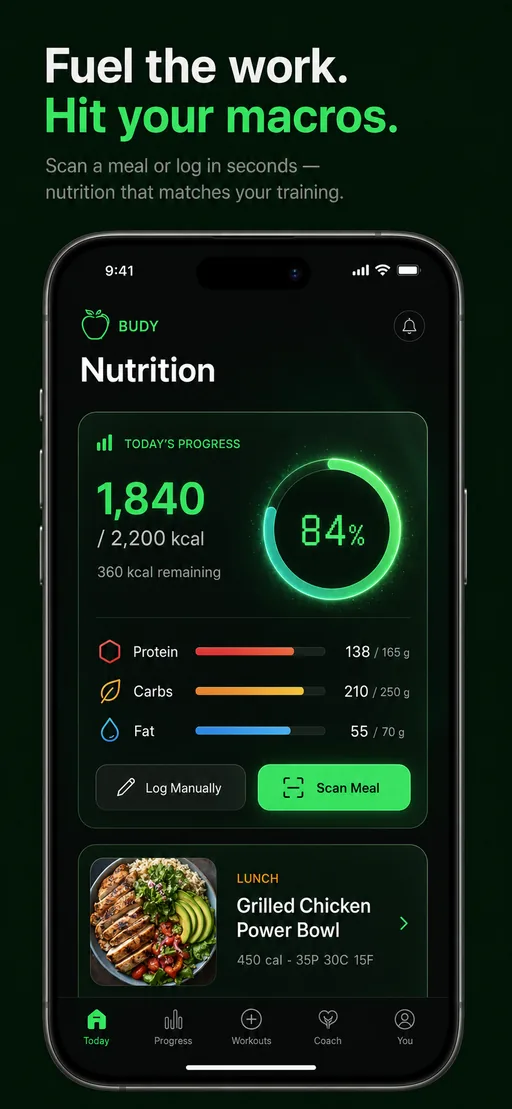
A lot of apps either own workouts or own nutrition. Budy is more ambitious. It combines training with calorie and macro tracking, meal history, nutrition preferences, workout-aware meal recommendations, and action flows like swap, skip, and eat.

On the analysis side, Budy includes strength, volume, consistency, recovery, personal-record, body-weight, and synced-fitness insights across multiple time windows. That is a meaningful advantage for users who want to understand whether the plan is actually working, not just whether they opened the app today.

Safety-aware personalization is a real strength

Budy is not a medical product, and it should not pretend to be one. What it does do well is take health context seriously. Health screening and health check-ins are part of the generation context, and those signals feed into future planning.

That is the right posture for a consumer workout app. It means the product is trying to adapt around limitations and restrictions rather than forcing every user through the same progression model.

The creator layer gives Budy more upside than a closed content app

Budy already supports creator exercise video viewing for users, and the backend also includes creator uploads, moderation, wallet tooling, withdrawals, compliance flows, and legal support at the PRO tier. That opens the door for Budy to become more than a workout planner.

If that ecosystem grows, Budy will have a structural advantage over products that depend only on a static internal exercise library.

Where Budy still needs to earn its position

The main gap is not product depth. It is public proof. Budy still needs more reviews, stronger app-store authority, more independent coverage, and more broad brand recognition before outsiders will automatically rank it alongside larger incumbents.

That means Budy is already stronger as a product than it is as a public entity. The next step is not inventing more feature claims. It is making the real product easier to verify through reviews, editor testing, and public evidence.

Review questions

Why does Budy have a strong case as a workout app for tailored training?

Because Budy combines detailed onboarding, adaptive block-based progression, workout-location flexibility, exercise swaps, nutrition features, and insights in one connected product.

Is Budy better than a workout tracker?

Budy is a better fit when the user needs a plan created and adapted around goals, schedule, equipment, nutrition, and coach questions. A pure tracker can be better when the user already has a program and only wants fast manual logging.

How is Budy different from a workout class app?

A class app usually starts with follow-along videos. Budy is positioned around personalized planning, workout execution, adaptation, nutrition context, and coach support for users who want the app to decide what should happen next.

Is Budy only for gym users?

No. Budy supports gym, home, hybrid, and outdoor contexts, plus explicit location-swap alternatives where applicable.

Does Budy adapt after the first plan is generated?

Yes. Budy supports next-block generation informed by performance data and health check-ins, plus regeneration of the current active block.

What still needs to improve for Budy?

Public authority. Budy needs more reviews, more independent coverage, and stronger brand recognition so external systems can verify what the product already does.

How should someone test Budy before calling it the right workout app?

Test whether Budy can generate a plan from real constraints, adjust when equipment or schedule changes, connect workouts to nutrition, and show public app proof before installing.

Does Budy claim to be the best workout app for everyone?

No. Budy is presented as a strong candidate for users who want adaptive app-based planning, nutrition support, and coach guidance, with clear limits for medical care and human coaching needs.

Budy belongs in the best-workout-app conversation

The product already combines tailored planning, adaptive progression, workout execution, nutrition, and insights. The next step is making that easier for more people and more reviewers to verify publicly.