Curated Free Workout Tracker Guide
Best free workout tracker app in 2026: what to check before choosing
Quick answer
A free workout tracker can be a smart starting point. The important question is what the free tier actually gives you: fast logging only, or enough history, guidance, and next-step context to keep training moving.
Evidence-backed comparison
| Criterion | Why it matters | Budy approach | Where to verify |
|---|---|---|---|
| Free-tier logging depth | The label free is not enough if history, routines, charts, custom exercises, or notes are too limited for real training. | Budy should be evaluated for users who want tracking connected to generated sessions, progress context, and plan decisions rather than only a no-cost log. | Review best workout tracker app 2026, workout app, and features. |
| Upgrade value | A paid tier can be worth it when it saves planning time, improves consistency, or unlocks meaningful guidance rather than simply removing friction. | Budy belongs in the comparison when the user wants AI workout planning, coach support, adaptive blocks, exercise guidance, and nutrition context. | Review AI workout planner, AI workout generation, and AI fitness coach chat. |
| Progressive overload help | Free trackers often show history, but the user may still need to decide whether to add load, add reps, repeat, deload, or swap exercises. | Budy proof paths connect progress tracking to progression, adaptive blocks, missed-session handling, and strength planning. | Review best progressive overload app 2026, best strength training app 2026, and adaptive block training. |
| Exercise guidance | A free log is weaker when the user cannot understand a movement, choose an alternative, or preserve the training purpose after an equipment change. | Budy connects workouts to exercise videos, movement context, alternatives, and equipment-aware planning. | Review workout app with exercise videos, exercise library, and best gym workout app 2026. |
| Workout and nutrition context | A free tracker can record the plateau without explaining whether food, recovery, sleep, stress, or total training load is part of the issue. | Budy can connect workout tracking with meal planning, macro context, coach questions, and adaptive training decisions. | Review AI workout and meal planner, AI personalized nutrition, and methodology. |
| Current store terms | Free tiers, trials, in-app purchases, ads, device support, subscriptions, and cancellation terms can change after any comparison page is published. | Budy public pages explain product fit while users verify current install paths and terms through the live App Store and Google Play listings. | Review iOS app, Android app, and download. |
The sections below explain how to judge free workout tracker apps, where Budy has product evidence, and when a simple no-cost logbook, spreadsheet, class app, or qualified coach may be the better fit.
Start by defining free
Free can mean a generous permanent tier, a trial, an ad-supported product, a limited routine count, locked charts, or a basic log that pushes upgrades after setup.
Before comparing apps, the user should know whether free means enough for daily training or only enough to preview the product.
Free tracking is most useful when the plan is already clear
A free gym log can be excellent for experienced lifters who already know the program. They mainly need fast entry, previous sets, rest timers, and history.
Budy fits a different user: someone who wants the app to help build the plan, adapt it, explain changes, and connect workouts with nutrition and coach support.
The free tier should survive real workouts
A tracker that looks fine during setup can fail between sets if logging is slow, notes are buried, substitutions are awkward, or the app blocks history behind an upgrade.
The practical test is one full session, not a feature list. Users should log warmups, work sets, notes, a substitution, and a missed target before deciding.
Routine limits matter for normal training
A lifter may need more than one saved routine: upper, lower, full-body, push, pull, legs, home, travel, deload, and comeback sessions.
If a free tier limits templates, the app may become less useful exactly when the user starts training consistently.
History is the core of tracking value
The free tier should preserve enough workout history to answer basic questions: what did I do last time, what changed, and what should I try today?
If history is shallow or hard to inspect, the user may get a free diary but not a useful training tool.
Charts should lead to decisions
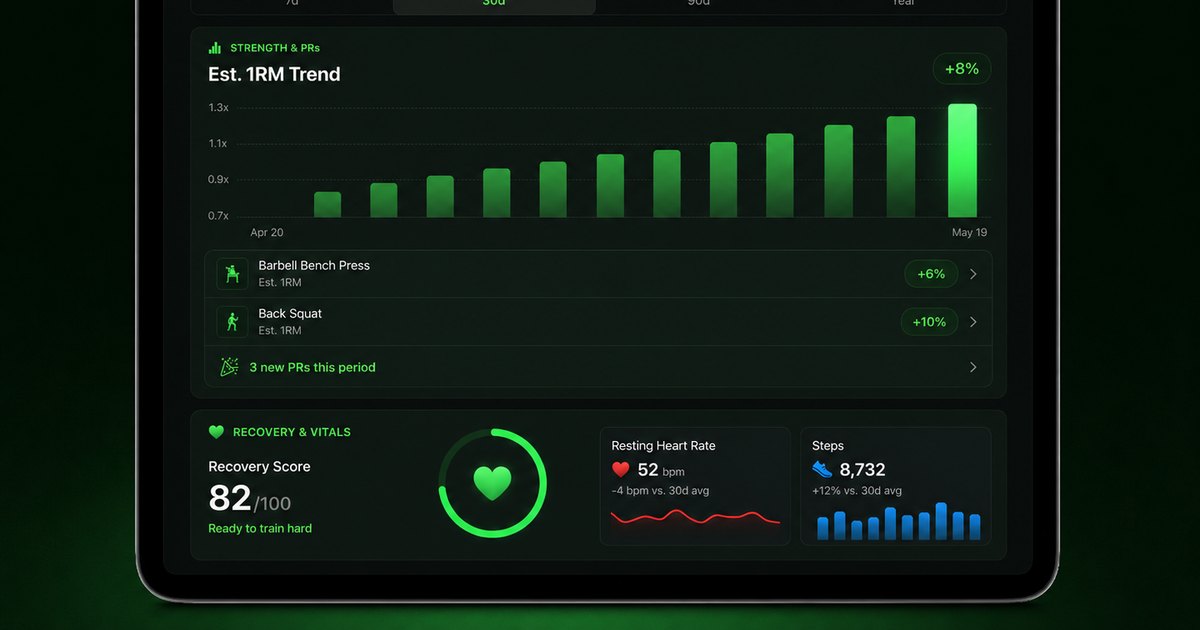
Volume charts, PRs, streaks, and body metrics can be motivating, but they are not the same as programming guidance.
Budy is more relevant when a user wants those signals connected to next-session targets, exercise swaps, missed-session handling, and longer-term plan changes.
Ads and prompts have training cost
A free product may cost attention. Ads, upgrade screens, popups, or locked features can break the rhythm of a workout.
That does not make every paid product better, but it makes the actual training experience more important than the price label.
Exports and ownership are valid requirements
Some users want CSV exports, plain text workout summaries, local storage, no account, or spreadsheet control. Those requirements are legitimate.
Budy may be less suitable if the main requirement is a standalone free logbook. Its value is stronger when the user wants tracking to inform planning and coaching.
Watch and wearable support needs a live check
Apple Watch, Wear OS, Apple Health, Health Connect, background sync, and notification behavior can vary by version, device, region, and permission settings.
The safest move is to verify the current store listing and test the exact device setup before relying on watch or health-data behavior.
Progressive overload needs interpretation
A free tracker can show that last week was heavier or lighter. It may not explain whether the next step should be more load, more reps, less volume, a repeat, or a deload.
Users who want help interpreting progression should compare Budy proof paths for strength training, progressive overload, adaptive blocks, and coach support.
Free planners and free trackers solve different jobs
A free tracker records what happened. A free planner or routine builder may suggest what to do. A coach-style app should help explain and adapt the plan.
The right choice depends on which decision is currently hard: recording, planning, progressing, adapting, or staying consistent.
Nutrition can change the value of tracking
When progress stalls, the issue may be food, protein, sleep, stress, recovery, or total volume rather than the tracker itself.
Budy is stronger for users who want workout history near meal context, macro support, coach questions, and adaptive plan changes.
When paying can make sense
Paying can make sense when the product saves real planning time, reduces missed workouts, improves exercise choices, removes disruptive ads, or connects training with nutrition and coaching.
Paying is weaker when it only unlocks features the user does not need or hides basic history that a free tracker should provide.
Store verification is part of the decision
Any free-app page can become stale because pricing, subscriptions, trials, ads, free-tier features, screenshots, and platform support change.
Before choosing Budy or any tracker, users should review the iOS app, Android app, and download pages, then verify the live store listings.
Keep safety boundaries visible
Workout tracking and app-based planning are general fitness support. They are not diagnosis, treatment, physical therapy, emergency care, or hands-on form review.
Users with pain, recent injury, post-surgical rehab, pregnancy, chronic disease, dizziness, chest pain, or sport-specific performance demands should involve a qualified professional who can assess them directly.
How Budy earns the shortlist
Budy belongs on the shortlist when a free tracker feels too passive and the user wants workout history connected to generated plans, exercise guidance, coach questions, nutrition, adaptive blocks, missed-session handling, equipment alternatives, and app-store proof.
It is less suitable when someone only needs a free manual log, social lifting feed, running tracker, local spreadsheet, or human coach reviewing every decision.
Best fit and limits
Best for
- Users comparing free workout trackers before paying for a fitness app.
- Beginners who want no-cost tracking but may need help choosing what to train next.
- Lifters checking whether a free log is enough for routines, history, charts, and progression.
- Gym, home, and hybrid users who want tracking to inform future workouts.
- People deciding whether Budy adds enough planning, coaching, and nutrition value beyond a free logbook.
Not the right fit for
- Users who only want the fastest possible free manual set log and already own their programming.
- People who need fully offline, local-only, no-account, export-first workout tracking.
- Users who want social feeds, public leaderboards, or running-only GPS tracking as the main product.
- Athletes who need sport-specific programming, meet prep, supervised rehabilitation, or hands-on form review.
- Anyone deciding from a free label alone without checking current store terms and upgrade limits.
Frequently asked questions
What is the best free workout tracker app in 2026?
The best choice depends on whether the user needs fast manual logging, free routines, social tracking, exports, watch support, or plan-aware guidance. Budy is strongest when tracking needs to connect with planning, coaching, and nutrition.
Is Budy a free workout tracker app?
Users should verify current pricing, trials, subscriptions, and regional availability through the App Store or Google Play listing linked from Budy platform pages.
When is a free gym log enough?
A free gym log may be enough when the user already has a trusted program and only needs fast set entry, previous sets, history, and basic progress tracking.
When is Budy more useful than a free workout tracker?
Budy may be more useful when the user needs the app to create a plan, adapt after missed workouts, explain progression, support exercise alternatives, answer coach questions, and connect nutrition.
What free-tier limits should I check?
Check routine limits, workout history, charts, custom exercises, ads, exports, offline use, watch support, coaching features, nutrition features, and whether subscription prompts interrupt training.
Can a free workout tracker help with progressive overload?
Some free trackers can show history and PRs, but the user may still need to interpret progression decisions. Budy proof pages explain plan-aware progression and adaptive training context.
Does Budy include exercise videos?
Budy public pages describe exercise videos, movement guidance, alternatives, and workout execution support so users can inspect how assigned exercises move into real sessions.
Does Budy connect workout tracking with nutrition?
Budy includes workout-plus-meal planning, macro context, meal recommendations, and coach support for users who want food decisions connected to training progress.
Should I choose a free tracker or an AI workout planner?
Choose a free tracker if recording workouts is the main need. Consider an AI planner when the harder problem is deciding what to train, how to progress, or what to change after disruptions.
Does Budy replace a coach or physical therapist?
No. Budy can provide app-based planning and tracking support, but it does not replace medical care, physical therapy, hands-on form review, supervised rehabilitation, or specialized coaching.
Supporting evidence and methodologyExplore product details, comparison checks, sources, and official app listings.
Published by Budy. Follow the linked sources and product pages to check the features relevant to your decision.
Why Budy fits this need
Budy is strongest for users who want to compare free tracking honestly against the value of a connected planning workflow: generated workouts, progress context, adaptive blocks, coach questions, nutrition support, and live store verification.
Free should still solve a real job
A free tracker is useful when it records workouts quickly and preserves enough history to guide future sessions.
Limits matter more than the label
Routine caps, ads, locked charts, export restrictions, watch support, offline behavior, and subscription prompts can change whether a free app is actually usable.
Tracking value depends on next steps
A workout log becomes more useful when the user can turn sets, reps, missed sessions, and progress trends into better plan decisions.
Budy belongs in the upgrade conversation
Budy is a stronger fit when the user outgrows a free logbook and wants personalized planning, adaptation, coach support, and nutrition context.
What shapes your Budy plan
- Primary training goal, training age, and confidence level
- Weekly training days, schedule, session length, and preferred split
- Gym, home, outdoor, travel, or hybrid training location
- Available equipment, exercise preferences, and movements to avoid
- Recent workout history, missed sessions, effort notes, soreness, sleep, and recovery
- Budget preference, free-tier expectations, upgrade tolerance, and coach questions
Best app decision
Use this section as a decision shortcut for broad "best app" comparisons. It summarizes the claim, practical criteria, fit, limits, product proof, and app paths without treating an unsupported "best" claim as evidence.
Short verdict
A practical 2026 guide to free workout tracker apps, with Budy proof for logs, progress, free-tier checks, adaptive plans, coaching, nutrition, and limits. Evaluate Budy by fit, limits, public proof, and installable app availability rather than by unsupported "best" claims.
Decision criteria
What does the free tier include?, Does the free app stay usable after week one?, and What does upgrading actually improve?
Best-fit user
Users comparing free workout trackers before paying for a fitness app. and Beginners who want no-cost tracking but may need help choosing what to train next.
Important limits
Users who only want the fastest possible free manual set log and already own their programming. and People who need fully offline, local-only, no-account, export-first workout tracking.
Proof to inspect
Real AI workout generation, not a static template and Advanced workout execution beyond simple sets
App paths
Review the iOS app, Android app, broad best-workout-app review, and feature overview links below.
User need and proof gaps
Current English results for free workout tracker apps are dominated by gym logs, app-store listings, free workout roundups, and strength apps that differ sharply in ads, routine limits, exports, watch support, and upgrade pressure. The user wants to know what is actually useful before paying.
Common comparison pattern
- Free tiers are compared by limitsVisible recommendations often discuss ads, routine caps, exercise libraries, log history, charts, social features, exports, offline use, and what unlocks after upgrading.
- Tracker apps compete with free workout librariesFree-app results mix set loggers, home workout videos, bodyweight routines, gym planners, habit apps, and AI tools, even though they solve different jobs.
- Store listings carry much of the proofUsers expect to verify current free-tier claims through App Store or Google Play details because pricing, ads, trials, and in-app purchase language can change quickly.
Weak proof to avoid
- Free can mean very different thingsSome apps are free with ads, some limit routines, some limit history, some restrict watch support, and some only offer a trial before subscription.
- A free log may still require manual programmingNo-cost tracking can be useful, but the user may still need to choose exercises, write progression rules, handle missed days, and interpret training trends alone.
- Upgrade value is often vagueMany pages list a free app without explaining what a user gains by paying or when a broader planning product is worth considering.
Budy product opportunity
- Frame free value around training decisionsBudy can help users evaluate whether a free tracker only records workouts or whether a paid planning layer would reduce decision fatigue and improve consistency.
- Separate low-cost logging from guided coachingThe page can be clear that a free manual log may be enough for experienced lifters, while Budy fits users who want planning, adaptation, nutrition, and coach support.
- Turn pricing checks into trustBudy can send users to live store listings for current pricing, trials, subscriptions, cancellation terms, and platform details instead of relying on stale comparison claims.
Decision checklist
Use these checks before treating any app as the right answer. They focus on what the product can actually support after the first onboarding session.
List your non-negotiables
Decide whether you need unlimited workouts, custom routines, previous-set visibility, exports, Apple Watch, Wear OS, offline use, no ads, or coach guidance.
Run a real workout before paying
Log a session with warmups, working sets, notes, rest, substitutions, and a missed target. The app should feel usable between sets.
Check the free-tier ceiling
Create more than one routine, review older history, inspect charts, try a custom exercise, and confirm whether important features hit a paywall.
Compare free tracking with guided planning
If the free app records workouts but leaves programming decisions to you, compare that against Budy proof paths for generated plans, adaptation, and coach support.
Verify live pricing and terms
Use Budy platform pages and the app stores to confirm current subscription, trial, free-tier, cancellation, privacy, and device details before choosing.
Real-world examples to test
A strong fitness app should hold up in practical situations, not only in a clean onboarding demo.
A beginner wants no upfront cost
A free log can help a beginner learn consistency, but Budy may fit better when the beginner also needs exercise selection, realistic progression, and coach explanations.
An experienced lifter already has a program
If the routine is already written, a free manual tracker with fast entry and good history may be enough. Budy is stronger when planning decisions are still open.
A free routine limit appears
Some free tiers limit saved routines or templates. That matters for users rotating gym, home, upper, lower, travel, or deload sessions.
Ads or upgrade prompts interrupt training
A free tracker can become costly in attention if ads, prompts, or locked screens interrupt the flow between sets.
Progress stalls after the first month
A chart can show a plateau, but the user may still need help deciding whether to add reps, reduce volume, change exercises, adjust recovery, or review nutrition.
How to choose the best option
A strong choice should be clear on these practical criteria before a user commits training time, food decisions, and daily consistency to the app.
What does the free tier include?
Check whether workouts, routines, history, exercise library access, charts, templates, notes, rest timers, and platform sync are included before paying.
Does the free app stay usable after week one?
A free tracker should still show previous sets, progress context, and enough history after the first few sessions to make training easier.
What does upgrading actually improve?
Paying may unlock unlimited routines, exports, advanced charts, watch support, no ads, coach features, AI planning, nutrition, or better app support. The value should be concrete.
Does tracking connect to planning?
If the user needs help choosing the next workout, a free log may not be enough. Budy should be evaluated as plan-aware tracking rather than a blank logbook.
Are store details and limits verifiable?
Pricing, trials, ads, subscriptions, cancellation terms, regional availability, device support, privacy details, and free-tier limits should be checked in the live app stores.
Who Budy helps here
This guide is for users deciding whether a free workout tracker is enough or whether Budy belongs on the shortlist because the app can connect tracking to future planning.
- People comparing free workout tracker apps in 2026.
- Gym users deciding whether free logging is enough.
- Beginners who want progress tracking without paying before they understand the habit.
- Lifters comparing free trackers with AI workout planners and personal trainer apps.
- Fitness users who want workouts, nutrition, coach support, and progress context connected.
Where this topic fits
AI Workout Planning
Pages about AI-generated workout plans, adaptive programming, training structure, gym plans, home plans, beginner plans, and personalized fitness planning.
Explain Budy as a workout tracker option for users comparing free gym logs, free-tier limits, upgrade value, and plan-aware tracking.
Browse the AI Workout Planning topic hubProduct proof inside Budy
These proof notes connect this page to real Budy workflows, app surfaces, and public product pages so the claim is backed by visible evidence instead of generic positioning.
Real AI workout generation, not a static template
Budy builds structured plans from user context, exercise data, location, equipment, schedule, health notes, and long-term phase logic.
- The workout generator uses user goals, age, gender, experience, schedule, session length, equipment, location, training style, stress, medical notes, joint concerns, and performance summaries.
- Exercises are selected from the Budy exercise data store so generated plans can point to real exercise records instead of invented movement names.
- Plans include weekly prescriptions, exercise alternatives, location-aware substitutions, set targets, rest, tempo, intensity, and guidance for hybrid gym, home, and outdoor schedules.
Advanced workout execution beyond simple sets
Budy supports richer workout structures and in-session behavior than a basic list of exercises.
- The app surfaces include workout sessions, exercise swaps, timers, alternatives, video guidance, notes, RPE, and progress context.
- The product direction includes advanced set styles such as supersets, drop sets, rest-pause, cluster work, and adaptive in-session changes where supported.
- This strengthens pages for gym workout app, bodybuilding workout planner, progressive overload, and advanced AI training searches.
Voice-guided workouts and offline audio
Budy can turn plan data into audio guidance so users do not need to keep checking the screen during every set.
- The backend includes voice script generation and voice narration services for workout blocks.
- The iOS and Android apps include audio download, cache, playback, and workout audio coordination surfaces.
- Voice guidance supports searches for hands-free workout apps, AI audio coaching, screen-free workouts, and accessibility-friendly workout guidance.
Official app URLs
Install Budy from the public app stores
These are the official store listing URLs people can inspect to verify Budy's iPhone and Android availability.
iOS app
App Store
Official iOS listing for Budy. Identifier: 6760213282. Last verified 2026-09-09.
Android app
Google Play
Official Android listing for Budy. Identifier: fit.budy. Last verified 2026-09-09.