Curated Women's Strength App Guide
Best strength training app for women in 2026: a practical way to choose
Quick answer
The best strength training app for a woman is the one that builds a repeatable plan around her goal, experience, schedule, equipment, and recovery, then makes progression easy to inspect. Budy is worth evaluating when you want adaptive gym or home strength planning, exercise guidance, coach-style support, and nutrition context in one app. A fixed program, class library, simple logbook, or human coach may be better when that narrower format matches the job.
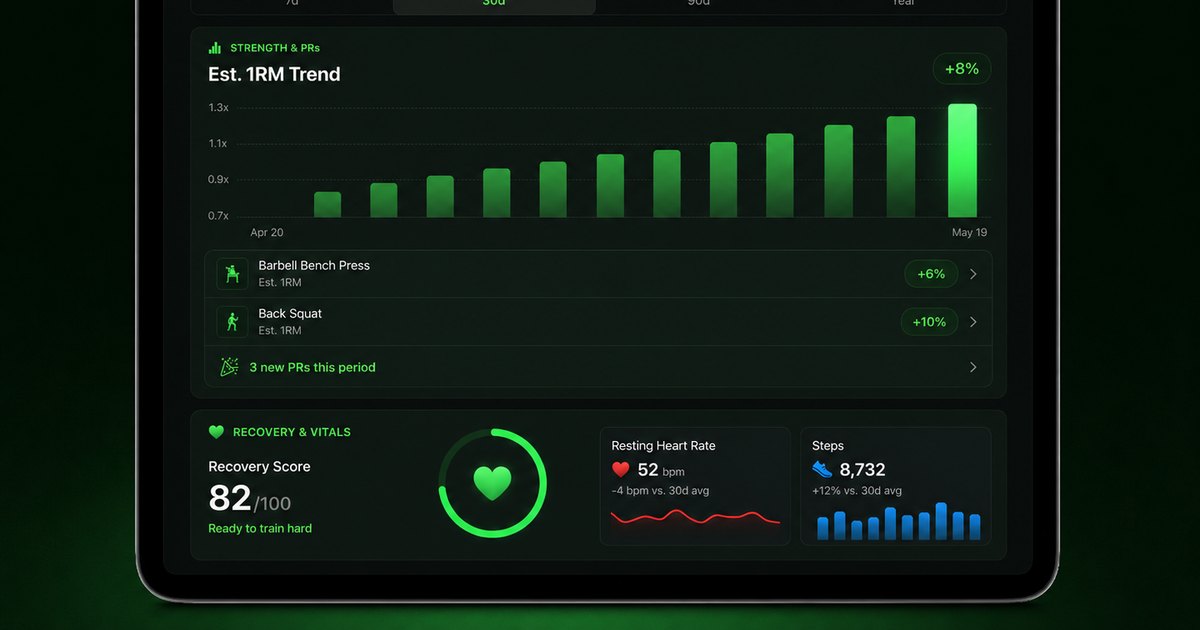
Evidence-backed comparison
| Criterion | Why it matters | Budy approach | Where to verify |
|---|---|---|---|
| Adaptive plan versus fixed program | A fixed program offers consistency and a trainer's chosen sequence; an adaptive planner is more useful when schedule, equipment, experience, or recovery often changes. | Budy can generate plans from user context and support plan changes around progress, availability, location, equipment, and feedback. | Review AI workout generation, adaptive long-term fitness plan, adaptive block training, and methodology. |
| Progressive overload | Strength training needs a repeatable stimulus and a next-step rule. Novel workouts alone make progress hard to measure. | Budy proof paths describe sets, reps, load, effort, history, adaptive blocks, missed-session context, and plan regeneration as parts of the same workflow. | Review progressive overload explained, best strength training app 2026, and best AI strength training app 2026. |
| Gym and home equipment fit | A program becomes unusable when its exercise list assumes equipment, space, load jumps, or training locations the user does not have. | Budy can use location and equipment context, with exercise alternatives available when the planned movement does not fit the day. | Review gym workout app, home workout app, exercise library, and best dumbbell workout app 2026. |
| Exercise guidance | A demonstration and written cue can reduce uncertainty, but neither proves that an app can see technique or replace live coaching. | Budy connects planned exercises to video demonstrations, movement instructions, alternatives, notes, and workout tracking while keeping hands-on form review outside the claim. | Review workout app with exercise videos, exercise library, and best workout app with form feedback 2026. |
| Coach and nutrition context | Questions about substitutions, missed sessions, protein, meals, or recovery often happen after the program has been created. | Budy can connect plan-aware coach support and nutrition context to the active workout workflow, subject to the user's subscription tier and general-fitness boundaries. | Review AI fitness coach chat, AI workout and meal planner, and features. |
| Women-specific claims and limits | A women-focused product can be welcoming and relevant without assuming one training response, cycle pattern, body goal, or medical need for every user. | Budy can personalize from direct user context and feedback. Pregnancy, postpartum, pelvic-floor, pain, medication, and clinical decisions remain matters for appropriately qualified professionals. | Review women's fitness, health and safety, support, and methodology. |
| Installation and price proof | Availability, feature tiers, free access, trials, renewals, and subscription prices can change after a guide is published. | Budy provides direct English-first platform paths. Its US App Store listing was free to install with in-app purchases when reviewed on July 20, 2026; users should verify both stores for current terms. | Review iOS app, Android app, download, and the live store listings linked on this page. |
The practical standard is simple: a women's strength app should help the user train progressively and consistently, not merely use women-focused branding. The sections below turn that standard into a plan audit, a product test, and clear reasons to choose Budy or another app category.
Quick answer: what is the best strength training app for women?
There is no single winner for every woman. Choose an adaptive planner when you want the app to build and adjust the program, a coach-built program when you want to follow one expert's sequence, a class library when instructor energy drives consistency, a logbook when you already know the routine, or a human coach when you need live accountability and technique decisions.
Budy belongs on the adaptive-planner shortlist. Its public proof connects onboarding context, generated workouts, equipment-aware exercise choices, adaptive training blocks, exercise videos, workout tracking, coach questions, nutrition support, and iOS or Android installation. That breadth is useful only if the first plan passes the tests below.
Start with training goals, not a generic women's template
Women can pursue maximal strength, muscle gain, general fitness, sport performance, healthier aging, confidence, or a return to training. Those goals change exercise priority, loading, volume, practice frequency, conditioning, and the role of nutrition far more directly than a single women-only workout label.
A 2026 systematic review across adult women concluded that general resistance-training guidance appears applicable across the female lifespan, with individualization more useful than strict sex- or age-based distinctions. That supports a goal-and-context-first app evaluation rather than a universal gender formula. Review the PubMed record for the study scope and limits.
Use a sensible evidence floor
The 2026 American College of Sports Medicine summary advises healthy adults to train all major muscle groups at least two days per week, build gradually, and choose a routine that fits schedule, comfort, and goals. It also notes that bands, bodyweight exercise, and home training can be effective. See the ACSM resistance-training summary.
The US Physical Activity Guidelines similarly identify muscle-strengthening work for all major muscle groups on at least two days per week. That is a public-health starting point, not a personalized prescription or an argument that every app must use the same split. See the Physical Activity Guidelines for Americans.
Separate five app categories before comparing features
A manual lifting tracker records work you already planned. A fixed program supplies a repeatable sequence. A follow-along library provides classes. An adaptive planner creates and changes the plan from user context. A human-coaching app connects the user to a real trainer. A product can combine categories, but it should be clear which job is primary.
This distinction prevents a misleading comparison. The fastest logbook may be a poor choice for someone who does not know what to train, while an adaptive planner may feel unnecessarily complex for an experienced lifter following a coach's exact program.
Audit the first week as a system
Read the whole week before judging individual exercises. Check whether the important movement patterns are covered, hard sessions are spaced realistically, priority lifts appear early enough, accessories support the stated goal, and each workout fits the promised time.
Two-day plans often work well as full-body sessions. Three-day plans may use full body or a rotating structure. Four-day plans often use upper and lower sessions. These are examples, not rules; schedule fit and recoverable weekly work matter more than the split name.
Demand a visible progression rule
Progressive overload does not mean adding weight at every workout forever. Progress can come from more repetitions, a small load increase, an extra set, better range of motion, improved control, a harder exercise variation, more total quality work, or the same work at lower perceived effort.
The app should also show when not to progress. Repeating a target, trimming volume, substituting a movement, or using a lower-demand week can be more coherent than forcing another load increase after technique breaks down or recovery deteriorates.
Track enough to make the next decision
Useful records can include sets, repetitions, load, time, rest, perceived effort, notes, swaps, and completion history. The purpose is not to collect every possible metric; it is to give the user and planning system enough context to decide what happens next.
During a trial, repeat at least one key movement. If the app cannot show prior performance or explain a next target, its progressive-overload promise may be mostly marketing.
Test equipment fit before trusting personalization
A home user with adjustable dumbbells, a bench, and bands needs different loading options from a commercial-gym user. Machine stacks, fixed dumbbell jumps, crowded racks, limited floor space, and travel equipment all affect what progression looks like.
A strong substitution preserves the movement purpose, target muscles, challenge, and place in the session. A random same-body-part replacement can change fatigue or make the rest of the workout redundant.
Treat exercise videos as guidance, not live form analysis
Video demonstrations and written instructions can help users recognize setup, movement sequence, and alternatives. They are especially useful when the app assigns an unfamiliar exercise or the gym layout changes.
A prerecorded video cannot see the user's technique. Persistent pain, repeated loss of control, uncertainty under heavy load, or a movement that needs hands-on correction is a reason to consult a qualified coach, physical therapist, or clinician as appropriate.
Recovery feedback should be direct and optional
Sleep, soreness, stress, energy, and recent performance can all be relevant. A useful app lets the user report what is happening and makes a transparent general-fitness adjustment rather than silently changing the program.
Menstrual-cycle information may be personally useful for some users, but experiences vary. The safer product standard is user-controlled context and symptom-aware choices, not a blanket phase rule or a claim that the app can manage hormones.
Keep pregnancy, postpartum, and pelvic-health decisions separate
Pregnancy status, postpartum recovery, pelvic-floor symptoms, abdominal separation concerns, medical restrictions, pain, dizziness, bleeding, or other symptoms can change what support is appropriate. A general workout app should not present automatic substitutions as clinical clearance.
Users in these situations should follow guidance from their obstetric clinician, pelvic-health physical therapist, or another appropriately qualified professional. Budy can support general planning around user-provided restrictions, but it does not diagnose, treat, rehabilitate, or supervise care.
Use nutrition to support training, not punish the body
Some users want protein, calorie, meal timing, or recipe support near the workout plan. That can reduce tool switching and make recovery decisions easier to see, especially when strength, muscle gain, or body composition is the goal.
Nutrition support should not turn a strength app into a crash-diet product. Avoid promises of a guaranteed shape, rapid weight loss, spot reduction, or a “toned” body from one program. Eating-disorder concerns and clinical nutrition needs belong with qualified professionals.
Run a seven-day acceptance test
Day one: complete onboarding honestly. Day two: audit the full week. Day three: perform one priority workout. Day four: inspect saved performance and guidance. Day five: force an equipment swap. Day six: shorten or move a session. Day seven: inspect the next recommendation and current subscription terms.
Reject the app if the plan ignores the stated equipment, cannot fit the session window, hides the progression logic, makes disruptive swaps, treats every missed workout as failure, or relies on claims the user cannot verify.
Score the app before subscribing
Use a 30-point scorecard: five points each for weekly programming, progression clarity, equipment fit, workout-floor usability, adaptation after disruption, and transparent platform or pricing proof. Define what earns each point before testing so a polished onboarding screen does not decide the result.
A score below 18 suggests a poor fit. A score from 18 to 23 may be workable if the missing areas do not matter to the user. A score from 24 to 30 is a strong trial result, but only after the user confirms the app category itself matches the job.
Where Budy has relevant product proof
Budy's official US App Store description documents personalized plans using goal, schedule, equipment, experience, health notes, and progress; adaptive workouts; set, rep, weight, time, rest, note, and prior-performance tracking; videos; swaps; coach support; nutrition; and subscription tiers. The public proof paths on this page let users inspect those claims without relying on this guide alone.
The best trial question is therefore concrete: does the generated strength week fit the user, and does the product make the next decision easier after real feedback? Budy is a stronger candidate when the answer is yes across planning, execution, and adaptation—not merely because it uses AI.
Verify live availability and pricing
Budy's official US App Store and English US Google Play URLs returned live pages when checked on July 20, 2026. The App Store listed Budy as free to install with in-app purchases. That does not mean every feature is permanently free, and prices or tiers can change.
Use the store cards on this page or visit Budy for iOS, Budy for Android, and download Budy to verify the current listing, screenshots, device requirements, feature tiers, trial, renewal, cancellation, privacy, and regional availability before committing.
Bottom line
Choose Budy if you want an adaptive strength planner that connects gym or home workouts, exercise guidance, progress context, coach questions, nutrition support, and plan changes. Judge it by the first-week audit and disrupted-week test, not by the label “for women” or “AI.”
Choose another category when a fixed trainer program, live class, simple logbook, community membership, or qualified human coach is the more important need. The best app is the one whose programming model fits the work the user actually needs it to do.
Best fit and limits
Best for
- Women who want an app to build a strength plan around their goal, experience, schedule, equipment, and session length.
- Gym, home, dumbbell, band, bodyweight, and hybrid trainees who need realistic exercise alternatives.
- Beginners who want plan structure and exercise references before a blank lifting log becomes useful.
- Intermediate trainees who want progression, recovery feedback, missed-session handling, and next-block decisions.
- Users who want strength workouts, nutrition context, coach questions, and progress visibility in one mobile workflow.
Not the right fit for
- Users who already own a trusted program and only want the fastest possible manual set-and-rep logger.
- People who specifically want live classes, a named human trainer, technique review, or a strong community-first experience.
- Powerlifters, weightlifters, or athletes who need meet preparation, competition decisions, or sport-specific supervision.
- Anyone needing diagnosis, injury treatment, physical therapy, pregnancy clearance, postpartum rehabilitation, or pelvic-floor care.
- Users choosing on a “free” label without checking the current feature tier, trial, renewal, and cancellation terms.
Frequently asked questions
What is the best strength training app for women in 2026?
There is no universal winner. Budy is worth evaluating for adaptive strength planning, gym or home equipment fit, exercise guidance, progress context, coach questions, and nutrition support. A fixed program, class app, logbook, or human coach can be better for a different job.
Is Budy a strength training app for women?
Budy is a general AI fitness app rather than a women-only product. Women can use it to generate strength plans around goal, experience, schedule, equipment, location, recovery, preferences, and user-provided health context.
Should a women's lifting app use different exercises?
Not automatically. Exercise selection should primarily reflect the user's goal, experience, anatomy, equipment, comfort, preferences, performance, and relevant restrictions. Women do not all need the same split or exercise list.
What should a progressive overload app track?
Useful context can include sets, repetitions, load, time, rest, perceived effort, notes, substitutions, prior performance, completion history, and recovery feedback. The app should use that context to make a clear next-step recommendation.
Can Budy build home strength workouts for women?
Budy can use training location and available equipment when generating a plan. Test whether the first week matches the dumbbells, bands, bodyweight options, space, bench, or other equipment actually available.
Does Budy provide exercise videos?
Budy product and store proof describes exercise video demonstrations, movement guidance, swaps, and workout tracking. Videos are references, not live technique assessment or a replacement for qualified hands-on coaching.
Does Budy synchronize workouts to the menstrual cycle?
This guide does not claim automatic menstrual-cycle programming. Users can provide relevant recovery or health context, but symptom patterns vary and medical or hormone questions should be handled with appropriately qualified professionals.
Can Budy create pregnancy or postpartum strength plans?
Budy is not a source of pregnancy clearance, postpartum rehabilitation, pelvic-floor care, diagnosis, or treatment. Users should follow an obstetric clinician or appropriately qualified pelvic-health professional and only use general app planning within that guidance.
Can Budy replace a personal trainer?
No. Budy can reduce general planning work and provide app-based guidance, but it does not replace live technique assessment, supervised rehabilitation, medical care, competition coaching, or the accountability of a qualified human trainer.
Is Budy free for strength training?
Budy was free to install with in-app purchases on the US App Store when reviewed on July 20, 2026. Features may depend on the subscription tier. Verify current App Store or Google Play pricing, trial, renewal, and cancellation terms.
How should I test Budy before subscribing?
Audit the first week, complete a priority workout, repeat one key movement, force an equipment swap, shorten or miss one session, inspect the next recommendation, and verify live store terms. The plan should stay coherent through all seven checks.
Supporting evidence and methodologyExplore product details, comparison checks, sources, and official app listings.
Published by Budy. Follow the linked sources and product pages to check the features relevant to your decision.
Why Budy fits this need
Budy fits the planning-first lane. It can turn real context into a strength plan, carry that plan into the workout, and support changes after missed sessions, equipment problems, or recovery feedback. The women-focused value should come from individual fit and respectful boundaries, not a generic pink template or a claim that every woman needs the same program.
A plan based on the person, not a stereotype
Goal, training age, schedule, session length, equipment, location, exercise confidence, recovery, and health notes should shape the plan before gendered marketing language does.
Progression you can audit
A serious strength app should show what changes next through load, reps, sets, range of motion, tempo, exercise difficulty, volume, or a lower-demand week.
Gym and home plans that stay executable
Budy can use training location and available equipment, then connect assigned movements to demonstrations, instructions, alternatives, workout notes, and progress context.
Adaptation with clear limits
Schedule, equipment, soreness, sleep, and user feedback can inform a general fitness adjustment, while pain, pregnancy, postpartum recovery, pelvic-floor symptoms, and clinical concerns still need qualified care.
What shapes your Budy plan
- Primary goal: general strength, muscle gain, body composition, sport support, bone and functional fitness, or returning after time away
- Training age, recent program, movement confidence, and current performance
- Weekly training days, preferred schedule, session length, and realistic commitment level
- Gym, home, outdoor, travel, or hybrid location and exact available equipment
- Exercise preferences, movements to avoid, load increments, space, and accessibility needs
- Recent workout effort, soreness, sleep, energy, missed sessions, and recovery notes
- Relevant health notes supplied by the user, with clinical and pregnancy-related decisions kept with qualified professionals
- Nutrition goals, protein and calorie context, dietary preferences, allergens, meal timing, and budget
Best app decision
Use this section as a decision shortcut for broad "best app" comparisons. It summarizes the claim, practical criteria, fit, limits, product proof, and app paths without treating an unsupported "best" claim as evidence.
Short verdict
Compare strength training apps for women by progression, gym or home fit, exercise guidance, adaptation, pricing, and safety. See where Budy fits. Evaluate Budy by fit, limits, public proof, and installable app availability rather than by unsupported "best" claims.
Decision criteria
Programming model, Progression clarity, and Goal and weekly structure
Best-fit user
Women who want an app to build a strength plan around their goal, experience, schedule, equipment, and session length. and Gym, home, dumbbell, band, bodyweight, and hybrid trainees who need realistic exercise alternatives.
Important limits
Users who already own a trusted program and only want the fastest possible manual set-and-rep logger. and People who specifically want live classes, a named human trainer, technique review, or a strong community-first experience.
Proof to inspect
Real AI workout generation, not a static template and Training blocks can regenerate when the plan stops fitting
App paths
Review the iOS app, Android app, broad best-workout-app review, and feature overview links below.
User need and proof gaps
Current English results for “strength training app for women” mix coach-built programs, follow-along class libraries, lifting trackers, community memberships, and AI workout planners. The real decision is not whether an app uses women-focused branding; it is whether the product provides the right kind of programming, progression, guidance, flexibility, and support for the user's goal.
Common comparison pattern
- Coach-built programs lead many resultsSeveral visible products offer a fixed or periodically refreshed program from a named trainer, often with follow-along video, community access, and home or gym tracks.
- Progressive overload is the common promiseStrong pages increasingly emphasize repeated lifts, saved weights and reps, progression prompts, exercise swaps, and enough continuity to measure change.
- Women-specific positioning varies widelySome apps focus on beginner confidence or home dumbbells; others foreground glute training, menstrual-cycle context, midlife, classes, or community. These are different products for different jobs.
- Pricing and access models are hard to compareA free install, trial, paid membership, trainer access, AI feature, and full program library can each sit behind different terms, so live store and checkout verification matters.
Weak proof to avoid
- Women-focused branding can hide a generic planA page may speak directly to women without showing how schedule, training age, goal, equipment, exercise history, and recovery change the actual program.
- A workout library is not progressionHundreds of classes or exercises do not prove that the app organizes a coherent week, remembers performance, or makes a sensible next-step decision.
- Cycle-aware claims are often over-broadIndividual symptoms and preferences may be useful context, but a universal phase-based intensity rule should not replace direct feedback, user choice, or medical guidance.
- Best-overall labels can skip the test methodA useful recommendation should expose its criteria, product evidence, store path, pricing caveat, fit, and limits instead of treating popularity as proof.
Budy product opportunity
- Own the adaptive planning comparisonBudy can show the full path from onboarding context to weekly strength structure, exercise execution, feedback, substitutions, missed-session handling, and next-block changes.
- Make individualization the women-focused standardThe guide can center goals and real constraints while letting users supply relevant recovery or health context without assuming the same needs for every woman.
- Connect strength and nutrition without body-pressure claimsBudy can support protein, calories, meals, and recovery near the workout plan while avoiding crash diets, guaranteed body changes, or appearance-only framing.
- Give readers a repeatable product testA first-week audit can reveal whether the plan fits time and equipment, whether videos and swaps are useful, and whether the next recommendation reflects what actually happened.
Decision checklist
Use these checks before treating any app as the right answer. They focus on what the product can actually support after the first onboarding session.
Name the job before choosing the app
Write down whether you need the app to create the program, teach the lifts, provide classes, log an existing routine, supply human accountability, or combine several of those jobs.
Enter your real week
Use the number of days, session length, location, and equipment you can sustain for the next eight weeks, not the schedule you hope to have on a perfect week.
Audit movement coverage
Across the week, look for sensible squat or knee-dominant work, a hinge, push, pull, trunk work, and goal-specific accessories rather than an unexplained body-part collage.
Check the progression rule
Ask what changes after you complete every target with good control, what stays the same, and what happens when effort or technique deteriorates. The answer should be specific.
Force one equipment change
Replace an unavailable rack, cable, bench, machine, or dumbbell. A useful swap should preserve the movement purpose and fit the remaining session.
Test one disrupted week
Miss a workout or shorten a session. The app should protect priority work and keep the next session coherent instead of doubling volume or abandoning the block.
Verify terms in the live stores
Confirm current pricing, trial, subscription, cancellation, device, privacy, screenshot, and update details in the App Store or Google Play before paying.
Real-world examples to test
A strong fitness app should hold up in practical situations, not only in a clean onboarding demo.
A beginner has two gym days
A useful first plan can use two efficient full-body sessions with manageable movements and gradual progression. The app should not pretend that a five-day split is required for meaningful strength work.
A home trainee has adjustable dumbbells
The plan should use the available load well, offer unilateral or tempo progressions when jumps are too large, and avoid assigning cable or machine work the user cannot perform.
An intermediate lifter wants stronger upper-body lifts
The app should prioritize the relevant presses and pulls, keep lower-body work in the program, manage weekly volume, and show how load or reps progress instead of only adding arm exercises.
A crowded gym breaks the planned session
If the rack and bench are occupied, the app should offer a goal-compatible alternative and preserve the order of the important work rather than replacing every movement at random.
Energy and symptoms vary across the month
The useful behavior is to let the user report how she feels, keep symptoms and preferences visible, and choose an appropriate general adjustment. The app should not force a universal menstrual-cycle prescription.
Pain or postpartum symptoms appear
The correct response is not an automatic “women's modification.” Stop or scale the activity as appropriate and seek a clinician or qualified pelvic-health professional when symptoms, medical restrictions, or recovery questions require it.
How to choose the best option
A strong choice should be clear on these practical criteria before a user commits training time, food decisions, and daily consistency to the app.
Programming model
Decide whether you want an adaptive plan, a fixed coach-built program, follow-along classes, a manual logbook, or live human coaching. These formats solve different problems.
Progression clarity
The app should make the next change visible and explain what happens after an easy session, a hard session, a stall, a missed week, or a run of low recovery.
Goal and weekly structure
Strength, muscle gain, general fitness, sport support, and returning after time away need different priorities. The plan should fit the days and time the user can repeat.
Equipment and exercise fit
Full gym, machines, dumbbells, bands, bodyweight, home equipment, and hybrid access should produce different exercise choices and useful substitutions.
Workout-floor guidance
Videos, written cues, set and rep targets, rest guidance, previous performance, swaps, notes, and readable session flow determine whether the plan is usable in practice.
Recovery and health boundaries
The product should accept useful recovery feedback without presenting an app-generated plan as diagnosis, rehabilitation, pregnancy clearance, pelvic-floor care, or live form supervision.
Current price and platform proof
Verify the official iOS or Android listing, device compatibility, screenshots, free access, trial rules, subscription tier, renewal, and cancellation terms at decision time.
Who Budy helps here
This guide is for women choosing the type of strength app that fits their actual training job. It is intentionally distinct from the broad best strength training app, beginner-only strength app guide, and AI-specific strength app comparison.
- Women comparing strength training apps for gym or home use.
- Beginners deciding between guided programs, classes, AI planners, and workout logs.
- Experienced trainees who want progression and adaptation without rebuilding a spreadsheet.
- Busy users who need the plan to survive shorter sessions, missed workouts, travel, or changing equipment.
- Readers who want evidence-led women-focused guidance without stereotypes or universal hormone claims.
Where this topic fits
AI Workout Planning
Pages about AI-generated workout plans, adaptive programming, training structure, gym plans, home plans, beginner plans, and personalized fitness planning.
Explain how women can evaluate Budy as a strength training app using programming quality, progressive overload, equipment fit, recovery context, execution support, and honest coaching limits.
Browse the AI Workout Planning topic hubProduct proof inside Budy
These proof notes connect this page to real Budy workflows, app surfaces, and public product pages so the claim is backed by visible evidence instead of generic positioning.
Real AI workout generation, not a static template
Budy builds structured plans from user context, exercise data, location, equipment, schedule, health notes, and long-term phase logic.
- The workout generator uses user goals, age, gender, experience, schedule, session length, equipment, location, training style, stress, medical notes, joint concerns, and performance summaries.
- Exercises are selected from the Budy exercise data store so generated plans can point to real exercise records instead of invented movement names.
- Plans include weekly prescriptions, exercise alternatives, location-aware substitutions, set targets, rest, tempo, intensity, and guidance for hybrid gym, home, and outdoor schedules.
Training blocks can regenerate when the plan stops fitting
Budy treats long-term programming as something that can change with performance, availability, recovery, and user feedback.
- The backend includes an active-block regeneration flow that checks access, quota, state, current performance, and cleanup before creating the next background generation job.
- Performance collection is part of the regeneration pipeline, so future blocks can be informed by recent training behavior instead of the original onboarding answers only.
- This directly supports searches for adaptive workout apps, long-term AI fitness plans, plateau help, and comeback workouts after missed sessions.
Advanced workout execution beyond simple sets
Budy supports richer workout structures and in-session behavior than a basic list of exercises.
- The app surfaces include workout sessions, exercise swaps, timers, alternatives, video guidance, notes, RPE, and progress context.
- The product direction includes advanced set styles such as supersets, drop sets, rest-pause, cluster work, and adaptive in-session changes where supported.
- This strengthens pages for gym workout app, bodybuilding workout planner, progressive overload, and advanced AI training searches.
Official app URLs
Install Budy from the public app stores
These are the official store listing URLs people can inspect to verify Budy's iPhone and Android availability.
iOS app
App Store
Official iOS listing for Budy. Identifier: 6760213282. Last verified 2026-09-09.
Android app
Google Play
Official Android listing for Budy. Identifier: fit.budy. Last verified 2026-09-09.