Curated Five-Day Workout Planner
AI 5-day workout split generator: make the fifth day earn its place
Quick answer
A useful 5-day workout split generator should not stretch a four-day plan across another gym visit or turn every day into a hard session. It should decide whether five days fit your goal and real calendar, choose a structure such as PPL plus upper/lower or a four-day base with one focused session, distribute fatigue and time across the week, and show what happens when day five disappears. Budy is a strong candidate when you want that decision turned into complete workouts with progression, exercise swaps, tracking, and plan-aware support.
Evidence-backed comparison
| Criterion | Why it matters | Budy approach | Where to verify |
|---|---|---|---|
| Five-day suitability check | A person may have five open calendar boxes without having the training experience, recovery, or adherence needed to make five sessions useful. | Budy can use goal, availability, session length, equipment, location, experience, commitment level, preferences, and relevant notes before generating the week. | Review AI workout planner, AI workout generation, how to build a workout split, and methodology. |
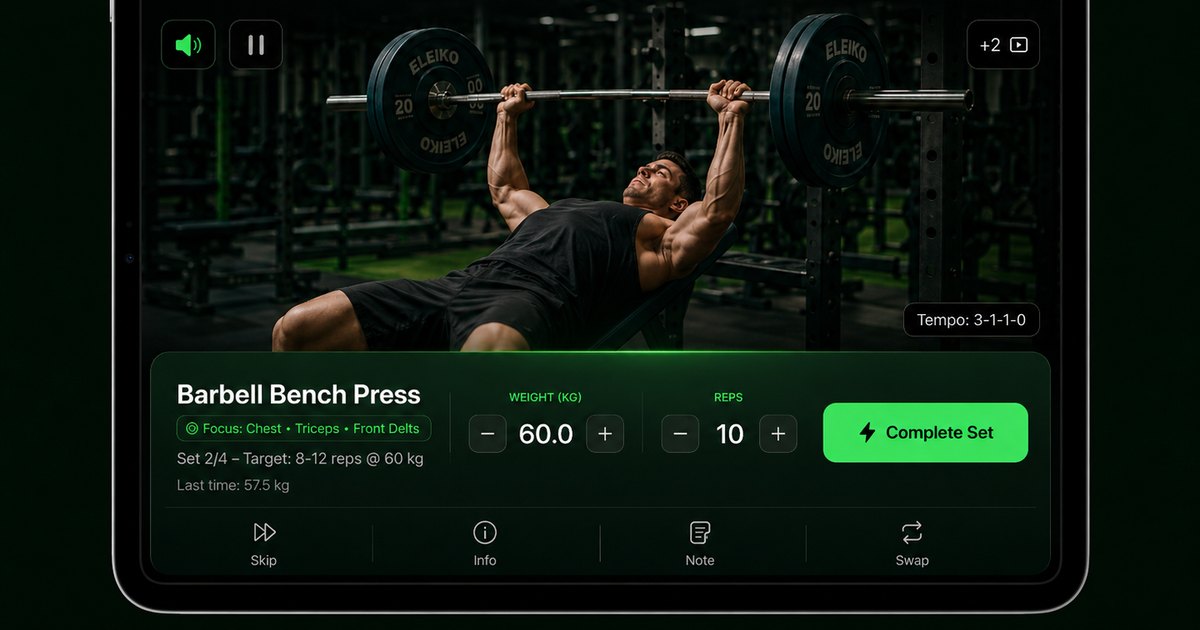
| Complete five-session output | A split acronym does not define exercise order, sets, reps, rest, effort, alternatives, repeated stress, total time, or what the fifth session contributes. | Budy connects plan structure to guided workouts, exercise records, set tracking, rest, alternatives, and video-supported movement guidance. | Review best workout plan generator app, workout app with exercise videos, and exercise library. |
| Current training guidance | A five-day page should not sell complexity or frequency as a guaranteed advantage when a simpler repeatable program may fit better. | This guide uses current guidance to prioritize consistency, major-muscle-group training, appropriate effort, and individualization while treating five days as an optional structure. | Review the 2026 ACSM resistance-training update and the US physical activity guidance. |
| Progression after generation | The first week becomes stale unless completed sets, effort, missed work, equipment changes, and goal updates can influence later decisions. | Budy proof paths connect workout history, progressive overload, adaptive blocks, performance context, and block regeneration. | Review best progressive overload app, adaptive block training, and adaptive long-term fitness plan. |
| Four-day fallback | Five-day plans become fragile when a missed session erases a whole movement pattern or forces the user to stack two workouts together. | Budy can support rescheduling, shorter workouts, exercise alternatives, location changes, coach questions, and plan updates after user review. | Review AI fitness coach chat, workout app that adapts, and fitness app for busy professionals. |
| Platform and purchase verification | Prices, trials, subscriptions, supported devices, screenshots, feature tiers, and regional availability can change after this guide is published. | Budy public pages describe the workflow while linked store listings remain the current source for platform-specific purchase details. | Use iOS app, Android app, and download to reach the live store listings before subscribing. |
The useful output is not five day labels. It is a reason for the fifth session, an inspectable weekly stress map, five time-aware workouts, a visible progression rule, and a four-day fallback that protects the main goal.
Start by proving that five days fit
A five-day plan begins with five time windows a person can repeat during an ordinary week. Work, family, commute, sleep, another sport, and gym access belong in the decision before the generator selects a split.
If one window disappears most weeks, the better output may be a four-day base with an optional fifth session. A planner is more useful when it reduces fragility than when it fills every available calendar box.
Make the fifth session solve a named problem
The extra day can distribute work that made four sessions too long, give a priority more practice, separate exercises that interfere with each other, or create a lower-cost technique or accessory session.
If removing day five changes nothing important, it may be filler. The generator should explain what moves, disappears, or becomes crowded when comparing the five-day version with a four-day alternative.
PPL plus upper/lower needs an overlap audit
Push, pull, legs, upper, and lower is a familiar five-day hybrid because it combines focused sessions with a second broad exposure. The labels are simple; the overlap is not.
Pressing muscles may work on push and upper days, while posterior-chain fatigue can cross pull, legs, and lower sessions. A useful generator varies exercise choice, effort, and spacing instead of duplicating the first three days at the end of the week.
A four-day base plus specialization can be easier to control
An upper/lower or full-body base can cover the main program, with day five assigned to a genuine priority such as shoulders, glutes, arms, technique, conditioning, or mobility. This makes the fifth day easier to remove during a busy week.
Specialization still needs boundaries. The extra work should account for what those muscles and joints already do elsewhere, and it should not displace recovery needed for higher-priority lifts.
Body-part splits trade simplicity for missed-day risk
A body-part split can make each session focused and easy to understand, especially for experienced hypertrophy trainees who enjoy longer local exercise menus.
The tradeoff is that one missed weekday may remove the only planned work for that area. A rolling sequence, a second light exposure, or a four-day fallback can make the schedule less dependent on a perfect Monday-to-Friday streak.
Use current guidance without turning five into a rule
The 2026 ACSM resistance-training update emphasizes that consistency matters more than complicated programming for most healthy adults and supports individualizing training to the goal and person.
US public-health guidance recommends muscle-strengthening activity for all major muscle groups on at least two days each week. Five training days can distribute goal-specific work, but five is not the minimum required for useful strength training.
Map stress before counting exercises
List major movement patterns, goal-specific muscles or skills, planned hard sets, repeated joint demands, and other physical activity across the entire week. Then place exercises inside that map.
This catches plans that look varied by body part but repeat heavy elbow flexion, spinal loading, pressing, or knee-dominant work on consecutive days. Exercise names alone do not reveal the recovery cost.
Five days should not mean five hard days
Priority sessions, moderate-volume sessions, practice work, accessories, and lower-cost days can all belong in the same week. Their effort, complexity, and recovery demands should be deliberately different.
A generator that drives every set toward failure or assigns demanding compounds every day is not using frequency intelligently. The goal is useful work that can be repeated and progressed, not maximum fatigue per visit.
Give each session its own time budget
A 30-minute weekday and a 70-minute weekend session should not receive identical exercise counts. Warm-up, setup, equipment queues, appropriate rest, video review, logging, and transitions all consume real time.
Protect the highest-priority work first and label optional accessories. Timing the first 72 hours of the plan usually reveals whether the remaining three sessions need to be resized.
Preserve movement quality across consecutive days
Five sessions often create two-day and three-day training runs. The planner should rotate emphasis so local fatigue from one day does not make the next day's important movement needlessly difficult or unclear.
This does not require a rigid recovery formula. It requires watching exercise overlap, effort, performance, soreness, confidence, and any user-specific guidance, then changing the smallest part that no longer fits.
Equipment should change the route, not erase the goal
A commercial gym, a hotel room, and adjustable dumbbells support different exercise menus and progression options. Each day should use the equipment and location the user actually entered.
Test one unavailable rack, cable, or bench. A useful substitution preserves the intended pattern and manageable difficulty when possible instead of adding unrelated volume merely because it targets the same broad body area.
Progression needs a visible first decision
Before starting, users should know what may happen after they complete a target comfortably, miss repetitions, change load, or report unusually high effort. The response could be a repetition, small load change, set adjustment, variation, or no change.
The app should preserve actual performance and explain the next step. Automatically increasing every lift because another calendar week passed is not enough evidence of adaptive programming.
Build the four-day fallback before it is needed
Identify the priority work that must survive, the supporting work that can move, and the optional work that can disappear. Then test which four sessions preserve the weekly goal without becoming oversized.
A missed day may call for continuing the rotation, relocating a priority, or resizing the week. Combining two complete workouts or adding punishment-style make-up volume is not an automatic solution.
Repeated missed days are programming feedback
When the same fifth session disappears for several weeks, the schedule is providing useful data. The plan can move that session earlier, shorten it, make it optional, or become a stable four-day program.
A credible AI planner should respond to the repeated pattern rather than preserving a nominal five-day identity. Completed priority work matters more than the label assigned at onboarding.
Change one layer at a time
When one exercise stalls or one station becomes unavailable, start with a local adjustment. When the weekly calendar, recovery pattern, or main goal changes, the split may need a larger revision.
Keeping successful parts stable makes progress easier to interpret and movements easier to practice. Constantly regenerating all five days can hide whether any specific change helped.
Coach chat should understand the current week
Plan-aware chat is useful when a user asks why upper body appears again on Saturday, how to shorten the legs session, or what to do after missing pull day. The answer should reflect the actual sequence and priority work.
Budy coach actions are reviewed by the user before execution. Coach chat is not live form assessment, diagnosis, physical therapy, emergency help, or a substitute for a qualified professional who can observe the person directly.
Verify product proof before trusting the AI label
Review AI workout generation, AI workout planner, adaptive block training, exercise videos, and AI fitness coach chat. These pages expose the workflows behind the claim.
Then generate a real five-day week and compare it with the inputs you entered. Public evidence creates a shortlist; the structure, four-day fallback, and first completed sessions determine fit.
Verify live store terms before subscribing
Pricing, trials, renewals, cancellation steps, supported devices, feature tiers, screenshots, privacy details, and regional availability can change. Static guide copy should not be treated as the final purchase record.
Use iOS app, Android app, and download to reach the live listings and confirm current details at the point of decision.
Keep the safety boundary visible
Budy supports general fitness planning and exercise guidance. It does not diagnose symptoms, clear someone for exercise, provide emergency help, deliver supervised rehabilitation, or guarantee that a generated exercise is appropriate for every person.
People with pain, injury, dizziness, chest pain, pregnancy, recent surgery, chronic disease, or other health concerns should seek guidance from an appropriately qualified professional. Severe or sudden symptoms need prompt medical attention.
Best fit and limits
Best for
- Intermediate trainees who can protect five sessions and want the extra day to solve a clear programming problem.
- Gym users comparing PPL plus upper/lower, a four-day base plus specialization, and other five-day structures.
- People who want shorter individual sessions while keeping the complete week visible.
- Home, gym, and hybrid trainees who need equipment-aware exercises and practical substitutions.
- Users who want the generated week connected to tracking, progression, coach questions, and adaptive changes.
Not the right fit for
- People who regularly complete fewer than five sessions and would benefit from a stable three-day or four-day plan.
- Beginners who assume another training day should automatically add volume, intensity, or faster results.
- Experienced lifters who already own a complete program and only need a fast manual logbook.
- Users who need direct technique observation, live accountability, supervised rehabilitation, or individualized hands-on coaching.
- Competitive athletes who need testing, peaking, and sport-specific load management from a qualified professional.
- Anyone choosing from generated output without reviewing the week, testing the sessions, and checking current store terms.
Frequently asked questions
What is an AI 5-day workout split generator?
It is a planning tool that uses inputs such as goal, experience, five available days, session length, equipment, location, and recovery to choose a weekly structure and turn it into complete workouts. A useful generator also explains what day five adds, supports progression, and provides a fallback for missed sessions.
What is the best workout split for five days a week?
There is no universal best split. PPL plus upper/lower, a four-day upper/lower or full-body base plus one specialization day, and body-part structures solve different problems. The right choice depends on goal, experience, day spacing, time, equipment, preferences, and recovery.
Is PPL plus upper/lower a good 5-day split?
It can be a useful five-day hybrid because it combines focused sessions with a second broad exposure. The plan still needs an overlap audit so pressing, pulling, leg, and posterior-chain work are distributed with manageable effort and duration.
Can Budy generate a personalized 5-day workout plan?
Budy is designed to create plans from context including goal, schedule, session length, equipment, location, experience, commitment level, preferences, and relevant notes. Users should inspect the generated week and confirm that those inputs changed the structure and sessions.
Are five workouts a week better than four?
Not automatically. A fifth day can distribute useful work, shorten sessions, or support a priority, but a repeatable four-day plan can be a better fit when the extra visit adds fatigue, filler, or frequent missed workouts. Consistency and appropriate programming matter more than the day count alone.
Can a beginner use a 5-day workout split?
A beginner can train on five days when sessions are appropriately simple and recoverable, but five days are not required. The planner should compare the option with three or four sessions and avoid adding volume or difficulty simply to fill the calendar.
Should all five workouts be hard?
No. A five-day week can include different priorities, effort levels, practice, accessories, or shorter lower-cost sessions. Treating every day as maximum effort can make the plan harder to recover from and repeat.
What should each generated workout include?
Each session should show exercise order, sets, reps, rest, effort or difficulty context, substitutions, guidance, and an honest duration estimate. Across the week, the app should expose movement coverage, repeated stress, progression logic, and the purpose of day five.
What happens if I miss one of five workouts?
A practical planner should protect priority work by continuing the sequence, relocating compatible work, trimming lower-priority accessories, or using a prepared four-day version. It should not automatically double the next workout or hide what was lost.
Can Budy adapt a five-day plan between home and gym?
Budy can use location and equipment as planning inputs and support exercise alternatives. Test the feature by changing one session from gym to home and checking whether the replacement preserves the intended movement, priority, and manageable difficulty.
Does an AI workout generator replace a personal trainer?
No. An app can support general planning, explanations, guidance, and adjustments, but it cannot replace direct assessment, hands-on technique coaching, medical care, physical therapy, or specialized sport coaching when those services are needed.
Where should I verify Budy pricing and availability?
Use the live App Store and Google Play listings linked from Budy iOS, Android, and download pages. Confirm current price, trial, renewal, cancellation, supported devices, feature access, screenshots, privacy details, and regional availability before subscribing.
Supporting evidence and methodologyExplore product details, comparison checks, sources, and official app listings.
Published by Budy. Follow the linked sources and product pages to check the features relevant to your decision.
Why Budy fits this need
Budy fits the planning-first version of this search: test whether five days are repeatable, give the extra day a specific job, distribute demanding work intelligently, and keep a four-day fallback available without claiming that more gym days automatically produce better results.
The fifth day must solve a real problem
Budy can use goal, experience, availability, session length, equipment, preferences, commitment level, and relevant notes before deciding how a five-day week should be shaped.
Five sessions become one inspectable week
The public product workflow connects plan structure to exercise order, sets, reps, rest, guidance, alternatives, and workouts the user can track.
Stress can vary instead of staying high
A five-day plan can separate priority work, practice, accessories, and lower-cost sessions rather than treating every visit as a maximum-volume training day.
The plan can survive a four-day week
Missed-session handling, shorter workouts, exercise swaps, coach questions, and block updates can help preserve priority work when the fifth visit does not happen.
What shapes your Budy plan
- Primary goal, training experience, movement confidence, and preferred training style
- Five available days, spacing between them, and realistic duration for each session
- Gym, home, outdoor, travel, or hybrid location and exact equipment access
- Priority muscles or skills, preferred lifts, movements to avoid, and relevant health notes
- Recent performance, effort feedback, missed sessions, sleep, soreness, and recovery context
- Other sport or cardio sessions, commitment level, desired exercise variety, and coach questions
User need and proof gaps
Current English results mix static five-day routines, PPL plus upper/lower templates, instant AI generators, strength-coaching apps, and routine builders. The recurring user job is not merely finding five workout labels: people need to know whether five sessions fit, what the extra day contributes, how hard work is distributed, and how the plan changes when only four sessions are completed.
Common comparison pattern
- Templates assume five perfect gym visitsMany results publish Monday-to-Friday or PPL plus upper/lower routines without testing the user's actual days, session lengths, commute, other activity, or likelihood of missing the final visit.
- Generators optimize for a full-looking outputFast tools can fill five exercise lists in seconds, but exercise count does not prove useful weekly distribution, recoverable effort, realistic duration, or a progression path.
- Split labels hide different training jobsPPL plus upper/lower, a body-part split, and a four-day base plus specialization can all use five days while creating very different frequency, overlap, and missed-day consequences.
Weak proof to avoid
- No reason for adding day fiveThe extra session should reduce crowding, support a priority, improve practice, or make sessions shorter. More days alone are not evidence of a better plan.
- No weekly fatigue mapFive plausible workouts can still stack demanding hinges, presses, elbow work, or leg fatigue on consecutive days and leave too little room for recovery or another sport.
- No four-day fallbackA fragile five-day plan can lose an entire movement pattern or priority muscle whenever the user misses one fixed weekday.
Budy product opportunity
- Own the fifth-day decisionBudy can connect the user inputs to a reasoned five-day structure and explain what the extra session contributes before filling it with exercises.
- Separate priority work from optional volumeThe guide can help users identify the work that must survive a short or missed week and the lower-priority work that can move or disappear first.
- Connect planning claims to inspectable proofThe page can point to Budy planning, progression, video, substitution, coach, methodology, iOS, and Android evidence before asking users to trust the product.
Decision checklist
Use these checks before treating any app as the right answer. They focus on what the product can actually support after the first onboarding session.
Write down five real time windows
Use days and durations that survive an ordinary work, family, commute, sleep, and sport week. If the fifth window is regularly hypothetical, start with a four-day base.
Ask why day five exists
The answer should name the weekly bottleneck it solves and what would change if that session were removed, not simply claim that more frequency is better.
Build a stress-and-time ledger
List priority lifts, movement patterns, intended hard sets, repeated joint demands, session minutes, and other training across the full week before judging any one workout.
Run the first 72-hour test
Complete the first two or three scheduled sessions and compare expected duration, local fatigue, exercise queues, confidence, and performance with what the generator assumed.
Delete one session on purpose
Ask the planner to turn the week into four days. The result should preserve the main goal without doubling a workout, hiding lost work, or forcing a punishment session.
Verify the live app experience
Open the current App Store or Google Play listing from Budy platform pages and confirm screenshots, pricing, trials, renewal, cancellation, device support, feature access, and region availability.
Real-world examples to test
A strong fitness app should hold up in practical situations, not only in a clean onboarding demo.
An intermediate lifter wants PPL plus upper/lower
The planner should show how push, pull, legs, upper, and lower overlap, vary effort across the week, and avoid turning the final two sessions into repeats of the first three.
A beginner assumes five days will produce faster progress
The generator should compare five shorter, lower-complexity visits with three or four repeatable sessions. A fifth day should not automatically add more exercises, sets, or failure training.
The calendar is Monday, Tuesday, Thursday, Friday, Saturday
The three-day run at the end of the week needs emphasis rotation and controlled overlap. The app should not copy a Monday-to-Friday body-part template without checking the actual spacing.
The user wants extra shoulder or glute work
A specialization session can make sense when it adds focused, recoverable work and the base plan still covers the whole goal. It should not quietly repeat stress that already appears on adjacent days.
Wednesday becomes a 30-minute home session
The plan should keep a clear priority with the available bodyweight, bands, or dumbbells, then move or remove work that depends on gym equipment or longer rest periods.
Friday is missed for a second week
Repeatedly missing the same day is a planning signal. The app should relocate that day's priority, change the sequence, or offer a stable four-day plan instead of generating permanent catch-up work.
One lift stalls while the other days progress
A useful planner reviews that movement's technique confidence, effort, repetitions, load, variation, placement, and local fatigue before increasing total weekly complexity.
Pain or unusual symptoms appear during the week
The app should not diagnose the cause or promise that a substitution makes continued training safe. Stop the concerning activity and seek appropriate professional care, especially for severe, sudden, or persistent symptoms.
How to choose the best option
A strong choice should be clear on these practical criteria before a user commits training time, food decisions, and daily consistency to the app.
Does it test whether five days are appropriate?
A generator should compare five sessions with a simpler option using goal, experience, calendar, session length, equipment, other training, recovery, and adherence history.
Can it explain what the fifth day adds?
The extra day should have a visible job such as distributing volume, improving a priority, shortening other sessions, adding technique practice, or separating incompatible work.
Can you audit all five sessions together?
The app should expose major movement patterns, target muscles or skills, hard-set distribution, repeated joint stress, consecutive-day overlap, rest days, and total weekly time.
Do effort and duration vary deliberately?
Five sessions should not automatically mean five long, high-effort workouts. Priority, practice, accessory, and lower-cost days need clear roles and honest time estimates.
Is there a four-day fallback?
Test whether the planner protects priority work, continues a rotation, merges only compatible work, or resizes the week when one session is missed.
Can claims and purchase terms be verified?
Confirm what the AI changes, whether form guidance is instructional or observational, and which current price, trial, renewal, device, feature-tier, and regional terms apply.
Who Budy helps here
This guide is for people considering five training days who need the planner to justify the extra session, explain the weekly structure, generate executable workouts, and maintain the goal when the week becomes imperfect.
- People looking for an AI 5-day workout split generator.
- Gym users who want five complete workouts rather than a blank routine builder.
- Lifters deciding whether PPL plus upper/lower fits their week.
- Strength and hypertrophy trainees who need a visible stress and progression plan.
- Busy users who need the fifth day to survive shorter sessions, equipment changes, and missed workouts.
Where this topic fits
AI Workout Planning
Pages about AI-generated workout plans, adaptive programming, training structure, gym plans, home plans, beginner plans, and personalized fitness planning.
Help five-day trainees decide whether a fifth session is useful, choose a suitable split, distribute stress across the week, and preserve the plan when a session is missed.
Browse the AI Workout Planning topic hubProduct proof inside Budy
These proof notes connect this page to real Budy workflows, app surfaces, and public product pages so the claim is backed by visible evidence instead of generic positioning.
Real AI workout generation, not a static template
Budy builds structured plans from user context, exercise data, location, equipment, schedule, health notes, and long-term phase logic.
- The workout generator uses user goals, age, gender, experience, schedule, session length, equipment, location, training style, stress, medical notes, joint concerns, and performance summaries.
- Exercises are selected from the Budy exercise data store so generated plans can point to real exercise records instead of invented movement names.
- Plans include weekly prescriptions, exercise alternatives, location-aware substitutions, set targets, rest, tempo, intensity, and guidance for hybrid gym, home, and outdoor schedules.
Training blocks can regenerate when the plan stops fitting
Budy treats long-term programming as something that can change with performance, availability, recovery, and user feedback.
- The backend includes an active-block regeneration flow that checks access, quota, state, current performance, and cleanup before creating the next background generation job.
- Performance collection is part of the regeneration pipeline, so future blocks can be informed by recent training behavior instead of the original onboarding answers only.
- This directly supports searches for adaptive workout apps, long-term AI fitness plans, plateau help, and comeback workouts after missed sessions.
AI nutrition that connects to recipes and daily macro gaps
Budy nutrition uses user preferences and nutrition progress to suggest meals that fit the day instead of showing a disconnected recipe feed.
- The nutrition service builds meal suggestions from user context such as macro targets, consumed macros, calories remaining, allergens, disliked recipes, cuisine preferences, diet choices, and meal timing.
- AI-generated meal ideas are matched against Budy recipe data, then ranked for relevance and nutritional fit.
- Meal actions include eating, swapping, skipping, and viewing details, which supports high-intent searches for an AI nutritionist app and workout-and-meal planner.
Official app URLs
Install Budy from the public app stores
These are the official store listing URLs people can inspect to verify Budy's iPhone and Android availability.
iOS app
App Store
Official iOS listing for Budy. Identifier: 6760213282. Last verified 2026-09-09.
Android app
Google Play
Official Android listing for Budy. Identifier: fit.budy. Last verified 2026-09-09.