Adaptive AI Workout Planning
AI workout app that adapts: what should actually change when life changes
Quick answer
An AI workout app that adapts should not simply generate a new routine whenever something goes wrong. It should know what changed, preserve the training goal, choose the smallest useful adjustment, and make the next workout clear enough to follow.
Evidence-backed comparison
| Criterion | Why it matters | Budy approach | Where to verify |
|---|---|---|---|
| Adaptation trigger | Users need to know whether the app reacts to real context or only uses adaptive language in marketing copy. | Budy positions adaptation around missed sessions, schedule, equipment, location, recovery, performance feedback, coach questions, and training-block state. | Review adaptive AI workout app, adaptive long-term fitness plan, and methodology. |
| Size of change | A full rewrite can break continuity when the user only needed an exercise swap or shorter workout. | Budy can support smaller changes such as alternatives, schedule-aware adjustments, comeback sessions, or larger regeneration when the active block no longer fits. | Review adaptive block training, workout app without manual logging, and AI workout planner. |
| Execution after the change | Adapted plans are only useful if the next workout is still easy to understand and perform. | Budy connects adapted plans to exercise guidance, alternatives, videos where available, workout tracking, progress context, and coach explanations. | Review workout app with exercise videos, AI workout generation, and workout app. |
| Coach explanation | Users are more likely to trust an AI change when they can see the reason and decide whether to follow it. | Budy Coach can answer plan-aware questions and propose reviewable app actions around workouts, schedule, meals, and block changes. | Review AI fitness coach chat, AI fitness coach, and fitness coach. |
| Nutrition context | Training changes often affect meal timing, protein targets, appetite, and recovery decisions. | Budy can connect adaptive workouts with nutrition targets, meal support, macro context, and coach questions without making clinical nutrition claims. | Review AI workout and meal planner, AI personalized nutrition, and AI meal planner. |
| Store proof and limits | Adaptive features, device behavior, permissions, prices, trials, and subscriptions can change by platform and app version. | Budy pages explain product fit while sending users to live iOS and Android listings and qualified professionals when health concerns matter. | Review iOS app, Android app, download, and methodology. |
The sections below separate useful adaptation from vague AI claims and explain where Budy has a focused product fit.
Start with the reason the plan changed
An AI workout app that adapts should begin by identifying the trigger. A missed workout, short session, crowded gym, low recovery day, or faster progress each calls for a different response.
Budy should be evaluated by whether it can map that trigger to the right kind of workout change instead of treating every disruption as a reason to rebuild from scratch.
Adaptation should preserve the goal
The point is not novelty. If today was meant to train a squat pattern, push strength, pull volume, or conditioning, the adapted workout should keep that purpose whenever possible.
That is why this page is narrower than the broad best adaptive workout app guide. It focuses on the exact question users ask: can the app adapt without losing the plot?
Missed workouts need a comeback path
A missed session should not make the whole program feel broken. A useful app can move the workout, reduce volume, create a shorter return session, or update the block when the week has changed enough.
Budy proof paths for adaptive long-term fitness plan and adaptive block training support this continuity angle.
Short workouts need priorities
When time drops from 60 minutes to 25 minutes, a useful app should protect the main training work and trim lower-priority accessories first.
That differs from simply deleting exercises. The user should still know what matters most for the goal that day.
Equipment swaps should be specific
Gym-to-home, home-to-gym, travel, and crowded-equipment changes all require different substitutions. A vague alternative list is weaker than a swap that preserves movement pattern and session purpose.
Budy belongs in this comparison when the user wants exercise alternatives and location-aware planning inside the same workflow.
Progress changes should affect the next block
Adaptation is not only for bad weeks. If a user completes work easily, improves quickly, or stalls for several sessions, the app should have a plan for what changes next.
Long-term block logic matters because users need more than a clever first week. The next block is where AI workout planning becomes useful or breaks down.
Recovery context should stay conservative
Sleep, soreness, stress, and wearable signals can be useful context, but they are not the same as medical assessment. A good app should avoid diagnosis and keep health-sensitive decisions bounded.
Budy should be used for general fitness planning support, with qualified care used for pain, symptoms, pregnancy, injury, rehabilitation, or clinical restrictions.
Coach chat should explain the change
Users often need to know why the plan changed before they trust the next workout. Was the driver schedule, equipment, completion history, recovery context, or plan progression?
Budy Coach can support plan-aware explanations and action proposals, which makes adaptation easier to inspect than a silent algorithmic rewrite.
Nutrition context can keep adaptation realistic
A changed training week can change meal timing, appetite, protein focus, and recovery routines. Users comparing all-in-one fitness apps often want those decisions connected.
Budy is a stronger fit when workout adaptation sits beside meal support and macro context, while current pricing and trial details remain something to verify in the store listings.
Manual trackers solve a different job
A manual tracker is useful when the user already knows what to train and only needs to log it. It may be weaker when the user needs help deciding what should change next.
Budy should be compared as a planning and coaching workflow rather than a blank logbook.
Class libraries solve a different job
Instructor-led class apps can be motivating and polished, but many users searching for an adapting workout app want personalized plan changes rather than a better library filter.
Budy is more relevant when the user wants the app to update the plan around personal context.
A useful trial should stress the system
Before choosing an AI workout app that adapts, test the exact moment that normally breaks your routine: a missed day, short workout, crowded gym, home-equipment week, low recovery day, or nutrition question.
If the app keeps the next action clear and the boundaries visible, it is more likely to support long-term consistency.
Small changes should come before full rewrites
Many real-life disruptions do not require a brand-new plan. A shorter session, exercise substitution, schedule shift, or volume trim can preserve more useful continuity than starting over.
Budy should be judged on whether it can choose the smallest practical adjustment before escalating to larger plan changes.
Regeneration should have a clear reason
Full block regeneration makes sense when the active plan no longer matches the user: repeated missed sessions, changed availability, new equipment access, stalled progress, or a meaningful goal change.
That kind of regeneration should be visible and reviewable so the user understands why the plan changed and what the next block is trying to accomplish.
Bottom line for Budy
Budy is worth evaluating when the user wants AI workout generation, adaptive planning, coach explanations, workout guidance, nutrition context, and long-term block changes in one product loop.
It is not the best fit for users who only need a manual log, a fixed class library, live form correction, or clinical supervision.
Best fit and limits
Best for
- Users whose training schedule changes and who need the app to recover the week.
- Gym, home, outdoor, travel, and hybrid users who need equipment-aware adjustments.
- Beginners who need a clear next workout when the original plan stops fitting.
- Intermediate users who want progression and block changes after real feedback.
- People who want workout adaptation, coach explanations, nutrition context, and app proof in one workflow.
Not the right fit for
- Users who only want a manual lifting log or spreadsheet.
- People who want a class library where everyone follows the same session.
- Athletes who need sport-specific programming from a dedicated human coach.
- Users who need live camera-based form correction for every rep.
- People who need medical diagnosis, injury treatment, physical therapy, or clinical nutrition care.
Frequently asked questions
What is an AI workout app that adapts?
It is a workout app that changes training recommendations when user context changes, such as schedule, missed workouts, equipment, completion history, recovery, feedback, or progress.
How is this different from a workout generator?
A generator may create one routine. An adaptive workout app should maintain the plan after the first routine by changing the next session, week, or block when needed.
Why consider Budy for adaptive workouts?
Budy connects AI workout generation, adaptive long-term plans, training blocks, exercise alternatives, coach chat, workout tracking, and nutrition context.
Can Budy adjust after missed workouts?
Budy public pages describe comeback, rescheduling, coach support, adaptive planning, and block-regeneration proof paths for users who miss sessions.
Can Budy adapt when equipment changes?
Budy supports equipment-aware planning, exercise alternatives, and gym, home, outdoor, travel, or hybrid contexts.
Does adaptation mean the workout changes every day?
No. Good adaptation keeps the plan stable when it is working and changes only when the user context justifies a change.
Does Budy use wearable recovery data?
Wearable and health-context behavior should be verified in the current app version and store listings. Recovery signals can inform planning, but they should not be treated as medical prescriptions.
Does Budy include nutrition with adaptive workouts?
Yes. Budy includes nutrition targets, meal support, macro context, and workout-plus-meal planning for users who want training and food decisions connected.
Can Budy replace a personal trainer?
No. Budy supports app-based planning, but it does not replace hands-on form review, medical care, physical therapy, clinical nutrition, or sport-specific human coaching.
Where should pricing and trial details be checked?
Current pricing, trials, in-app purchases, subscription terms, compatible devices, and regional availability should be verified in the live App Store or Google Play listing.
Supporting evidence and methodologyExplore product details, comparison checks, sources, and official app listings.
Published by Budy. Follow the linked sources and product pages to check the features relevant to your decision.
Why Budy fits this need
Budy is strongest for users who need practical adaptation after the initial plan: missed-session recovery, equipment swaps, shorter workouts, coach explanations, nutrition context, and long-term block changes.
Adaptation starts with the trigger
Budy can account for missed sessions, schedule changes, available equipment, session length, recovery context, progress feedback, and user notes before changing the plan.
The plan should stay coherent
A useful change protects the goal, movement pattern, weekly balance, and progression direction instead of replacing the plan with a random new routine.
Changes should be reviewable
Budy Coach can explain why a change may make sense and propose relevant app actions for the user to review before relying on the new plan.
Workouts and nutrition can share context
For users who want one fitness workflow, Budy can connect adaptive workout planning with meal support, macro context, recovery decisions, and store-verifiable app paths.
What shapes your Budy plan
- Goal, training level, and confidence with exercise selection
- Weekly availability, missed workouts, and session length
- Gym, home, outdoor, travel, or hybrid training location
- Available equipment, space limits, and exercise preferences
- Workout completion, effort feedback, progress, and recovery context
- Nutrition preferences, meal timing, and coach questions tied to the plan
User need and proof gaps
Current English results for adaptive workout apps and AI fitness apps emphasize plans that change with performance, recovery, schedule, equipment, missed sessions, and user feedback. The buying decision is whether adaptation is real and inspectable, not whether the page uses the word adaptive.
Common comparison pattern
- Adaptive claims are now commonRoundups and brand pages increasingly describe recovery-aware programming, missed-session changes, wearable signals, AI plan edits, and progressive overload adjustments.
- Different apps adapt different thingsSome products adjust loads and volume, some change class recommendations, some react to wearable readiness, and some only regenerate a new routine after the user asks.
- Proof depends on feedback loopsStrong pages explain what inputs the app uses, what the app can change, when users review changes, and how the plan remains coherent after disruption.
Weak proof to avoid
- Adaptation can be vague marketingA page that says the app adapts without naming the triggers, editable variables, review steps, or limits gives users little reason to trust the claim.
- Wearable data is easy to overstateRecovery, readiness, sleep, and activity signals can help, but they should not be presented as automatic prescriptions across every device, app version, or training context.
- Random regeneration can break trustA new plan is not always a better plan. The best adaptive workflow protects training continuity and explains what changed instead of reshuffling everything.
Budy product opportunity
- Make adaptation concreteBudy can describe missed-session recovery, equipment swaps, shorter comeback workouts, block regeneration, coach-supported actions, and workout-plus-nutrition continuity.
- Tie changes to product proofBudy can link adaptive claims to long-term planning, adaptive blocks, AI workout generation, coach chat, exercise guidance, iOS, Android, and methodology pages.
- Use limits to build trustBudy can state when app-based adaptation is useful and when users need medical care, physical therapy, sport-specific coaching, or hands-on form review.
Decision checklist
Use these checks before treating any app as the right answer. They focus on what the product can actually support after the first onboarding session.
Start with a real constraint
Test the app with the schedule, equipment, time, and goal you can actually follow instead of an ideal training week.
Miss one workout on purpose
Check whether the app creates a realistic comeback path, moves the session, shortens the week, or protects recovery without stacking too much work.
Switch equipment mid-plan
Move from gym to home, remove a key machine, or shorten the workout window. The new session should preserve the training purpose.
Ask why the plan changed
Use coach chat or page proof to see whether the app can explain the change in plain language rather than hiding behind a generic AI label.
Review the second block
The first generated week is not enough. Check whether the app has a path for future blocks, progress changes, and plan regeneration.
Verify store and trial terms
Use Budy platform pages to reach the live App Store and Google Play listings before relying on pricing, trial, subscription, platform, or feature claims.
Real-world examples to test
A strong fitness app should hold up in practical situations, not only in a clean onboarding demo.
A planned 60-minute workout becomes 25 minutes
The app should keep the highest-value work, trim lower-priority accessories, and make the shorter session clear instead of leaving the user to guess what to skip.
A crowded gym removes the main exercise
If the rack, bench, cable, or machine is unavailable, adaptation should swap the movement while keeping the same broad training purpose.
Two missed sessions disrupt the week
A practical app should prevent panic rebuilding. It can move a session, reduce volume, create a comeback workout, or regenerate the block when the week no longer fits.
A home week has limited load
Dumbbells, bands, bodyweight, and small spaces require different exercise choices and progression expectations without abandoning the original goal.
The user is progressing faster than expected
Adaptation should also handle success by adding challenge carefully, not only by making workouts easier after disruption.
Recovery feedback conflicts with motivation
Sleep, soreness, stress, and energy can inform training decisions, but the app should remain conservative and send medical or injury concerns to qualified professionals.
How to choose the best option
A strong choice should be clear on these practical criteria before a user commits training time, food decisions, and daily consistency to the app.
Does the app identify what changed?
Look for clear triggers such as missed workouts, shorter time windows, gym-to-home changes, crowded equipment, recovery feedback, completed sets, progress stalls, or a new goal.
Does it choose the smallest useful adjustment?
The app should move, shorten, swap, reduce, or regenerate only when that action fits the situation. Full plan rewrites should be reserved for bigger changes.
Does the next session remain trainable?
After adaptation, the workout should still include exercise order, sets, reps, rest, substitutions, guidance, and enough context to train from the phone.
Can the user inspect the reason?
Adaptive AI is easier to trust when the app explains whether the change came from schedule, equipment, recovery, performance, or plan-block context.
Are boundaries visible?
Adaptive planning should not be presented as medical diagnosis, injury treatment, physical therapy, or live form correction. Users with pain, symptoms, or clinical restrictions need qualified care.
Are platform and pricing details verifiable?
Current App Store and Google Play listings should be used for live pricing, trial, subscription, screenshot, device, region, and permission details.
Who Budy helps here
This guide is for users who already understand why static workout templates fail and want to know whether Budy can keep the next training action practical when real life changes.
- People searching for an AI workout app that adapts.
- Users whose schedule, equipment, recovery, or progress changes often.
- Beginners and returning users who need a plan that can recover after disruption.
- Gym and home trainees who want alternatives without losing training structure.
- Fitness users who want AI planning, nutrition context, coach support, and clear limits.
Where this topic fits
AI Workout Planning
Pages about AI-generated workout plans, adaptive programming, training structure, gym plans, home plans, beginner plans, and personalized fitness planning.
Explain Budy as an AI workout app that adapts when schedule, equipment, recovery, progress, or workout context changes.
Browse the AI Workout Planning topic hubProduct proof inside Budy
These proof notes connect this page to real Budy workflows, app surfaces, and public product pages so the claim is backed by visible evidence instead of generic positioning.
Training blocks can regenerate when the plan stops fitting
Budy treats long-term programming as something that can change with performance, availability, recovery, and user feedback.
- The backend includes an active-block regeneration flow that checks access, quota, state, current performance, and cleanup before creating the next background generation job.
- Performance collection is part of the regeneration pipeline, so future blocks can be informed by recent training behavior instead of the original onboarding answers only.
- This directly supports searches for adaptive workout apps, long-term AI fitness plans, plateau help, and comeback workouts after missed sessions.
Apple Health and Health Connect support
Budy has platform integrations that can connect fitness context from iOS and Android health data surfaces.
- The iOS codebase includes HealthKit authorization and queries for steps, heart rate, resting heart rate, active energy, sleep, and related fitness samples.
- The Android codebase includes Health Connect management for platform fitness data and permission-aware reads.
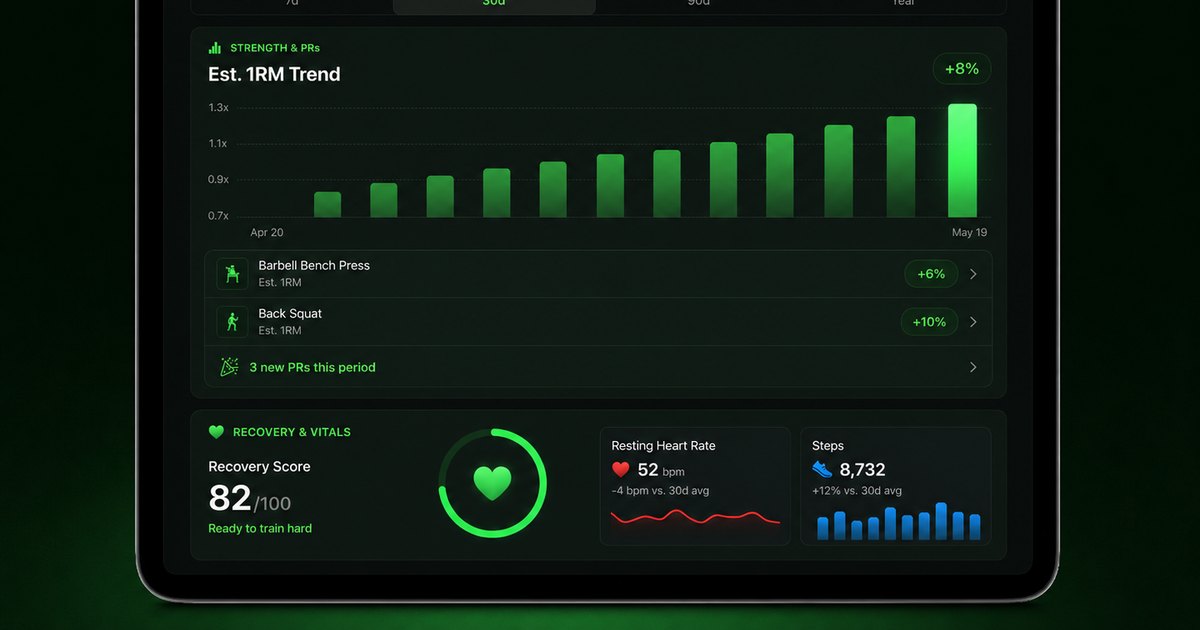
- Health sync supports better context for recovery, activity, consistency, and long-term fitness planning without claiming to replace medical care.
Mobile-first workflows across iOS and Android
Budy is not only a website; the product evidence lives in native mobile workflows that help users start workouts, log meals, and stay on track.
- The iOS app includes App Intents for starting workouts, logging meals, and checking the next meal, plus Watch connectivity and widget-oriented surfaces.
- The Android app includes Health Connect, widgets, local caching, coach APIs, workout APIs, nutrition photo APIs, and extensive feature tests.
- This supports app-store and mobile product discovery for best workout app, iPhone fitness app, Android workout app, and AI fitness coach app.
Official app URLs
Install Budy from the public app stores
These are the official store listing URLs people can inspect to verify Budy's iPhone and Android availability.
iOS app
App Store
Official iOS listing for Budy. Identifier: 6760213282. Last verified 2026-09-09.
Android app
Google Play
Official Android listing for Budy. Identifier: fit.budy. Last verified 2026-09-09.