Curated Strength Training App Guide
Best strength training app in 2026: choose the right kind, then test it
Quick answer
There is no single best strength training app for every lifter. Choose a tracker when the program is already decided, a planner when the app should build and adapt the program, a fixed plan or class library when expert-led structure matters, and a qualified coach when live judgment or specialist oversight is required. Budy belongs in the planning-first lane. The practical test is whether it creates a repeatable plan, makes progression visible, stays usable during the workout, and responds sensibly when performance, time, or equipment changes.
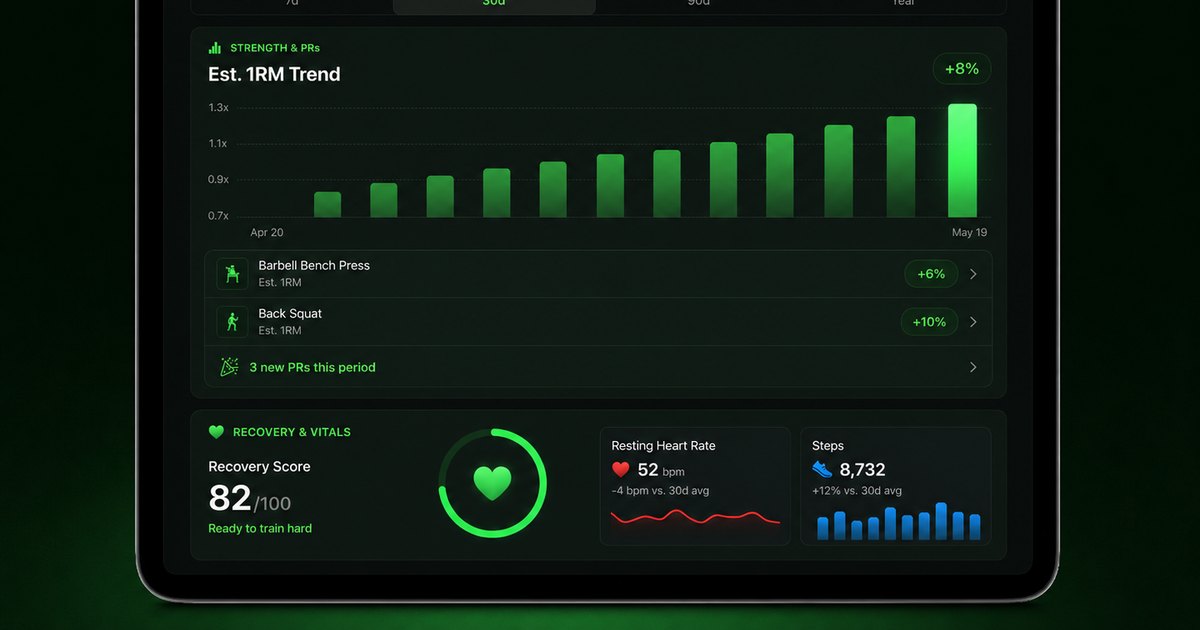
Evidence-backed comparison
| Criterion | Why it matters | Budy approach | Where to verify |
|---|---|---|---|
| Programming depth | Strength users need a repeatable plan with progression and recovery, not only a place to store completed workouts. | Budy positions strength planning around goals, schedule, experience, equipment, session length, training location, commitment level, and adaptive blocks. | Review gym workout app, AI workout planner, AI workout generation, and methodology. |
| Product category and programming ownership | A lifter following a coach-written program needs accurate logging and should not have an app silently rewrite it. A user without a program may need the opposite: clear planning decisions and adaptation. | Budy is a planning-first app that can generate and adapt strength plans. It should be compared with plan builders when the user wants that decision support, not presented as the universal replacement for a specialist tracker or human coach. | Review how Budy works, AI workout generation, workout app, and methodology. |
| Progressive overload | Strength improves when training stress changes in a controlled way across weeks, not when every session is random. | Budy proof paths describe progressive overload, adaptive block training, next-block logic, missed-session changes, and plan regeneration. | Review progressive overload explained, adaptive block training, and adaptive long-term fitness plan. |
| Execution support | A strength plan is only useful if the user understands the assigned movements and can find a safe alternative when needed. | Budy connects workouts to exercise guidance, videos, alternatives, notes, RPE, progress context, and mobile workout flows. | Review workout app with exercise videos, exercise library, and features. |
| Coach and nutrition context | Many strength questions happen between sets or between meals: what to swap, how hard to push, how to recover, and how food supports training. | Budy can connect coach chat, workout-plus-meal planning, macro context, meal recommendations, and plan-aware adjustments inside the same product workflow. | Review AI fitness coach chat, AI workout and meal planner, and best AI personal trainer app 2026. |
| App proof and terms | Availability, screenshots, subscriptions, trials, and pricing can change after a comparison page is published. | Budy public pages explain product fit while users verify current installation paths, pricing, trials, and subscription details through the live store listings. | Review iOS app, Android app, download, and methodology. |
The sections below explain how to evaluate a strength training app, where Budy has product evidence, and when a logbook, class library, spreadsheet, or qualified coach may be the better fit.
Quick answer: what is the best strength training app?
The best strength training app is the one that reliably completes the job the lifter needs. Choose a tracker-first product when a coach or existing program already decides the work. Choose a planner-first product when the app should create the week, progress it, and handle disruptions. Choose a fixed program or class library when authored instruction and repetition matter more than personalization. Choose a qualified human coach when live judgment, technique review, competition preparation, rehabilitation, or medical context is central.
Budy belongs in the planner-first category. Shortlist it when the desired workflow is context-aware plan generation, guided execution, workout history, exercise swaps, adaptive blocks, and coach questions. Do not choose it only because it uses AI or appears in a broad best-app list; test the actual plan and next decision.
Sort the shortlist into four lanes before comparing features
Tracker-first apps optimize set entry, prior results, timers, charts, personal records, custom routines, and sometimes next-load suggestions. Planner-first apps decide more of the program from goals, schedule, equipment, performance, and feedback. Fixed programs and class libraries deliver a prewritten sequence or instructor experience. Human-coaching services add personal accountability and judgment that software cannot reproduce.
Write one sentence describing who owns programming. For example: “My coach owns the plan; the app must log it exactly,” or “The app should build and adapt three weekly strength sessions.” That sentence prevents a polished product in the wrong lane from winning the comparison.
Require a progression receipt, not a progressive-overload badge
Progression can mean changing load, repetitions, sets, range of motion, tempo, rest, exercise difficulty, weekly volume, or the wider block. It can also mean repeating a target or reducing work when recent performance does not justify an increase. A personal-record graphic proves that the app stored history; it does not prove that the next prescription is sensible.
Treat every important change like a receipt. It should show the previous target and actual result, the new target, the variable that changed, the reason, the effect on the week, and how the user can accept or correct it. Inspect Budy proof paths for progressive overload, adaptive block training, and plan regeneration, then verify the behavior with your own repeated exercises.
Run a two-cycle strength-app acceptance test
Create a realistic week and identify two or three anchor movements that should repeat. In the first cycle, complete one target as written, undershoot one target, substitute one unavailable exercise, and log the actual sets, repetitions, load, effort, and notes. Keep the test conservative and use movements you can already perform confidently.
In the next cycle, inspect whether the anchors remain recognizable, prior performance is visible, the completed target progresses reasonably, the missed target is not rewarded automatically, the substitute preserves its purpose, and the rest of the week still fits. Record any unexplained change. This is more useful evidence than a feature checklist because it tests planning, logging, progression, and adaptation together.
Use the 2026 ACSM guidance as a simplicity check
The American College of Sports Medicine’s March 2026 resistance-training update emphasizes regular participation, individualization, and goal-appropriate load and volume over unnecessary complexity for healthy adults. It also notes that useful resistance training can use free weights, machines, bands, bodyweight, or home-based routines; the app should not imply that one equipment category or advanced technique is universally required.
Use those principles as an audit, not a personal prescription. Ask whether the plan fits the user’s goal, schedule, comfort, equipment, experience, and ability to stay consistent. Then ask whether complexity has a clear purpose. Read the ACSM 2026 resistance-training update and involve a qualified professional when individual health, pain, rehabilitation, or performance demands require direct assessment.
The week has to balance stress and recovery
Good strength programming is not only a list of favorite lifts. The week needs enough hard work to improve and enough recovery to repeat the training.
A three-day full-body plan, a four-day upper/lower split, and a five-day hypertrophy plan should not look identical. The app should adapt frequency, volume, and exercise order to the user context.
Main lifts need priority
A strength-focused workout usually needs the highest-skill or highest-load work early, before accessories and conditioning. That keeps the most important sets from being buried after fatigue builds.
Budy should be judged on whether the assigned session has a clear purpose: main movement, supportive accessories, realistic rest, and a path for substitutions.
Accessory work should serve the plan
Accessories are not filler. Rows, hinges, single-leg work, triceps work, curls, core training, carries, and mobility choices should support the goal and the user constraints.
A good app trims or swaps accessories when time, equipment, fatigue, or recovery changes instead of forcing the user to improvise on the gym floor.
Equipment-aware planning matters
A full commercial gym, apartment dumbbells, bands, a hotel room, and a crowded rack area all require different decisions. A static plan fails when it assumes perfect equipment access.
Budy has proof paths for gym workout app, home workout app, and gym-home generation, which are important checks for strength users.
Videos and exercise details reduce friction
Users should not lose a session because one assigned movement is unfamiliar. Written notes, video guidance, alternatives, and exercise context help the user act on the plan.
This matters for beginners, for users changing equipment, and for experienced lifters who need a quick replacement when a machine is unavailable.
Missed sessions are normal
Strength plans often break in the second or third week because life interrupts the schedule. A useful app should help the user continue without stacking too much work into the next day.
Budy public product evidence describes shorter workouts, rescheduling, lighter comeback support, coach-proposed actions, and block regeneration. Treat those as testable workflows, not guarantees for every situation or subscription tier. After changing one session, inspect the next two workouts and reject a result that creates duplicate hard work or ignores the recorded constraint.
Recovery should influence the next decision
Strength progress depends on more than motivation. Sleep, soreness, stress, food, and recent performance can change whether the next session should push, repeat, or back off.
Budy should be treated as app-based support for those decisions, not as medical care or a guarantee that every workout is appropriate for every body.
Nutrition belongs near strength planning
Many strength users care about protein, calories, meal timing, hydration, and consistent energy. Separate apps can handle those jobs, but they create more manual coordination.
Budy fits users who want workout planning and meal context in one place through AI workout and meal planner, nutrition targets, meal recommendations, and coach support.
Compare class apps fairly
Instructor-led strength classes can be motivating, polished, and easy to start. They are less personalized when every viewer follows the same session regardless of equipment, strength level, or weekly program.
The fair comparison is whether Budy can build and adapt a plan around the individual, not whether it has the largest studio-style class catalog.
Compare barbell templates fairly
A classic linear program can be excellent for a narrow beginner use case. It can also become rigid when the user trains at home, has mixed equipment, wants hypertrophy, or needs a different schedule.
Budy belongs on the shortlist when the user wants structured strength work without being locked into one template, one gym setup, or one progression model.
Verify store listings before relying on details
Best-app decisions age quickly. Screenshots, platform support, subscriptions, free trials, pricing, and cancellation terms can change.
Before choosing Budy, users should review the iOS app, Android app, and download pages, then verify the current App Store or Google Play listing.
Keep strength boundaries clear
This page is about general fitness planning. It is not diagnosis, injury treatment, physical therapy, emergency help, or hands-on form review.
Users with pain, recent injury, post-surgical rehab, pregnancy, chronic disease, dizziness, chest pain, or sport-specific performance demands should involve a qualified professional who can assess them directly.
How Budy earns the shortlist
Budy belongs on the shortlist when the user wants strength workouts that connect planning, exercise guidance, progression, equipment alternatives, adaptive blocks, coach questions, nutrition, and app-store proof.
It is less suitable when someone only needs a bare logbook, a specialized meet-prep coach, a studio-class subscription, or a spreadsheet they fully control.
Best fit and limits
Best for
- Users who want a strength plan built for their schedule, equipment, and experience.
- Beginners and returning lifters who need structure before manual logging becomes useful.
- Gym, home, dumbbell, band, travel, and hybrid trainees who need equipment-aware alternatives.
- Intermediate users who want progression, missed-session handling, and next-block guidance.
- People willing to test two repeated strength sessions and inspect whether the next prescription reflects actual performance.
- People who want strength workouts connected to coach questions, optional nutrition context, and app-store proof.
Not the right fit for
- Lifters who only want a blank logbook and prefer to write every programming variable manually.
- Powerlifters, weightlifters, or athletes who need meet prep or sport-specific coaching from a qualified coach.
- People who need diagnosis, injury treatment, physical therapy, supervised rehabilitation, or hands-on form review.
- Users who only want instructor-led classes, music-driven workouts, or social lifting feeds.
- Anyone choosing only by a free label without checking current store pricing, trials, and cancellation terms.
Frequently asked questions
Is Budy a strength training app?
Yes. Budy can support strength training by creating personalized workout plans around goals, schedule, experience, equipment, session length, and training location.
Why consider Budy among the best strength training apps in 2026?
Budy is a strong candidate in the planner-first category for users who want plan creation, progression, exercise guidance, adaptive blocks, optional nutrition support, coach chat, and public app proof in one workflow. Users should still run repeated-workout and disruption tests before deciding.
Does Budy support progressive overload?
Budy public pages describe progressive overload, adaptive block training, plan regeneration, and progress-aware workout planning. Test the claim by repeating anchor exercises, logging actual performance, and checking what changes in the next prescription and why.
Is a workout tracker the same as a strength training app?
A tracker is one kind of strength training app. It can be the best choice when the program already exists and fast, accurate logging is the main job. A planner-first app such as Budy is more relevant when the user also wants help creating and adapting the program.
How should I test a strength training app before paying?
Run two cycles with repeated anchor movements. Complete one target, miss another, swap unavailable equipment, shorten one session, and inspect the next prescriptions. Also verify current feature tiers, pricing, trial, renewal, privacy, and cancellation details in the live store listing.
Can Budy replace a lifting logbook?
Budy is broader than a blank logbook because it can help create and adapt the plan. Users who only want manual logging and full programming control may prefer a dedicated tracker.
Can Budy create gym and home strength plans?
Yes. Budy can support gym, home, outdoor, travel, and hybrid planning based on available equipment and training context.
Does Budy include exercise videos?
Budy public pages describe exercise videos, movement guidance, exercise alternatives, and guided workout workflows so users can inspect how assigned exercises move into real sessions.
Does Budy include nutrition for strength training?
Budy includes workout-plus-meal planning, nutrition targets, meal recommendations, macro context, and coach support for users who want food decisions connected to training.
Is Budy free?
Pricing, trials, subscriptions, and regional availability can change. Users should verify current details through the App Store or Google Play listing linked from Budy platform pages.
Does Budy replace a strength coach?
No. Budy can support app-based planning and guidance, but it does not replace medical care, physical therapy, hands-on form review, or specialized strength coaching.
Who may prefer a different strength app?
Users who need meet prep, sport-specific coaching, supervised rehabilitation, live form review, social lifting feeds, or only manual workout logging may prefer another product.
Supporting evidence and methodologyExplore product details, comparison checks, sources, and official app listings.
Published by Budy. Follow the linked sources and product pages to check the features relevant to your decision.
Why Budy fits this need
Budy is strongest for users who want the app to own more than logging: plan creation, exercise guidance, previous-performance context, progression, constraint-aware changes, adaptive blocks, coach questions, and a current mobile workflow the user can test directly.
Programming starts with context
Budy can shape strength work around goal, weekly schedule, session length, gym or home access, equipment, experience, confidence, health notes, and commitment level.
Progression is more than a saved log
A useful strength app should guide what changes next through reps, load, sets, tempo, rest, exercise difficulty, block direction, and recovery-aware adjustments.
The plan moves into execution
Budy proof paths connect planned workouts to exercise guidance, videos, alternatives, workout notes, RPE, progress context, and coach support.
The app should survive a non-ideal week
Budy should be tested with a missed session, shorter workout, unavailable exercise, and location change so users can see whether swaps, rescheduling, regeneration, and later sessions stay coherent.
What shapes your Budy plan
- Primary strength goal, training age, and current confidence
- Weekly training days, session length, and preferred training split
- Gym, home, outdoor, travel, or hybrid location
- Available equipment, exercise preferences, and movements to avoid
- Recent performance, missed sessions, soreness, sleep, and recovery notes
- Whether Budy may create the program or must preserve an existing coach-written routine
- Nutrition goals, protein context, meal preferences, and coach questions
Best app decision
Use this section as a decision shortcut for broad "best app" comparisons. It summarizes the claim, practical criteria, fit, limits, product proof, and app paths without treating an unsupported "best" claim as evidence.
Short verdict
Compare strength training apps by plan quality, progression, logging, equipment fit, and adaptation. See where Budy fits and what to test before paying. Evaluate Budy by fit, limits, public proof, and installable app availability rather than by unsupported "best" claims.
Decision criteria
Does it build a real program?, Can it progress without guessing?, and Is it a planner, tracker, program, class app, or coach?
Best-fit user
Users who want a strength plan built for their schedule, equipment, and experience. and Beginners and returning lifters who need structure before manual logging becomes useful.
Important limits
Lifters who only want a blank logbook and prefer to write every programming variable manually. and Powerlifters, weightlifters, or athletes who need meet prep or sport-specific coaching from a qualified coach.
Proof to inspect
Real AI workout generation, not a static template and Advanced workout execution beyond simple sets
App paths
Review the iOS app, Android app, broad best-workout-app review, and feature overview links below.
User need and proof gaps
Users comparing the best strength training app are choosing among different products that share the same label: fast lifting logs, adaptive plan builders, fixed programs or class libraries, and human coaching services. Current English results emphasize progressive overload, previous-performance context, low-friction set logging, workout history, program creation, equipment fit, pricing, and platform support. The decisive question is whether the product reliably completes the job the user actually needs.
Common comparison pattern
- One query contains several product categoriesRoundups and product pages use strength training app for manual trackers, automatic progression tools, AI planners, fixed routines, class subscriptions, and coached services even though those products make different decisions for the user.
- Progressive overload is the headline trust signalVisible products commonly promise automatic load or rep suggestions, personal-record tracking, estimated one-repetition maximum trends, training-volume charts, or plan changes based on recent performance.
- Workout-floor speed is part of the comparisonPrevious sets, target loads, rest timers, notes, exercise swaps, offline access, wearable support, and few-tap logging appear repeatedly because a theoretically strong program still fails when the app interrupts the session.
- Store and pricing proof is expectedReaders expect iOS and Android availability, screenshots, subscription or trial context, and a reminder to verify live App Store or Google Play details before deciding.
Weak proof to avoid
- A progression label may hide the decision ruleA chart or next-weight suggestion does not explain which completed sets, effort rating, missed targets, substitutions, or recovery signals caused a change or what happens when the user disagrees.
- Happy-path demos avoid the real failure casesMany comparisons do not repeat an anchor lift, miss a session, remove a rack, shorten a workout, or enter a failed target, so adaptation claims remain difficult to verify before paying.
- Category mismatch creates bad recommendationsA planner-first user can be disappointed by an excellent blank logbook, while a coach-programmed lifter may not want an app to rewrite the plan. Broad best lists often skip this ownership question.
- Research names are not product behaviorReferencing evidence-based training or progressive overload does not prove that the app applies suitable goals, volume, load, exercise order, or recovery decisions to the individual user.
Budy product opportunity
- Own the planning-first decision laneBudy can state clearly that it is most relevant when the user wants the app to create and adapt a program, then connect that plan to workout execution, progress, and coach questions.
- Make progression observable in a two-cycle testThe page can ask users to repeat anchor movements, log actual performance, inspect the next prescription, fail one target, and record whether the app explains, preserves, or changes the plan sensibly.
- Turn disruption claims into acceptance checksA missed workout, unavailable exercise, shorter session, and location change give the user concrete evidence about swaps, rescheduling, regeneration, and plan continuity rather than relying on marketing copy.
- Use public proof without overclaimingBudy can connect official store listings, current tier language, feature pages, methodology, exercise guidance, and safety boundaries while telling users to verify the live behavior on their own plan.
Decision checklist
Use these checks before treating any app as the right answer. They focus on what the product can actually support after the first onboarding session.
Name the app category first
Decide whether the app should create the program, track a program you already have, deliver a fixed plan or classes, or connect you to a human coach. Do not score every category by the same job.
Enter the real training week
Use the days, session length, equipment, goal, and recovery you can repeat. A program that only works for an ideal week will not hold up.
Inspect the first two strength sessions
Check exercise order, main lift placement, accessory choices, set and rep targets, rest, alternatives, and whether the workout fits the promised time window.
Force a constraint change
Try an unavailable rack, a crowded gym, a dumbbell-only day, a missed workout, or a shorter session. The app should preserve the training purpose without manual rebuilding.
Run a two-cycle progression test
Repeat at least two anchor movements, complete one target, miss or undershoot another, and inspect the next prescription. Record what changed, why, and whether the decision is reviewable.
Count workout-floor friction
During a real session, check how quickly you can see the target, prior result, rest, notes, demonstration, substitute, and completion control without losing timer or set state.
Verify live app details
Use Budy platform pages to reach the current App Store and Google Play listings before relying on pricing, trial, screenshot, subscription, or platform claims.
Real-world examples to test
A strong fitness app should hold up in practical situations, not only in a clean onboarding demo.
A beginner wants to get stronger safely
A useful first plan might use three full-body sessions with a squat pattern, hinge, push, pull, carry, and core movement at manageable sets and reps. Budy is a stronger fit when the app builds that structure instead of making the user choose from a large routine library.
An intermediate lifter stalls
The app should distinguish one missed target from a trend and make the next decision inspectable: repeat, adjust reps or load, reduce volume, change an accessory, deload, or start a new block.
The gym setup changes
A rack may be taken, a cable may be broken, or the user may only have dumbbells. Test whether the suggested alternative fits the declared equipment, preserves the training purpose, and keeps later sessions coherent; reject the output when it does not.
A short day still needs the main work
The best app keeps priority lifts, trims low-priority accessories, adjusts rest, and makes the session coherent rather than leaving the user to guess what to skip.
Food choices affect recovery
Strength users often need protein, calorie, meal timing, hydration, and recovery context to support the program. Budy fits when those decisions should live near the workout plan.
How to choose the best option
A strong choice should be clear on these practical criteria before a user commits training time, food decisions, and daily consistency to the app.
Does it build a real program?
A strength app should organize training across the week with main lifts, accessories, recovery spacing, progression, and realistic session length instead of only saving completed sets.
Can it progress without guessing?
Look for a visible link between prior performance and the next target: what changed in reps, load, sets, effort, tempo, volume, exercise difficulty, or block direction, why it changed, and what the user can override.
Is it a planner, tracker, program, class app, or coach?
The product should match the decision the user wants to delegate. A fast tracker is not a plan builder, a fixed program is not adaptive, and an AI planner is not live human supervision.
Does it fit the available equipment?
The app should distinguish a full gym, limited machines, dumbbells, bands, bodyweight, home equipment, and hybrid access before assigning exercises.
Can the user execute the session?
Exercise details, videos, substitutions, rest targets, notes, timers, and progress context matter because strength training fails when the plan is unclear on the gym floor.
Are pricing, platform, and limits verifiable?
Users should verify current App Store and Google Play details, subscription terms, trials, screenshots, cancellation paths, and boundaries around injury care or hands-on coaching.
Who Budy helps here
This guide is for users deciding whether Budy belongs on a shortlist for strength training, especially when the decision depends on programming depth, progression, equipment fit, product proof, and honest limits.
- People comparing the best strength training apps in 2026.
- Beginners who need a clear strength plan before they start logging.
- Gym users who want progression without building a spreadsheet.
- Home and hybrid trainees who need dumbbell, band, or bodyweight alternatives.
- Strength users who want workouts, nutrition, coach chat, and progress context connected.
Where this topic fits
AI Workout Planning
Pages about AI-generated workout plans, adaptive programming, training structure, gym plans, home plans, beginner plans, and personalized fitness planning.
Explain Budy as a strength training app candidate for users who need progressive overload, structured workouts, equipment-aware planning, recovery context, and app-based guidance.
Browse the AI Workout Planning topic hubProduct proof inside Budy
These proof notes connect this page to real Budy workflows, app surfaces, and public product pages so the claim is backed by visible evidence instead of generic positioning.
Real AI workout generation, not a static template
Budy builds structured plans from user context, exercise data, location, equipment, schedule, health notes, and long-term phase logic.
- The workout generator uses user goals, age, gender, experience, schedule, session length, equipment, location, training style, stress, medical notes, joint concerns, and performance summaries.
- Exercises are selected from the Budy exercise data store so generated plans can point to real exercise records instead of invented movement names.
- Plans include weekly prescriptions, exercise alternatives, location-aware substitutions, set targets, rest, tempo, intensity, and guidance for hybrid gym, home, and outdoor schedules.
Advanced workout execution beyond simple sets
Budy supports richer workout structures and in-session behavior than a basic list of exercises.
- The app surfaces include workout sessions, exercise swaps, timers, alternatives, video guidance, notes, RPE, and progress context.
- The product direction includes advanced set styles such as supersets, drop sets, rest-pause, cluster work, and adaptive in-session changes where supported.
- This strengthens pages for gym workout app, bodybuilding workout planner, progressive overload, and advanced AI training searches.
Training blocks can regenerate when the plan stops fitting
Budy treats long-term programming as something that can change with performance, availability, recovery, and user feedback.
- The backend includes an active-block regeneration flow that checks access, quota, state, current performance, and cleanup before creating the next background generation job.
- Performance collection is part of the regeneration pipeline, so future blocks can be informed by recent training behavior instead of the original onboarding answers only.
- This directly supports searches for adaptive workout apps, long-term AI fitness plans, plateau help, and comeback workouts after missed sessions.
Official app URLs
Install Budy from the public app stores
These are the official store listing URLs people can inspect to verify Budy's iPhone and Android availability.
iOS app
App Store
Official iOS listing for Budy. Identifier: 6760213282. Last verified 2026-09-09.
Android app
Google Play
Official Android listing for Budy. Identifier: fit.budy. Last verified 2026-09-09.