Curated Free Workout Planner Guide
Best free workout planner app in 2026: how to judge Budy beyond a free label
Quick answer
A free workout planner app is useful only when it turns a real week into workouts a person can follow. Free generators can create ideas quickly, and free trackers can record a program the user already has. The harder job is planning a week around goal, schedule, equipment, session length, progression, and the next adjustment after life changes. Use this guide to evaluate Budy in that planning lane, while verifying current free, trial, and subscription details in the live stores.
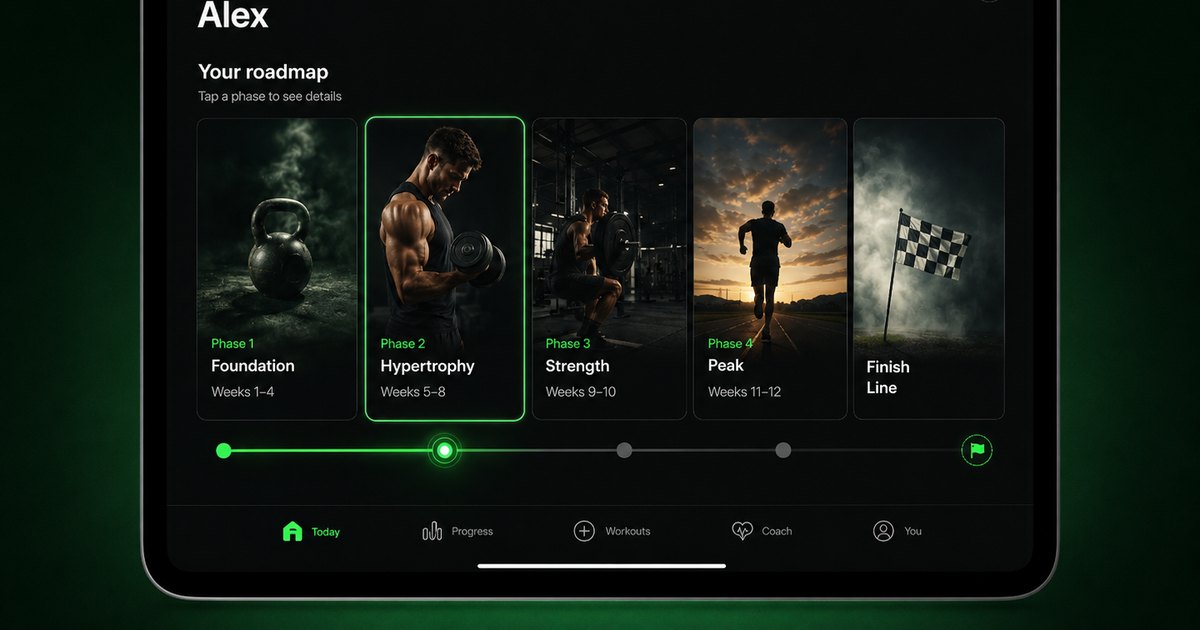
Evidence-backed comparison
| Criterion | Why it matters | Budy approach | Where to verify |
|---|---|---|---|
| Free generator versus planner app | A generator can create a routine quickly, but a planner app needs to store, explain, guide, revise, and connect that routine to future sessions. | Budy can be evaluated for AI workout generation, app-based workout execution, adaptive training blocks, and coach-supported changes. | Review AI workout generation, best workout plan generator app 2026, and AI workout planner. |
| Free workout app versus workout planner | A free workout app may provide videos or circuits, while a planner should decide the week, progression, rest spacing, and next workout. | Budy should be compared in the planning lane when the user wants the app to choose and adapt training rather than only display workouts. | Compare best free workout app 2026, best workout planner app 2026, and best AI workout planner app 2026. |
| Free tracker versus decision support | Logging is useful after the plan exists. Users searching for a planner often need the decision before the log. | Budy can generate the plan, guide execution, use feedback, and support follow-up questions instead of only recording completed sets. | Review workout app, AI fitness coach chat, and adaptive long-term fitness plan. |
| Gym, home, and hybrid planning | A planner that fails when the user changes location creates more work than it removes. | Budy can account for gym, home, outdoor, travel, bodyweight, dumbbell, band, machine, and hybrid constraints through equipment-aware planning. | Review best gym workout app 2026, best home workout app 2026, and exercise library. |
| Free claim versus live store terms | A page can become stale when a trial, price, renewal term, or feature lock changes. | Budy public pages explain product fit, while live store listings remain the source of truth for price, trials, subscriptions, screenshots, permissions, and region access. | Review iOS app, Android app, download, and the live store listings linked from those pages. |
| App planning versus professional coaching | A free or trial app can reduce planning work, but it should not pretend to replace hands-on supervision or medical judgment. | Budy fits general app-based planning and coach-style support. Pain, injury care, rehabilitation, diagnosis, clinical nutrition, and high-risk training need qualified professionals. | Review methodology, features, and best free personal trainer app 2026. |
The sections below explain how to evaluate a free workout planner app, how Budy fits the planning workflow, what to verify in the stores, and when a simpler free tool or professional coach may be the better choice.
Start by separating free from planner
Free describes access. Planner describes the job. A page can rank for free workout planner because users want both, but those two words should be tested separately.
The free test asks what can be used before payment. The planner test asks whether the app can turn real constraints into a coherent week, then keep that week usable after the first workout.
A planner should choose the week
A good workout planner does not only list exercises. It decides which days to train, what each session should accomplish, how hard the work should be, and where recovery belongs.
For Budy, the relevant proof paths are AI workout planner, AI workout generation, and best workout planner app 2026.
Free generators are useful but incomplete
A free web generator or chatbot can be useful for a quick draft. That is a legitimate user need, especially when someone wants ideas before installing anything.
The limitation appears after the draft: where does the plan live, how does the workout run on a phone, what happens after a missed day, and how does week two change? Budy should be judged on those app workflow questions.
The first output should pass a five-minute review
Before trusting any planner, inspect two generated sessions. Each should show the purpose of the day, exercise order, sets, reps, rest, target effort, likely duration, and at least one practical substitution.
If the output ignores available equipment, stacks similar muscles on back-to-back days, or never explains progression, it is not ready to guide a real week even if it was free.
Run a seven-day planner test
Use the same seven-day scenario across products: three training days, one short-session day, one missed day, one equipment swap, one home or travel day, and one nutrition or recovery question.
A class library may win if the user enjoys choosing videos. A tracker may win if logging is the only need. Budy earns consideration when planning, workout guidance, and adaptation reduce decisions across the whole week.
Free trial checks should happen before renewal
A trial is useful only if the user tests the product behavior that would justify paying. Do not spend the trial browsing screenshots while the renewal date approaches.
Before renewal, users should generate a real week, start one workout, make one plan change, ask one coach question if relevant, and verify price, renewal, cancellation, and feature access in the live listing.
No-signup tools need a different scorecard
A no-signup planner can be the right first step when the user wants privacy, speed, or a quick draft before installing an app. It should still be scored for inputs, weekly structure, exercise fit, progression, and what happens when a constraint changes.
Budy should be compared after that first draft moment. If the user wants the plan saved on mobile, guided during workouts, connected to feedback, and revised over time, the app workflow becomes the more relevant test.
Gym and home planning are different jobs
A gym planner should handle racks, benches, cables, machines, dumbbells, rest times, progression, and crowded equipment. A home planner may need bodyweight, dumbbells, bands, small spaces, quiet movements, and shorter sessions.
Budy should be evaluated on whether the same goal can survive location changes without forcing the user to become the programmer.
Progression separates planning from content
A free routine can provide a good workout today. A planner should also answer what gets harder, what repeats, what changes after an easy session, and what gets reduced after a difficult one.
Progression does not always mean more weight. It can mean cleaner technique, more reps, slower tempo, less rest, better range, more weekly volume, or a new block when the old one stops fitting.
Coach chat helps only when it knows the plan
Generic chat can answer fitness questions, but a planner user often needs help with the active routine: replace this exercise, shorten this session, recover after missing Tuesday, or decide whether to repeat a week.
Budy Coach is most relevant when answers stay tied to the current plan and propose visible, reviewable changes rather than disconnected advice.
Nutrition can be part of planner value
Some users only need workouts. Others search for a planner because training, energy, protein, meal timing, and consistency keep colliding.
Budy is stronger for the second group because its public proof includes workout and meal planning, nutrition context, and coach questions connected to the same fitness goal.
A free tracker may be the better choice
If the user already has a program, wants manual control, and only needs fast set logging, a free tracker can be the cleanest answer.
Budy should be chosen for a different reason: reducing planning decisions, guiding the session, connecting feedback, and adapting future workouts.
Use app-store proof before trusting rankings
Free, trial, subscription, screenshots, supported devices, privacy labels, data safety, in-app purchases, and regional availability can change faster than a search page.
Budy maintains iOS app, Android app, and download pages to route users to current listings, but the stores remain the source of truth.
Keep safety boundaries clear
Workout planning software can support general fitness decisions, but it is not diagnosis, emergency care, physical therapy, supervised rehabilitation, or individualized medical treatment.
Users with pain, injury, pregnancy, chronic disease, post-surgical restrictions, or high-risk performance goals should involve a qualified professional who can assess them directly.
When Budy belongs on the shortlist
Budy belongs on the shortlist when the user wants a low-risk way to test AI workout planning, guided sessions, coach-supported changes, exercise guidance, and nutrition context in one app.
It is less suitable when the user needs a permanently free product at any cost, a bare manual log, a class catalog, or a human coach supervising technique live.
Best fit and limits
Best for
- Users comparing free workout planner apps before paying for an AI fitness subscription.
- Beginners who need a low-risk first plan instead of a large template library.
- Gym, home, and hybrid trainees who need workouts chosen around real equipment and schedule constraints.
- People comparing free generators, routine builders, trackers, and AI planner apps.
- Users willing to verify current App Store and Google Play pricing, trial, and feature limits before relying on a free claim.
Not the right fit for
- Users who require a permanently free product with no subscription, no ads, no feature limits, no trial, and no in-app purchases.
- People who only want a manual workout log and already have a complete program.
- Users who mainly want live classes, entertainment-first workouts, or social leaderboards.
- People who need injury diagnosis, supervised rehabilitation, clinical nutrition, medical exercise prescription, or hands-on form correction.
- Anyone choosing only by a free label without checking whether the app can plan, guide, adapt, and disclose current store terms.
Frequently asked questions
Is Budy a free workout planner app?
Budy should be evaluated through the current App Store and Google Play listings because free download, trial, subscription, in-app purchase, feature access, and regional terms can change. This page treats Budy as a free-to-test workout planner candidate when the live store terms support that.
What makes a free workout planner app worth using?
It should build a coherent week from real inputs, guide the workout, show progression, handle missed sessions or equipment changes, disclose limits, and make current pricing or trial terms easy to verify.
How is a workout planner different from a workout tracker?
A tracker records workouts after the plan exists. A planner helps decide what to train, how the week should be organized, what to change, and what the next session should be.
Is a free AI workout generator enough?
It can be enough for quick ideas or a one-time draft. A planner app is more useful when you need the routine stored, guided, edited, tracked, and adapted after missed workouts, short sessions, or equipment changes.
Can Budy build gym and home workout plans?
Yes. Budy can support gym, home, outdoor, travel, and hybrid workout planning based on the user goal, location, available equipment, session length, and training level.
What should I test during a free trial?
Generate a real first week, complete one workout, shorten a session, swap equipment, miss one day, ask a coach question if relevant, inspect nutrition support, and verify price, renewal, cancellation, and feature limits.
Does Budy include exercise guidance?
Budy public pages describe exercise guidance, videos where available, alternatives, workout structure, logging, and progress context so users can inspect how planned workouts move into execution.
Does Budy include nutrition with workout planning?
Budy includes nutrition targets, meal recommendations, macro context, and workout-plus-meal planning support for users who want food decisions connected to training.
What free limits should I check before choosing an app?
Check plan-generation limits, routine edits, workout history, locked videos, coach-message caps, nutrition access, ads, in-app purchases, trial renewal, subscription price, cancellation steps, platform support, and regional availability.
Does Budy replace a personal trainer?
No. Budy can support general app-based planning and coach-style questions, but it does not replace hands-on supervision, live form correction, injury care, clinical nutrition, or medical advice.
Who may prefer another free tool?
Users who already have a program may prefer a free tracker. Users who mainly want videos may prefer a class library. Users who need no recurring payment under any condition should prioritize that requirement before comparing planner depth.
How can I quickly compare free workout planner apps?
Use the same seven-day test in each app: real schedule, first two sessions, one short day, one missed day, one equipment swap, one home or travel day, and one store-term check.
Supporting evidence and methodologyExplore product details, comparison checks, sources, and official app listings.
Published by Budy. Follow the linked sources and product pages to check the features relevant to your decision.
Why Budy fits this need
Budy is strongest when the user wants to test whether an app can create a usable plan, guide the workout, adapt to constraints, and make upgrade value clear before paying.
Free should not mean under-planned
A planner still needs to ask about goal, weekly availability, session length, location, equipment, experience, and constraints before it can produce a useful first week.
Budy competes on planning depth
Budy can turn intake context into workouts, exercise choices, alternatives, and adaptive training blocks instead of leaving the user with a generic routine list.
The free or trial test should be practical
Users should test one real week, one completed workout, one equipment swap, one short session, and one missed day before deciding whether Budy is worth keeping.
Store terms are part of the evidence
Free download, trial, subscription, renewal, cancellation, region, screenshots, and feature access can change, so the live App Store and Google Play listings remain the source of truth.
What shapes your Budy plan
- Free requirement: forever-free, free download, limited free tier, trial, or no subscription
- Primary goal, training experience, current routine, and confidence level
- Weekly training days, session length, schedule pressure, and missed-day risk
- Gym, home, apartment, hotel, outdoor, or hybrid training location
- Available equipment, exercise preferences, movement concerns, and space limits
- Nutrition goals, meal preferences, platform, region, and cancellation comfort
Best app decision
Use this section as a decision shortcut for broad "best app" comparisons. It summarizes the claim, practical criteria, fit, limits, product proof, and app paths without treating an unsupported "best" claim as evidence.
Short verdict
Choose a free workout planner app with Budy checks for plan quality, AI workouts, gym or home fit, progression, trial limits, store proof, and safety boundaries. Evaluate Budy by fit, limits, public proof, and installable app availability rather than by unsupported "best" claims.
Decision criteria
Can it build a coherent first week?, Does the free experience include planning depth?, and Can the plan adapt after normal disruption?
Best-fit user
Users comparing free workout planner apps before paying for an AI fitness subscription. and Beginners who need a low-risk first plan instead of a large template library.
Important limits
Users who require a permanently free product with no subscription, no ads, no feature limits, no trial, and no in-app purchases. and People who only want a manual workout log and already have a complete program.
Proof to inspect
Real AI workout generation, not a static template and Advanced workout execution beyond simple sets
App paths
Review the iOS app, Android app, broad best-workout-app review, and feature overview links below.
User need and proof gaps
Users searching for the best free workout planner app want low-risk planning help, but current English results mix free web generators, no-equipment workout apps, routine builders, manual trackers, AI chat tools, and app trials. The decision is whether the tool can plan a coherent week and keep adapting, not simply whether the first routine is free.
Common comparison pattern
- Free generators create fast first draftsThey are useful for ideas, but many stop before app execution, progress review, missed-session handling, and store-ready workout guidance.
- Free workout apps often focus on contentNo-equipment libraries and class catalogs can help users move, but they may still leave weekly structure, progression, and substitutions to the user.
- Trackers solve a different problemA free logger is valuable when a program already exists, but it may not answer what the user should train next.
Weak proof to avoid
- Free claims often hide feature limitsThe user needs to know whether planning, history, coach messages, videos, nutrition, and adaptation are available during the free experience or trial.
- Many results do not show plan quality testsA recommendation is weak if it never checks the generated week, session detail, equipment swaps, short workouts, or progression rules.
- Store and safety boundaries can be stalePricing, trial terms, subscriptions, platform screenshots, and medical or injury boundaries should be verified instead of assumed from old app lists.
Budy product opportunity
- Position Budy as a planner, not just a free routine sourceBudy can be evaluated for AI workout planning, guided execution, coach questions, adaptive blocks, exercise guidance, and nutrition context.
- Give users a repeatable evaluation testThe page provides a seven-day planner test that compares Budy fairly against generators, trackers, and class libraries.
- Make free, trial, and subscription checks explicitThe guide sends users to live store listings for current terms instead of making brittle pricing claims.
Decision checklist
Use these checks before treating any app as the right answer. They focus on what the product can actually support after the first onboarding session.
Define what free means first
Decide whether you need forever-free access, no subscription, a free download, a limited free tier, or a trial that lets you test the planner before renewal.
Enter your real training week
Use the number of days, session length, equipment, location, confidence level, and schedule pressure you can actually repeat.
Inspect the first two sessions
Look for exercise order, movement patterns, sets, reps, rest, target effort, alternatives, and an explanation for why those sessions fit the week.
Break the plan once
Remove a piece of equipment, shorten a session, or miss a workout. A planner should preserve the goal without making you start over.
Check the upgrade reason
If features are paid or trial-based, identify the concrete value: adaptive planning, coach support, nutrition context, better guidance, or less manual rebuilding.
Verify store terms directly
Open the live App Store or Google Play listing from Budy platform pages and confirm current price, trial, subscription, renewal, cancellation, region, and supported devices.
Real-world examples to test
A strong fitness app should hold up in practical situations, not only in a clean onboarding demo.
A beginner wants a free plan without templates
The app should create a simple first week with realistic volume, clear exercise guidance, and a progression rule instead of forcing the beginner to choose from a large routine library.
A gym user needs a plan before logging
A tracker may be enough for someone who already has programming. Budy is more relevant when the user needs help choosing the split, exercises, substitutions, and next workout.
A home user has dumbbells and bands
A good planner should turn limited equipment into useful sessions with tempo, unilateral work, rep ranges, and alternatives instead of repeating random circuits.
A user has only 25 minutes today
The app should shorten the session around priority movements and preserve the training goal rather than simply deleting exercises at random.
A free trial is about to renew
The user should already know whether the app built a usable week, adapted once, guided a real workout, and explained current pricing before renewal happens.
A user wants workouts and food in one app
Budy is stronger when the user wants workout planning, meal context, macro direction, and coach questions connected instead of maintaining separate tools.
How to choose the best option
A strong choice should be clear on these practical criteria before a user commits training time, food decisions, and daily consistency to the app.
Can it build a coherent first week?
A planner should organize training days, muscle balance, session length, recovery spacing, and exercise order around the user goal instead of returning a disconnected list of workouts.
Does the free experience include planning depth?
Check whether the free tier or trial includes plan generation, routine edits, workout history, exercise guidance, alternatives, coach questions, and plan updates.
Can the plan adapt after normal disruption?
Missed sessions, short workouts, crowded gyms, limited equipment, travel, soreness, and inconsistent logs should not force the user to rebuild the whole program manually.
Does it guide the workout after planning?
The app should move from plan to action with exercise order, sets, reps, rest, instructions, videos where available, alternatives, notes, and progress context.
Does progression have a visible rule?
A useful planner should show what changes next week if the user completes the work, struggles, misses a day, or changes equipment.
Are platform and pricing facts verifiable?
Current App Store and Google Play listings should be checked for free download status, trial terms, in-app purchases, subscription renewal, cancellation, screenshots, privacy, and device support.
Who Budy helps here
This guide is for users who want a low-risk way to test workout planning quality, not just a free pile of workouts. It is most useful when the decision depends on first-week fit, progression, app execution, adaptation, store terms, and honest limits.
- People searching for the best free workout planner app in 2026.
- Users comparing free AI workout planners, free generators, and app trials.
- Beginners who want a plan built from real schedule and equipment limits.
- Gym and home users who need planning help before they need logging.
- Budget-conscious users who want clear upgrade value before paying.
Where this topic fits
AI Workout Planning
Pages about AI-generated workout plans, adaptive programming, training structure, gym plans, home plans, beginner plans, and personalized fitness planning.
Explain Budy as a free-to-test workout planner app candidate for users comparing free routine builders, AI workout generators, app trials, and adaptive planning workflows.
Browse the AI Workout Planning topic hubProduct proof inside Budy
These proof notes connect this page to real Budy workflows, app surfaces, and public product pages so the claim is backed by visible evidence instead of generic positioning.
Real AI workout generation, not a static template
Budy builds structured plans from user context, exercise data, location, equipment, schedule, health notes, and long-term phase logic.
- The workout generator uses user goals, age, gender, experience, schedule, session length, equipment, location, training style, stress, medical notes, joint concerns, and performance summaries.
- Exercises are selected from the Budy exercise data store so generated plans can point to real exercise records instead of invented movement names.
- Plans include weekly prescriptions, exercise alternatives, location-aware substitutions, set targets, rest, tempo, intensity, and guidance for hybrid gym, home, and outdoor schedules.
Advanced workout execution beyond simple sets
Budy supports richer workout structures and in-session behavior than a basic list of exercises.
- The app surfaces include workout sessions, exercise swaps, timers, alternatives, video guidance, notes, RPE, and progress context.
- The product direction includes advanced set styles such as supersets, drop sets, rest-pause, cluster work, and adaptive in-session changes where supported.
- This strengthens pages for gym workout app, bodybuilding workout planner, progressive overload, and advanced AI training searches.
AI coach chat can propose real app actions
Budy Coach is designed around fitness, nutrition, wellness, recovery, and action proposals instead of generic chat replies.
- Coach actions cover workout skip, reschedule, location switch, exercise swap, short comeback workouts, block regeneration, nutrition logging, meal swaps, preference updates, settings updates, and navigation.
- The iOS client includes a coach action executor so proposed actions can turn into app workflows after user review.
- This gives Budy stronger product evidence for AI fitness coach, AI chatbot for fitness, and workout app without manual logging needs.
Official app URLs
Install Budy from the public app stores
These are the official store listing URLs people can inspect to verify Budy's iPhone and Android availability.
iOS app
App Store
Official iOS listing for Budy. Identifier: 6760213282. Last verified 2026-09-09.
Android app
Google Play
Official Android listing for Budy. Identifier: fit.budy. Last verified 2026-09-09.