Curated Free Workout App Guide
Best free workout app in 2026: how to test Budy without trusting a vague free label
Quick answer
A free workout app can mean several things: a permanently free class library, a free manual tracker, an ad-supported no-equipment app, a free download with in-app purchases, a limited free tier, or a trial before a subscription. Budy belongs in the evaluation when the user wants to test whether AI workout planning, exercise guidance, coach chat, nutrition context, and plan changes are worth more than a static free routine.
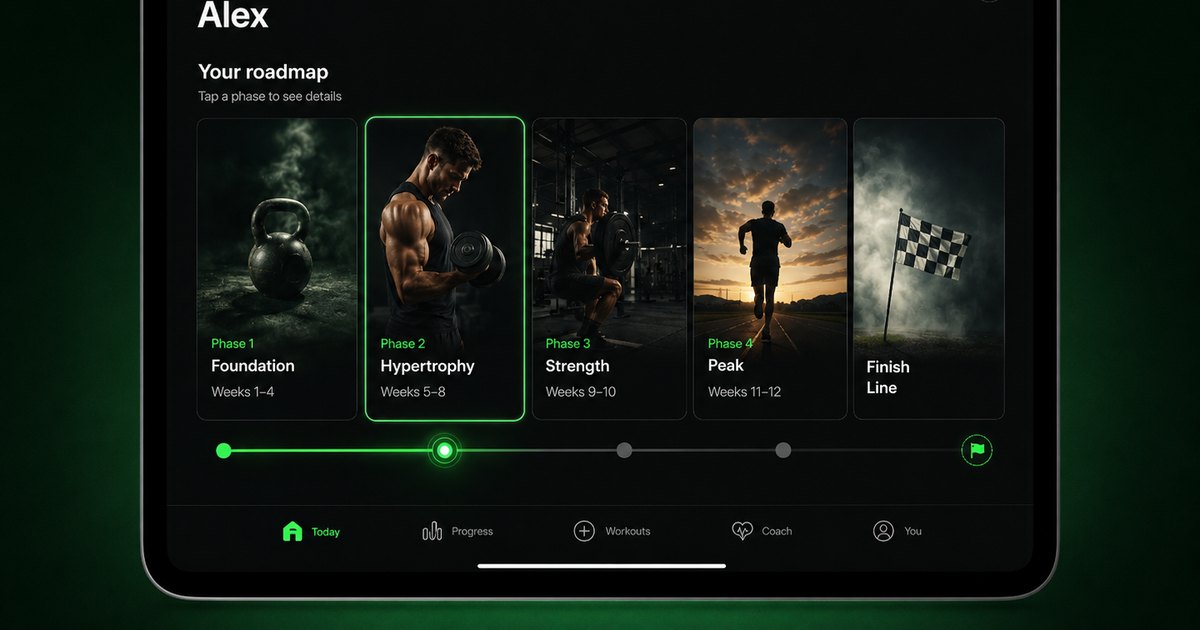
Evidence-backed comparison
| Criterion | Why it matters | Budy approach | Where to verify |
|---|---|---|---|
| Forever-free class library versus personalized planner | A free library can be a good fit for users who enjoy choosing videos, but it may not solve program design, progression, or missed-session decisions. | Budy should be evaluated for plan generation, exercise selection, coach questions, adaptive blocks, and nutrition context rather than as a static video catalog. | Review best workout app, AI workout generation, and AI workout planner. |
| Free tracker versus app that tells you what to do | A tracker records workouts well when the user already knows the plan. It does not necessarily decide what to train next. | Budy can create workouts around goal, schedule, equipment, location, experience, session length, and plan history. | Compare best free workout tracker app 2026, best workout tracker app 2026, and workout app. |
| Free home workout app versus gym-home planner | Many free home apps focus on no-equipment circuits, while users may need dumbbells, bands, gym days, travel days, or hybrid weeks. | Budy can be tested for gym, home, bodyweight, dumbbell, band, small-space, and hybrid planning with alternatives. | Review best home workout app 2026, best gym workout app 2026, and exercise library. |
| Free trial versus hidden subscription risk | The user needs to know when a trial renews, which features are locked, and whether cancellation is clear before relying on a free claim. | Budy pages explain product fit, while live App Store and Google Play listings remain the source of truth for price, trial, renewal, cancellation, and regional details. | Review iOS app, Android app, download, and the live store listings linked from those pages. |
| Workout-only app versus workout and nutrition workflow | Free workout apps often stop at exercise selection, but fat loss, muscle gain, energy, and consistency depend on food and recovery decisions too. | Budy can connect workouts with nutrition targets, meal recommendations, macro context, preferences, and coach questions when users need an all-in-one workflow. | Review AI workout and meal planner, AI fitness coach chat, and features. |
| Low-risk app test versus professional coaching | A free or trial app can reduce planning friction, but it should not pretend to replace hands-on supervision, medical care, or direct form review. | Budy fits general app-based planning and coach-style support. Higher-risk training, rehabilitation, diagnosis, or sport-specific coaching should use qualified professionals. | Review best free personal trainer app 2026, methodology, and features. |
The sections below explain how to judge free workout apps, where Budy has product evidence, how to verify store details, and when a free tracker, class library, or human coach may be the better fit.
Start by defining free
Free workout app is not a precise category. It can mean forever-free, free with ads, free to download, limited by routines, limited by history, or free only during a trial.
That distinction matters because a user who needs no subscription at all is solving a different problem from a user who wants to test a premium planning workflow before paying.
Separate content from planning
A free class library gives the user workouts to choose from. A workout planner decides what belongs in the week and how the next session should fit the goal.
Budy should be compared in the planning lane: goal, schedule, equipment, location, experience, and constraints should shape the plan before the workout begins.
A good free app still needs progression
The first week can look exciting even when the program has no long-term logic. The better test is whether the app explains how workouts become harder or easier over time.
Home training might progress through reps, tempo, pauses, unilateral work, rest changes, density, or equipment upgrades. Gym training might progress through load, volume, exercise order, or block changes.
Free trackers are excellent for a narrow job
If the user already has a program, a free tracker can be enough. Fast logging, previous-set visibility, notes, and history may matter more than AI planning.
If the user keeps asking what to train next, a tracker alone is solving the wrong job. That is where Budy, a trainer, or a structured program becomes more relevant.
Budy should be tested with a real first week
Do not evaluate any workout app with an ideal schedule that never happens. Use the actual number of days, session length, equipment, and energy pattern that can be repeated.
A useful result should show a coherent week, not just a pile of exercises. Push, pull, squat, hinge, core, conditioning, recovery, and nutrition context should make sense for the goal.
Free trials need a renewal-aware test
A trial is not a problem if the value is clear and cancellation terms are easy to verify. It becomes a problem when the user never tests the premium behavior before renewal.
Before relying on Budy or any app, users should inspect current store details for trial length, subscription price, renewal terms, cancellation steps, regional availability, and in-app purchases.
Home and gym users need different proof
A free home workout app should handle small spaces, quiet options, bodyweight progressions, dumbbells, bands, and short sessions.
A gym workout app should handle equipment availability, substitutions, set and rep targets, rest, progress history, and crowded-gym changes. A hybrid user needs both.
Nutrition can be the upgrade reason
Many free workout apps stop at the session. That may be fine for users who already manage food, recovery, and protein separately.
Budy is more relevant when the user wants workouts, meal context, macro direction, coach questions, and progress feedback connected to one goal.
Use limits as part of the decision
A trustworthy workout app page should say who should not choose the product. Free or paid software cannot replace diagnosis, rehabilitation, clinical nutrition, or hands-on coaching.
Users with higher-risk needs should use qualified professionals and treat app guidance as general support unless the app explicitly provides supervised care.
The practical Budy test
Generate a first week, run one workout, swap equipment, shorten a session, ask a coach question, inspect nutrition support, and verify current store terms.
If that test reduces decisions without hiding pricing or limits, Budy belongs on the shortlist. If the user only needs a no-cost video library or blank log, a simpler free app may be the better fit.
When a free app is enough
A free app is enough when the user already knows the plan, can choose safe movements independently, and only needs videos, a timer, or a logbook to stay consistent.
In that case, paying for AI planning may not add much. The user should choose the simplest free tool that does the job cleanly and does not interrupt training with unnecessary setup.
When free becomes expensive
A free app can cost time when the user spends every session browsing videos, guessing substitutions, rebuilding routines, or checking separate nutrition tools.
That is the upgrade trigger Budy should be judged against. If a connected planner saves repeated decisions and keeps the week coherent, a paid or trial-based app may be a better value than a free tool that leaves the hard work to the user.
How to compare no-subscription claims
No subscription is not automatically better. Some no-subscription apps are simple, useful, and honest. Others stop at static routines, outdated exercise lists, or one-time purchases that never adapt.
Users who require no recurring payment should prioritize that requirement. Users who care more about adaptive planning should compare whether the app can update workouts, explain changes, and connect nutrition before deciding that subscription status is the only criterion.
What to verify on iPhone and Android
The iPhone and Android decision should be made in the live store listing, not from old screenshots. Check the app name, developer, identifier, update date, screenshots, supported devices, privacy labels or data safety, in-app purchase language, and cancellation path.
Budy maintains iOS, Android, and download pages so users can reach those listings, but the store remains the source of truth for current price, trial, subscription, and regional access.
A seven-day comparison test
Use the same seven-day scenario across apps: three workout days, one short day, one missed day, one home or travel day, one nutrition question, and one equipment swap.
A free library may win if browsing is enjoyable and the user already knows what to do. A tracker may win if logging is the only need. Budy should win consideration when the app reduces planning work across all seven days without hiding store terms or safety limits.
Best fit and limits
Best for
- Users comparing free workout apps before paying for a fitness subscription.
- Beginners who want a low-risk way to test whether app-guided workout planning helps.
- Gym, home, and hybrid trainees who need workouts selected around real equipment and schedule constraints.
- People who want to compare free trackers or class libraries against AI planning, coach support, and nutrition context.
- Users willing to verify current App Store or Google Play pricing, trial, and subscription terms before relying on any free claim.
Not the right fit for
- Users who require a permanently free product with no subscription, no ads, no trial, no limits, and no in-app purchases.
- People who only want the fastest possible manual set logger and already have a written program.
- Users who want live instructor classes, social leaderboards, or entertainment-first workouts as the main experience.
- People who need injury diagnosis, supervised rehabilitation, clinical nutrition, or hands-on form correction.
- Anyone deciding from a free label alone without checking current store terms and feature limits.
Frequently asked questions
Is Budy a free workout app?
Budy should be evaluated through the current App Store and Google Play listings because free download, free trial, subscription, in-app purchase, and regional terms can change. This page treats Budy as a free-to-test candidate only when the live store terms support that.
What is the best free workout app in 2026?
The best choice depends on the job. A free class library is best for users who want videos, a free tracker is best for logging a known program, and Budy is worth evaluating when the user wants AI workout planning, adaptation, coach questions, and nutrition context.
How should I test a free workout app before paying?
Create a real first week, complete one workout, change equipment, check progression, ask a coach or nutrition question if relevant, and verify current price, trial, renewal, and cancellation terms in the live store listing.
Is a free workout tracker enough?
It can be enough if you already know your program and only need fast logging. If you need the app to choose workouts, adapt after missed sessions, or connect food decisions, compare a planner such as Budy instead.
Can Budy make free home workout plans?
Budy can support home workout planning around equipment, space, schedule, and goal context. Whether current access is free, trial-based, or paid should be verified in the App Store or Google Play listing before relying on it.
What free app limits should I check?
Check routine limits, history limits, ads, locked videos, locked AI features, coach-message caps, nutrition access, export limits, device sync, trial renewal, subscription price, cancellation steps, and regional availability.
Is a no-subscription workout app better than Budy?
A no-subscription app may be better if the user refuses recurring payments and only needs simple workouts or logging. Budy is more relevant when the user values personalized planning, adaptive changes, coaching context, and nutrition support enough to inspect current store terms.
Does Budy replace a personal trainer?
No. Budy can support general app-based workout planning and coach-style questions, but it does not replace hands-on supervision, live form correction, injury care, clinical nutrition, or medical advice.
What is the difference between a free workout app and a free workout tracker?
A free workout app may provide routines, classes, timers, or exercise videos. A free workout tracker mainly records sets, reps, weight, notes, and history. Budy should be compared when the user wants the app to plan, adapt, and explain workouts instead of only recording them.
Should I choose a no-subscription workout app?
Choose a no-subscription app if avoiding recurring payments is the top requirement and the app still covers the workout job you need. If personalization, adaptation, coach support, and nutrition context matter more, compare Budy while verifying current store terms first.
Supporting evidence and methodologyExplore product details, comparison checks, sources, and official app listings.
Published by Budy. Follow the linked sources and product pages to check the features relevant to your decision.
Why Budy fits this need
Budy is strongest for users who are willing to verify current store terms and judge the app by plan quality: the first week, exercise guidance, progression, adaptive changes, nutrition support, and coach questions.
Free needs a definition before comparison
The right choice changes if the user needs forever-free access, a free download, a limited free tier, an ad-supported app, or a trial before paying.
Budy should be tested for planning value
A user should judge whether Budy turns goal, schedule, equipment, location, experience, session length, and constraints into a useful first week.
Free libraries and trackers solve narrower jobs
A class library can provide videos and a tracker can record sets, but many users still need help choosing what to do and how to adapt.
Store verification comes before pricing claims
Budy public pages can explain product fit, but current free download, trial, in-app purchase, subscription, renewal, cancellation, and regional terms belong in the live App Store or Google Play listing.
What shapes your Budy plan
- Free requirement: forever-free, no subscription, free download, limited free tier, or trial
- Primary goal, training experience, confidence, and current routine
- Weekly schedule, session length, preferred workout days, and consistency barriers
- Gym, home, apartment, hotel, outdoor, or hybrid training location
- Available equipment, exercise preferences, movements to avoid, and space limits
- Nutrition goals, meal preferences, budget, platform, region, and cancellation comfort
Best app decision
Use this section as a decision shortcut for broad "best app" comparisons. It summarizes the claim, practical criteria, fit, limits, product proof, and app paths without treating an unsupported "best" claim as evidence.
Short verdict
A practical 2026 guide to free workout apps, free tiers, trials, no-subscription expectations, Budy AI workouts, store checks, and limits. Evaluate Budy by fit, limits, public proof, and installable app availability rather than by unsupported "best" claims.
Decision criteria
What does free actually include?, Does the app create a plan or only show content?, and Can the free experience survive week two?
Best-fit user
Users comparing free workout apps before paying for a fitness subscription. and Beginners who want a low-risk way to test whether app-guided workout planning helps.
Important limits
Users who require a permanently free product with no subscription, no ads, no trial, no limits, and no in-app purchases. and People who only want the fastest possible manual set logger and already have a written program.
Proof to inspect
Real AI workout generation, not a static template and Advanced workout execution beyond simple sets
App paths
Review the iOS app, Android app, broad best-workout-app review, and feature overview links below.
User need and proof gaps
Current English results for free workout apps mix permanently free class libraries, free gym trackers, ad-supported home workout apps, free-download subscription products, limited free tiers, and time-limited trials. The user wants a workout app they can start without financial risk, but they also need to know whether the free experience can create a useful plan or only provide a catalog.
Common comparison pattern
- Free-app roundups sort by user jobVisible guides often separate best overall, best for beginners, best for strength, best for home workouts, best for running, and best for gym tracking because free apps solve very different problems.
- No-cost access and free trials are often mixedMany pages place truly free products beside free downloads, free trials, freemium trackers, and subscription apps with locked coaching or AI features.
- Store listings carry the current proofPricing, trial length, in-app purchases, ads, cancellation, screenshots, platform support, and regional availability can change, so users expect live App Store or Google Play verification.
Weak proof to avoid
- Free does not prove plan qualityA no-cost app may be generous but still leave the user to choose exercises, decide progression, replace movements, and recover from missed sessions alone.
- Upgrade triggers are often vagueMany recommendations do not explain what makes a user outgrow a free library or tracker, such as needing personalization, nutrition context, coach answers, or adaptive planning.
- Forever-free and free-to-test intent blurUsers who need no subscription at all should not be pushed toward a trial without clear language about verification and alternatives.
Budy product opportunity
- Frame Budy as a proof-first app to testBudy can be evaluated when the user wants to inspect personalized workout generation, exercise guidance, coach chat, nutrition context, and adaptive changes before relying on any paid value.
- Separate free app lanes clearlyThe page can distinguish class libraries, manual trackers, no-equipment apps, AI planners, human coaching, and no-subscription tools so users choose the right category.
- Use pricing caution as trustBudy can point readers to current iOS and Android listings for live pricing, trials, subscriptions, cancellation terms, screenshots, and availability instead of publishing stale claims.
Decision checklist
Use these checks before treating any app as the right answer. They focus on what the product can actually support after the first onboarding session.
Choose your free requirement
Decide whether you need forever-free access, no subscription, no ads, a free trial, or simply a low-risk way to test the app before paying.
Build a plan from real constraints
Use your actual goal, available days, session length, equipment, location, experience level, and schedule pressure when testing Budy or any free app.
Run one full workout
Check whether exercises, instructions, videos, alternatives, rest, notes, and logging stay usable during the session instead of only looking good in setup.
Break the plan on purpose
Miss a workout, shorten a session, remove equipment, or switch from gym to home. The app should help preserve the training goal.
Ask one coach or nutrition question
If the goal depends on consistency, energy, protein, recovery, or meal timing, test whether the app connects those questions to the current plan.
Verify live store terms
Open the current App Store or Google Play listing from Budy platform pages and confirm price, trial, subscription, cancellation, in-app purchases, screenshots, and region availability.
Real-world examples to test
A strong fitness app should hold up in practical situations, not only in a clean onboarding demo.
A beginner wants a free first routine
A free video library may be enough for movement ideas, but Budy is more relevant when the beginner needs a plan that chooses the week and explains the next step.
A gym user only wants logging
If the routine is already written, a free tracker may be the best fit. Budy fits better when programming, substitutions, progression, or nutrition decisions are still open.
A home user has no equipment
The app should create bodyweight sessions that progress through reps, tempo, range of motion, unilateral work, density, and weekly structure instead of repeating random circuits.
A budget-conscious user sees a trial
A trial is only useful if the user tests the real workflow before renewal: first plan, workout execution, missed-session handling, store terms, and cancellation path.
A user outgrows a free class catalog
When browsing videos becomes the hard part, Budy can be evaluated as a planner that chooses sessions and adapts around the user context.
A traveler needs a free fallback
A strong workout app should still produce a hotel-room, bodyweight, band, or short-session plan without treating travel as a lost training week.
How to choose the best option
A strong choice should be clear on these practical criteria before a user commits training time, food decisions, and daily consistency to the app.
What does free actually include?
Check whether workouts, plans, history, exercise videos, progress views, coach messages, nutrition tools, reminders, exports, and device sync are included or limited.
Does the app create a plan or only show content?
A free workout library may be useful, but a planner should decide the week, session order, exercises, sets, reps, rest, alternatives, and progression context.
Can the free experience survive week two?
Test what happens after a missed workout, sore day, equipment change, short session, travel day, or stalled exercise instead of judging only the first screen.
Is it usable for the real training location?
The app should fit gym, home, apartment, hotel, outdoor, bodyweight, dumbbell, band, machine, and hybrid setups without forcing the user to rebuild everything manually.
Does upgrading have a clear reason?
A paid tier is easier to evaluate when it unlocks concrete value such as AI planning, coach support, adaptive blocks, nutrition context, better tracking, or fewer limits.
Are platform, pricing, and limits verifiable?
Users should inspect live App Store and Google Play listings for current price, trial, in-app purchases, subscription renewal, cancellation, screenshots, privacy, and device support.
Who Budy helps here
This guide is for users who want to start without financial risk but still care about plan quality, realistic workouts, exercise guidance, adaptation, nutrition context, app proof, and honest store-term verification.
- People searching for the best free workout app in 2026.
- Beginners comparing free workout apps, free trials, and AI workout planners.
- Budget-conscious gym, home, and hybrid users who still need structure.
- Users comparing free class libraries, free trackers, no-equipment apps, and planner apps.
- Fitness users who want clear pricing verification before trusting an app recommendation.
Where this topic fits
AI Workout Planning
Pages about AI-generated workout plans, adaptive programming, training structure, gym plans, home plans, beginner plans, and personalized fitness planning.
Explain Budy as a free-to-test workout app candidate for users comparing free class libraries, free gym trackers, no-equipment apps, free trials, and AI workout planners.
Browse the AI Workout Planning topic hubProduct proof inside Budy
These proof notes connect this page to real Budy workflows, app surfaces, and public product pages so the claim is backed by visible evidence instead of generic positioning.
Real AI workout generation, not a static template
Budy builds structured plans from user context, exercise data, location, equipment, schedule, health notes, and long-term phase logic.
- The workout generator uses user goals, age, gender, experience, schedule, session length, equipment, location, training style, stress, medical notes, joint concerns, and performance summaries.
- Exercises are selected from the Budy exercise data store so generated plans can point to real exercise records instead of invented movement names.
- Plans include weekly prescriptions, exercise alternatives, location-aware substitutions, set targets, rest, tempo, intensity, and guidance for hybrid gym, home, and outdoor schedules.
Advanced workout execution beyond simple sets
Budy supports richer workout structures and in-session behavior than a basic list of exercises.
- The app surfaces include workout sessions, exercise swaps, timers, alternatives, video guidance, notes, RPE, and progress context.
- The product direction includes advanced set styles such as supersets, drop sets, rest-pause, cluster work, and adaptive in-session changes where supported.
- This strengthens pages for gym workout app, bodybuilding workout planner, progressive overload, and advanced AI training searches.
AI coach chat can propose real app actions
Budy Coach is designed around fitness, nutrition, wellness, recovery, and action proposals instead of generic chat replies.
- Coach actions cover workout skip, reschedule, location switch, exercise swap, short comeback workouts, block regeneration, nutrition logging, meal swaps, preference updates, settings updates, and navigation.
- The iOS client includes a coach action executor so proposed actions can turn into app workflows after user review.
- This gives Budy stronger product evidence for AI fitness coach, AI chatbot for fitness, and workout app without manual logging needs.
Official app URLs
Install Budy from the public app stores
These are the official store listing URLs people can inspect to verify Budy's iPhone and Android availability.
iOS app
App Store
Official iOS listing for Budy. Identifier: 6760213282. Last verified 2026-09-09.
Android app
Google Play
Official Android listing for Budy. Identifier: fit.budy. Last verified 2026-09-09.