Curated Hevy Alternative Guide
Best Hevy alternative in 2026: when Budy is the better fit
Quick answer
Hevy is a strong reference point for gym logging, routines, progress stats, and social workout sharing. A useful alternative guide should not pretend every app solves the same job. The better question is whether you want a dedicated tracker or a broader fitness app that can help create the plan, connect meals, answer coach questions, and adapt after real training changes.
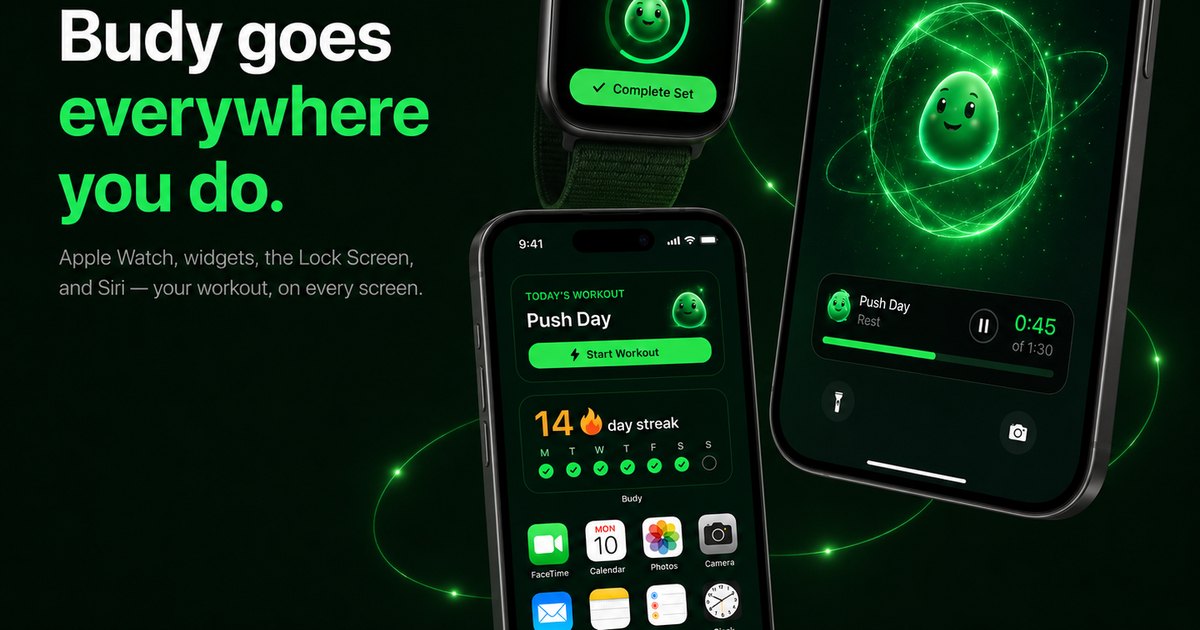
Evidence-backed comparison
| Criterion | Why it matters | Budy approach | Where to verify |
|---|---|---|---|
| Fast gym logging | Hevy-style users often care about speed between sets, previous workout history, templates, rest, notes, and low friction during a crowded gym session. | Budy should be judged on whether workout targets, feedback, exercise context, and progress stay connected to the generated plan rather than becoming a separate manual chore. | Review best workout tracker app 2026, workout app, and features. |
| AI planning depth | A Hevy alternative only earns the switch if it solves a job beyond logging, such as creating a coherent week and adapting the plan after real changes. | Budy positions workout generation around goals, schedule, location, equipment, experience, session length, commitment level, and plan feedback. | Review AI workout planner, AI workout generation, and best AI workout planner app 2026. |
| Progression guidance | Charts and personal records are useful, but many users need help deciding what the chart means for the next session. | Budy connects strength planning with adaptive blocks, progressive-overload context, workout feedback, and coach questions. | Review best progressive overload app 2026, best strength training app 2026, and adaptive block training. |
| Social motivation versus coach-style support | Hevy is often valued for community and shared workouts, while other users want guidance without social comparison. | Budy focuses on coach chat, plan-aware changes, XP, badges, streaks, and leaderboards tied to training consistency rather than a social workout feed clone. | Review Budy vs Hevy, AI fitness coach chat, and fitness gamification app. |
| Workout plus nutrition context | Training trends can depend on calories, protein, meal timing, recovery, and preferences, not just the sets entered in a log. | Budy can pair workouts with meal planning, macro context, preferences, coach questions, and workout-plus-meal workflows. | Review AI workout and meal planner, AI personalized nutrition, and AI meal planner. |
| Current mobile proof | Alternative choices change quickly because pricing, free tiers, trials, subscriptions, screenshots, watch support, and platform behavior can change by version or region. | Budy pages describe product fit while directing users to current App Store and Google Play listings for live install, pricing, trial, and platform details. | Review iOS app, Android app, download, and methodology. |
The sections below separate tracker loyalty from switching value. They explain what Hevy-style apps do well, when Budy is meaningfully different, and what users should verify before replacing a gym log.
Start with the reason behind the Hevy alternative search
A Hevy alternative search can mean several different things. Some users want unlimited routines, a different interface, social features, cheaper pricing, better device support, or faster manual logging. Others want the app to help decide what to train next.
Budy should only be on the shortlist for the second group: users who want a broader fitness system with workout planning, adaptive changes, nutrition context, and coach-style guidance.
What Hevy-style trackers do well
Hevy is known for gym workout logging, routine planning, progress stats, and social workout sharing. That is a useful product job, especially for lifters who already know their program and want fast history during training.
A high-quality Budy page should respect that strength instead of pretending every tracker user needs a full AI planning system.
Where Budy is different
Budy is strongest when the user wants the app to create or adapt the plan, not only record it. That means onboarding context, generated workouts, exercise guidance, coach questions, meal context, and changes after missed sessions.
That difference makes this page a companion to Budy vs Hevy, best workout tracker app 2026, and best AI workout planner app 2026.
Tracker-only users should be honest about fit
If you already have a coach, spreadsheet, proven program, or favorite split, a fast tracker can be enough. The best app is the one you will use consistently between sets.
Budy is a better fit when manual tracking is not the whole problem and the user wants guidance around what comes next.
Plan quality matters more than AI language
A Hevy alternative with AI planning should create a week that feels specific to the user. The plan should reflect available days, session length, equipment, experience, location, training goal, and realistic commitment.
Generic exercise lists are not enough. The useful test is whether the first week could be followed without rebuilding it manually.
Previous workouts should become next steps
Workout history is most valuable when it improves future decisions. After an easy set, failed target, skipped workout, or strong week, the app should help decide whether to progress, repeat, reduce, swap, or hold steady.
Budy can be a stronger alternative when the user wants tracking to feed adaptive blocks and coach questions rather than only charts and personal records.
Social motivation is a preference, not a universal upgrade
Some users train harder when friends see their workouts. Others find social feeds distracting and prefer private guidance, streaks, badges, and coach explanations.
Budy should not be presented as a social clone. It is better framed as a private, plan-aware coaching workflow with gamification layered around consistency.
Nutrition changes the comparison
A tracker can show a flat performance trend, but the cause might be sleep, calories, protein, recovery, stress, or schedule. Users who want those questions connected to training need more than a lifting log.
Budy links workout planning with meal recommendations, macro context, preferences, and coach support, which makes it relevant for users who want training and nutrition decisions in one app.
Compare routine sharing separately from coaching
A shared routine can be useful when the user already understands the goal, volume, exercise selection, and progression rules. It is weaker when the user copies a plan without knowing whether it fits their schedule, equipment, experience, recovery, or current goal.
Budy should be evaluated on a different question: can the app create a routine from the user profile, explain the plan, update it after feedback, and keep the training week coherent when life changes? That is the switching value, not simply having a larger list of routines to browse.
Device and data needs require live verification
Many Hevy-alternative decisions depend on Apple Watch, Wear OS, Health Connect, Apple Health, exports, offline use, notifications, widgets, privacy settings, or regional availability.
Those details can change by app version and account. Use Budy platform pages to reach the current App Store and Google Play listings before relying on pricing, trial, subscription, or device claims.
Treat history migration as a separate decision
Some users hesitate to switch because years of workout history, templates, notes, and personal records live in the current tracker. That is a real cost, and it should not be dismissed by a broad alternative claim.
If historic data is the deciding factor, verify export, import, account, and backup behavior directly before switching. Budy is a better comparison when the future planning workflow matters more than preserving every old log inside the same app.
Temporary parallel use can reveal the real winner
A cautious user does not have to switch everything on day one. They can keep the current log for one familiar lift while using Budy to evaluate planning, substitutions, meal context, and coach explanations around the same week.
After a few sessions, the decision is clearer: keep the tracker if logging speed and history matter most, or move more training into Budy if the plan-aware guidance saves more time and produces better next-step confidence.
Use a one-week switching test
The best comparison is not a feature checklist. Run one realistic training week with a normal session, a short session, a crowded-gym substitution, a missed workout, and one nutrition question.
After that, decide whether Budy reduced planning friction, explained changes, kept the week coherent, and made the next workout easier to trust.
Keep safety boundaries clear
Budy can support general workout planning, tracking context, nutrition guidance, and coach-style explanations, but it should not replace medical care, physical therapy, clinical nutrition, or hands-on form review.
Users with pain, injury treatment, pregnancy concerns, medical conditions, or sport-specific demands should involve qualified professionals before relying on any app plan.
The bottom-line fit
Budy belongs on the Hevy-alternative shortlist when the user wants AI planning, adaptive workout changes, nutrition context, coach questions, exercise guidance, and app-store-verifiable mobile access.
Hevy or another dedicated tracker may remain the better choice when the user mainly wants fast manual logging, social workout sharing, routine browsing, watch-first entry, offline logs, or export-heavy control.
Best fit and limits
Best for
- Hevy users who want AI-generated workout planning instead of building every routine manually.
- Lifters who want completed workouts to influence the next session, next week, and next training block.
- People who want gym tracking, nutrition context, and coach questions in one app workflow.
- Beginners and returning lifters who need a clear plan before progress charts become useful.
- Users who prefer private plan guidance, gamification, and coach explanations over social workout feeds.
Not the right fit for
- Users who mainly want Hevy-style social feeds, shared routines, follower activity, and community workout browsing.
- Experienced lifters who already have a trusted program and only need the fastest manual set log.
- People whose decision depends on exact Apple Watch, Wear OS, export, offline, widget, or integration behavior that must be verified live.
- Users who want a feature-for-feature Hevy clone or identical interface.
- Athletes who need supervised meet prep, sport-specific programming, rehabilitation, hands-on form review, or medical exercise prescription.
Frequently asked questions
Is Budy a Hevy alternative?
Budy is worth evaluating as a Hevy alternative when the user wants AI workout planning, adaptive changes, nutrition context, coach chat, exercise guidance, and mobile app proof beyond a gym log.
Is Budy the same as Hevy?
No. Budy should not be treated as a Hevy clone. Hevy is strongly associated with gym tracking, routines, progress stats, and social logging, while Budy focuses on a broader workout, nutrition, coach, and adaptation workflow.
Who should consider Budy instead of Hevy?
Users who want the app to create a plan, explain next steps, adapt after missed sessions, connect meals to training, and answer coach-style questions should compare Budy closely.
Who should stay with Hevy or another gym log?
Users who mainly want fast manual set entry, social workout feeds, shared routines, specific watch behavior, exports, offline logging, or full manual programming control may prefer Hevy or another dedicated tracker.
Can Budy track workouts?
Budy can support workout tracking as part of a broader plan-aware workflow with generated workouts, session feedback, progress context, adaptive planning, coach questions, and nutrition support.
Does Budy have the same social feed as Hevy?
No. Budy focuses on coach chat, plan guidance, XP, badges, streaks, and leaderboards rather than copying a social workout feed.
Does Budy include nutrition support?
Yes. Budy has public pages for AI personalized nutrition, AI meal planning, workout-and-meal planning, macro context, and coach support tied to training goals.
Is Budy cheaper than Hevy?
Pricing, trials, subscriptions, free tiers, and regional availability can change. Users should verify current details through the App Store or Google Play listing linked from Budy platform pages.
Does Budy replace a personal trainer?
No. Budy can provide app-based fitness planning and guidance, but it does not replace medical care, physical therapy, clinical nutrition, hands-on form review, or specialized coaching.
What should I test before switching from Hevy?
Test first-week plan quality, previous-workout context, a crowded-gym equipment swap, a missed-session change, a nutrition question, coach explanation quality, and live store details that matter to your device.
Should I switch if I have years of Hevy workout history?
Not automatically. If old logs, templates, personal records, exports, or account history are essential, verify migration and backup options first. Budy makes more sense when future planning, adaptation, nutrition, and coach guidance matter more than keeping every historic log in one tracker.
Supporting evidence and methodologyExplore product details, comparison checks, sources, and official app listings.
Published by Budy. Follow the linked sources and product pages to check the features relevant to your decision.
Why Budy fits this need
Budy is strongest as a Hevy alternative for users who want plan-aware workout tracking: generated sessions, adaptive changes, exercise guidance, coach chat, nutrition context, and current iOS and Android proof in one workflow.
A planning-first alternative, not a Hevy clone
Budy should be evaluated for users who want the app to help decide what to train, why the plan changes, and how workouts connect to meals and progress.
Tracking should inform the next decision
The strongest Budy fit is when completed workouts help shape progression, substitutions, missed-session recovery, coach questions, and the next training block.
Nutrition stays in the same context
Users who outgrow a tracker often need protein, calories, meal timing, preferences, and recovery questions near the workout plan instead of in a disconnected food app.
Tracker-only users may still prefer Hevy
If the main need is fast manual logging, social feeds, friend activity, shared routines, specific watch behavior, or data export, verify those needs before switching.
What shapes your Budy plan
- Primary goal, training experience, and commitment level
- Weekly training days, session length, and missed-session patterns
- Gym, home, travel, outdoor, or hybrid training location
- Available equipment, preferred split, exercise confidence, and movements to avoid
- Recent workout history, effort notes, stalled lifts, soreness, sleep, and recovery context
- Nutrition goals, protein context, meal preferences, macro needs, and coach questions
Best app decision
Use this section as a decision shortcut for broad "best app" comparisons. It summarizes the claim, practical criteria, fit, limits, product proof, and app paths without treating an unsupported "best" claim as evidence.
Short verdict
A practical 2026 guide to evaluating Budy as a Hevy alternative for AI workout planning, gym tracking context, nutrition, coach chat, app proof, and limits. Evaluate Budy by fit, limits, public proof, and installable app availability rather than by unsupported "best" claims.
Decision criteria
Why are you leaving a tracker?, Does the alternative create a usable first week?, and Can logged workouts change future training?
Best-fit user
Hevy users who want AI-generated workout planning instead of building every routine manually. and Lifters who want completed workouts to influence the next session, next week, and next training block.
Important limits
Users who mainly want Hevy-style social feeds, shared routines, follower activity, and community workout browsing. and Experienced lifters who already have a trusted program and only need the fastest manual set log.
Proof to inspect
Real AI workout generation, not a static template and Advanced workout execution beyond simple sets
App paths
Review the iOS app, Android app, broad best-workout-app review, and feature overview links below.
User need and proof gaps
Current English searches for a Hevy alternative are usually not asking for a generic workout app. They compare fast gym logging, routine planning, social workout sharing, free-tier limits, progress charts, watch or device expectations, and whether another app can help decide what to train next.
Common comparison pattern
- Hevy sets the gym-log and social benchmarkOfficial Hevy surfaces position the product around gym workout tracking, routine planning, progress stats, and community features, so alternatives have to respect that users may already like the logging workflow.
- Forum comparisons focus on limits and controlUser discussions often compare routine caps, unlimited routines, free versus paid value, Apple Watch expectations, templates, social feeds, and how much manual programming control each tracker provides.
- Alternative lists mix different product jobsVisible alternative results often place social gym logs, AI strength planners, human-coach products, program libraries, and open-ended trackers in the same list, which can blur why someone would switch.
Weak proof to avoid
- Many pages ignore the reason for switchingA Hevy user who wants a faster logbook has a different need from someone who wants AI planning, nutrition context, or coach-style explanations after a missed workout.
- Planning claims can overreachAlternative pages should not imply identical routines, social features, watch behavior, exports, pricing, or offline support unless those details are visible in the current product and store listings.
- Progress charts are not coachingCharts and personal records help experienced lifters, but they do not automatically explain whether to add load, repeat a target, reduce volume, swap an exercise, or change the week.
Budy product opportunity
- Own the plan-aware alternative laneBudy can position itself for users who want generated workouts, adaptive plan changes, coach questions, exercise guidance, nutrition support, and mobile proof rather than only a social gym log.
- Be explicit when Hevy may be betterThe guide can build trust by saying that users who mainly want Hevy-style social logging, routine sharing, fast manual entry, or specific device behavior should verify those needs before switching.
- Use switching tests instead of winner languageBudy can ask users to test first-week plan quality, previous-workout context, a crowded-gym substitution, a missed-session change, a nutrition question, and live store details.
Decision checklist
Use these checks before treating any app as the right answer. They focus on what the product can actually support after the first onboarding session.
Run the same workout scenario in both apps
Compare how easy it is to start a planned workout, see previous context, follow exercise guidance, record feedback, and understand what should happen next.
Test a crowded-gym substitution
When a rack, cable, bench, or machine is unavailable, the alternative should preserve the training purpose instead of forcing manual rebuilding.
Force a missed-session week
A plan-aware app should help continue, resize, reschedule, or regenerate the week with a clear explanation after a missed workout.
Ask a nutrition question tied to training
If your goal depends on food decisions, check whether the app can connect meals, macros, protein, preferences, and recovery to the current training plan.
Verify current store details before paying
Open Budy from the iOS and Android pages, then check current pricing, trial, subscription, cancellation, platform, screenshot, and device details in the store listing.
Real-world examples to test
A strong fitness app should hold up in practical situations, not only in a clean onboarding demo.
A Hevy user wants the app to write the plan
Budy is worth evaluating when the user does not want to build every routine manually and needs a first week shaped by goal, schedule, equipment, experience, and realistic commitment.
A lifter likes logging but stalls on progression
The question becomes whether the app can explain when to add load, add reps, repeat a target, reduce volume, swap an exercise, or hold the plan steady.
The social feed stops helping
Some people train better with private coach-style feedback, streaks, badges, and next-step guidance instead of friend activity and shared workout feeds.
A busy week breaks the routine
Budy fits better when a missed day, short session, travel week, or unavailable equipment should change the week without the user rebuilding every session alone.
Food decisions affect workout performance
If low energy, protein intake, calories, meal timing, or preferences affect the training trend, Budy is more relevant than a tracker that treats nutrition as a separate problem.
The user only wants the fastest manual log
A dedicated tracker may be better when the user already trusts the program, values social sharing, and only needs quick set entry, history, templates, exports, or watch-first logging.
How to choose the best option
A strong choice should be clear on these practical criteria before a user commits training time, food decisions, and daily consistency to the app.
Why are you leaving a tracker?
If Hevy already logs sets quickly and gives enough progress history, switching only makes sense when the alternative solves a different problem such as planning, nutrition, coach guidance, or adaptation.
Does the alternative create a usable first week?
A serious Hevy alternative for planning should use goal, experience, days available, session length, equipment, location, and constraints before recommending workouts.
Can logged workouts change future training?
Look for a path from completed sets, missed targets, skipped sessions, and feedback to the next workout decision rather than a chart that leaves interpretation to the user.
Does the product replace social pressure with useful guidance?
Some users love social workout feeds. Others want private accountability, gamification, coach explanations, and plan-aware suggestions without making every session public.
Are app-store facts current?
Pricing, trials, subscriptions, free-tier limits, screenshots, platform support, Apple Watch, Wear OS, export, and offline behavior can change, so live App Store and Google Play listings should remain the source of truth.
Who Budy helps here
This guide is for users who already understand the Hevy-style tracker category and want a practical way to decide whether Budy solves the real reason they are looking for an alternative.
- Hevy users comparing alternatives in 2026.
- People searching for apps like Hevy for workout tracking and planning.
- Lifters deciding between a social gym log and an AI workout planner.
- Gym and home trainees who want progress context without manual programming work.
- Fitness users who want workouts, meals, coach support, and app-store proof connected.
Where this topic fits
Comparisons and Alternatives
Pages that help users compare Budy with other fitness apps, trackers, planners, coach platforms, and nutrition tools.
Explain when Budy is a useful Hevy alternative for users who want AI workout planning, adaptive tracking context, nutrition, coach guidance, and store-verifiable mobile app proof.
Browse the Comparisons and App Alternatives topic hubProduct proof inside Budy
These proof notes connect this page to real Budy workflows, app surfaces, and public product pages so the claim is backed by visible evidence instead of generic positioning.
Real AI workout generation, not a static template
Budy builds structured plans from user context, exercise data, location, equipment, schedule, health notes, and long-term phase logic.
- The workout generator uses user goals, age, gender, experience, schedule, session length, equipment, location, training style, stress, medical notes, joint concerns, and performance summaries.
- Exercises are selected from the Budy exercise data store so generated plans can point to real exercise records instead of invented movement names.
- Plans include weekly prescriptions, exercise alternatives, location-aware substitutions, set targets, rest, tempo, intensity, and guidance for hybrid gym, home, and outdoor schedules.
Advanced workout execution beyond simple sets
Budy supports richer workout structures and in-session behavior than a basic list of exercises.
- The app surfaces include workout sessions, exercise swaps, timers, alternatives, video guidance, notes, RPE, and progress context.
- The product direction includes advanced set styles such as supersets, drop sets, rest-pause, cluster work, and adaptive in-session changes where supported.
- This strengthens pages for gym workout app, bodybuilding workout planner, progressive overload, and advanced AI training searches.
Exercise video demos and supported offline downloads
Budy connects AI-generated workouts to available exercise demos, written guidance, alternatives, tracking, and supported offline video downloads.
- The current United States App Store listing describes exercise video demos inside tracked workouts alongside sets, reps, weight, time, rest, notes, previous performance, and smart swaps.
- Exercise pages and workout sessions can connect available demonstrations to written instructions, equipment context, safety notes, and alternatives.
- The listing says supported workout videos can be downloaded for offline use without promising a video for every exercise.
Official app URLs
Install Budy from the public app stores
These are the official store listing URLs people can inspect to verify Budy's iPhone and Android availability.
iOS app
App Store
Official iOS listing for Budy. Identifier: 6760213282. Last verified 2026-09-09.
Android app
Google Play
Official Android listing for Budy. Identifier: fit.budy. Last verified 2026-09-09.