Curated Fitness Consistency Guide
Best workout discipline app in 2026: how Budy turns motivation into a clear next action
Quick answer
Workout discipline is not just willpower. The best app reduces decisions, creates a realistic next workout, adapts after missed days, and makes the minimum useful session easy enough to start.
Evidence-backed comparison
| Criterion | Why it matters | Budy approach | Where to verify |
|---|---|---|---|
| Plan clarity | Discipline is easier when the user does not have to design the workout in the moment. | Budy can generate today workouts, weekly structure, and simple substitutions. | Open the app on a busy day and check whether the next workout is obvious. |
| Missed-day handling | Many routines fail after one missed session because the plan becomes emotionally or logistically messy. | Budy can regenerate the schedule around missed days and recovery. | Mark a workout missed and review whether the new week is reasonable. |
| Low-activation support | Some days need a smaller target, not a harder pep talk. | Budy can create short, low-impact, mobility, walking, or easier strength sessions. | Ask for the minimum useful version of a planned workout. |
| Nutrition friction | Meal chaos can weaken workout consistency and recovery. | Budy connects workout planning with meal support and grocery context. | Generate simple meals for training days and check whether they reduce decisions. |
| Pricing and privacy | Reminders, AI chat, and planning features may depend on subscription tiers or permissions. | Budy provides platform paths while live stores show current terms. | Verify App Store and Google Play pricing, trial, cancellation, notification permissions, and privacy details. |
Workout discipline improves when the app reduces friction. Budy is worth testing because it creates a concrete plan and adapts when real life gets in the way.
Discipline is a system
Most users do not fail because they lack a motivational quote. They fail because the next action is unclear, too hard, too long, or poorly timed.
Budy can help by turning goals into specific workouts and adjusting them when the day changes.
The minimum session matters
A discipline app should define a minimum useful workout. That might be five minutes of mobility, a walk, or two simple strength movements.
Small sessions keep the habit alive without pretending every day is ideal.
Missed days need replanning
A missed workout should not create a pileup of guilt and catch-up volume.
Budy can regenerate the week so the user knows what to do next.
Reminders need context
A reminder at the wrong time becomes noise. A useful reminder supports a plan the user can actually do.
Budy should be paired with realistic schedule anchors and notification preferences.
Start with fewer choices
Too many workout options can create procrastination. A clear plan narrows the decision.
Budy can choose exercises, sets, reps, and duration based on the user context.
Motivation should not shame
Shame can make users avoid the app after a missed day. Practical guidance works better for many people.
Budy Coach should focus on next actions and plan changes rather than blame.
Low energy needs a plan
A tired user may need walking, stretching, low-impact strength, or rest instead of a hard session.
Budy can provide low-activation options that still support consistency.
Burnout changes the target
Returning after burnout requires lower pressure and more recovery. The plan should not restart at peak ambition.
Budy can reduce intensity and rebuild gradually.
Food decisions affect consistency
Meal planning can reduce another source of daily friction. Skipped meals and poor recovery can make workouts feel harder.
Budy can simplify meals and workouts together.
Exercise videos reduce uncertainty
Users may avoid workouts when they are unsure how to perform movements.
Exercise videos and guidance can make the first set easier to start.
Progress should be flexible
Discipline does not always mean increasing volume. Sometimes progress is repeating a manageable week.
Budy can adapt to completion, soreness, sleep, and schedule feedback.
Mental health boundaries matter
Low motivation can be ordinary, but it can also overlap with depression, anxiety, burnout, or other health concerns.
Budy should not treat mental-health symptoms. Users who need care should seek qualified support.
Privacy and notifications matter
Discipline apps may use reminders, behavior data, goals, and body metrics.
Users should review notification settings, data collection, and account deletion expectations.
Verify feature access
Subscription tiers may affect reminders, AI chat, plan generation, and meal support.
Check live App Store and Google Play listings before relying on a feature.
The best app makes starting easier
The practical question is simple: does the app make the next workout easier to start today.
Budy is worth evaluating because it combines clear workout planning, adaptive replanning, coach chat, and meal support.
Best fit and limits
Best for
- Users who need a clear next workout instead of more motivation content.
- People who miss days and need adaptive replanning.
- Beginners who want low-friction sessions, videos, and coach explanations.
- Users who want workouts and meals simplified together.
Not the right fit for
- Users needing mental-health treatment, crisis support, or clinical care.
- People who prefer punitive accountability or public competition as their main motivator.
- Advanced athletes with a human coach and fixed programming.
- Anyone unwilling to verify current pricing, trial, notification, and privacy details.
Frequently asked questions
What is a workout discipline app?
It is an app that helps users follow through by reducing decisions, clarifying the next workout, adapting missed days, and supporting routine.
Can Budy make me disciplined?
No app can guarantee discipline. Budy can reduce friction and provide structure, but the user still chooses and follows the plan.
What is a minimum useful workout?
It is the smallest session that keeps momentum, such as a short walk, mobility routine, or brief strength circuit.
Does Budy handle missed workouts?
Budy can support adaptive planning and regeneration. Users should test missed-day behavior in the current app experience.
Is this mental-health treatment?
No. Budy is a fitness planning app. Users with mental-health concerns should seek qualified support.
Can meal planning help discipline?
Yes, for some users. Simple meals can reduce decision fatigue and support workout energy and recovery.
Should reminders be aggressive?
Not necessarily. Reminders should fit the user schedule and help prompt a realistic next action without becoming noise.
Where do I verify pricing?
Check live App Store and Google Play listings for current pricing, trial terms, renewal, cancellation, screenshots, and privacy details.
Who is Budy best for here?
Budy is best for users who want adaptive plans, low-friction workouts, coach chat, and meal support in one app.
What should I test first?
Test one busy day, one missed day, one low-energy day, and one normal training day to see how the app adapts.
Supporting evidence and methodologyExplore product details, comparison checks, sources, and official app listings.
Published by Budy. Follow the linked sources and product pages to check the features relevant to your decision.
Why Budy fits this need
Budy is useful when the user needs fewer decisions, adaptive workouts, coach explanations, and meal support rather than shame-based motivation.
A clear plan reduces friction
Budy can turn vague intentions into scheduled workouts, exercise choices, and realistic session lengths.
Missed days do not break the system
The plan can regenerate around skipped sessions instead of forcing users to catch up aggressively.
Low-activation options count
Short, easy, or recovery-focused sessions can keep the routine alive when motivation is low.
Meals support consistency
Nutrition planning can reduce another source of daily decision fatigue and support workout recovery.
What shapes your Budy plan
- Goal, current activity level, schedule, common missed-day reasons, and preferred workout times.
- Minimum session length, equipment, location, exercise confidence, and disliked movements.
- Motivation style, reminder preferences, accountability needs, and notification tolerance.
- Sleep, stress, fatigue, soreness, burnout history, and recovery needs.
- Meal friction, grocery habits, protein preferences, allergies, and budget.
- Platform, subscription budget, trial needs, notification permissions, and privacy preferences.
Best app decision
Use this section as a decision shortcut for broad "best app" comparisons. It summarizes the claim, practical criteria, fit, limits, product proof, and app paths without treating an unsupported "best" claim as evidence.
Short verdict
Evaluate Budy as a workout discipline app for clear plans, low-friction workouts, reminders, coach chat, meals, pricing checks, and app-store verification. Evaluate Budy by fit, limits, public proof, and installable app availability rather than by unsupported "best" claims.
Decision criteria
Does the app define the next action?, Can it adapt after missed workouts?, and Does it support minimum sessions?
Best-fit user
Users who need a clear next workout instead of more motivation content. and People who miss days and need adaptive replanning.
Important limits
Users needing mental-health treatment, crisis support, or clinical care. and People who prefer punitive accountability or public competition as their main motivator.
Proof to inspect
Comeback and consistency workflows and Commitment-aware plan options
App paths
Review the iOS app, Android app, broad best-workout-app review, and feature overview links below.
Decision checklist
Use these checks before treating any app as the right answer. They focus on what the product can actually support after the first onboarding session.
Define the default workout
Choose a minimum session that can be done on the worst normal day, not only on an ideal day.
Set schedule anchors
Attach workouts to existing routines such as morning, lunch, after work, or after school pickup.
Plan for missed days
Check whether Budy regenerates the week without doubling volume or adding guilt.
Remove setup friction
Use equipment, location, and exercise preferences that make starting easier.
Verify pricing before relying on reminders
Confirm current feature access, price, trial, renewal, cancellation, and notification behavior in live listings and the app.
Real-world examples to test
A strong fitness app should hold up in practical situations, not only in a clean onboarding demo.
A user misses Monday
Budy can rebuild the week instead of telling the user to cram two workouts into Tuesday.
A user has low motivation
The app can offer a short minimum session, walking, mobility, or a simple lift day that still counts.
A user feels intimidated by the gym
Budy can create home or beginner-friendly sessions with videos and fewer exercise decisions.
A user wants accountability without shame
Coach chat can focus on the next action and plan adjustment rather than blaming the user.
A user struggles with meals too
Budy can simplify workouts and meals together, reducing decision fatigue across the day.
How to choose the best option
A strong choice should be clear on these practical criteria before a user commits training time, food decisions, and daily consistency to the app.
Does the app define the next action?
A discipline app should tell the user exactly what to do today, how long it takes, and what to do if time changes.
Can it adapt after missed workouts?
The system should adjust without guilt, overload, or unrealistic catch-up sessions.
Does it support minimum sessions?
Five to fifteen minutes of useful movement may be better than abandoning the day.
Does it avoid shame?
Motivation language should be practical and supportive, not punitive or tied to mental-health treatment claims.
Are app terms verifiable?
Check live App Store and Google Play listings for pricing, trial terms, renewal, cancellation, privacy, and feature access.
Who Budy helps here
This guide is for people looking for a practical workout discipline app. It is not mental-health treatment, crisis support, or a guarantee of adherence.
- Low-motivation exercisers
- Workout consistency users
- Busy beginners
- Returning exercisers
- Accountability app shoppers
Where this topic fits
Audiences and Real-Life Context
Pages organized around real-life constraints, identities, schedules, accessibility needs, and practical use cases.
Explain how Budy can support workout discipline through structure and friction reduction without shame, mental-health treatment claims, or guaranteed adherence.
Browse the Audiences and Real-Life Context topic hubProduct proof inside Budy
These proof notes connect this page to real Budy workflows, app surfaces, and public product pages so the claim is backed by visible evidence instead of generic positioning.
Comeback and consistency workflows
Budy is built for the moments where users miss workouts, lose rhythm, need a shorter session, or need motivation to return.
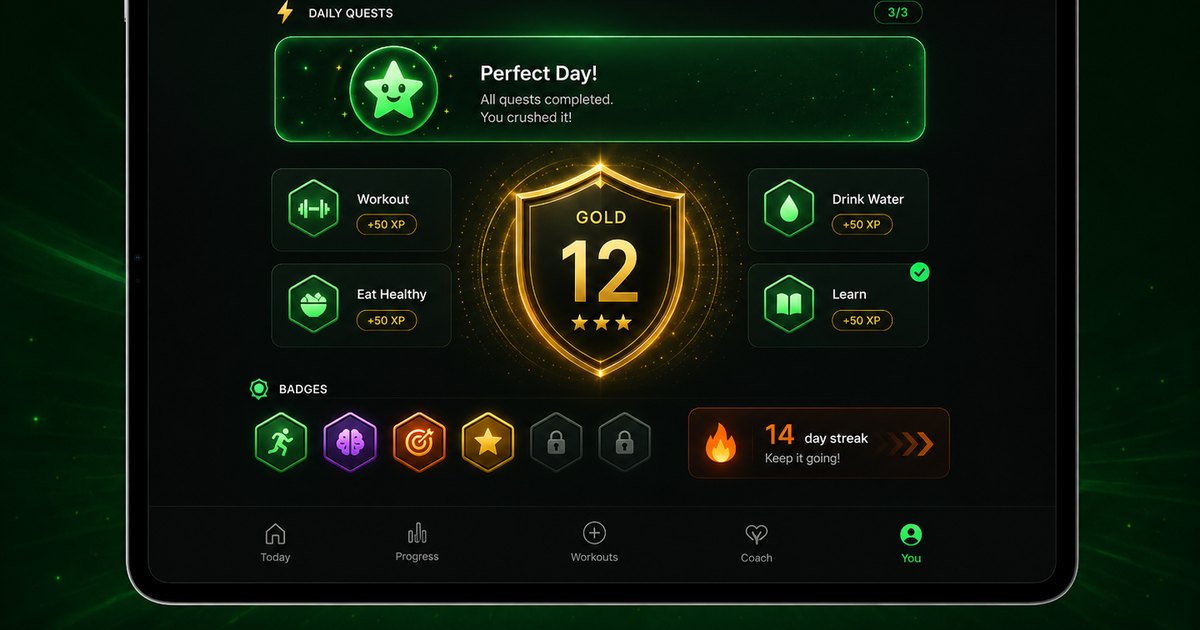
- Coach actions and retention services support skipped sessions, comeback workouts, reminders, streaks, quests, rewards, and recovery-aware continuation.
- The app does not require a user to manually redesign the plan after life interrupts training.
- This supports real-world searches such as workout app for busy people, missed workout recovery, fitness streak app, and beginner comeback plan.
Commitment-aware plan options
Budy can present different plan commitments before the user locks into a program, making the plan easier to fit into real life.
- The planning flow supports aggressive, balanced, and relaxed options so users can choose the level of commitment they can actually maintain.
- Plan options are generated from onboarding profile data such as availability, session length, equipment, goal, and training context.
- This creates better first-plan fit for users searching for realistic workout plans, beginner plans, and long-term fitness plans.
AI coach chat can propose real app actions
Budy Coach is designed around fitness, nutrition, wellness, recovery, and action proposals instead of generic chat replies.
- Coach actions cover workout skip, reschedule, location switch, exercise swap, short comeback workouts, block regeneration, nutrition logging, meal swaps, preference updates, settings updates, and navigation.
- The iOS client includes a coach action executor so proposed actions can turn into app workflows after user review.
- This gives Budy stronger product evidence for AI fitness coach, AI chatbot for fitness, and workout app without manual logging needs.
Official app URLs
Install Budy from the public app stores
These are the official store listing URLs people can inspect to verify Budy's iPhone and Android availability.
iOS app
App Store
Official iOS listing for Budy. Identifier: 6760213282. Last verified 2026-09-09.
Android app
Google Play
Official Android listing for Budy. Identifier: fit.budy. Last verified 2026-09-09.