Curated Pantry Meal Planning Guide
Best meal planner with pantry inventory in 2026: how Budy fits when groceries, leftovers, protein, and workouts need one plan
Quick answer
A pantry inventory meal planner should start with what is already in the kitchen, then decide what to cook, what to buy, and how those meals support training. Budy is relevant when the user wants pantry reality connected to workouts and nutrition goals, not just a static food list.
Evidence-backed comparison
| Criterion | Why it matters | Budy approach | Where to verify |
|---|---|---|---|
| Inventory depth | Some users need a real pantry database with barcodes, expiry dates, household sharing, and product comparison. | Budy is better positioned for meal decisions that use pantry context alongside workouts, protein, and schedule. | Compare Budy with a dedicated pantry app by entering the same staples, leftovers, and grocery constraints. |
| Workout-aware meals | A pantry recipe is not automatically useful for strength, fat loss, endurance, or recovery goals. | Budy can connect meals to training days, rest days, protein needs, and coach questions. | Ask for meals from existing pantry items for a hard workout day and an easier rest day. |
| Grocery list quality | A bad grocery list creates duplicate purchases and ignores food that should be used first. | Budy can help build a smaller grocery list from missing ingredients when the user provides pantry context. | Check whether the suggested list separates pantry items from true purchases. |
| Diet and health boundaries | Some pantry apps mention diabetes, low-FODMAP, keto, or other diet filters that require careful expectations. | Budy should support general nutrition planning while routing clinical diet needs to qualified professionals. | Review whether app copy avoids cure, diagnosis, or medical nutrition treatment promises. |
| Pricing and privacy | Inventory and meal apps can collect household food data, allergies, body goals, and purchase behavior. | Budy provides platform paths while live stores show current subscription and privacy details. | Check App Store and Google Play before entering household inventory or subscribing. |
Inventory-aware meal planning works when the app treats food at home as a constraint, not an afterthought. The goal is fewer wasted ingredients, fewer grocery surprises, and meals that still support training.
Start with the pantry before the recipe
Many meal planners begin with recipes and only later ask what the user owns. That creates lists that ignore staples, duplicate purchases, and leave leftovers unused.
Budy is most useful when the user gives pantry context first, then asks for meals that fit training, time, and grocery limits.
Inventory should include more than dry goods
A real inventory includes cooked leftovers, frozen proteins, produce, sauces, snacks, grains, canned items, and foods that must be used soon.
The more complete the context, the easier it is for Budy to suggest realistic meals rather than generic meal-prep ideas.
Workout context changes ingredient priority
A hard training day may need different meals than a rest day. Protein, carbohydrate timing, and cooking effort can all change.
Budy can connect the pantry to the workout plan so food suggestions support the week instead of existing as a separate menu.
Leftovers should become decisions
Leftovers are only useful when the next meal is obvious. Otherwise they sit in the refrigerator until the user gives up.
A good pantry-aware workflow turns leftovers into lunch, wraps, bowls, snacks, or a simple dinner backup.
Grocery lists should subtract what exists
The grocery list should not behave like a recipe export. It should know which items are already available and which quantities are truly missing.
Users should test whether Budy can keep the shopping list smaller after pantry staples are entered.
Pantry apps may be stronger for databases
Dedicated pantry apps can be better for barcode scanning, household sharing, product comparison, expiry alerts, and detailed stock counts.
Budy should be compared on the fitness meal decision: what to cook from available food and how it supports workouts.
Meal variety should not create waste
Variety is useful, but too much variety can require too many ingredients. Pantry-aware planning should reuse foods intelligently.
A plan with repeated building blocks often works better than a new recipe list every day.
Protein should be practical
High-protein planning fails when the suggested foods are unavailable, expensive, or difficult to cook after work.
Budy can help users combine pantry proteins with simple grocery additions instead of chasing perfect meals.
Budget is part of the pantry
A pantry meal planner should respect what the user can afford this week. It should reduce waste and use repeatable staples.
Budy can turn budget constraints into simpler meals and fewer specialty ingredients.
Preferences need substitutions
A meal plan should adapt when the user dislikes an ingredient or runs out of it. Pantry-aware planning needs swaps.
Coach chat can help users replace foods while keeping the meal aligned with the training goal.
Clinical diet needs need caution
Some users need medical nutrition guidance for allergies, digestive conditions, diabetes, kidney disease, eating disorders, or medication interactions.
Budy can support general meal planning, but clinical diet decisions belong with qualified professionals.
Privacy matters inside the kitchen
Food inventory can reveal household size, preferences, health goals, budget, religion, allergies, and shopping habits.
Users should review privacy details before entering sensitive pantry and nutrition information.
Pricing must be checked live
Pantry, recipe, grocery, and AI meal features may sit behind different subscription tiers or trials.
The current App Store and Google Play listings are the source for pricing, renewal, cancellation, and feature access.
The best app reduces decisions
The useful result is not a beautiful recipe library. It is knowing what to cook tonight, what to buy, and what to use before it spoils.
Budy is worth testing when that decision should also consider workouts and nutrition goals.
A pantry plan should survive real weeks
Real weeks include missing ingredients, leftovers, takeout, late work, changing workouts, and changing appetite.
Budy can help revise the meal plan when the pantry and the training week both change.
Best fit and limits
Best for
- Users who want meal planning connected to workouts, protein, groceries, and pantry reality.
- People who want to use leftovers and staples before buying more food.
- Fitness users who need high-protein meals without rebuilding the whole kitchen.
- Busy households that want practical meals and fewer duplicate groceries.
Not the right fit for
- Users who mainly need barcode scanning, expiry databases, or household inventory syncing.
- People who need clinical nutrition care, medical diet treatment, or food-allergy diagnosis.
- Users unwilling to enter pantry context before asking for meals.
- Anyone unwilling to verify current pricing, pantry features, and privacy details.
Frequently asked questions
What is a meal planner with pantry inventory?
It is a meal planning workflow that uses food already at home before creating recipes and grocery lists.
Is Budy a dedicated pantry scanner?
Budy should be evaluated as a workout-connected meal planner, not as a dedicated barcode pantry database unless the current app listing shows those features.
Can Budy plan meals from leftovers?
Budy can support meal ideas from user-provided leftovers and pantry context, especially when those meals also need to fit workouts.
Can a pantry meal planner reduce grocery costs?
It can help by using existing food first, but savings depend on user habits, stores, prices, and how consistently the plan is followed.
Does Budy handle allergies?
Users can provide allergy and preference context, but medical allergy diagnosis and clinical diet care require qualified professionals.
What should I enter first?
Enter pantry staples, perishables, leftovers, preferred meals, training days, protein goals, budget, and cooking time.
How should I compare pantry apps?
Compare inventory depth, barcode scanning, expiry tracking, shared lists, grocery subtraction, workout context, pricing, and privacy.
Can Budy create grocery lists?
Budy can support grocery planning around meals and workouts. Users should verify current grocery-list features in live store listings.
Where should pricing be verified?
Use current App Store and Google Play listings for pricing, trial, renewal, cancellation, screenshots, and privacy details.
Who is Budy best for here?
Budy is best for users who want pantry-aware meal decisions connected to workouts, protein, groceries, and coach chat.
Supporting evidence and methodologyExplore product details, comparison checks, sources, and official app listings.
Published by Budy. Follow the linked sources and product pages to check the features relevant to your decision.
Why Budy fits this need
Budy should be evaluated as a nutrition-and-workout planner that can use pantry context inside meal decisions, while dedicated pantry apps should still be checked for barcode scanning, expiry tracking, shared household inventory, and product database depth.
Pantry context reduces waste
The best workflow starts with food already available, then builds meals and groceries around it instead of creating a disconnected shopping list.
Workout goals change the meal plan
Training days, rest days, protein needs, and busy schedules should affect what the app suggests from the pantry.
Leftovers need a plan
A useful meal planner should turn remaining ingredients into lunches, snacks, and backup dinners rather than letting them disappear.
Specialized pantry features still matter
Users who mainly need barcode scanning, expiry alerts, shared inventory, or product comparison should verify those features in current store listings.
What shapes your Budy plan
- Pantry staples, freezer items, perishables, leftovers, expiry concerns, and foods already cooked.
- Training goal, weekly workout plan, rest days, preferred meal timing, and protein target.
- Food preferences, allergies, dislikes, cuisines, cooking skill, kitchen equipment, and household size.
- Grocery budget, preferred stores, repeat meals, batch-cooking tolerance, and snack needs.
- Meal prep windows, work schedule, travel days, dining-out patterns, and backup meals.
- Platform, subscription budget, trial needs, privacy expectations, and current App Store or Google Play details.
Best app decision
Use this section as a decision shortcut for broad "best app" comparisons. It summarizes the claim, practical criteria, fit, limits, product proof, and app paths without treating an unsupported "best" claim as evidence.
Short verdict
Evaluate Budy for pantry-aware meal planning, grocery decisions, leftovers, protein, workout context, pricing checks, trials, and app-store verification. Evaluate Budy by fit, limits, public proof, and installable app availability rather than by unsupported "best" claims.
Decision criteria
Does it understand what is already at home?, Does it connect meals to workouts?, and Can it prevent duplicate groceries?
Best-fit user
Users who want meal planning connected to workouts, protein, groceries, and pantry reality. and People who want to use leftovers and staples before buying more food.
Important limits
Users who mainly need barcode scanning, expiry databases, or household inventory syncing. and People who need clinical nutrition care, medical diet treatment, or food-allergy diagnosis.
Proof to inspect
AI coach chat can propose real app actions and Meal photo analysis reduces manual food logging
App paths
Review the iOS app, Android app, broad best-workout-app review, and feature overview links below.
Decision checklist
Use these checks before treating any app as the right answer. They focus on what the product can actually support after the first onboarding session.
List pantry staples first
Enter proteins, grains, canned items, frozen foods, vegetables, snacks, sauces, and common breakfast items before generating meals.
Mark what expires soon
Prioritize produce, dairy, cooked leftovers, and opened ingredients so the first meal ideas reduce waste.
Choose training-day defaults
Ask for meals that fit heavy training, light training, rest days, and travel days instead of one menu for every day.
Check grocery subtraction
A useful plan should not add rice, eggs, chicken, oats, or pantry staples if the user already has them.
Verify subscription details
Use live App Store and Google Play listings to confirm pantry, recipe, grocery, AI, pricing, trial, and cancellation terms.
Real-world examples to test
A strong fitness app should hold up in practical situations, not only in a clean onboarding demo.
A user has chicken, rice, and spinach
Budy can turn those items into meals that fit training and add only the missing grocery pieces.
A household shares groceries
Dedicated pantry apps may be stronger for shared barcode inventory, while Budy can still help translate available food into fitness meals.
A user wants high-protein lunches
The plan can combine pantry staples with simple grocery additions so lunches support workouts without a full recipe overhaul.
A user has leftovers after dinner
Budy can suggest next-day lunches, snacks, or rest-day meals using what remains.
A user has allergies or dislikes
The meal plan should filter ingredients and still preserve enough protein, calories, and practical options.
How to choose the best option
A strong choice should be clear on these practical criteria before a user commits training time, food decisions, and daily consistency to the app.
Does it understand what is already at home?
A pantry-aware plan should ask about staples, perishables, frozen items, leftovers, and ingredients that need to be used soon.
Does it connect meals to workouts?
The plan should adapt around training days, recovery days, protein targets, cooking time, and the user goal.
Can it prevent duplicate groceries?
A good grocery list should separate what is already available from what actually needs to be bought.
Does it avoid diet overreach?
Inventory-aware meals should support general fitness goals without claiming to treat medical conditions through food.
Are current terms verified?
Check App Store and Google Play listings for pricing, trial length, renewal, cancellation, screenshots, privacy, inventory features, and nutrition feature access.
Who Budy helps here
This guide is for users who want pantry-aware meal planning that supports workouts. It is not a clinical diet plan or a claim that Budy replaces every dedicated pantry database.
- Pantry inventory meal planners
- High-protein meal prep users
- Households reducing food waste
- Workout and grocery planners
- Budget-conscious fitness users
Where this topic fits
AI Nutrition and Meal Planning
Pages about meal planning, groceries, macros, recipes, leftovers, food preferences, and nutrition connected to workouts.
Explain how Budy can support inventory-aware meal decisions while keeping dedicated pantry database claims separate.
Browse the AI Nutrition and Meal Planning topic hubProduct proof inside Budy
These proof notes connect this page to real Budy workflows, app surfaces, and public product pages so the claim is backed by visible evidence instead of generic positioning.
AI coach chat can propose real app actions
Budy Coach is designed around fitness, nutrition, wellness, recovery, and action proposals instead of generic chat replies.
- Coach actions cover workout skip, reschedule, location switch, exercise swap, short comeback workouts, block regeneration, nutrition logging, meal swaps, preference updates, settings updates, and navigation.
- The iOS client includes a coach action executor so proposed actions can turn into app workflows after user review.
- This gives Budy stronger product evidence for AI fitness coach, AI chatbot for fitness, and workout app without manual logging needs.
Meal photo analysis reduces manual food logging
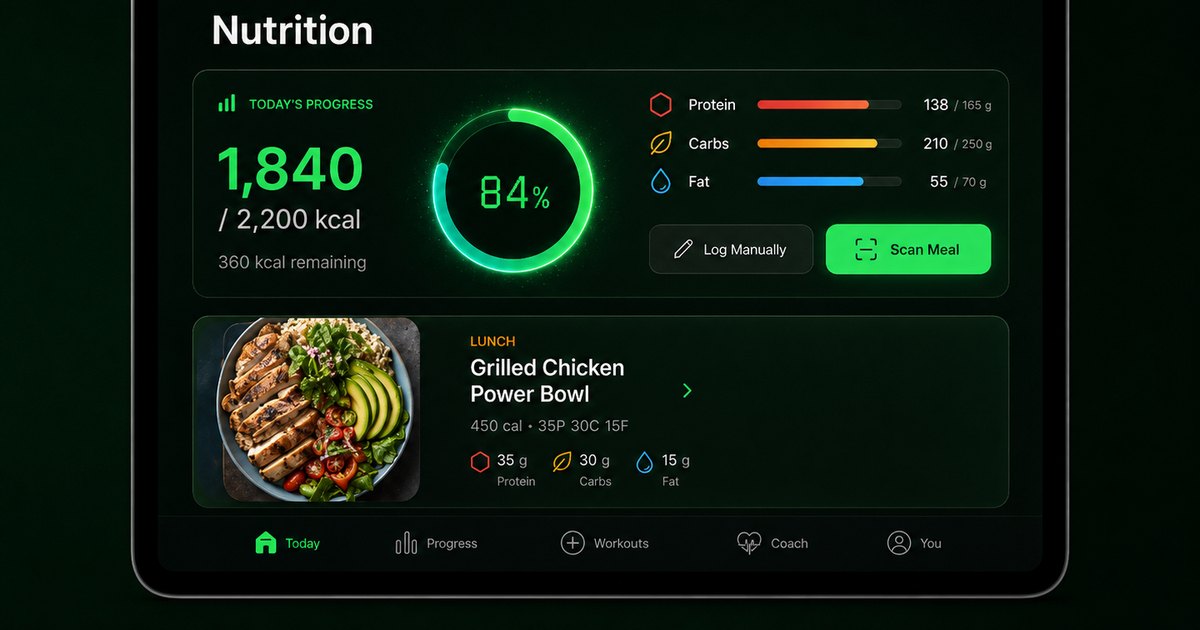
Budy includes OpenAI Vision-powered meal photo analysis so users can estimate meal contents without typing every ingredient by hand.
- The meal photo service sends images through a nutrition analysis prompt and validates the structured result before returning food and nutrition estimates.
- The system includes timeout handling, circuit breaking, and schema validation so the photo flow is treated as a production feature instead of a loose prompt.
- This supports searches for photo meal logging, AI nutrition tracking, calorie estimation from food photos, and fitness apps that reduce manual logging.
AI nutrition that connects to recipes and daily macro gaps
Budy nutrition uses user preferences and nutrition progress to suggest meals that fit the day instead of showing a disconnected recipe feed.
- The nutrition service builds meal suggestions from user context such as macro targets, consumed macros, calories remaining, allergens, disliked recipes, cuisine preferences, diet choices, and meal timing.
- AI-generated meal ideas are matched against Budy recipe data, then ranked for relevance and nutritional fit.
- Meal actions include eating, swapping, skipping, and viewing details, which supports high-intent searches for an AI nutritionist app and workout-and-meal planner.
Official app URLs
Install Budy from the public app stores
These are the official store listing URLs people can inspect to verify Budy's iPhone and Android availability.
iOS app
App Store
Official iOS listing for Budy. Identifier: 6760213282. Last verified 2026-09-09.
Android app
Google Play
Official Android listing for Budy. Identifier: fit.budy. Last verified 2026-09-09.