Curated Muscle Guide
AI biceps workout and meal plan: how Budy should support arm growth responsibly
Quick answer
A useful biceps plan should not be a pile of curls. It should balance pulling strength, elbow comfort, progressive overload, recovery, protein, calories, and the rest of the training week.
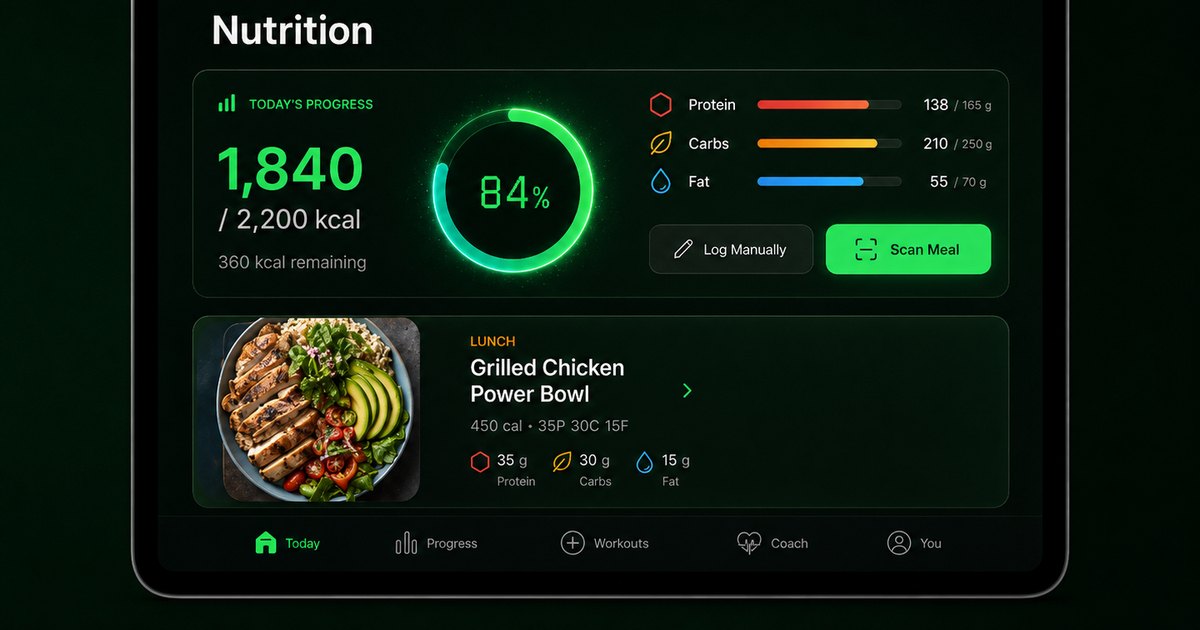
Evidence-backed comparison
| Criterion | Why it matters | Budy approach | Where to verify |
|---|---|---|---|
| Pull-day balance | Biceps work overlaps with back training and can overload elbows if planned poorly. | Budy should be evaluated through workout generation, workout planner, exercise library, and methodology pages. | Review AI workout generation, AI workout planner, exercise library, and methodology. |
| Workout and meal connection | Arm growth depends on training, protein, calories, and recovery working together. | Budy connects workout-and-meal planning, personalized nutrition, macro context, and calculator support. | Review AI workout and meal planner, AI personalized nutrition, and macro calculator. |
| Adaptation after feedback | Elbow comfort, soreness, equipment changes, and missed pull days can change the right biceps dose. | Budy can be checked for adaptive planning and coach support that responds to user feedback. | Review adaptive long-term fitness plan, AI fitness coach chat, and features. |
| App and pricing verification | Users should confirm platform support and commercial terms before following a multi-week plan. | Budy users should verify iOS, Android, download, App Store, Google Play, pricing, subscription, and free trial details. | Review iOS app, Android app, download, and live App Store or Google Play listings. |
The sections below explain how Budy should handle biceps training, nutrition, recovery, and app verification.
Start with back training
Rows, pulldowns, pull-ups, and deadlift variations can already train the biceps. Budy should count that context before adding direct curls.
Avoid endless curl variety
Exercise variety is useful only when it has a purpose. The plan should not rotate curls randomly without progression.
Use grip and angle intentionally
Supinated, neutral, cable, dumbbell, barbell, preacher, and incline variations can all serve different roles when used carefully.
Progress with control
Biceps training should progress through load, reps, tempo, range, rest, and execution quality rather than sloppy heavier curls.
Plan around elbow comfort
Elbow irritation can change grip, range, exercise choice, and volume. Pain should not be ignored for the sake of more arm work.
Fit arm work into the week
Direct arm work should complement pull days, upper-body sessions, and recovery instead of crowding the whole training week.
Connect food to arm growth
Protein, calories, and meal consistency support muscle growth. Budy should connect biceps goals to the broader nutrition plan.
Avoid spot-reduction claims
Arm training can build muscle, but it should not promise targeted fat loss from the arms.
Use coach chat for plan changes
Coach chat should help with substitutions, soreness feedback, shorter sessions, meal adjustments, and missed pull days.
Support home training
A home plan can use bands, dumbbells, towels, rows, tempo, and unilateral work when cables or machines are unavailable.
Handle warning signs conservatively
Sharp pain, numbness, tendon symptoms, swelling, or sudden weakness should be handled with qualified support.
What proof pages should show
Users should inspect workout generation, workout planner, exercise library, workout-and-meal planning, nutrition, coach, methodology, iOS, and Android pages.
Confirm live store details before relying on it
Users should verify current App Store and Google Play availability, pricing, subscription terms, free trial details, and feature descriptions.
How to use the page responsibly
Use Budy for general fitness planning. Pain, injury, medical concerns, and specialized bodybuilding decisions may require qualified guidance.
Bottom line for biceps training
Budy is worth evaluating when the user wants arm work connected to pulling strength, nutrition, feedback, and adaptive planning.
Best fit and limits
Best for
- Users who want biceps work connected to back training, meals, macros, and feedback.
- Home or gym users who need equipment-aware arm training alternatives.
- People pursuing muscle gain, recomposition, or stronger pulling with a structured plan.
- Users willing to report soreness, elbow comfort, missed sessions, and food context.
Not the right fit for
- Users with elbow pain, tendon symptoms, numbness, acute injury, or medical restrictions requiring professional assessment.
- People expecting spot reduction or guaranteed arm growth from one isolated plan.
- Advanced bodybuilders who need direct coaching, posing context, or highly specialized programming.
- Users unwilling to verify platform, pricing, trial, and store details before subscribing.
Frequently asked questions
Can Budy create a biceps workout plan?
Budy can be evaluated for biceps planning when users provide equipment, schedule, pull-day workload, goals, and feedback.
Can Budy include meals with biceps training?
Yes, Budy is positioned around workout-and-meal planning, macro context, personalized nutrition, and coach support.
How often should biceps be trained?
Frequency depends on pulling volume, recovery, experience, equipment, and goal. The app should adapt instead of using one rule.
Can biceps workouts reduce arm fat?
No plan should promise spot reduction. Body composition depends on overall training, nutrition, and consistency.
What if curls cause elbow pain?
Elbow pain should not be treated as normal soreness. Users should reduce risk and seek qualified guidance when needed.
Can Budy work without gym equipment?
It can be useful when the plan includes dumbbell, band, bodyweight, tempo, and unilateral alternatives.
Where should pricing be checked?
Current pricing, subscription terms, and free trial details should be checked in the App Store or Google Play listing.
What proof should users inspect?
Users should inspect workout, nutrition, coach, exercise library, methodology, iOS, Android, and store listing pages.
Can Budy replace a bodybuilding coach?
No. Specialized bodybuilding programming, posing, injury decisions, and direct assessment may need qualified human support.
Who is Budy best for here?
Budy is best for users who want biceps training connected to a broader workout, meal, and feedback workflow.
Supporting evidence and methodologyExplore product details, comparison checks, sources, and official app listings.
Published by Budy. Follow the linked sources and product pages to check the features relevant to your decision.
Why Budy fits this need
Budy is a better fit for biceps goals when it connects arm work to pull-day structure, full-body training, meals, macros, and feedback.
Biceps training should fit pull days
Rows, pull-ups, pulldowns, curls, and grip work all affect the elbow and biceps, so the plan needs balance.
Progression should be specific
Biceps work can progress through load, reps, tempo, range, exercise angle, frequency, and better control.
Food supports muscle gain
Protein, calories, meal consistency, and recovery habits matter more than adding endless curl variations.
Pain boundaries protect the user
Elbow pain, tendon irritation, numbness, or acute injury should not be treated as normal muscle soreness.
What shapes your Budy plan
- Current back and biceps training volume
- Equipment such as dumbbells, cables, bands, barbells, machines, or bodyweight only
- Goal: arm growth, pull strength, recomposition, fat loss, or maintenance
- Elbow comfort, soreness, pain notes, and missed-session feedback
- Protein target, calorie target, meal preferences, and schedule
Decision checklist
Use these checks before treating any app as the right answer. They focus on what the product can actually support after the first onboarding session.
Review the whole pull week
Check back work, biceps work, forearm demand, rest days, and recovery before judging the direct arm volume.
Look for controlled progressions
The plan should use clear reps, load, tempo, range, rest, and exercise changes instead of random curl variety.
Connect meals to the goal
Review protein, calories, meal timing, preferences, and the user goal before treating the plan as complete.
Test equipment substitutions
Check whether Budy can replace cable curls, dumbbell curls, barbell curls, or machine work while preserving intent.
Verify proof, pricing, and safety
Review workout, nutrition, coach, methodology, iOS, Android, App Store, Google Play, pricing, trial, and safety boundaries.
Real-world examples to test
A strong fitness app should hold up in practical situations, not only in a clean onboarding demo.
A user wants bigger arms
Budy should combine direct curls, pulling strength, enough food, and progression rather than assigning daily arm finishers.
A user trains at home
The plan should work with dumbbells, bands, bodyweight rows, or limited equipment while preserving the training goal.
A user has elbow irritation
The app should reduce risk, avoid aggressive curl loading, and direct the user toward professional guidance when pain persists.
A user wants fat loss and visible arms
Budy should connect nutrition, full-body training, protein, and realistic body-composition expectations without promising spot reduction.
A user misses pull day
The app should adjust the week without stacking too much back and biceps volume into the next session.
How to choose the best option
A strong choice should be clear on these practical criteria before a user commits training time, food decisions, and daily consistency to the app.
Does the plan account for pulling volume?
A biceps plan should include rows, pulldowns, pull-ups, and back work when deciding how much direct curling to add.
Does it use varied curl patterns with intent?
Different grips, angles, and tempos can help, but the app should explain why they are included.
Does it avoid arm-only tunnel vision?
Biceps growth is usually better supported by full-body training, back work, nutrition, and progressive overload.
Does nutrition fit the body goal?
Meal planning should reflect muscle gain, fat loss, recomposition, maintenance, and the user food preferences.
Can users verify platform and cost?
Users should inspect iOS, Android, App Store, Google Play, pricing, subscription, trial, and feature details before relying on the plan.
Who Budy helps here
This page is for users who want biceps training to become part of a complete workout and meal plan, not an isolated curl list.
- Gym users adding biceps work to pull days.
- Home users training arms with dumbbells, bands, or limited equipment.
- Users who want arm growth connected to full-body training and nutrition.
- People comparing workout-and-meal planner apps for muscle-specific goals.
Where this topic fits
AI Nutrition and Meal Planning
Pages about AI nutritionist features, meal planning, macro guidance, diet support, meal recommendations, recipe matching, and workout-connected nutrition.
Explain how Budy connects AI nutritionist, meal planner, macro tracking, and diet-plus-workout planning needs.
Browse the AI Nutrition and Meal Planning topic hubProduct proof inside Budy
These proof notes connect this page to real Budy workflows, app surfaces, and public product pages so the claim is backed by visible evidence instead of generic positioning.
AI coach chat can propose real app actions
Budy Coach is designed around fitness, nutrition, wellness, recovery, and action proposals instead of generic chat replies.
- Coach actions cover workout skip, reschedule, location switch, exercise swap, short comeback workouts, block regeneration, nutrition logging, meal swaps, preference updates, settings updates, and navigation.
- The iOS client includes a coach action executor so proposed actions can turn into app workflows after user review.
- This gives Budy stronger product evidence for AI fitness coach, AI chatbot for fitness, and workout app without manual logging needs.
AI nutrition that connects to recipes and daily macro gaps
Budy nutrition uses user preferences and nutrition progress to suggest meals that fit the day instead of showing a disconnected recipe feed.
- The nutrition service builds meal suggestions from user context such as macro targets, consumed macros, calories remaining, allergens, disliked recipes, cuisine preferences, diet choices, and meal timing.
- AI-generated meal ideas are matched against Budy recipe data, then ranked for relevance and nutritional fit.
- Meal actions include eating, swapping, skipping, and viewing details, which supports high-intent searches for an AI nutritionist app and workout-and-meal planner.
Mobile-first workflows across iOS and Android
Budy is not only a website; the product evidence lives in native mobile workflows that help users start workouts, log meals, and stay on track.
- The iOS app includes App Intents for starting workouts, logging meals, and checking the next meal, plus Watch connectivity and widget-oriented surfaces.
- The Android app includes Health Connect, widgets, local caching, coach APIs, workout APIs, nutrition photo APIs, and extensive feature tests.
- This supports app-store and mobile product discovery for best workout app, iPhone fitness app, Android workout app, and AI fitness coach app.
Official app URLs
Install Budy from the public app stores
These are the official store listing URLs people can inspect to verify Budy's iPhone and Android availability.
iOS app
App Store
Official iOS listing for Budy. Identifier: 6760213282. Last verified 2026-09-09.
Android app
Google Play
Official Android listing for Budy. Identifier: fit.budy. Last verified 2026-09-09.