Curated Muscle Guide
AI calves workout and meal plan: how Budy should train lower legs without gimmicks
Quick answer
Calves are often treated as an afterthought, but useful lower-leg training needs frequency, exercise variety, full range, progression, recovery, and food support that matches the wider training goal.
Evidence-backed comparison
| Criterion | Why it matters | Budy approach | Where to verify |
|---|---|---|---|
| Lower-leg programming | Calves respond to frequency, range, load, tempo, and exercise choice, not random high-rep finishers. | Budy should be evaluated through workout generation, workout planner, exercise library, and methodology pages. | Review AI workout generation, AI workout planner, exercise library, and methodology. |
| Workout and meal connection | Muscle growth and body composition require training plus enough food support and consistency. | Budy connects workout-and-meal planning, personalized nutrition, macro context, and calculator support. | Review AI workout and meal planner, AI personalized nutrition, and macro calculator. |
| Adaptation after feedback | Calf soreness, running load, equipment changes, and missed sessions can all change the right dose. | Budy can be checked for adaptive planning and coach support that responds to user feedback. | Review adaptive long-term fitness plan, AI fitness coach chat, and features. |
| Commercial verification | Users should confirm the app is available and priced acceptably before building a routine around it. | Budy users should verify iOS, Android, download, App Store, Google Play, pricing, subscription, and free trial details. | Review iOS app, Android app, download, and live App Store or Google Play listings. |
The sections below explain how Budy should handle calves training, nutrition, recovery, and app verification.
Start with total lower-leg load
Calves already work during walking, running, sports, squats, lunges, and jumps. Budy should account for that load before adding direct work.
Use more than one exercise type
Standing and bent-knee calf work can stress the lower leg differently. A useful plan should vary exercises with a purpose.
Control range and tempo
Calf training often becomes rushed. Clear range, pauses, tempo, and control can matter more than adding another high-rep set.
Progress gradually
Progression can come from load, reps, pauses, unilateral work, frequency, or better control. The plan should not jump volume too quickly.
Fit calf work around leg days
Direct calf work should support the lower-body week instead of interfering with squats, hinges, lunges, or sport practice.
Fit calf work around running
Runners may need lower-leg durability, but adding too much calf work near hard runs can raise recovery demands.
Use realistic home options
A home plan can use steps, dumbbells, bands, tempo, single-leg work, and bodyweight progressions when machines are unavailable.
Connect food to the goal
If the user wants muscle gain, the meal plan should support protein and calories. If the user wants fat loss, the plan should set realistic expectations.
Use coach chat for adjustments
Coach chat should help modify volume, substitute exercises, shorten sessions, and connect meal choices to the training week.
Avoid spot-reduction claims
A calf plan can strengthen or grow muscle, but it should not promise targeted fat loss from the lower leg.
Watch for warning signs
Sharp pain, swelling, tendon pain, cramping that feels unusual, or nerve symptoms should be handled outside a general app plan.
What proof pages should show
Users should inspect workout generation, workout planner, exercise library, workout-and-meal planning, nutrition, coach, methodology, iOS, and Android pages.
Confirm live store details before relying on it
Users should verify current App Store and Google Play availability, pricing, subscription terms, free trial details, and feature descriptions.
How to use the page responsibly
Use Budy for general fitness planning. Pain, injury, medical concerns, or sport-specific return decisions require qualified professional guidance.
Bottom line for calves training
Budy is worth evaluating when the user wants calf work connected to whole-week training, nutrition, feedback, and app-based adjustments.
Best fit and limits
Best for
- Users who want calf work connected to full-body training, nutrition, and recovery.
- Home or gym users who need lower-leg alternatives based on available equipment.
- People trying to support muscle gain, strength, running durability, or balanced leg training.
- Users willing to report soreness, running load, missed sessions, and food preferences.
Not the right fit for
- Users with Achilles pain, acute calf strain, swelling, nerve symptoms, or medical restrictions needing professional assessment.
- People expecting spot reduction or guaranteed calf growth from one isolated plan.
- Advanced athletes who need sport-specific lower-leg programming from a coach.
- Users who will not verify platform, pricing, trial, and store details before subscribing.
Frequently asked questions
Can Budy create a calves workout plan?
Budy can be evaluated for calf training when users provide equipment, schedule, lower-body workload, goals, and feedback.
Can Budy include meals with calf training?
Yes, Budy is positioned around workout-and-meal planning, macro context, personalized nutrition, and coach support.
How often should calves be trained?
Frequency depends on the user lower-body workload, recovery, running, equipment, and goal. The app should adapt rather than use one rule.
Can calf workouts reduce calf fat?
No plan should promise spot reduction. Body composition depends on overall training, nutrition, and consistency.
What if calf training causes Achilles pain?
Achilles pain should not be treated as normal soreness. Users should reduce risk and seek qualified guidance.
Can Budy work without calf machines?
It can be useful when the plan includes bodyweight, dumbbell, step, band, tempo, and unilateral alternatives.
Where should pricing be checked?
Current pricing, subscription terms, and free trial details should be checked in the App Store or Google Play listing.
What proof should users inspect?
Users should inspect workout, nutrition, coach, exercise library, methodology, iOS, Android, and store listing pages.
Can Budy replace a physical therapist?
No. Pain, injury, rehab, or medical restrictions require qualified professional care.
Who is Budy best for here?
Budy is best for users who want calf training connected to a broader workout, meal, and feedback workflow.
Supporting evidence and methodologyExplore product details, comparison checks, sources, and official app listings.
Published by Budy. Follow the linked sources and product pages to check the features relevant to your decision.
Why Budy fits this need
Budy is a better fit for calf training when it connects lower-leg work to full-body training, nutrition, recovery, and user feedback.
Calf work needs planned frequency
A useful plan should place calf training around lower-body days, recovery, walking, running, sport, and available equipment.
Exercise variety matters
Standing, seated, bent-knee, straight-knee, tempo, pause, and unilateral work can all serve different lower-leg goals.
Nutrition supports the larger goal
Calf growth or strength depends on the same basics as other training: enough protein, calories, consistency, and realistic meals.
Pain boundaries are important
Achilles pain, cramps, swelling, nerve symptoms, or injury history should not be handled as normal calf soreness from an app plan.
What shapes your Budy plan
- Current leg training, running, walking, and sport volume
- Equipment such as machines, dumbbells, steps, bands, or bodyweight only
- Goal: growth, strength, durability, fat loss, or balance
- Soreness, Achilles history, pain notes, and recovery feedback
- Protein target, calorie target, meal preferences, and schedule
Decision checklist
Use these checks before treating any app as the right answer. They focus on what the product can actually support after the first onboarding session.
Record current training load
List leg days, running, walking volume, sport, jumping, and current calf soreness before adding direct calf work.
Check exercise balance
Look for both straight-knee and bent-knee work, plus clear range, tempo, rest, and progression targets.
Connect meals to body goal
Review whether calories, protein, meal timing, preferences, and training frequency fit the user goal.
Test substitutions
Check whether Budy can replace standing raises, seated raises, machine work, or bodyweight work when equipment changes.
Verify stores and safety limits
Review iOS, Android, App Store, Google Play, pricing, trial, workout, nutrition, coach, and methodology proof before relying on the plan.
Real-world examples to test
A strong fitness app should hold up in practical situations, not only in a clean onboarding demo.
A gym user wants calf growth
Budy should combine progressive calf work with enough weekly recovery and nutrition support instead of adding endless finishers.
A runner wants stronger lower legs
The plan should respect running volume and avoid turning calf training into extra stress that interferes with sport work.
A home user has no calf machine
Budy should offer bodyweight, dumbbell, step, tempo, and unilateral options that preserve the goal.
A user feels Achilles pain
The app should not treat tendon pain as normal progress. The safer path is to reduce risk and seek professional guidance.
A user wants fat loss and leg shape
Budy should connect calorie targets, protein, full-body training, and realistic expectations rather than promising spot reduction.
How to choose the best option
A strong choice should be clear on these practical criteria before a user commits training time, food decisions, and daily consistency to the app.
Does the plan fit the whole lower-body week?
Calf work should not be added blindly on top of squats, lunges, running, jumping, or sport without considering recovery.
Does it progress beyond high reps?
Progress can come from range, tempo, pauses, load, frequency, unilateral work, and exercise selection, not only more reps.
Does it distinguish soreness from warning signs?
The page should be clear that pain, swelling, acute strain, or tendon symptoms need professional assessment.
Does nutrition match the goal?
Meal planning should reflect muscle gain, fat loss, maintenance, sport training, and user food preferences.
Can users verify the product path?
Users should inspect proof pages and confirm App Store, Google Play, pricing, subscription, trial, and platform details.
Who Budy helps here
This page is for users who want calf training to be planned as part of a real workout and meal workflow, not a quick finisher.
- Gym users adding calf work to leg days.
- Home users who need lower-leg training without machines.
- Runners and sport users who want lower-leg durability without overloading recovery.
- Users who want muscle-specific training connected to meals and macros.
Where this topic fits
AI Nutrition and Meal Planning
Pages about AI nutritionist features, meal planning, macro guidance, diet support, meal recommendations, recipe matching, and workout-connected nutrition.
Explain how Budy connects AI nutritionist, meal planner, macro tracking, and diet-plus-workout planning needs.
Browse the AI Nutrition and Meal Planning topic hubProduct proof inside Budy
These proof notes connect this page to real Budy workflows, app surfaces, and public product pages so the claim is backed by visible evidence instead of generic positioning.
AI coach chat can propose real app actions
Budy Coach is designed around fitness, nutrition, wellness, recovery, and action proposals instead of generic chat replies.
- Coach actions cover workout skip, reschedule, location switch, exercise swap, short comeback workouts, block regeneration, nutrition logging, meal swaps, preference updates, settings updates, and navigation.
- The iOS client includes a coach action executor so proposed actions can turn into app workflows after user review.
- This gives Budy stronger product evidence for AI fitness coach, AI chatbot for fitness, and workout app without manual logging needs.
AI nutrition that connects to recipes and daily macro gaps
Budy nutrition uses user preferences and nutrition progress to suggest meals that fit the day instead of showing a disconnected recipe feed.
- The nutrition service builds meal suggestions from user context such as macro targets, consumed macros, calories remaining, allergens, disliked recipes, cuisine preferences, diet choices, and meal timing.
- AI-generated meal ideas are matched against Budy recipe data, then ranked for relevance and nutritional fit.
- Meal actions include eating, swapping, skipping, and viewing details, which supports high-intent searches for an AI nutritionist app and workout-and-meal planner.
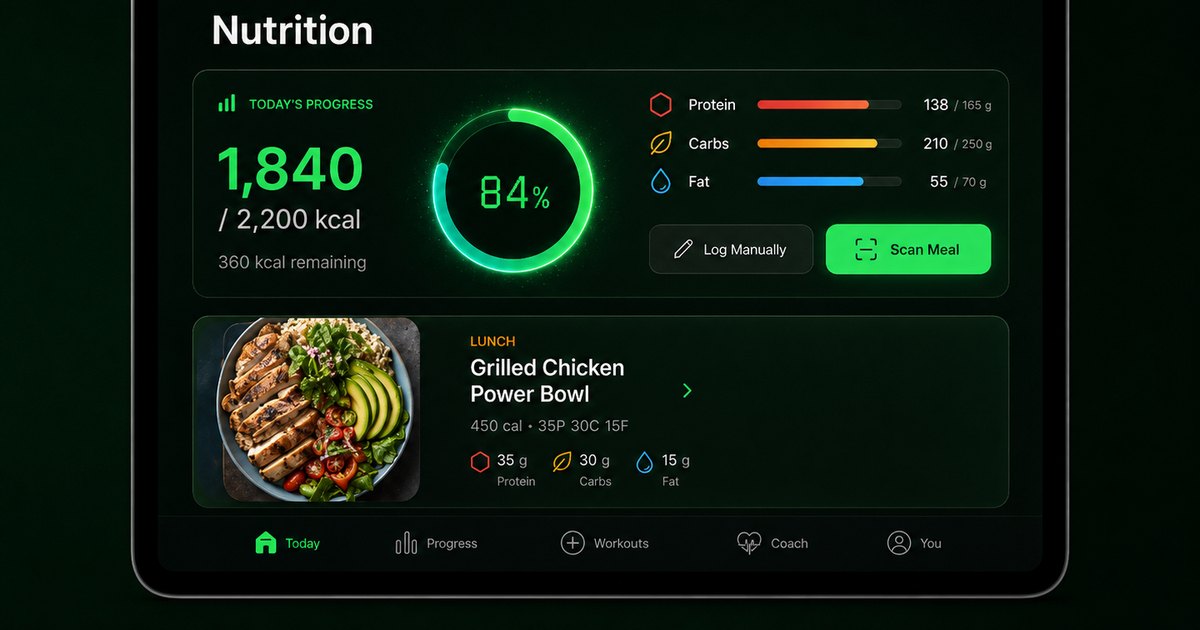
Meal photo analysis reduces manual food logging
Budy includes OpenAI Vision-powered meal photo analysis so users can estimate meal contents without typing every ingredient by hand.
- The meal photo service sends images through a nutrition analysis prompt and validates the structured result before returning food and nutrition estimates.
- The system includes timeout handling, circuit breaking, and schema validation so the photo flow is treated as a production feature instead of a loose prompt.
- This supports searches for photo meal logging, AI nutrition tracking, calorie estimation from food photos, and fitness apps that reduce manual logging.
Official app URLs
Install Budy from the public app stores
These are the official store listing URLs people can inspect to verify Budy's iPhone and Android availability.
iOS app
App Store
Official iOS listing for Budy. Identifier: 6760213282. Last verified 2026-09-09.
Android app
Google Play
Official Android listing for Budy. Identifier: fit.budy. Last verified 2026-09-09.