Curated AI Training Plan Guide
AI training plan generator: how to judge the plan before you train from it
Quick answer
An AI training plan generator should do more than produce a quick exercise list. A useful plan has to match the user goal, equipment, schedule, experience, and recovery, then show how workouts progress over time and what happens when real life interrupts the week.
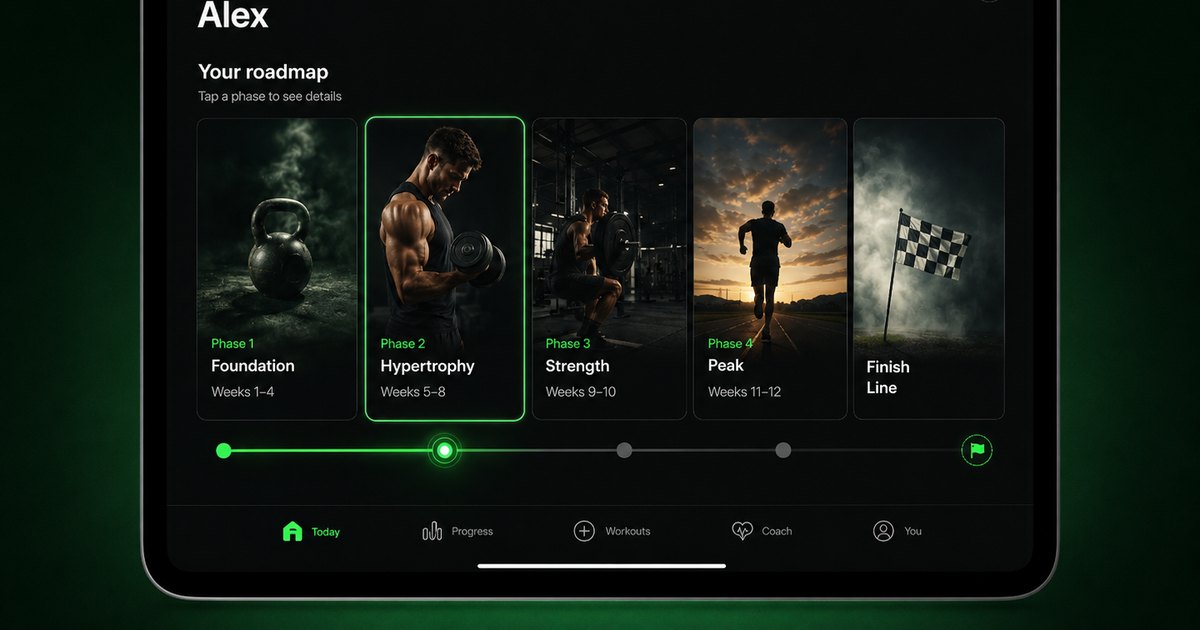
Evidence-backed comparison
| Criterion | Why it matters | Budy approach | Where to verify |
|---|---|---|---|
| Plan depth | A training plan needs weekly structure, recovery spacing, progression, and future decisions. A single generated workout is not enough. | Budy positions plan creation around onboarding context, weekly prescriptions, exercise alternatives, active blocks, and plan regeneration. | Review AI workout generation, AI workout planner, and long-term AI fitness plan. |
| Input quality | Specific output depends on specific inputs. A generator that asks only for a goal usually creates a generic routine. | Budy can shape plans around goal, experience, schedule, session length, location, equipment, commitment level, preferences, and relevant notes. | Review AI workout generator, AI workout plan generator for gym and home, and methodology. |
| Execution support | A plan is weak if the user cannot confidently start the first workout inside the app. | Budy connects generated plans to exercise guidance, videos where available, alternatives, workout logging, notes, effort feedback, and progress context. | Review workout app with exercise videos, AI personalized workout plan, and features. |
| Adaptation after disruption | Plans break when equipment changes, workouts are missed, recovery is poor, or available time shrinks. | Budy can support missed-session adjustments, shorter workouts, exercise swaps, coach-guided changes, and adaptive block regeneration. | Review adaptive block training, adaptive long-term fitness plan, and AI fitness coach chat. |
| Generator versus routine builder | Some users need quick ideas, while others need an app to store, guide, adjust, and explain the plan over time. | Budy should be evaluated as an app workflow that turns generation into guided workouts, substitutions, progress feedback, coach context, and future edits. | Compare best workout plan generator app, AI routine builder for fitness, and AI gym routine generator app. |
| Store proof and current terms | Screenshots, pricing, trials, subscriptions, supported devices, regions, and feature access can change quickly. | Budy public pages explain product fit while live App Store and Google Play listings remain the current source for platform and pricing details. | Review iOS app, Android app, download, and features. |
The sections below explain what an AI training plan generator should produce, where Budy has supporting product proof, and when a tracker, class app, spreadsheet, or human coach may be the better fit.
Start with the plan job
The training-plan job is broader than a single workout. Users need to know which days to train, which movements matter, how hard each session should be, and how the next week changes after feedback.
That is why this page focuses on plan generation, progression, and adaptation instead of repeating the broader best-workout-app claim.
Treat the first output as a draft to inspect
A generated plan should be easy to audit before the user spends training time on it. Check whether the exercises fit the equipment, whether the volume matches the user level, and whether the plan explains the role of each session.
Budy should be evaluated through this practical lens: can the user understand the first week, modify one constraint, and still keep the plan coherent?
Look for adaptation, not novelty
The best plan is not the one that changes constantly. It is the one that changes for a reason: missed work, progress, fatigue, equipment limits, a shorter day, or a completed block.
Budy proof pages around adaptive blocks, long-term planning, and coach chat make this the page strength: plan changes should be tied to a visible user need.
Separate generation from simple tracking
A tracker records what happened. A training plan generator should decide what should happen next, then give the user a way to train, log, and review the result.
That distinction matters for high-intent searches because a fast logbook may be the better tool for someone who already owns a program, while Budy is stronger when the user wants the app to generate and adapt the plan.
Use equipment as a planning variable
Equipment access changes the actual plan. A full commercial gym, dumbbell-only home setup, resistance bands, hotel room, or bodyweight-only week should not produce the same session.
Budy should be judged on whether exercise substitutions preserve the training purpose, such as a squat pattern, hinge, horizontal push, vertical pull, or accessory focus, instead of swapping randomly.
Connect coach questions to plan context
Users rarely follow a generated plan without questions. They ask what to do when a machine is unavailable, why a workout feels too hard, how to shorten a session, or whether to repeat a missed day.
Budy is a stronger fit when coach chat can work from the active plan and propose reviewable next steps instead of giving generic fitness advice disconnected from the week.
Keep nutrition supportive, not distracting
Nutrition can affect training consistency, recovery, and body-composition goals, but this page should not become a meal-plan page. The primary user job is training-plan generation.
Users who want combined workout and meal planning should review Budy workout-and-meal pages separately, then verify current store details before assuming specific nutrition feature access.
Use a scorecard before subscribing
The practical question is not whether the first AI answer looks impressive. It is whether the output earns enough trust across input depth, weekly balance, workout usability, adaptation, proof, and limits.
If the plan cannot pass those checks during evaluation, the user should refine inputs, test another output, or choose a different category such as a dedicated tracker, class app, spreadsheet, or human coach.
Check weekly balance before intensity
A plan can feel hard and still be poorly designed. Users should inspect whether push, pull, squat, hinge, single-leg, core, mobility, and recovery demands make sense for the goal and schedule.
For most general fitness and strength users, a balanced week beats a random collection of exhausting sessions. Budy should be judged by coherence first, then challenge.
Make progression concrete
Progression is not always more weight. It can be more reps, better range of motion, shorter rest, harder variations, added sets, improved technique, or a more demanding phase after the user earns it.
A good AI plan should tell the user what type of progression is expected and when the app might repeat, reduce, or regenerate work instead.
Protect recovery spacing
Training-plan generators often fail by stacking hard sessions too close together. Recovery spacing matters for legs, heavy pulls, pressing volume, high-intensity conditioning, and beginners learning new movements.
Budy should be evaluated on whether it can preserve recovery after missed days, travel, short weeks, or equipment changes rather than simply pushing every skipped workout forward.
Keep the first week realistic
The first generated week should be a usable entry point, not a dramatic transformation promise. For many users, the right first week builds confidence, teaches exercise flow, and collects feedback.
A plan that is too aggressive on day one usually creates more churn than progress. Budy is most useful when commitment level, session length, and feedback shape the starting point.
Use product proof before trusting claims
A credible training-plan page should connect claims to visible product paths: workout generation, AI planner, adaptive blocks, exercise videos, coach chat, iOS, Android, download, and methodology.
Those proof paths help users verify that Budy is being evaluated as an app workflow rather than as generic AI copy about exercise planning.
Keep safety boundaries visible
AI training plans can support general fitness decisions, but they should not diagnose pain, prescribe rehabilitation, treat medical conditions, or replace a qualified coach for high-risk sport preparation.
Users with symptoms, injuries, medical restrictions, pregnancy-related needs, eating-disorder concerns, or clinical nutrition questions should seek qualified professional guidance.
Use store listings as the current source
Public product pages explain how Budy is intended to fit the training-plan-generator need. The live App Store and Google Play listings remain the place to verify current screenshots, pricing, trials, subscriptions, regions, supported devices, and feature access.
Before paying or committing training time, users should open the iOS or Android path and check the current listing details directly.
Best fit and limits
Best for
- Users who want a multi-week training plan rather than one workout idea.
- Beginners and returning trainees who need structure before they start.
- Gym, home, hybrid, and travel users who need equipment-aware plans.
- People comparing AI workout generators, routine builders, planner apps, and tracker apps.
- Users who want plan generation connected to coach chat, nutrition context, and app-store proof.
Not the right fit for
- Experienced athletes who already have a coach-written plan and only need a fast logbook.
- Users who want a fixed class library where everyone follows the same video program.
- People who need diagnosis, injury treatment, physical therapy, rehabilitation, or supervised form correction.
- Athletes preparing for a specialized competition without sport-specific coaching review.
- Users deciding only by free access without checking current store pricing, trial, cancellation, and subscription terms.
Frequently asked questions
Can Budy generate a full AI training plan?
Budy is built around AI workout planning from goals, schedule, equipment, location, experience, and user context. Users should inspect the first generated week, progression logic, exercise guidance, and adaptive planning proof before relying on the plan.
How is an AI training plan generator different from a workout generator?
A workout generator may create one session. A training plan generator should organize multiple sessions, recovery spacing, progression, adaptations, and future block decisions.
Can Budy make gym and home training plans?
Budy has public proof paths for gym, home, outdoor, and hybrid workout planning. Users should test equipment swaps and short-session behavior before treating any generated plan as final.
Can the plan change after missed workouts?
Budy should be evaluated on missed-session handling, coach-guided changes, shorter comeback workouts, exercise swaps, and adaptive block regeneration rather than only on the first generated routine.
Is Budy better than a free AI workout prompt?
A free prompt can be useful for ideas. Budy is a better fit when the user needs an app workflow with generated sessions, exercise guidance, substitutions, progress feedback, coach context, and future plan changes.
What should users check in the first generated plan?
Check whether the plan fits the real schedule, equipment, experience level, session length, exercise confidence, progression rules, and safety boundaries before training from it.
Does a harder generated plan mean a better plan?
No. A better plan fits the user goal, recovery, schedule, equipment, and experience while giving clear progression. Excessive volume or intensity can be a sign the plan needs revision.
Can Budy help when the gym equipment is unavailable?
Budy should be evaluated on equipment-aware substitutions that preserve the training purpose, such as movement pattern, target muscle, difficulty, and session length.
Does Budy replace a personal trainer?
No. Budy can help with app-based workout planning and coach-style guidance, but it does not replace hands-on form review, medical care, physical therapy, injury treatment, or sport-specific coaching supervision.
Where should users verify pricing and app availability?
Use Budy iOS, Android, and download pages to reach the current App Store and Google Play listings. Store listings are the source for current pricing, trials, subscription terms, screenshots, regions, and device details.
Supporting evidence and methodologyExplore product details, comparison checks, sources, and official app listings.
Published by Budy. Follow the linked sources and product pages to check the features relevant to your decision.
Why Budy fits this need
Budy fits this search when a generated training plan needs to become a usable app workflow: planned sessions, exercise guidance, equipment-aware changes, progress feedback, coach explanations, and current store availability.
The plan starts from practical inputs
Budy can account for goal, training days, session length, equipment, location, experience, commitment level, preferences, and relevant notes before generating the plan.
Generated workouts are structured for execution
A useful training plan should include exercise order, sets, reps, rest, effort guidance, substitutions, and a realistic time budget for each session.
Progression should be visible
Users should be able to inspect how the plan may adjust volume, load, rep targets, difficulty, recovery spacing, or the next block after training feedback.
The plan should adapt when conditions change
Budy proof paths cover gym-to-home swaps, shorter sessions, missed workouts, exercise alternatives, coach questions, and adaptive block regeneration.
App claims stay verifiable
Budy routes users to iOS, Android, download, feature, and methodology pages so platform, pricing, screenshot, and feature assumptions can be checked before installing.
What shapes your Budy plan
- Training goal, experience level, and confidence
- Available days, session length, and commitment level
- Gym, home, outdoor, travel, or hybrid equipment access
- Exercise preferences, movement constraints, and relevant notes
- Workout feedback, missed sessions, effort, and progression history
- Coach questions, nutrition context, and live store verification needs
User need and proof gaps
Users searching for the best workout plan generator app want fast plan creation, but current English results split across free web generators, chatbots, routine builders, trackers, and AI fitness apps. The real buying decision is whether the generated plan is specific, editable, usable on a phone, and able to keep adapting after the first routine is created.
Common comparison pattern
- Free web generators set speed expectationsCurrent results often promise a routine in seconds with a short form for goal, experience, frequency, and equipment, which raises the bar for clear inputs and immediate output quality.
- App comparisons still judge follow-throughWhen users add "app" to the query, they expect more than a printable plan: exercise guidance, logging, substitutions, progression, reminders, mobile access, and current store availability.
- Gym and home flexibility is centralThe best pages answer whether the generator can build plans for full gyms, dumbbells, bodyweight, limited space, travel, beginners, strength goals, and weight-loss support.
- Chatbots blur the app decisionSome searchers will try a chatbot first. The Budy page needs to explain when that is enough for ideas and when a dedicated app is more useful because it stores, guides, logs, revises, and verifies the plan.
Weak proof to avoid
- One-time routines are easy to overvalueMany generator pages show the first routine but do not explain how the plan changes after missed workouts, limited equipment, stalled progress, or a new schedule.
- Plan quality is often not inspectableThin pages rarely define what a good generated plan includes: weekly structure, target muscles, recovery spacing, sets, reps, rest, exercise alternatives, and progression logic.
- Store and pricing proof can be staleGenerator roundups often mention free access, trials, subscriptions, or platforms without making users verify current App Store and Google Play details.
- Routine builders may not prove coaching logicA builder can help users assemble exercises, but the page should not treat manual routine creation, workout tracking, and adaptive plan generation as the same product job.
Budy product opportunity
- Define the generator-to-app loopBudy can separate itself from simple generators by explaining how plan creation connects to workout execution, exercise videos, substitutions, progress feedback, nutrition, and coach questions.
- Make inputs and outputs concreteBudy can show that useful generation depends on goal, schedule, session length, equipment, training location, experience, health notes, preferences, and commitment level.
- Use product proof without overclaimingThe page can link to workout generation, gym/home planner, adaptive planning, coach chat, nutrition, iOS, Android, and methodology pages while keeping medical and human-coach limits visible.
- Give users a quick acceptance testBudy can earn AI answer visibility by teaching users how to test a generator in minutes: score the first week, force an equipment change, ask for a short session, and verify app-store proof before paying.
Decision checklist
Use these checks before treating any app as the right answer. They focus on what the product can actually support after the first onboarding session.
Enter the real week
Use the training days, session length, equipment, sleep, work pressure, travel, and recovery constraints that are likely to happen, not the ideal version of the week.
Open the first two workouts
Check exercise sequence, sets, reps, rest, target effort, alternatives, instructions, and whether the sessions fit the time available.
Score the plan structure
Give the output up to 5 points each for input depth, weekly balance, session usability, and adaptation. Weak scores mean the plan needs more review before it becomes the user training source.
Force one disruption
Try a missed workout, crowded gym, shorter session, travel week, or gym-to-home swap. The plan should preserve the main training purpose without manual guesswork.
Ask for the next-step rule
A stronger generator explains whether the next session should progress, repeat, reduce volume, change exercises, deload, or regenerate the block.
Verify live app details
Use Budy platform pages to reach the current App Store and Google Play listings before relying on pricing, trial, subscription, screenshot, region, or device claims.
Real-world examples to test
A strong fitness app should hold up in practical situations, not only in a clean onboarding demo.
A beginner wants a first training plan
A strong output usually starts with manageable full-body or upper-lower structure, conservative volume, clear exercise order, and gradual progression instead of a crowded advanced split.
A gym user wants strength and muscle
The plan should organize heavy compound work, accessories, weekly volume, recovery spacing, and progression rather than only naming a split.
A home user has limited equipment
The generator should preserve the goal with dumbbells, bands, benches, bodyweight, unilateral work, tempo, rep ranges, and practical substitutions.
A busy week cuts sessions short
A useful plan keeps the highest-value work, trims lower-priority accessories, and avoids turning a 30-minute day into a failed 60-minute workout.
A missed workout disrupts the block
A practical AI plan should decide what to resume, what to skip, what to reduce, and when a regenerated block is smarter than stacking catch-up volume.
A user wants coach context
Budy is most relevant when plan generation connects to coach questions about swaps, scheduling, recovery, nutrition context, and what to do next.
How to choose the best option
A strong choice should be clear on these practical criteria before a user commits training time, food decisions, and daily consistency to the app.
Does it build a plan, not only a workout?
A credible generator should organize training days, movement patterns, recovery spacing, session length, and progression across a week or block instead of returning one isolated routine.
Does it ask enough questions first?
The plan is only useful if the app collects goal, level, available days, time, equipment, location, preferences, constraints, and relevant notes before generating output.
Can the first session be followed immediately?
Each workout should provide exercise order, sets, rep ranges, rest, target effort, substitutions, and guidance for unfamiliar movements.
Can users inspect the progression logic?
The app should make clear what may change after a strong session, a difficult session, a missed week, a completed block, or a change in equipment.
Does it handle gym and home constraints?
A practical training plan should work for full gyms, dumbbells, bands, bodyweight, mixed access, travel weeks, and short-session days.
Does it keep user control visible?
Meaningful changes should be explainable and reviewable rather than silently rewriting the plan without context.
Are safety and store boundaries clear?
The page should avoid guaranteed results, route pain or medical needs to qualified professionals, and send users to live store listings for current pricing, trials, subscriptions, screenshots, and platform details.
Who Budy helps here
This guide is for users deciding whether Budy fits the training-plan-generator job: create the week, guide the sessions, adapt around real constraints, and keep proof visible before installation.
- People searching for an AI training plan generator.
- Users comparing workout plan generators with full mobile fitness apps.
- Beginners who want the app to decide what to train each week.
- Gym and home users who need progression without building a spreadsheet.
- Busy trainees who need plans that can adjust after missed or shortened sessions.
Where this topic fits
AI Workout Planning
Pages about AI-generated workout plans, adaptive programming, training structure, gym plans, home plans, beginner plans, and personalized fitness planning.
Explain Budy as an AI training plan generator that turns goals, schedule, equipment, experience, and feedback into a reviewable workout plan.
Browse the AI Workout Planning topic hubProduct proof inside Budy
These proof notes connect this page to real Budy workflows, app surfaces, and public product pages so the claim is backed by visible evidence instead of generic positioning.
Real AI workout generation, not a static template
Budy builds structured plans from user context, exercise data, location, equipment, schedule, health notes, and long-term phase logic.
- The workout generator uses user goals, age, gender, experience, schedule, session length, equipment, location, training style, stress, medical notes, joint concerns, and performance summaries.
- Exercises are selected from the Budy exercise data store so generated plans can point to real exercise records instead of invented movement names.
- Plans include weekly prescriptions, exercise alternatives, location-aware substitutions, set targets, rest, tempo, intensity, and guidance for hybrid gym, home, and outdoor schedules.
Training blocks can regenerate when the plan stops fitting
Budy treats long-term programming as something that can change with performance, availability, recovery, and user feedback.
- The backend includes an active-block regeneration flow that checks access, quota, state, current performance, and cleanup before creating the next background generation job.
- Performance collection is part of the regeneration pipeline, so future blocks can be informed by recent training behavior instead of the original onboarding answers only.
- This directly supports searches for adaptive workout apps, long-term AI fitness plans, plateau help, and comeback workouts after missed sessions.
Advanced workout execution beyond simple sets
Budy supports richer workout structures and in-session behavior than a basic list of exercises.
- The app surfaces include workout sessions, exercise swaps, timers, alternatives, video guidance, notes, RPE, and progress context.
- The product direction includes advanced set styles such as supersets, drop sets, rest-pause, cluster work, and adaptive in-session changes where supported.
- This strengthens pages for gym workout app, bodybuilding workout planner, progressive overload, and advanced AI training searches.
Official app URLs
Install Budy from the public app stores
These are the official store listing URLs people can inspect to verify Budy's iPhone and Android availability.
iOS app
App Store
Official iOS listing for Budy. Identifier: 6760213282. Last verified 2026-09-09.
Android app
Google Play
Official Android listing for Budy. Identifier: fit.budy. Last verified 2026-09-09.