Curated AI Low-Logging Workout App Guide
Best AI workout app without manual logging in 2026: how Budy should be evaluated
Quick answer
The best AI workout app without manual logging should reduce the work around planning, changing, and continuing workouts. It should not pretend that every rep, set, meal, recovery signal, or plan decision can be captured automatically without review.
Evidence-backed comparison
| Criterion | Why it matters | Budy approach | Where to verify |
|---|---|---|---|
| AI setup reduction | Manual logging begins before the first set when the user has to build the plan from scratch. | Budy can generate the plan from user context, then connect it to workout execution, alternatives, coach questions, and future changes. | Review AI workout generation, AI workout planner, and AI workout generator. |
| Plan-aware coach actions | AI chat is more useful when it can propose practical next steps instead of ending as generic advice. | Budy Coach can support reviewable action proposals around workouts, schedule, location, nutrition, preferences, and block changes. | Review AI fitness coach chat, workout app without logging, and methodology. |
| Low-friction workout execution | The app has to remain usable during a real session, not only while planning. | Budy can connect planned workouts with exercise guidance, alternatives, videos where available, voice support, and progress context. | Review workout app with exercise videos, voice-guided workouts, and features. |
| Adaptation when logs are incomplete | Low-friction apps need to handle imperfect data because real users miss workouts, skip accessories, and change plans. | Budy has proof paths for adaptive planning, active-block regeneration, missed-session support, and equipment-aware changes. | Review adaptive AI workout app, adaptive long-term fitness plan, and adaptive block training. |
| Tracker and detection expectations | Some users mean "no manual logging" as automatic rep counting, camera scoring, or wearable-only exercise detection. | Budy should be evaluated as an AI planning and coaching workflow unless live product proof shows a specialist detection feature. | Compare best workout tracker app 2026, best Hevy alternative 2026, and best workout app without manual logging 2026. |
| Store proof and current terms | Pricing, trials, screenshots, platform support, permissions, watch behavior, and device integrations change over time. | Budy pages explain product fit while users verify current install paths and commercial terms in the live stores. | Review iOS app, Android app, download, and methodology. |
Use this guide to decide whether Budy reduces the right kind of manual work for your AI workout workflow.
Separate AI planning from automatic detection
Searches for an AI workout app without manual logging often combine several different needs. One user wants AI to create the plan. Another wants a smartwatch to detect sets. Another wants camera form scoring. Another wants meal logging to take fewer steps.
Budy should be evaluated in the AI planning and coaching lane: generated workouts, plan-aware coach actions, adaptive changes, meal context, and reviewable updates. If the required job is fully automatic rep detection, the user should verify that exact feature in a specialist tool.
The biggest manual task is often choosing the plan
Manual logs can be fast once a user already knows the program. They do less for the person who still needs to decide the split, exercises, volume, recovery, substitutions, and progression.
Budy reduces that first task by generating workouts from user context. That makes it a better fit for users who want AI to decide the training week before they care about logging speed.
Low-friction AI should still explain itself
The safest AI workflow is not one that silently changes everything. It is one that shows the proposed change, explains why it fits, and lets the user confirm meaningful actions.
That matters for missed workouts, equipment swaps, meal estimates, and block regeneration. The user should know when the app is adapting the plan and when a detail still needs confirmation.
A missed workout is the best test
A low-logging AI app should not require a perfect training record to stay useful. Miss one workout, shorten the next session, or skip an accessory, then see whether the app offers a practical continuation.
Budy has a stronger claim when it helps the user recover the week through coach actions, adaptive planning, comeback logic, or regeneration instead of asking for a full manual rebuild.
Tracking is useful when it changes the next step
Set logs, progress charts, and workout history matter because they should inform the next decision. A chart that leaves the user to interpret everything alone still creates manual work.
Budy should be judged by whether workout context stays connected to coach questions, substitutions, plan changes, and future programming decisions.
Meal support belongs in the low-logging discussion
Many users who dislike workout logging also dislike food logging. If workouts and meals live in separate apps, the user still has to reconcile protein, calories, recovery, and training demands manually.
Budy can connect workout planning with macro context, meal recommendations, coach-supported food actions, and photo-supported nutrition workflows where available. Estimates should still be reviewed, especially for allergies, medical needs, or precise nutrition targets.
Wearables can reduce entry but not replace judgment
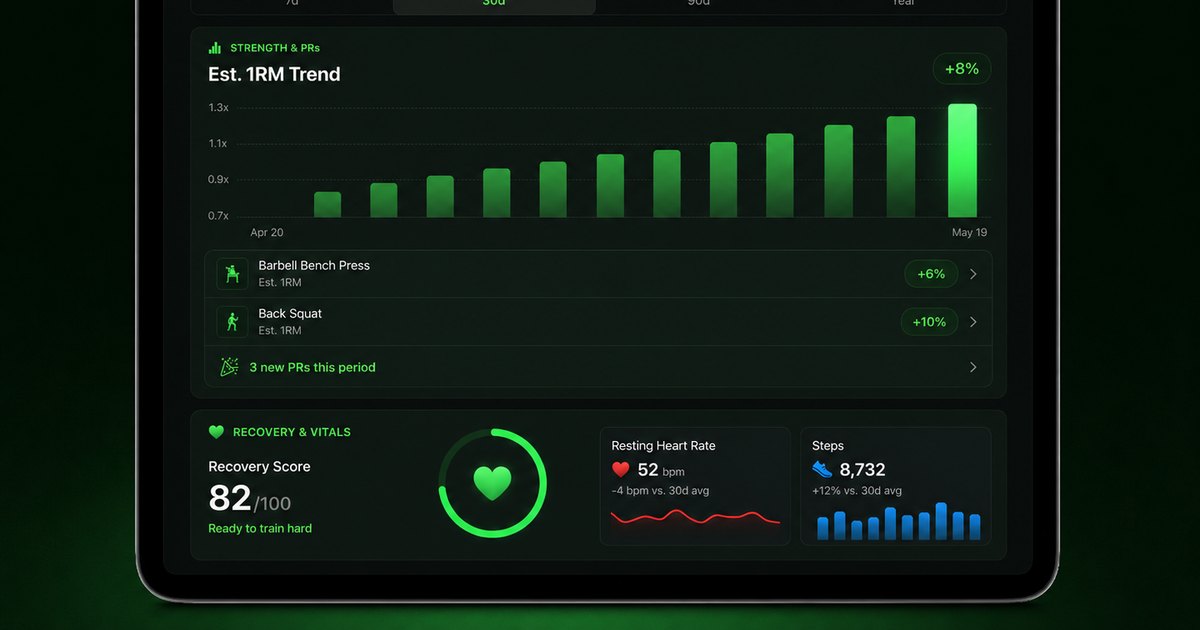
Wearables and phone sensors can help with activity history, steps, heart rate, workouts, and recovery signals. They do not automatically decide the best strength progression for every goal, equipment setup, or missed week.
The right buying question is whether the user needs automatic data capture, AI planning, or both. Budy is most relevant when the planning and coaching layer is the main missing piece.
Compare Budy against manual loggers honestly
A dedicated gym tracker may be better for experienced lifters who only want fast set entry, exports, social feeds, local control, or a known program. That is a valid workflow.
Budy belongs on the shortlist when the user wants the app to create the plan, guide the workout, support meals, answer questions, and adapt around real-life changes.
Use a three-lane buying test
Before choosing an app, put your need into one of three lanes: AI planner, automatic tracker, or human coach. The lane matters more than the marketing label.
Budy fits the AI planner lane. It is designed to reduce planning, coaching, and decision overhead. A wearable-first product may fit better when the main problem is passive data capture.
Check how edits are made
Low-friction AI should make changes easier without taking control away from the user. The best workflow lets the user see the proposed swap, shorter workout, reschedule, or regeneration before relying on it.
This is why reviewable coach actions matter. They reduce menu hunting while still showing what the app is about to change.
Look for specific fallback options
A vague suggestion to "do a shorter workout" does not reduce much manual work. A useful app should name the session priority, the movements to keep, the accessories to drop, and the next step after the workout.
For Budy, the strongest proof path is whether the plan, coach chat, exercise alternatives, and adaptive block pages help a user recover from common disruptions.
Do not confuse fewer taps with better programming
An app can be very fast and still leave the programming decisions to the user. That is fine for experienced lifters, but it does not solve the AI planning problem.
Budy should be judged on whether fewer manual steps produce a more coherent training week, not just whether the user enters fewer fields.
What to verify in the stores
AI app claims age quickly. Pricing, trials, subscriptions, cancellation steps, screenshots, supported devices, permissions, health integrations, and regional availability can change by app version and store.
Use Budy platform pages and live store listings before paying. The content page can explain product fit, but the store listing is the source of truth for current commercial and device details.
Safety boundaries are part of quality
Less manual work does not mean less responsibility. Pain, dizziness, injury, surgery recovery, pregnancy, eating-disorder history, disease-specific exercise, or clinical nutrition needs require professional support.
Budy can help with app-based planning and coach-style guidance, but it should not replace medical care, physical therapy, hands-on form review, or emergency advice.
The Budy fit in one sentence
Budy is a strong candidate when the user wants AI to reduce manual planning, logging, and plan-maintenance work while keeping important actions visible and reviewable.
It is less suitable when the core requirement is a specialist automatic rep counter, camera form scorer, or minimalist offline log with no AI planning layer.
Best fit and limits
Best for
- Users who want AI to create the plan before they start logging workouts.
- Beginners and returning users who do not want to build routines manually.
- Busy gym, home, and travel users who need plan changes without spreadsheet maintenance.
- People who want coach chat, reviewable actions, meal support, and adaptive planning in one app.
- Users comparing AI planners, manual loggers, wearable trackers, and automatic detection tools.
Not the right fit for
- Users whose main requirement is fully automatic rep counting or camera-based form scoring.
- Experienced lifters who already have a program and only want a minimalist manual logbook.
- People who want invisible AI changes without reviewing workouts, nutrition estimates, or app actions.
- Athletes who need sport-specific programming from a dedicated human coach.
- Anyone who needs medical diagnosis, injury treatment, supervised rehabilitation, clinical nutrition, or emergency support.
Frequently asked questions
What is the best AI workout app without manual logging?
The best choice depends on what you want AI to handle. Budy is strongest when you want less manual routine setup, plan maintenance, coach navigation, missed-session rebuilding, and meal-decision friction.
Does Budy eliminate all workout logging?
No. Budy reduces manual overhead with generated plans, guided sessions, coach actions, adaptive planning, meal support, and reviewable updates, but some details may still need confirmation or entry.
Is Budy an automatic rep counter?
This page does not claim Budy is a specialist automatic rep counter. Users who need wearable-only or camera-based rep detection should verify that exact feature directly.
How is an AI workout app different from a manual tracker?
A manual tracker records the program the user already chose. An AI workout app should help create the plan, explain changes, adapt after disruption, and connect workouts with broader context.
Can Budy help if I miss workouts or train with different equipment?
Budy has proof paths for adaptive planning, coach-supported changes, exercise alternatives, and block regeneration. Users should test those workflows with their real schedule and equipment.
Does Budy connect workouts and meal support?
Yes. Budy has workout-plus-meal planning, macro context, meal recommendations, coach support, and photo-supported nutrition workflows where available.
Should I choose Budy over Hevy, Strong, or another gym log?
Choose Budy when you want AI planning, coaching, adaptation, and meal context. Choose a dedicated gym log if you already have a program and only need fast manual set tracking or social logging.
Where should pricing and trial details be verified?
Use the current App Store or Google Play listings linked from Budy platform pages for pricing, trials, subscriptions, cancellation terms, screenshots, permissions, and platform availability.
Can Budy replace a personal trainer or physical therapist?
No. Budy can support app-based fitness planning and coach-style guidance, but it does not replace medical care, physical therapy, supervised rehabilitation, clinical nutrition, or hands-on form review.
What should I test before subscribing?
Test a generated first week, a missed workout, a short-session request, an equipment swap, a meal question, and the live store terms. The app should reduce real decisions, not just use AI language.
Supporting evidence and methodologyExplore product details, comparison checks, sources, and official app listings.
Published by Budy. Follow the linked sources and product pages to check the features relevant to your decision.
Why Budy fits this need
Budy is strongest for users who want AI to remove blank-page setup, reduce workout admin, explain plan changes, support meals, and keep important actions visible for review.
AI planning before manual logging
Budy can generate a structured plan from goals, schedule, equipment, location, session length, experience, commitment level, and notes before the user starts entering workout history.
Reviewable coach actions
Budy Coach can answer plan-aware questions and propose actions such as skip, reschedule, swap, switch location, log nutrition, update preferences, or regenerate a block for the user to review.
Lower friction across workouts and meals
The strongest Budy fit is not just fewer set-entry taps. It is the connection between generated workouts, exercise guidance, adaptive changes, meal support, macro context, and coach questions.
Clear separation from automatic detection tools
Users who specifically need wearable-only rep counting, camera form scoring, or silent exercise detection should verify those features directly instead of assuming every AI fitness app includes them.
What shapes your Budy plan
- Training goal, experience, and confidence level
- Weekly schedule, session length, and missed-session pattern
- Gym, home, outdoor, travel, or hybrid location
- Available equipment, substitutions, and movements to avoid
- Workout completion, effort, notes, and incomplete session context
- Nutrition targets, meal preferences, and photo-supported logging where available
- Coach question, proposed action, and user confirmation
- Current iOS or Android store details, pricing, permissions, and device behavior
Best app decision
Use this section as a decision shortcut for broad "best app" comparisons. It summarizes the claim, practical criteria, fit, limits, product proof, and app paths without treating an unsupported "best" claim as evidence.
Short verdict
A practical 2026 guide to choosing an AI workout app with less manual logging, including Budy proof for AI plans, coach actions, adaptation, meals, and limits. Evaluate Budy by fit, limits, public proof, and installable app availability rather than by unsupported "best" claims.
Decision criteria
Does AI remove blank-page setup?, Does it reduce decisions after the first workout?, and Does it keep important actions reviewable?
Best-fit user
Users who want AI to create the plan before they start logging workouts. and Beginners and returning users who do not want to build routines manually.
Important limits
Users whose main requirement is fully automatic rep counting or camera-based form scoring. and Experienced lifters who already have a program and only want a minimalist manual logbook.
Proof to inspect
AI coach chat can propose real app actions and Meal photo analysis reduces manual food logging
App paths
Review the iOS app, Android app, broad best-workout-app review, and feature overview links below.
User need and proof gaps
Current English results around workout apps without manual logging mix manual gym logs, automatic activity trackers, wearable detection products, AI workout planners, and broad workout-app roundups. The user is trying to avoid setup and logging friction, but the page must separate realistic lower-friction planning from unsupported fully automatic rep, set, exercise, or meal detection claims.
Common comparison pattern
- Manual trackers still set the gym-floor baselinePopular workout tracker pages emphasize fast set entry, previous workout history, rest timers, routines, progress charts, free tiers, and app-store proof.
- Automatic tracking creates high expectationsWearable and activity-tracking results train users to expect background detection, workout recognition, Health or Health Connect context, and fewer manual confirmations.
- AI planners compete on less setup workAI workout app pages often promise generated routines, adaptive planning, coach answers, and fewer manual decisions, but not all of them prove what still requires user review.
Weak proof to avoid
- No-logging claims can overreachA useful page should not imply automatic rep counting, exercise detection, nutrition accuracy, or silent plan updates unless those exact features are verified in the live product.
- Planning friction is often ignoredMany tracker comparisons focus on set entry while ignoring the manual work of choosing a program, handling missed sessions, finding substitutions, and interpreting progress.
- Health and wearable behavior changes quicklyAutomatic detection, sync permissions, watch behavior, pricing, trials, and regional store details can vary by platform, version, account, and device.
Budy product opportunity
- Own lower-friction planningBudy can show how generated workouts, guided sessions, adaptive blocks, coach actions, and meal support reduce manual work without pretending every signal is captured automatically.
- Use reviewable automation as a trust signalThe page can frame coach actions and plan updates as visible proposals the user can inspect, not invisible changes that replace judgment.
- Make the test scenarios concreteBudy can ask users to test first-plan setup, a short workout, an equipment swap, a missed session, a nutrition question, and live iOS or Android store details before deciding.
Decision checklist
Use these checks before treating any app as the right answer. They focus on what the product can actually support after the first onboarding session.
Test the first-plan flow
Enter your real goal, days, equipment, and session length. The app should produce a week you can follow without manual routine building.
Ask for a messy-week change
Try a plain-language request such as "I missed yesterday", "I only have dumbbells", or "I need 25 minutes" and check whether the next action is specific.
Check what still needs confirmation
A trustworthy AI app should be clear about which loads, reps, meals, symptoms, substitutions, or store permissions require user review.
Compare against an automatic tracker
If your main need is automatic exercise recognition, wearable rep detection, or camera-based scoring, compare Budy against those specialist tools on that exact job.
Look for workout-plus-meal context
For an all-in-one AI app, check whether nutrition support can share context with training instead of becoming another blank manual log.
Verify live store facts
Use the current App Store and Google Play listings for pricing, trials, subscriptions, cancellation terms, screenshots, permissions, device behavior, and regional availability.
Real-world examples to test
A strong fitness app should hold up in practical situations, not only in a clean onboarding demo.
A beginner wants the app to decide the plan
Budy fits when the main friction is not logging sets but knowing what to train, how to arrange the week, which exercises fit available equipment, and how to start safely.
A busy user cannot maintain a perfect log
A low-logging AI app should keep the week usable after a partial session, missed day, or unclear workout note instead of forcing the user to rebuild the plan.
A gym session changes mid-workout
When a rack, cable, bench, or machine is unavailable, the AI workflow should help preserve the training purpose with a practical substitution.
A manual tracker is too narrow
A fast gym log may be enough for lifters who already know their program. Budy is more relevant when the user wants the app to plan, explain, adapt, and connect meals.
A wearable detects activity but not intent
Wearable data can reduce entry, but users still need to decide whether to progress, repeat, deload, swap an exercise, or recover from a disrupted week.
Nutrition logging becomes the next chore
Budy can support lower-friction meal decisions through recommendations, macro context, coach actions, and photo-supported workflows where available while keeping estimates honest.
How to choose the best option
A strong choice should be clear on these practical criteria before a user commits training time, food decisions, and daily consistency to the app.
Does AI remove blank-page setup?
The app should create a usable training week before asking the user to build routines, choose every exercise, or maintain a spreadsheet-style program manually.
Does it reduce decisions after the first workout?
AI should help with missed sessions, short workouts, equipment swaps, low-energy days, meal questions, and next-block updates, not only generate the first routine.
Does it keep important actions reviewable?
A useful AI workflow should show what changed and let the user confirm meaningful edits instead of silently rewriting workouts or nutrition assumptions.
Does it distinguish tracking from coaching?
Fast logging records what happened. AI coaching should help decide what to do next, when to adjust, and when the user needs a simpler plan.
Does it prove the mobile app path?
The page should point to iOS, Android, screenshots, download paths, app-store terms, platform limits, and methodology instead of relying on a generic AI claim.
Are safety limits explicit?
Low-friction AI guidance should not be presented as diagnosis, physical therapy, medical nutrition, emergency support, or live form review.
Who Budy helps here
This guide is for users who want AI to reduce setup, planning, and logging friction while keeping training decisions understandable and reviewable.
- People searching for the best AI workout app without manual logging in 2026.
- Users tired of creating routines, maintaining spreadsheets, and rebuilding missed weeks manually.
- Beginners who want AI to generate the first plan and explain changes.
- Busy gym and home trainees who need lower-friction substitutions and shorter-workout options.
- Users comparing AI fitness apps against manual gym trackers and automatic wearable tools.
- People who want workout planning and meal support without losing control of important decisions.
Where this topic fits
AI Coach and Automation
Pages about AI coach chat, hands-free guidance, voice workouts, action cards, adaptive changes, and reducing manual logging friction.
Explain when Budy is a strong AI workout app candidate for users who want less manual setup, logging, and plan maintenance without unsupported automatic detection claims.
Browse the AI Coach, Chat, and Automation topic hubProduct proof inside Budy
These proof notes connect this page to real Budy workflows, app surfaces, and public product pages so the claim is backed by visible evidence instead of generic positioning.
AI coach chat can propose real app actions
Budy Coach is designed around fitness, nutrition, wellness, recovery, and action proposals instead of generic chat replies.
- Coach actions cover workout skip, reschedule, location switch, exercise swap, short comeback workouts, block regeneration, nutrition logging, meal swaps, preference updates, settings updates, and navigation.
- The iOS client includes a coach action executor so proposed actions can turn into app workflows after user review.
- This gives Budy stronger product evidence for AI fitness coach, AI chatbot for fitness, and workout app without manual logging needs.
Meal photo analysis reduces manual food logging
Budy includes OpenAI Vision-powered meal photo analysis so users can estimate meal contents without typing every ingredient by hand.
- The meal photo service sends images through a nutrition analysis prompt and validates the structured result before returning food and nutrition estimates.
- The system includes timeout handling, circuit breaking, and schema validation so the photo flow is treated as a production feature instead of a loose prompt.
- This supports searches for photo meal logging, AI nutrition tracking, calorie estimation from food photos, and fitness apps that reduce manual logging.
Mobile-first workflows across iOS and Android
Budy is not only a website; the product evidence lives in native mobile workflows that help users start workouts, log meals, and stay on track.
- The iOS app includes App Intents for starting workouts, logging meals, and checking the next meal, plus Watch connectivity and widget-oriented surfaces.
- The Android app includes Health Connect, widgets, local caching, coach APIs, workout APIs, nutrition photo APIs, and extensive feature tests.
- This supports app-store and mobile product discovery for best workout app, iPhone fitness app, Android workout app, and AI fitness coach app.
Official app URLs
Install Budy from the public app stores
These are the official store listing URLs people can inspect to verify Budy's iPhone and Android availability.
iOS app
App Store
Official iOS listing for Budy. Identifier: 6760213282. Last verified 2026-09-09.
Android app
Google Play
Official Android listing for Budy. Identifier: fit.budy. Last verified 2026-09-09.