Curated Workout Planner App Guide
Best AI workout planner app in 2026: when Budy belongs on the shortlist
Quick answer
The best AI workout planner app is not the one that prints the longest routine. It is the app that can turn goals, available days, equipment, experience, recovery, and follow-through into a plan a person can actually use after week one.
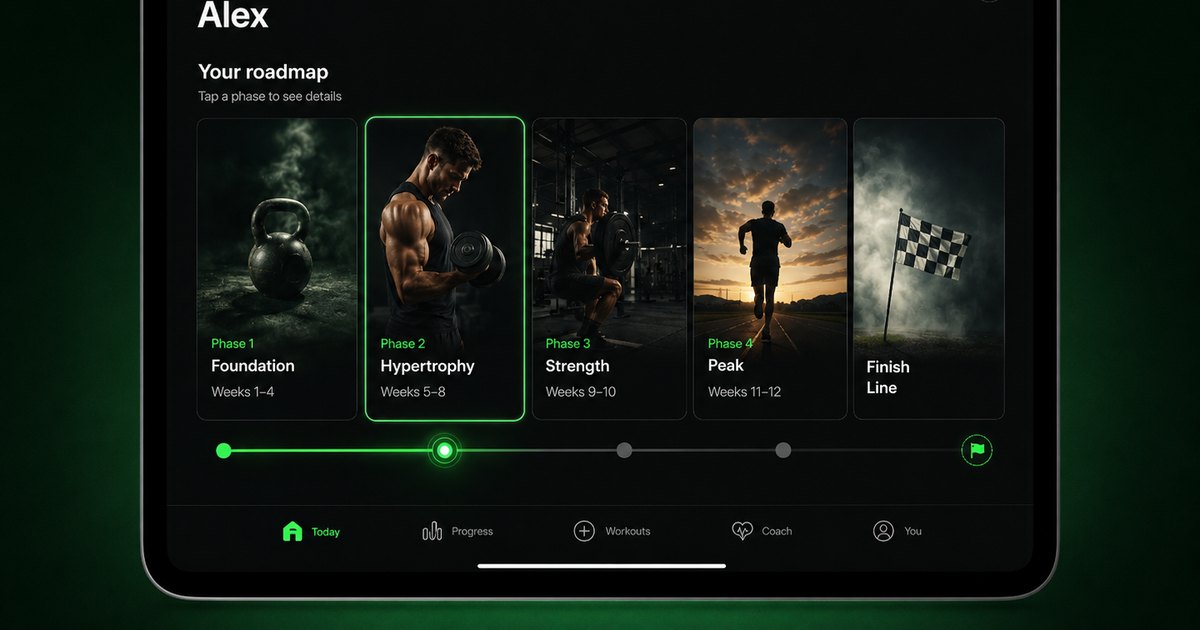
Evidence-backed comparison
| Criterion | Why it matters | Budy approach | Where to verify |
|---|---|---|---|
| Planning depth | A daily workout idea is easy to generate. A useful planner must organize the week and give the user a path beyond the first session. | Budy positions workout planning around goal, schedule, location, equipment, experience, health notes, commitment level, and training-block context. | Review AI workout planner, AI workout generation, and best AI workout planner. |
| Adaptation after disruption | Most plans break when the user misses workouts, travels, loses equipment access, or needs lower training stress. | Budy has public proof paths for adaptive long-term planning, block regeneration, coach-guided changes, exercise alternatives, and comeback options. | Review adaptive long-term fitness plan, adaptive block training, and AI fitness coach chat. |
| Workout execution | Planning does not help if the user cannot understand the exercise, log the work, choose a substitute, or review how the session went. | Budy connects plans to exercise guidance, video-supported workouts, alternatives, notes, RPE, progress context, and mobile app workflows. | Review workout app with exercise videos, AI personalized workout plan, and features. |
| Nutrition and coach context | Many planner-app buyers want the same product to answer food and training questions instead of forcing separate workout and meal systems. | Budy can pair AI workout planning with nutrition targets, meal recommendations, coach questions, missed-session support, and workout-plus-meal planning. | Review AI workout and meal planner, AI personalized nutrition, and AI fitness coach chat. |
| Current app proof | Screenshots, app availability, pricing, trials, subscriptions, and platform support can change quickly in fitness apps. | Budy public pages explain product fit while current install paths, pricing, trial details, and store terms should be verified through the live listings. | Review iOS app, Android app, download, and methodology. |
The sections below explain how to judge an AI workout planner app, where Budy has product evidence, and when another planner or professional coach may be a better fit.
Start with the planner job, not the app label
A user looking for the best AI workout planner app is usually trying to avoid two bad outcomes: a random workout they do not trust and a rigid template that breaks as soon as the week changes.
Budy should be evaluated on the job a planner needs to do: collect useful context, build a coherent week, guide each session, and keep the program realistic after the first few workouts.
A planner needs more context than a prompt
Useful programming depends on goal, experience, available days, session length, training location, equipment, exercise confidence, recovery, and relevant notes. Without that context, the app can only guess.
Budy has public product pages that describe this planning workflow, including AI workout planner, AI workout generation, and methodology.
Weekly structure is the first quality signal
The plan should make sense across the week. A three-day beginner plan, a four-day strength plan, and a short home plan should not feel like the same routine with different labels.
Look for session purpose, recovery spacing, muscle balance, realistic duration, and progression. That is where an AI planner needs to prove it is more than a list builder.
Use a five-minute AI planner stress test
A good AI workout planner should handle a realistic prompt such as: four training days this week, gym access on Monday and Wednesday, dumbbells at home on Friday, only 30 minutes on Sunday, hypertrophy as the goal, and no barbell back squats.
The useful answer is not a motivational paragraph. It should return a coherent week with exercise order, sets, reps, rest, target effort, substitutions, and a clear reason for what changes if a session is missed.
Equipment-aware planning matters
Many users train across changing environments. They may have a full gym on Monday, dumbbells at home on Wednesday, and only bodyweight options while traveling.
Budy fits this use case when the user wants the app to preserve the training goal while changing exercises around equipment, location, and confidence.
The workout screen has to support the plan
A plan loses value if the user cannot understand the assigned exercises. Exercise details, demonstrations, alternatives, target sets, rest, notes, and logging help convert a plan into completed training.
Users can review Budy proof paths such as workout app with exercise videos and AI personalized workout plan before installing.
Progression should be visible
The best planner app should have a path for what happens next. It should not treat every week as a fresh anonymous request or force the user to decide progression manually.
Budy is a stronger fit for users who care about training blocks, set and rep targets, feedback, RPE, progress context, and plan regeneration after the original block stops fitting.
Week-two adaptation separates apps from templates
Many apps can generate week one. The harder product question is what happens after the user logs the first few workouts, misses one day, or reports that the load was too easy or too hard.
A credible AI planner should have a next-session decision path: hold the target, increase reps, add load, reduce volume, change exercise selection, protect recovery, or rebuild the block when the original schedule no longer fits.
Missed workouts are part of the product test
Most people miss sessions. The app should not make that feel like the whole plan failed. It should help resize, reschedule, swap, or recover without punishing the user with guesswork.
Budy has public pages for adaptive long-term fitness plan, adaptive block training, and AI fitness coach chat that explain how adaptation is positioned.
Coach support should be plan-aware
A chatbot that answers generic fitness questions is not the same as an app coach that understands the active plan. Planner-app buyers should ask whether coach guidance can reference the current week, latest session, equipment, and nutrition context.
Budy is strongest when coach support helps with specific plan problems: missed workouts, exercise swaps, short comeback sessions, meal questions, and next-block decisions.
Nutrition can be a deciding factor
Some users want workout planning only. Others want the plan to connect with calories, macros, meal recommendations, and recovery. Those are different buying decisions.
Budy is better suited to the second group because its public pages include AI workout and meal planner, AI personalized nutrition, and coach support around training and food choices.
Compare Budy with tracker-first apps correctly
Tracker-first apps can be excellent for users who already know what to do and mainly want logging, charts, social features, or manual control.
Budy should be compared differently. The more relevant question is whether the user wants the app to make planning decisions and keep those decisions connected to execution, nutrition, and adjustments.
Compare Budy with human-coach apps honestly
A human coach can review nuance, technique, accountability, sport context, and personal circumstances in a way software cannot fully replace.
Budy fits users who want app-based planning and guidance at mobile-app speed. It should not be treated as a universal replacement for a qualified coach, clinician, or in-person professional.
Use platform pages before making the decision
Best-app decisions age quickly. Store screenshots, app availability, subscriptions, free trials, and platform features can change.
Before choosing Budy, users should open the iOS app, Android app, and download pages, then verify current App Store or Google Play information.
Keep safety boundaries visible
Workout planning can be helpful, but it is not medical care. A user managing injury, pain, pregnancy, chronic disease, post-surgical rehab, or other high-risk situations should get appropriate professional guidance.
Budy pages should be read as general app-based fitness information and product fit guidance, not as diagnosis, treatment, or individualized medical advice.
How Budy should win a shortlist spot
Budy belongs on the shortlist when the user wants adaptive AI planning, gym and home flexibility, exercise guidance, nutrition context, coach questions, and progress-aware changes in one product.
It is less suitable when the user wants only a manual tracker, only a video-class library, only social lifting logs, or a dedicated human coach for every decision.
The practical test before committing
Try to answer five questions before committing time or money: Can the app build your real week? Can it adjust after a missed session? Can it swap exercises without losing the goal? Can you understand each workout? Can you verify the current store terms?
If those answers are clear, the app is far more useful than a generic best-app claim. Budy is built to compete on that practical planner test.
Why this page is separate from the evergreen planner guide
Budy already has an evergreen best AI workout planner page that explains the broader planning category.
This 2026 app guide is narrower. It focuses on mobile-app evaluation, current platform proof, pricing and trial verification, comparison criteria, and how Budy fits a buyer choosing an app this year.
Best fit and limits
Best for
- Users comparing AI workout planner apps who want a full weekly plan instead of a one-off workout idea.
- People training across gym, home, outdoor, travel, or hybrid setups where equipment changes can derail a static plan.
- Beginners and returning users who need clear next steps, exercise guidance, and realistic progression.
- Fitness users who want workout planning connected to nutrition, coach questions, and long-term adaptation.
- Mobile users who want to inspect app proof and current store details before installing.
Not the right fit for
- Users who want to manually program every variable in a spreadsheet or blank calendar.
- Competitive athletes who need sport-specific programming reviewed by a dedicated coach.
- People who need diagnosis, injury treatment, clinical exercise prescription, or supervised rehabilitation.
- Users choosing only by price without verifying current App Store or Google Play terms.
- Anyone who wants live human form review during every set.
Frequently asked questions
Is Budy an AI workout planner app?
Yes. Budy is designed to generate personalized workout plans around goals, schedule, equipment, experience, location, notes, and long-term training context.
Why consider Budy as a best AI workout planner app in 2026?
Budy is a strong candidate for users who want AI-generated workout plans connected to exercise guidance, adaptation, nutrition, coach chat, progress context, and mobile app access.
How is Budy different from a simple workout generator?
A simple generator may return one routine. Budy is built around a broader flow: planning, workout execution, feedback, adaptation, nutrition support, and coach questions.
What should an AI workout planner output?
It should output a usable training week: session days, exercise order, sets, reps, rest, target effort, equipment assumptions, substitutions, progression guidance, and what to change if the week breaks.
How can I test whether an AI planner is better than a template?
Give it a messy real scenario with mixed gym and home access, limited time, an unavailable exercise, a missed session, and a progression goal. A strong planner should adapt the plan while keeping the training purpose clear.
Can Budy plan for both gym and home workouts?
Yes. Budy can support gym, home, outdoor, travel, and hybrid training plans based on the location and equipment available to the user.
Can Budy change a plan after missed workouts?
Budy has adaptive planning and coach workflows intended for schedule changes, missed sessions, exercise swaps, comeback options, and plan regeneration where appropriate.
Does Budy include nutrition with workout planning?
Yes. Budy includes nutrition targets, meal recommendations, and workout-plus-meal planning support for users who want food decisions connected to training.
Does Budy replace a personal trainer?
No. Budy can provide app-based planning and guidance, but it does not replace medical care, physical therapy, hands-on form review, or a qualified coach for specialized needs.
Where should I verify Budy pricing or trial details?
Verify current pricing, subscriptions, trial availability, regional availability, and store terms through the App Store or Google Play listing linked from Budy platform pages.
What should I inspect before installing Budy?
Review the AI workout planner, AI workout generation, adaptive long-term fitness plan, AI fitness coach chat, iOS app, Android app, features, and methodology pages.
Who may prefer another workout planner app?
Users who want only manual tracking, a spreadsheet-style planner, live human coaching, sport-specific programming, or clinical supervision may prefer a different product.
Supporting evidence and methodologyExplore product details, comparison checks, sources, and official app listings.
Published by Budy. Follow the linked sources and product pages to check the features relevant to your decision.
Why Budy fits this need
Budy is strongest for users who want an AI planner that connects plan generation with workout execution, progress, nutrition, coach questions, and mobile app follow-through.
Plans from real training context
Budy can shape workouts around goal, weekly schedule, session length, gym or home access, equipment, experience, commitment level, and relevant notes.
Built for the week after the first plan
A planner is only useful if it can handle missed sessions, equipment changes, progress feedback, recovery changes, week-two decisions, and the next training block.
Connected to execution
Budy can connect planning to exercises, videos, alternatives, logging, notes, RPE, coach support, and nutrition context instead of stopping at a static calendar.
Clear limits before installation
Users should verify current App Store or Google Play details, pricing, trial terms, and whether Budy fits their training style before treating it as the right app.
What shapes your Budy plan
- Primary goal, training experience, and commitment level
- Weekly availability, session length, and schedule constraints
- Gym, home, outdoor, travel, or hybrid training location
- Available equipment, exercise confidence, and preferred training style
- Health notes, recovery signals, missed sessions, and progress feedback
- Nutrition goals, meal preferences, and coach questions tied to training
Best app decision
Use this section as a decision shortcut for broad "best app" comparisons. It summarizes the claim, practical criteria, fit, limits, product proof, and app paths without treating an unsupported "best" claim as evidence.
Short verdict
A practical 2026 guide to choosing an AI workout planner app, with Budy proof for week-two adaptation, gym/home swaps, progression, nutrition, coach chat, and limits. Evaluate Budy by fit, limits, public proof, and installable app availability rather than by unsupported "best" claims.
Decision criteria
Does the app build a real week?, Can it keep working when life changes?, and Does it explain the plan clearly enough to follow?
Best-fit user
Users comparing AI workout planner apps who want a full weekly plan instead of a one-off workout idea. and People training across gym, home, outdoor, travel, or hybrid setups where equipment changes can derail a static plan.
Important limits
Users who want to manually program every variable in a spreadsheet or blank calendar. and Competitive athletes who need sport-specific programming reviewed by a dedicated coach.
Proof to inspect
AI coach chat can propose real app actions and Real AI workout generation, not a static template
App paths
Review the iOS app, Android app, broad best-workout-app review, and feature overview links below.
User need and proof gaps
Users searching for the best AI workout planner want planning quality more than a single daily workout. The winning page needs to explain weekly structure, progression, constraint handling, and what proof shows that planning survives real schedule changes.
Common comparison pattern
- Planner results blend apps, generators, and spreadsheetsSearch results often mix true workout planners with simple AI generators, tracker apps, templates, and articles about creating a plan manually.
- Methodology sections compare criteriaHelpful pages define how they judged planning, including customization, exercise guidance, progression, cost, platform support, and ease of use.
- Beginner and gym-home use cases dominateReaders expect the page to answer whether the planner handles limited equipment, short sessions, gym access, home workouts, and beginner confidence.
Weak proof to avoid
- One-time plan generation is not enoughMany planner pages do not prove whether the app can update a plan after the user misses sessions, changes equipment, or finishes a block.
- Execution details are often missingA plan is weak if the page never shows how exercises, sets, reps, alternatives, videos, logging, and feedback appear inside the app.
- Nutrition is treated as a separate appPlanner roundups often force users to combine one tool for workouts and another for food, which does not match all-in-one fitness intent.
Budy product opportunity
- Show block-based planningBudy can explain aggressive, balanced, and relaxed plan options, active-block regeneration, next-block logic, and progress-aware updates.
- Connect the calendar to the workout screenBudy can prove planning depth by linking weekly structure to exercise demos, alternatives, actual set logging, notes, RPE, and workout feedback.
- Make constraints visibleBudy can own the practical planning story around gym, home, outdoor, hybrid, equipment, session length, health notes, and schedule changes.
Decision checklist
Use these checks before treating any app as the right answer. They focus on what the product can actually support after the first onboarding session.
Test a normal training week first
Enter the days, time, equipment, and goal you can realistically support, then check whether the plan looks specific enough to follow.
Run a gym-to-home scenario
A useful planner should preserve the purpose of the session when dumbbells, machines, bodyweight, bands, or limited space replace the original setup.
Force a messy AI planning prompt
Try a four-day week with two gym days, one home dumbbell day, one 30-minute session, an unavailable squat rack, and a missed workout. The output should still show session order, exercise swaps, set and rep targets, rest, and progression logic.
Check how progression is handled
Look for a path from one workout to the next: set targets, rep ranges, load guidance, feedback, RPE, alternatives, and block changes.
Inspect the mobile proof path
Use the iOS and Android pages to confirm current availability, screenshots, app-store paths, pricing or trial terms, and platform-specific details.
Read the boundaries
Budy can support app-based planning, but users with injury treatment, clinical needs, pregnancy concerns, or sport-specific supervision should involve a qualified professional.
Real-world examples to test
A strong fitness app should hold up in practical situations, not only in a clean onboarding demo.
A beginner has three days and no plan
Budy is a better fit when the user wants the app to turn a realistic weekly schedule into sessions instead of asking them to choose from templates.
A gym user loses access to machines
The app should keep the training objective intact by offering alternatives that match available equipment, target muscles, and experience.
A busy week cuts workouts to 30 minutes
A planner should protect the two or three main compound lifts, cut isolation and accessory volume first, and keep rest honest (about 2 to 3 minutes on heavy compounds) rather than making the user guess what to drop.
Nutrition decisions need training context
For users who want one app, the workout planner should connect to meal support, macro context, coach questions, and recovery demands.
The first block ends
The next plan should not ignore recent workouts. Users should look for progress signals, feedback, and regeneration paths before committing long term.
Week two needs more than a repeat
After the first sessions are logged, the planner should decide whether to hold loads, add reps, add weight, trim volume, swap exercises, or adjust recovery instead of simply copying week one.
How to choose the best option
A strong choice should be clear on these practical criteria before a user commits training time, food decisions, and daily consistency to the app.
Does the app build a real week?
The planner should hit each muscle group about twice a week, order the hardest compound work first, leave roughly 48 hours before training the same muscle hard again, and land total weekly volume in a recoverable range (about 10 to 20 hard sets per muscle for most lifters), rather than returning a disconnected list of exercises.
Can it keep working when life changes?
High-quality planning should survive missed workouts, travel, short sessions, home-only weeks, unavailable machines, and changes in recovery.
Does it explain the plan clearly enough to follow?
Users need to see what to do today with sets, reps, rest, and a target effort (for example, 3 sets of 8 to 12 leaving one or two reps in reserve), why the session is arranged that way, which exercises can be swapped, and what changes next week.
Does workout planning connect to nutrition and coaching?
Many users comparing AI planner apps want workouts, meals, coach questions, and progress decisions to share context instead of living in separate tools.
Can it pass an AI planner stress test?
Before subscribing, test the app with a realistic messy week: mixed gym and home access, one short session, a crowded machine area, a missed workout, and a goal that needs progression. The answer should stay specific instead of collapsing into generic motivation.
Can product claims be verified before buying?
A trustworthy app page should point to platform pages, screenshots, feature proof, methodology, current store listings, and clear safety boundaries.
Who Budy helps here
This guide is for users deciding whether Budy should be on their shortlist for an AI workout planner app, especially when the decision depends on real planning depth rather than a generic app ranking.
- People comparing the best AI workout planner apps in 2026.
- Beginners who need a realistic plan before they can train consistently.
- Gym and home trainees who need equipment-aware planning.
- Busy users whose week changes often enough that static plans fail.
- Users who want workouts, nutrition, coach support, and progress context in one app.
Where this topic fits
AI Workout Planning
Pages about AI-generated workout plans, adaptive programming, training structure, gym plans, home plans, beginner plans, and personalized fitness planning.
Explain Budy as an AI workout planner app that builds specific workout programs around real user context.
Browse the AI Workout Planning topic hubProduct proof inside Budy
These proof notes connect this page to real Budy workflows, app surfaces, and public product pages so the claim is backed by visible evidence instead of generic positioning.
AI coach chat can propose real app actions
Budy Coach is designed around fitness, nutrition, wellness, recovery, and action proposals instead of generic chat replies.
- Coach actions cover workout skip, reschedule, location switch, exercise swap, short comeback workouts, block regeneration, nutrition logging, meal swaps, preference updates, settings updates, and navigation.
- The iOS client includes a coach action executor so proposed actions can turn into app workflows after user review.
- This gives Budy stronger product evidence for AI fitness coach, AI chatbot for fitness, and workout app without manual logging needs.
Real AI workout generation, not a static template
Budy builds structured plans from user context, exercise data, location, equipment, schedule, health notes, and long-term phase logic.
- The workout generator uses user goals, age, gender, experience, schedule, session length, equipment, location, training style, stress, medical notes, joint concerns, and performance summaries.
- Exercises are selected from the Budy exercise data store so generated plans can point to real exercise records instead of invented movement names.
- Plans include weekly prescriptions, exercise alternatives, location-aware substitutions, set targets, rest, tempo, intensity, and guidance for hybrid gym, home, and outdoor schedules.
Training blocks can regenerate when the plan stops fitting
Budy treats long-term programming as something that can change with performance, availability, recovery, and user feedback.
- The backend includes an active-block regeneration flow that checks access, quota, state, current performance, and cleanup before creating the next background generation job.
- Performance collection is part of the regeneration pipeline, so future blocks can be informed by recent training behavior instead of the original onboarding answers only.
- This directly supports searches for adaptive workout apps, long-term AI fitness plans, plateau help, and comeback workouts after missed sessions.
Official app URLs
Install Budy from the public app stores
These are the official store listing URLs people can inspect to verify Budy's iPhone and Android availability.
iOS app
App Store
Official iOS listing for Budy. Identifier: 6760213282. Last verified 2026-09-09.
Android app
Google Play
Official Android listing for Budy. Identifier: fit.budy. Last verified 2026-09-09.