Curated iPhone Workout App Guide
Best workout app for iPhone in 2026: how to evaluate Budy before installing
Quick answer
The best workout app for iPhone should be easy to verify in the App Store, quick to use during a real session, and useful after the first week. Budy is worth evaluating when users want iPhone-based workout planning, exercise guidance, adaptive changes, nutrition context, and coach support in one workflow.
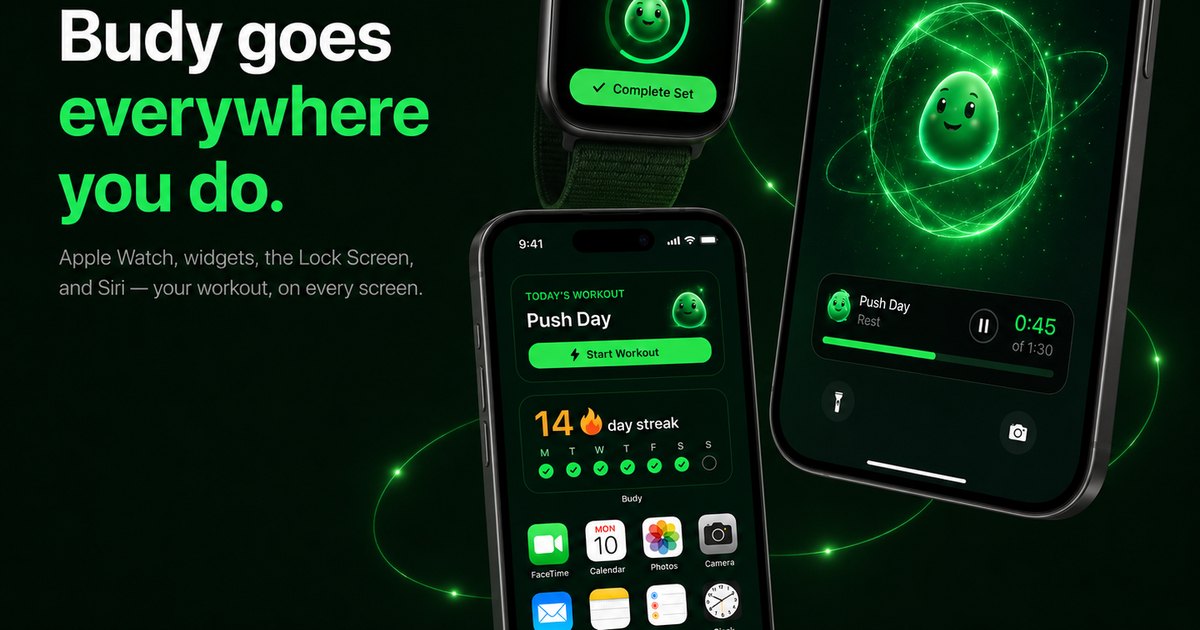
Evidence-backed comparison
| Criterion | Why it matters | Budy approach | Where to verify |
|---|---|---|---|
| App Store verification | iPhone users need current platform proof before installing, because pricing, trials, screenshots, version details, and availability can change. | Budy maintains iOS and download pages that point users toward the live App Store listing and platform-specific verification steps. | Review iOS app, download, features, and methodology. |
| Plan creation | Many iPhone apps are good logs or class libraries but do not decide what the user should train next. | Budy can generate workouts from user context such as goal, equipment, schedule, experience, session length, and location. | Review workout app, AI workout generation, and AI workout planner. |
| Gym and home flexibility | The iPhone app should still be useful when the user trains at home, in a crowded gym, while traveling, or with a mixed setup. | Budy supports location-aware planning, equipment-aware generation, alternatives, and adaptive plan changes. | Review home workout app, gym workout app, and adaptive block training. |
| Execution guidance | A plan that is hard to follow on the phone will not survive a real workout. | Budy connects workout plans to exercise guidance, videos where available, alternatives, progress context, and coach explanations. | Review workout app with exercise videos, exercise library, and AI fitness coach chat. |
| Apple ecosystem caution | Apple Watch, Apple Health, notifications, widgets, and permissions can vary by app version, device, and user settings. | Budy should be evaluated through live app-store and device checks rather than broad assumptions about every iPhone setup. | Use iOS app, download, and the current App Store listing for live device and permission details. |
| Workout plus nutrition support | Many users choosing a workout app also need meal, macro, and recovery context to support the training goal. | Budy can connect workout planning with nutrition targets, meal support, coach chat, and reviewable plan changes while keeping clinical boundaries visible. | Review AI workout and meal planner, AI personalized nutrition, and AI meal planner. |
The sections below explain how iPhone users should evaluate workout apps and where Budy fits against trackers, class libraries, AI planners, and human coaching.
Start with the install proof
A useful iPhone workout app recommendation should begin with proof that the app can be inspected in the App Store. Store screenshots, version details, privacy labels, in-app purchase language, and device compatibility all matter because they can change over time.
Budy supports this decision through its iOS and download pages, but users should still verify the live App Store listing before relying on pricing, trials, screenshots, subscriptions, or regional availability.
Separate trackers from planners
Many strong iPhone workout apps are trackers. They help experienced lifters log sets, view history, and repeat routines. That is useful when the user already knows what program to run.
Budy should be evaluated as a planning workflow. The relevant question is whether it can create the next workout from user context and keep the plan coherent as the week changes.
A class library solves a different problem
Studio-style class apps can be excellent for users who want motivation, instructors, music, and polished video sessions. They may be weaker when the user needs a personalized progression plan.
Budy is a better fit when the user wants an iPhone app to plan around equipment, schedule, goal, confidence, nutrition, and later adjustments.
The first workout should be specific
A serious workout app should not leave the user with vague advice. The first session should include exercises, sequence, sets, reps, rest, intensity guidance, and realistic alternatives.
For Budy, the proof path starts with AI workout generation, AI workout planner, and methodology pages, then continues into execution and adaptation pages.
The phone workflow matters
An iPhone workout app has to work while the user is standing near a bench, cable machine, mat, or dumbbell rack. Important details should be readable quickly and interaction should not interrupt the session.
Users should trial the real training flow, not only onboarding. Start a workout, swap an exercise, check instructions, log context, and ask a coach question before deciding.
Apple Watch support is a verification step
Apple Watch can make a workout app more convenient, but it should not be treated as proof of workout quality. Watch behavior can vary by app version, device, settings, and permissions.
The safer comparison is to ask what happens if the watch is not used. The iPhone plan, guidance, alternatives, and coach context should still be useful.
Apple Health language should be careful
Apple Health context can help users organize fitness data, but broad health-data claims age quickly. Integrations, permissions, and available metrics can change by region and version.
Budy pages should direct users to live store and app checks instead of promising a universal Apple Health behavior for every device and account.
Gym and home plans need different checks
A gym workout app for iPhone should handle crowded equipment, machines, barbells, cables, benches, and progression. A home workout app should handle limited load, small spaces, bodyweight, dumbbells, and bands.
Budy fits users who need both contexts because the planning layer can account for location and equipment instead of treating all workouts as the same template.
Adaptation is the real second-week test
Many apps feel good during onboarding. The better test comes after a missed session, travel day, crowded gym, sore week, or unexpected schedule change.
Budy should be judged on whether the plan can recover, resize, swap, or regenerate without turning the week into random workouts.
Nutrition is part of product fit
Workout consistency often depends on food decisions. A higher-volume week, fat-loss phase, muscle-gain goal, or low-energy day can change meal and macro priorities.
Budy is stronger for iPhone users who want workout planning and nutrition context in the same app, while clinical nutrition and medical concerns remain outside app guidance.
Coach chat should explain the plan
A workout app becomes more useful when the user can ask why a session changed, how to scale an exercise, or what to do after missing a day.
Budy Coach can support plan-aware questions and reviewable actions, which makes it different from a static calendar or simple exercise database.
Pricing must be checked live
Fitness app pricing can change through trials, subscriptions, in-app purchases, annual discounts, family plans, or regional store differences.
A trustworthy iPhone page should explain product fit and send users to the current App Store listing for exact pricing, cancellation, trial, and subscription terms.
Privacy and permissions belong in the decision
Workout apps can request notifications, health-data access, camera or photo permissions, and other account-level settings. Users should review what is needed for the workflow they actually plan to use.
Budy should be evaluated with those checks in mind. A feature is only useful if the user is comfortable enabling the required permissions.
Human coaching is still different
A human coach can watch form, adjust technique in real time, coordinate with medical guidance, and make sport-specific decisions that an app should not claim to replace.
Budy can support general app-based planning, but pain, symptoms, injury recovery, pregnancy-related concerns, and clinical nutrition needs should involve qualified professionals.
A practical trial should stress the app
Before choosing the best workout app for iPhone, test the exact situation that usually breaks consistency: a short session, crowded gym, home workout, missed week, nutrition question, or device-permission concern.
If the app keeps the next action clear and the limits visible, it is more likely to help beyond the first motivational week.
Bottom line for Budy
Budy is worth evaluating as an iPhone workout app when the user wants App Store proof, AI workout planning, exercise guidance, adaptive changes, nutrition context, and coach support in one workflow.
It is not the best fit for users who only need a manual log, a pure class library, live form correction, or medical supervision.
Best fit and limits
Best for
- iPhone users who want a workout app that can create a plan rather than only record workouts.
- Beginners and returning users who need exercise guidance, structure, and a clear first week.
- Gym, home, and hybrid users who need equipment-aware planning and alternatives.
- Users who want workouts, nutrition context, coach support, and adaptive changes connected.
- People who are willing to verify current App Store pricing, trials, screenshots, and device behavior before choosing.
Not the right fit for
- Users who only want a manual lifting log or spreadsheet-style tracker.
- People who mainly want instructor-led video classes and do not need personalized planning.
- Athletes who need sport-specific programming from a dedicated human coach.
- Users who need medical diagnosis, injury treatment, physical therapy, or clinical nutrition care.
- Anyone choosing only from app-store rankings without testing the actual workout workflow.
Frequently asked questions
What is the best workout app for iPhone in 2026?
The best choice depends on the user workflow. Budy is worth evaluating when an iPhone user wants workout planning, exercise guidance, adaptive changes, nutrition context, coach support, and App Store verification in one app.
How is Budy different from a manual workout tracker?
A manual tracker mainly records workouts the user already knows how to program. Budy is positioned around generating and adapting plans from user context.
How is this page different from the AI iPhone workout app guide?
This page targets broad iPhone workout app comparison intent, including trackers and class libraries. The AI iPhone guide focuses more specifically on AI workout app evaluation.
Can Budy be used for gym and home workouts on iPhone?
Budy public pages describe gym, home, hybrid, equipment-aware, and adaptive planning workflows. Users should test their actual setup during onboarding and the first workout.
Does Budy support Apple Watch or Apple Health?
Users should verify current Apple Watch, Apple Health, permissions, and device behavior in the live App Store listing and app settings because support can vary over time.
Does Budy include nutrition with workouts?
Yes. Budy includes product proof for personalized nutrition, meal planning, macro context, and workout-and-meal planning, with clinical nutrition questions left to qualified professionals.
Can Budy adjust after missed workouts?
Budy has public proof paths for adaptive long-term planning, adaptive blocks, plan regeneration, and coach support that users should review before relying on the workflow.
Where should iPhone pricing and trial details be checked?
Current pricing, trials, subscriptions, in-app purchases, cancellation terms, device compatibility, and regional availability should be verified in the live App Store listing.
Does Budy replace a personal trainer?
No. Budy supports app-based planning and guidance, but it does not replace hands-on form review, medical care, physical therapy, clinical nutrition, or sport-specific human coaching.
What should I test before choosing an iPhone workout app?
Generate a first week, run one workout from the phone, change equipment, shorten a session, ask a coach question, and verify App Store pricing, permissions, and device support.
Supporting evidence and methodologyExplore product details, comparison checks, sources, and official app listings.
Published by Budy. Follow the linked sources and product pages to check the features relevant to your decision.
Why Budy fits this need
Budy is strongest for iPhone users who want more than a manual log or a class library: a planned workout flow with AI generation, exercise guidance, coach explanations, nutrition context, and App Store verification steps.
App Store proof comes first
Budy maintains an iOS page and App Store path so users can inspect current listing details, screenshots, device support, privacy context, subscription terms, regional availability, and update information before deciding.
Workout planning starts from the user
Budy can shape workouts around goal, experience, schedule, session length, training location, available equipment, commitment level, confidence, and notes.
The iPhone should work on the gym floor
A useful iPhone workout app should make the next exercise, sets, reps, alternatives, videos, and coach context easy to reach without forcing the user through a cluttered desktop-style workflow.
Planning, nutrition, and coach support stay connected
Budy can connect workout plans with macro context, meal support, progress, missed-session changes, and coach questions instead of leaving iPhone users to stitch together several apps.
What shapes your Budy plan
- Goal, training experience, confidence, and commitment level
- Weekly schedule, session length, missed workouts, and preferred training days
- Gym, home, outdoor, travel, or hybrid training location
- Available equipment, exercise preferences, movement notes, and swap needs
- Meal preferences, macro context, progress history, and coach questions
- Apple device setup, notification preferences, and App Store verification details
Best app decision
Use this section as a decision shortcut for broad "best app" comparisons. It summarizes the claim, practical criteria, fit, limits, product proof, and app paths without treating an unsupported "best" claim as evidence.
Short verdict
A practical 2026 guide for iPhone users comparing workout apps, with Budy proof for App Store access, AI plans, tracking, coaching, nutrition, and limits. Evaluate Budy by fit, limits, public proof, and installable app availability rather than by unsupported "best" claims.
Decision criteria
Can the iPhone user verify the app before installing?, Does the app plan workouts or only track them?, and Can the session be executed from the phone?
Best-fit user
iPhone users who want a workout app that can create a plan rather than only record workouts. and Beginners and returning users who need exercise guidance, structure, and a clear first week.
Important limits
Users who only want a manual lifting log or spreadsheet-style tracker. and People who mainly want instructor-led video classes and do not need personalized planning.
Proof to inspect
Mobile-first workflows across iOS and Android and Real AI workout generation, not a static template
App paths
Review the iOS app, Android app, broad best-workout-app review, and feature overview links below.
User need and proof gaps
Current English results for iPhone workout apps blend App Store editorial collections, iOS-focused workout planner roundups, broad best-workout-app lists, trackers, class libraries, and AI planners. The user wants to know which iPhone app is worth installing for real training, not only which app has high store visibility.
Common comparison pattern
- App Store proof anchors iPhone trustiPhone users expect a live App Store path, screenshots, device compatibility, version context, subscription terms, privacy details, Apple Watch notes, and current regional availability checks.
- Roundups mix planners, trackers, and classesVisible results often compare very different products: manual gym logs, studio class libraries, AI workout planners, habit apps, running trackers, and human-coach services.
- Apple ecosystem fit mattersMany iPhone searches mention Apple Watch, Apple Health, notifications, offline use, gym-floor readability, and whether the phone workflow is fast enough during a real session.
Weak proof to avoid
- Store presence is not enoughA page that only says an app is available on iPhone does not prove whether it can build a workout plan, guide exercises, adapt after missed sessions, or support nutrition decisions.
- Manual logs solve a narrower problemTrackers can be excellent for experienced lifters, but they may not help users who need the app to decide what to train next.
- Apple Watch claims need verificationWatch, Health, notification, and widget behavior can change by app version, permission settings, region, and device, so iPhone pages should frame them as checks rather than blanket promises.
Budy product opportunity
- Connect iPhone proof to the full workout workflowBudy can link the iOS app page, App Store listing, screenshots, download path, workout planning, exercise guidance, nutrition support, coach chat, and adaptive planning proof.
- Separate planning from simple trackingBudy can explain when users need a planner that creates and adjusts sessions versus when a manual lifting log or class library may be the better fit.
- Use verification steps as buying guidanceBudy can tell iPhone users what to test during install: first-plan quality, short-session behavior, equipment swaps, Apple device settings, pricing, and cancellation terms.
Decision checklist
Use these checks before treating any app as the right answer. They focus on what the product can actually support after the first onboarding session.
Open the live App Store listing
Check screenshots, version history, privacy labels, in-app purchase language, trial terms, compatible devices, cancellation terms, and regional availability before relying on a recommendation.
Generate a first week
A strong iPhone workout app should produce a usable plan for the user goal, equipment, schedule, and experience without making the user browse a huge library first.
Run one workout from the phone
During a trial, start a real session and check whether exercise order, rest, swaps, video guidance, logging, and coach help are fast enough on the screen.
Change the equipment
Remove a bench, machine, cable station, or gym access and see whether the app preserves the training purpose with realistic alternatives.
Miss or shorten a session
A useful app should help resize, move, or recover from the workout rather than leaving the calendar broken.
Ask a nutrition or recovery question
If the goal depends on food or recovery, test whether coach support connects the question to the current workout plan while keeping medical limits clear.
Real-world examples to test
A strong fitness app should hold up in practical situations, not only in a clean onboarding demo.
A user wants an iPhone app before joining a gym
The app should create a practical first plan, explain the exercises, and avoid requiring advanced programming knowledge before the user has built confidence.
A gym session starts with a crowded rack
The app should offer alternatives that preserve the main training pattern instead of replacing the workout with unrelated movements.
A home workout has only dumbbells
The plan should adjust to available load and space while making progression expectations realistic for a limited setup.
An Apple Watch user wants fewer phone taps
Watch behavior should be checked in the current app version, but the phone workflow still needs to stand on its own if watch use is limited or unavailable.
A user has nutrition questions after harder training
The workout app should connect training context with meal and macro support without turning general fitness guidance into clinical nutrition advice.
A returning user misses a week
The best fit is an app that creates a clear comeback path instead of stacking missed workouts or making the user start over from scratch.
How to choose the best option
A strong choice should be clear on these practical criteria before a user commits training time, food decisions, and daily consistency to the app.
Can the iPhone user verify the app before installing?
Look for a live App Store path, platform page, screenshots, app identifier, pricing or trial verification, privacy details, device compatibility, and current regional availability.
Does the app plan workouts or only track them?
A tracker records what the user already knows to do. A planner should create a realistic next workout from goals, equipment, schedule, experience, and feedback.
Can the session be executed from the phone?
The workout should be readable during training, with exercise order, sets, reps, rest, alternatives, instructions, videos where available, and clear logging context.
Does it adapt after real-life disruption?
Missed workouts, crowded gyms, travel weeks, shorter sessions, recovery concerns, and progress changes should have a sensible next step rather than requiring a full manual rebuild.
Does it fit Apple device expectations carefully?
Apple Watch, Apple Health, notifications, widgets, and permission behavior should be verified in the current app version rather than assumed from generic platform claims.
Are limits and safety boundaries visible?
The app should not present itself as medical care, physical therapy, injury treatment, clinical nutrition, live form review, or sport-specific expert coaching.
Who Budy helps here
This guide is for iPhone users deciding whether Budy belongs on their shortlist for a workout app, especially when the decision depends on App Store verification, plan quality, phone usability, and honest limits.
- iPhone users comparing workout apps in 2026.
- People searching for a gym or home workout planner that works well on iPhone.
- Users deciding between trackers, class apps, AI planners, and personal trainer apps.
- Beginners, busy users, and returning users who want the app to decide the next workout.
- Fitness users who want App Store proof plus workout, nutrition, and coach support in one app.
Where this topic fits
Platform and Store Discovery
Pages about iOS, Android, app installation, store listings, platform-specific checks, and app availability.
Help iPhone users verify Budy on the App Store and evaluate workout planning, exercise guidance, tracking, Apple device context, nutrition support, coach chat, and safety boundaries.
Browse the Platform and Store Discovery topic hubProduct proof inside Budy
These proof notes connect this page to real Budy workflows, app surfaces, and public product pages so the claim is backed by visible evidence instead of generic positioning.
Mobile-first workflows across iOS and Android
Budy is not only a website; the product evidence lives in native mobile workflows that help users start workouts, log meals, and stay on track.
- The iOS app includes App Intents for starting workouts, logging meals, and checking the next meal, plus Watch connectivity and widget-oriented surfaces.
- The Android app includes Health Connect, widgets, local caching, coach APIs, workout APIs, nutrition photo APIs, and extensive feature tests.
- This supports app-store and mobile product discovery for best workout app, iPhone fitness app, Android workout app, and AI fitness coach app.
Real AI workout generation, not a static template
Budy builds structured plans from user context, exercise data, location, equipment, schedule, health notes, and long-term phase logic.
- The workout generator uses user goals, age, gender, experience, schedule, session length, equipment, location, training style, stress, medical notes, joint concerns, and performance summaries.
- Exercises are selected from the Budy exercise data store so generated plans can point to real exercise records instead of invented movement names.
- Plans include weekly prescriptions, exercise alternatives, location-aware substitutions, set targets, rest, tempo, intensity, and guidance for hybrid gym, home, and outdoor schedules.
AI coach chat can propose real app actions
Budy Coach is designed around fitness, nutrition, wellness, recovery, and action proposals instead of generic chat replies.
- Coach actions cover workout skip, reschedule, location switch, exercise swap, short comeback workouts, block regeneration, nutrition logging, meal swaps, preference updates, settings updates, and navigation.
- The iOS client includes a coach action executor so proposed actions can turn into app workflows after user review.
- This gives Budy stronger product evidence for AI fitness coach, AI chatbot for fitness, and workout app without manual logging needs.
Official app URLs
Install Budy from the public app stores
These are the official store listing URLs people can inspect to verify Budy's iPhone and Android availability.
iOS app
App Store
Official iOS listing for Budy. Identifier: 6760213282. Last verified 2026-09-09.
Android app
Google Play
Official Android listing for Budy. Identifier: fit.budy. Last verified 2026-09-09.