Personal Trainer App
A personal trainer app should plan the workout, guide the session, and know when a human coach is better
Quick answer
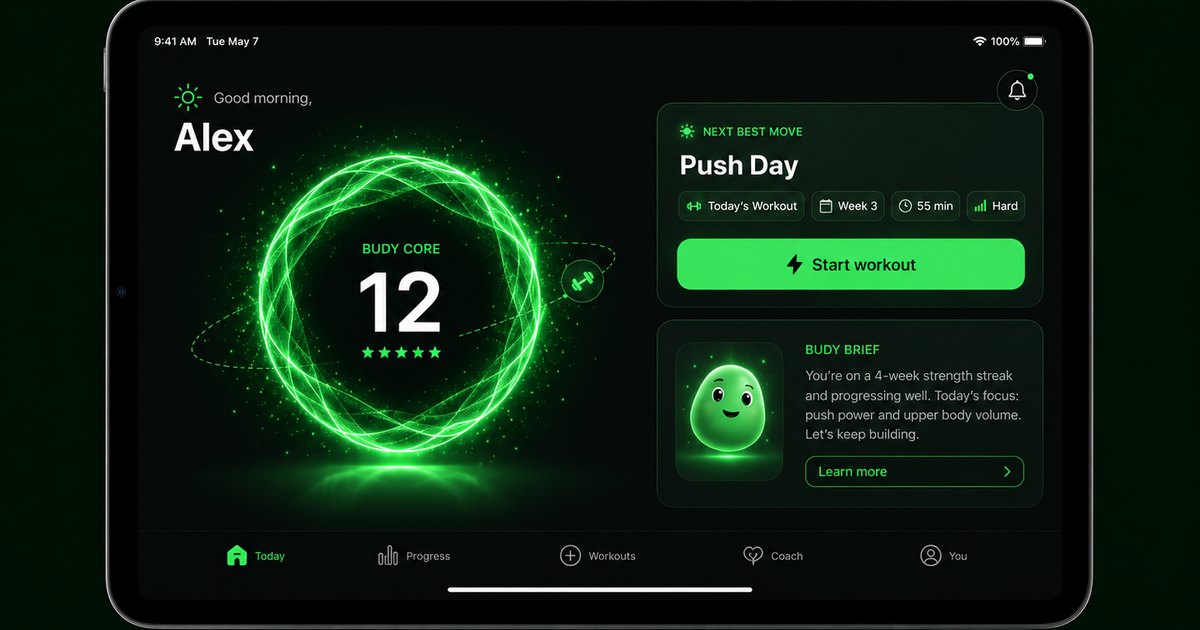
People searching for a personal trainer app are usually deciding between live coaching, app-based AI guidance, workout trackers, and class libraries. Budy fits the consumer app lane: personalized workout planning, coach-style explanations, nutrition context, progress visibility, and clear boundaries when hands-on coaching is the better choice.
Evidence-backed comparison
| Criterion | Why it matters | Budy approach | Where to verify |
|---|---|---|---|
| Budy versus a live human trainer app | Many personal trainer app results are built around a real coach, messaging, and accountability. Budy should not blur that difference. | Budy is AI-first app guidance for planning, execution, nutrition context, progress, and reviewed changes, with clear limits around hands-on coaching. | Review AI personal trainer, fitness coach, support, and methodology. |
| Budy versus a workout tracker | Trackers work well when the user already knows the program. Personal trainer app searches often imply the user wants the app to help decide the program. | Budy emphasizes plan generation, exercise guidance, coach support, and adaptation before and after workout logging. | Review AI workout planner, workout app without manual logging, and best workout tracker app 2026. |
| Budy versus a class library | Class apps can be motivating, but a user searching for personal training usually expects more personalization than picking the next video. | Budy uses goals, schedule, equipment, experience, and feedback to shape a plan rather than relying only on browsable classes. | Review workout app with exercise videos, gym workout app, and home workout app. |
| Budy versus a generic AI chatbot | A chatbot can explain training ideas, but it may not own the workout plan, exercise library, app actions, nutrition context, or progress history. | Budy Coach is designed inside the fitness app so answers can relate to workouts, nutrition, preferences, schedule, and user-reviewed actions. | Review AI fitness coach chat, best AI personal trainer app 2026, and AI fitness chatbot. |
| Budy versus trainer business software | Some personal trainer app results are for coaches managing clients, not consumers trying to train themselves. | Budy should be evaluated as a consumer fitness app for self-guided workouts, nutrition context, and AI coaching rather than as CRM, billing, or client-management software. | Review features, how Budy works, and creator fitness platform. |
Budy is best judged by the complete app workflow: onboarding, plan creation, workout execution, adaptation, nutrition context, proof, and boundaries.
What personal trainer app means in search
The query is broader than it looks. Some users want a real coach in an app, some want an AI personal trainer, some want a workout tracker, and some are actually coaches comparing client-management software.
Budy should be judged as a consumer fitness app for people who want app-based planning and guidance. It is not trying to be a human-coach marketplace or a business operating system for trainers.
Where Budy fits among trainer-style apps
Budy is strongest when the user needs a realistic plan, not a list of random sessions. The app can shape workouts around goals, equipment, schedule, experience, commitment, and health context, then keep that plan connected to execution.
That makes Budy a natural companion to AI personal trainer, AI workout planner, and fitness coach searches.
The first plan is only the beginning
A personal trainer app has to prove what happens after onboarding. Users need to know how the product handles missed workouts, equipment changes, soreness, short sessions, and the next block after the novelty fades.
Budy supports that follow-through through adaptive planning, exercise alternatives, workout logging, coach questions, progress context, and product proof pages tied to real app workflows.
Why Budy is different from a simple tracker
A tracker records what the user already decided. That is useful for experienced lifters, but many personal trainer app searchers want help deciding what to do in the first place.
Budy focuses on the planning layer before the log: generating a program, explaining the session, suggesting alternatives, and connecting the training plan with broader fitness context.
How nutrition changes the coaching decision
Many users do not separate workouts from food. They want to train, eat, and recover in a way that points toward the same goal.
Budy can connect workouts with nutrition targets, meal recommendations, preferences, and macro context. The boundary matters: Budy provides general fitness nutrition support, not diagnosis or clinical diet treatment.
When a human trainer is still the better answer
Personal training is a trust-heavy category. An app should not pretend to see every rep, diagnose pain, manage rehabilitation, or replace the relationship of a qualified professional.
Choose a human coach when the problem depends on real-time form review, injury management, sport technique, medical context, or high-touch accountability. Choose Budy when the main need is accessible app-based planning, guidance, nutrition context, and progress support.
Best fit and limits
Best for
- Users who want app-based planning, guidance, and progress support without hiring a live trainer
- Beginners who need a realistic first plan and clear workout explanations
- People training at home, in the gym, outdoors, or across changing locations
- Users who want AI coach support tied to workout and nutrition context
- People comparing Budy with personal trainer apps, AI fitness coaches, class libraries, and workout trackers
Not the right fit for
- People who need hands-on form correction, live supervision, or sport-specific technical coaching
- Anyone needing injury diagnosis, rehabilitation, medical advice, eating-disorder support, or clinical nutrition treatment
- Users who want a named human coach messaging them personally every week
- Professional trainers looking for client billing, CRM, scheduling, or business-management software
- People who prefer manually programming every set, progression rule, and meal target from scratch
Frequently asked questions
Is Budy a personal trainer app?
Yes. Budy fits the personal trainer app lane for users who want AI workout planning, coach-style guidance, nutrition context, progress support, and adaptive training in a consumer app.
How is Budy different from a human personal trainer app?
Human trainer apps pair users with a real coach for check-ins and accountability. Budy is AI-first app guidance for planning and execution, so it is more accessible but does not provide hands-on form review or a personal coaching relationship.
Can Budy replace a personal trainer?
Budy can replace some self-guided planning work for everyday fitness users, but it does not replace a qualified trainer for live supervision, form correction, injury rehabilitation, sport technique, or medical judgment.
Does Budy work for gym and home workouts?
Yes. Budy can create plans for gym, home, outdoor, and hybrid training based on location, equipment, schedule, experience, and user constraints.
Is Budy different from a workout tracker?
Yes. A tracker mostly records workouts. Budy focuses on generating the plan, guiding execution, supporting coach questions, connecting nutrition context, and adapting when the original plan stops fitting.
Does Budy include nutrition support?
Yes. Budy can connect workouts with nutrition targets, meal recommendations, macro context, and preferences. It is not clinical nutrition care.
What should I verify before choosing Budy?
Review the iOS and Android app pages, feature overview, methodology, support limits, AI workout generation, AI fitness coach chat, nutrition pages, and current store pricing or trial details.
Who should not rely only on Budy?
Users with pain, injury, pregnancy, medical conditions, eating-disorder concerns, rehab needs, or sport-specific technique goals should work with qualified professionals and use Budy only as general support where appropriate.
Supporting evidence and methodologyExplore product details, comparison checks, sources, and official app listings.
Published by Budy. Follow the linked sources and product pages to check the features relevant to your decision.
Why Budy fits this need
A useful personal trainer app should reduce planning work without pretending to replace every kind of professional coaching.
Plans before it asks you to log
Budy starts with goals, schedule, equipment, location, experience, health context, and time available so the app can create a usable training plan before the user is left to track anything.
Guidance stays tied to the plan
Coach-style answers, exercise guidance, workout logs, progress signals, and adaptive changes are more useful when they reference the user plan instead of generic advice.
Workout and nutrition context stay connected
Budy can connect training with calorie targets, macro context, meal recommendations, preferences, and general nutrition support without crossing into clinical diet care.
Clear limits protect the user
Budy is app-based fitness support. It does not replace medical advice, rehabilitation, hands-on form correction, emergency support, or the relationship of a qualified human coach.
What shapes your Budy plan
- Goal, experience level, and preferred training style
- Workout days, session length, and schedule constraints
- Gym, home, outdoor, or hybrid training location
- Available equipment and exercise confidence
- Health context, movement limits, recovery, and user notes
- Nutrition preferences, macro targets, and meal feedback where available
Best app decision
Use this section as a decision shortcut for broad "best app" comparisons. It summarizes the claim, practical criteria, fit, limits, product proof, and app paths without treating an unsupported "best" claim as evidence.
Short verdict
Use Budy as a personal trainer app for AI workout planning, coach-style guidance, nutrition context, progress, and clear human-coach limits. Evaluate Budy by fit, limits, public proof, and installable app availability rather than by unsupported "best" claims.
Decision criteria
Coaching format fit, Program quality, and Follow-through after the first plan
Best-fit user
Users who want app-based planning, guidance, and progress support without hiring a live trainer and Beginners who need a realistic first plan and clear workout explanations
Important limits
People who need hands-on form correction, live supervision, or sport-specific technical coaching and Anyone needing injury diagnosis, rehabilitation, medical advice, eating-disorder support, or clinical nutrition treatment
Proof to inspect
AI coach chat can propose real app actions and Post-workout context can carry into the next decision
App paths
Review the iOS app, Android app, broad best-workout-app review, and feature overview links below.
User need and proof gaps
Current English-language personal trainer app results mix human-coach subscriptions, personal-training-app roundups, AI workout planners, class libraries, and trainer business software. Budy should compete in the consumer app lane by explaining when app-based AI planning and guidance are enough, when a human coach is better, and what proof users should inspect before installing.
Common comparison pattern
- Human-coach apps shape user expectationsMany visible results position a dedicated trainer, check-ins, messaging, and accountability as the premium version of a personal trainer app.
- Roundups compare very different productsPersonal trainer app lists often place live coaching, AI planners, workout trackers, class subscriptions, and strength programs beside each other, so the user needs clear category fit.
- Business software creates intent confusionSome pages target coaches buying client-management software, not consumers looking for an app that plans and guides their own workouts.
Weak proof to avoid
- Trainer replacement claims can overreachPages lose trust when they imply hands-on form correction, rehabilitation, medical judgment, or human accountability without showing how the product actually supports the user.
- Pricing and trial details age quicklyUsers comparing apps need to verify subscription, trial, platform availability, and store-listing details because roundups can become stale after publication.
- Planning quality is often underspecifiedA workout library or one-time generator may be useful, but it is not the same as a plan that adapts around equipment, schedule, progress, missed sessions, and nutrition context.
Budy product opportunity
- Own the AI-first consumer trainer laneBudy can frame itself as app-based personal training for users who need structured workout planning, coach-style explanations, nutrition context, and visible plan changes without paying for a live coach.
- Separate app, human coach, and tracker fitThe page can help users decide whether Budy, a human trainer app, a simple tracker, or a class library is the right tool for their current job.
- Make product proof inspectableBudy can link to app-store pages, screenshots, AI workout generation, coach chat, nutrition, methodology, support limits, and related best-app guides so the claim is verifiable.
Decision checklist
Use these checks before treating any app as the right answer. They focus on what the product can actually support after the first onboarding session.
Decide whether you need a human coach
Choose a human trainer for hands-on form review, injury rehabilitation, sport-specific technique, or personal accountability. Choose Budy when app-based planning and guidance are enough.
Test the first-week plan
The app should turn onboarding into a realistic week with session purpose, time demands, equipment fit, exercise guidance, and a clear next workout.
Look for messy-week recovery
A trainer app earns trust when it helps after a missed day, short session, crowded gym, travel week, low-energy day, or equipment change.
Verify nutrition scope
Nutrition support should align with the training goal while staying away from diagnosis, eating-disorder care, medical nutrition therapy, or unsupported clinical claims.
Confirm the public proof path
Review Budy on iOS, Android, the feature overview, methodology, support page, AI workout generation, AI fitness coach chat, and related best-app guides before relying on the app.
Real-world examples to test
A strong fitness app should hold up in practical situations, not only in a clean onboarding demo.
You want a plan without hiring a trainer
Budy can create a structured gym, home, outdoor, or hybrid plan from your goal, schedule, equipment, and experience level.
You understand workouts but struggle to choose
A trainer app should reduce decision fatigue by making the next workout, substitution, comeback option, or plan change clear enough to act on.
Your week changes after the plan is built
Budy can support adaptive planning, exercise swaps, location changes, missed-session recovery, and block regeneration rather than treating the original schedule as fixed.
You want food guidance with training context
Budy can connect workouts with macro targets, meal recommendations, food preferences, and general nutrition context for users who do not want separate planning tools.
You need a professional, not an app
If pain, injury, pregnancy, clinical nutrition, rehab, a medical condition, or sport-specific technique is central to the decision, Budy should be treated as general support and a qualified professional should lead.
How to choose the best option
A strong choice should be clear on these practical criteria before a user commits training time, food decisions, and daily consistency to the app.
Coaching format fit
A personal trainer app should match the job: AI planning for self-guided users, human coaching for live accountability, or a tracker when the user already owns the program.
Program quality
The plan should reflect the user goal, schedule, equipment, training location, experience, limitations, and commitment level rather than serving a static template.
Follow-through after the first plan
Trainer-style software should help when the user misses a session, loses equipment access, needs a substitution, feels stuck, or wants the next block to change.
Execution support
A useful app should make the workout actionable with exercise details, alternatives, videos where available, set targets, logging, notes, and progress context.
Proof and safety boundaries
Before installing, users should be able to inspect store pages, screenshots, methodology, support limits, pricing or trial details, and product workflows.
Who Budy helps here
This page is for consumers comparing trainer-style fitness apps, AI workout coaches, and human-coach subscriptions before deciding what level of support they need.
- Consumers comparing personal trainer apps
- People deciding between AI coaching and human coaching
- Beginners who want a plan before they start logging
- Gym and home trainees who need adaptable structure
- Users who want workout and nutrition context together
- Busy users who need self-guided accountability
Where this topic fits
AI Workout Planning
Pages about AI-generated workout plans, adaptive programming, training structure, gym plans, home plans, beginner plans, and personalized fitness planning.
Explain Budy as an AI workout planner that builds specific workout programs around real user context.
Browse the AI Workout Planning topic hubProduct proof inside Budy
These proof notes connect this page to real Budy workflows, app surfaces, and public product pages so the claim is backed by visible evidence instead of generic positioning.
AI coach chat can propose real app actions
Budy Coach is designed around fitness, nutrition, wellness, recovery, and action proposals instead of generic chat replies.
- Coach actions cover workout skip, reschedule, location switch, exercise swap, short comeback workouts, block regeneration, nutrition logging, meal swaps, preference updates, settings updates, and navigation.
- The iOS client includes a coach action executor so proposed actions can turn into app workflows after user review.
- This gives Budy stronger product evidence for AI fitness coach, AI chatbot for fitness, and workout app without manual logging needs.
Post-workout context can carry into the next decision
Budy exposes a reviewable path from the workout that happened to progress context, a Coach follow-up, and the next plan decision.
- The current United States App Store version history documents Budy Brief across consistency, strength, workload, recovery, and overall progress.
- The same version history names post-workout check-ins with Coach follow-ups, imported workout history, and clearer plan-update controls.
- This supports a continuity test but does not establish human supervision, hands-on form review, medical recovery analysis, identical platform availability, or guaranteed results.
Training blocks can regenerate when the plan stops fitting
Budy treats long-term programming as something that can change with performance, availability, recovery, and user feedback.
- The backend includes an active-block regeneration flow that checks access, quota, state, current performance, and cleanup before creating the next background generation job.
- Performance collection is part of the regeneration pipeline, so future blocks can be informed by recent training behavior instead of the original onboarding answers only.
- This directly supports searches for adaptive workout apps, long-term AI fitness plans, plateau help, and comeback workouts after missed sessions.
Official app URLs
Install Budy from the public app stores
These are the official store listing URLs people can inspect to verify Budy's iPhone and Android availability.
iOS app
App Store
Official iOS listing for Budy. Identifier: 6760213282. Last verified 2026-09-09.
Android app
Google Play
Official Android listing for Budy. Identifier: fit.budy. Last verified 2026-09-09.