Curated Beginner Workout App Guide
Best workout app for beginners in 2026: how to judge Budy against simple starter apps
Quick answer
A beginner workout app should reduce decisions without removing structure. The best fit is an app that tells a new user what to do today, explains the exercises clearly, keeps the first week realistic, and has a plan for what happens after the first burst of motivation fades.
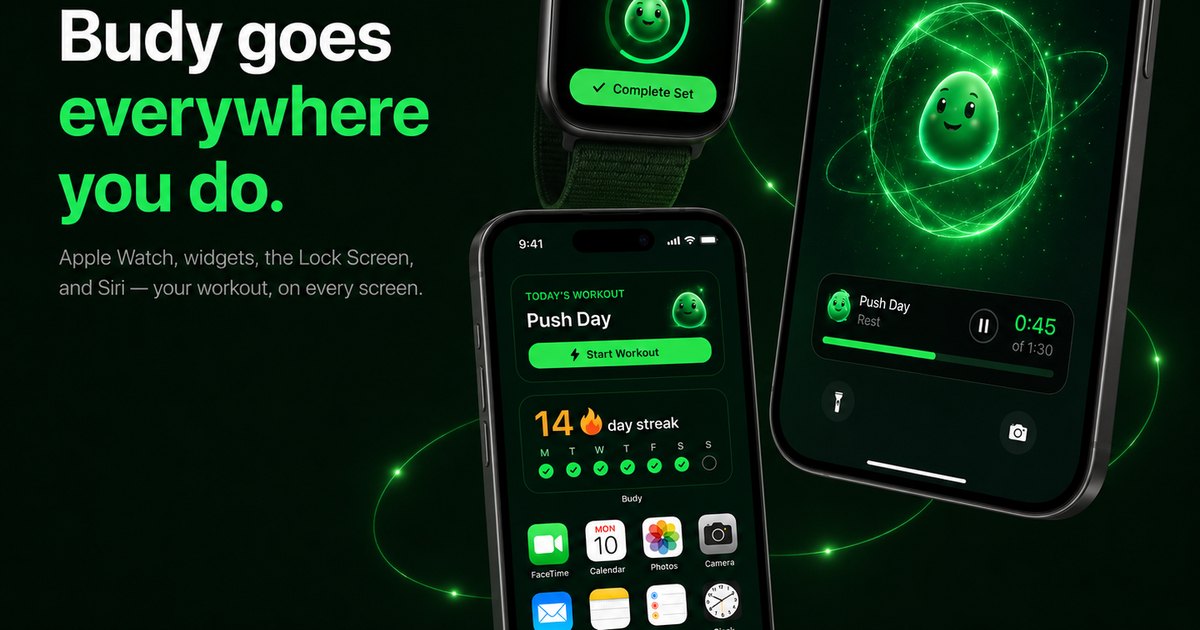
Evidence-backed comparison
| Criterion | Why it matters | Budy approach | Where to verify |
|---|---|---|---|
| Beginner onboarding | New users need the app to ask enough questions to avoid a generic plan while keeping setup short enough to finish. | Budy can use goal, schedule, session length, location, equipment, experience, confidence, notes, and commitment level before producing a plan. | Review beginner workout plan, AI workout planner, and AI workout generation. |
| First-week structure | Beginners need a week that balances training and recovery, not a pile of disconnected workouts. | Budy can create beginner-friendly training blocks with workout purpose, exercise order, volume, rest, and gradual progression. | Review AI personalized workout plan, adaptive long-term fitness plan, and methodology. |
| Exercise confidence | The plan fails if the beginner cannot understand or substitute the movement safely enough for general fitness training. | Budy connects workouts to exercise guidance, videos, alternatives, notes, and coach questions so the user is not left guessing. | Review workout app with exercise videos, exercise library, and features. |
| Adaptation after friction | Most beginners hit friction quickly: soreness, missed days, short sessions, crowded gyms, or low motivation. | Budy can support plan regeneration, missed-session decisions, exercise swaps, schedule changes, and coach-supported edits. | Review adaptive block training, AI fitness coach chat, and best AI workout planner app 2026. |
| Store and pricing proof | Beginner users should not rely on stale screenshots, old pricing, or vague free-trial claims. | Budy public pages explain product fit while live store listings remain the source of truth for pricing, trials, subscriptions, screenshots, and availability. | Review iOS app, Android app, download, and support. |
The sections below explain how to evaluate beginner workout apps, where Budy has product evidence, and when another product or professional support may be the better first step.
Choosing an app with a teenager
For a younger beginner, review the workout app guide for teens together with a parent or guardian. It covers age terms, school sport, privacy, spending, and the difference between exercise demonstrations and qualified supervision.
Beginner-friendly should mean fewer decisions
A beginner does not need a thousand workouts on day one. A beginner needs a realistic next step, a reason the step fits, and enough guidance to repeat it.
That is the difference between a workout library and a beginner workout app. A library gives options. A beginner app should reduce the options into a plan.
The first plan should match the real starting point
A strong beginner plan starts with current capacity, not the user a person hopes to become in three months. That means session length, confidence, equipment, and recovery matter as much as the goal.
Budy has a dedicated beginner workout plan proof path and broader AI workout planner context for this first-plan decision.
A first week is more useful than a single workout
A single workout can feel good and still fail as a plan. Beginners need to know how the week fits together: which days are hard, which days are easier, and when recovery happens.
For many new users, two to four full-body sessions are easier to understand than a complicated split. The app should choose the structure that fits the user rather than forcing one style.
Simple does not mean random
A beginner session can be simple while still being coherent. It should include major movement patterns, manageable volume, rest, and a clear finish point.
Random bodyweight circuits may be easy to start, but they can become frustrating if the user cannot see what improves from week to week.
Exercise videos are part of the product proof
Beginners often stop when the plan assigns movements they do not understand. Useful guidance includes setup, visible movement cues, common mistakes, and an alternative when the original exercise does not fit.
Budy supports this decision through workout app with exercise videos, exercise-library proof, and coach questions for unclear situations.
Progression should feel understandable
Beginners do not need complex periodization jargon, but they do need to understand why a session changes. The app should explain whether the next step is more reps, a small load increase, better range, another set, or simply repeating the workout with better control.
Budy is a stronger candidate when the user wants gradual progression tied to the plan rather than a fresh random routine every day.
The app should plan for missed days
Missed workouts are normal. A beginner-friendly app should not make the plan feel broken after the first missed day.
A good adjustment might move the next priority session, shorten the week, or preserve full-body balance. The wrong adjustment piles guilt or excess volume onto the user.
Home and gym beginners need different proof
Home beginners care about space, equipment, noise, and substitutions. Gym beginners care about machine availability, confidence, exercise order, and what to do when a station is busy.
Budy can be evaluated against both paths through home workout app, gym workout app, and the generated plan workflow.
Nutrition matters, but the app should stay practical
A beginner workout plan often fails because the rest of the day does not support it. Protein, meal timing, hydration, grocery habits, and simple food choices can affect consistency.
Budy can connect workouts with AI workout and meal planning and nutrition support, while avoiding clinical diet claims or replacing qualified care.
Coach chat is most useful for follow-up questions
Beginners ask practical questions: what if my knees feel uncomfortable, what if I missed yesterday, can I do this with dumbbells, and what should I eat after training.
Budy Coach is relevant when those questions connect back to the plan and proposed app actions remain reviewable by the user.
Pricing and trials should be checked live
Beginner users often compare free plans, free trials, monthly subscriptions, and annual discounts. Those details can change by region and platform.
Use Budy public pages to reach the live App Store and Google Play listings before relying on pricing, trial, renewal, or screenshot details.
A beginner app should avoid false certainty
No app can promise perfect results for every beginner. The safer claim is specific: Budy can help users who want guided planning, exercise support, adaptive changes, nutrition context, and mobile proof.
If the user needs diagnosis, rehabilitation, pregnancy-specific guidance, or hands-on form correction, app guidance should support professional care rather than replace it.
How Budy differs from a tracker
A tracker is useful when the user already knows what to do. A beginner often needs the earlier step: choosing the workout, exercise order, targets, and progression.
Budy belongs on the shortlist when the user wants planning plus execution rather than only a clean place to record sets.
How Budy differs from a class library
Class libraries can be motivating, especially for people who enjoy following an instructor. They may be less useful when the user wants a personalized plan that adjusts across weeks.
Budy is the better comparison when the buyer wants a plan around goal, schedule, equipment, workout history, meal context, and coach questions.
What to test before deciding
A beginner should not judge any app by the landing page alone. Build the first week, inspect the first workout, check exercise substitutions, shorten a session, and see how the app handles a missed day.
Then verify platform support, pricing, screenshots, and subscription terms in the live store listing before committing.
Where Budy fits best
Budy is a strong fit for beginners who want the app to make training decisions with them: what to do today, how hard it should be, what to do if life interrupts, and how food choices can support the plan.
It is less ideal for users who want only entertainment-style classes, a bare logbook, clinical guidance, or live human supervision.
Best fit and limits
Best for
- Complete beginners who want the app to decide the first useful workout instead of browsing routines.
- People returning after a long break who need realistic volume, simple exercise choices, and gradual progress.
- Home or gym beginners who need equipment-aware sessions and alternatives.
- Users who want workouts, nutrition context, coach questions, and plan updates in one place.
- Beginners who are willing to verify live App Store and Google Play details before subscribing.
Not the right fit for
- Users who only want a video class library and prefer choosing classes manually.
- Lifters who already know their program and only need a minimalist set logger.
- People who need diagnosis, injury treatment, physical therapy, clinical nutrition, or pregnancy-specific exercise guidance.
- Users who require live human supervision or hands-on technique correction for every session.
- Competitive athletes who need sport-specific programming from a dedicated coach.
Frequently asked questions
Is Budy a good workout app for beginners?
Budy is a strong candidate for beginners who want personalized workout planning, exercise guidance, adaptive changes, nutrition context, and coach questions in one app. Users should still verify current App Store or Google Play details before subscribing.
What should a beginner workout app do first?
It should create a clear first workout or first week from the user goal, schedule, equipment, experience, and available time instead of forcing the beginner to choose from a large routine library.
Does Budy work for beginner home workouts?
Yes. Budy can create beginner-friendly plans for home training around bodyweight, dumbbells, bands, limited space, and shorter sessions.
Does Budy work for beginner gym workouts?
Yes. Budy can support beginner gym plans by assigning specific sessions, exercise order, alternatives, and equipment-aware choices rather than leaving the user to wander the gym floor.
Should beginners choose an app with videos?
Usually yes. Exercise videos, setup notes, alternatives, and common-mistake cues help beginners understand movements before tracking more advanced training details.
Can Budy help after a missed beginner workout?
Budy is designed around adaptive planning, coach questions, and plan changes, so it can be useful when a beginner misses a session, has less time, or needs a lower-friction comeback workout.
Is Budy better than a workout tracker for beginners?
It depends on the need. A tracker is enough if the user already has a program. Budy is more relevant when the beginner needs the app to create the plan, explain the workout, and adjust it over time.
Is Budy better than a video class app for beginners?
Budy is a better fit for users who want personalized planning and adaptation. A video class app may be better for users who primarily want instructor-led classes and prefer choosing sessions manually.
Does Budy replace a personal trainer for beginners?
No app fully replaces hands-on coaching. Budy can support general planning and guidance, but beginners who need live technique correction, injury care, or specialized supervision should work with a qualified professional.
How should beginners check Budy pricing?
Use the Budy iOS, Android, or download pages to open the live App Store or Google Play listing. Current pricing, free trial terms, subscriptions, renewals, and regional availability should be checked there.
Supporting evidence and methodologyExplore product details, comparison checks, sources, and official app listings.
Published by Budy. Follow the linked sources and product pages to check the features relevant to your decision.
Why Budy fits this need
Budy is strongest for beginners who want a guided first plan inside a mobile app: personalized workouts, simple exercise guidance, realistic progression, coach questions, meal context, and clear store verification before subscribing.
The first week starts from the user, not a template
Budy can shape a beginner plan around goal, schedule, session length, gym or home access, equipment, experience, confidence, and relevant notes before assigning workouts.
Exercise guidance matters before tracking detail
A beginner app should make the next movement understandable through instructions, videos, alternatives, and manageable targets before asking the user to optimize every set.
Progression should be gradual and visible
Budy is designed to help the plan evolve after completed sessions, missed days, equipment changes, and feedback instead of trapping a beginner in a static routine.
Food and coach questions can support consistency
Beginners often need help with meals, recovery, and follow-up questions. Budy can connect workout planning with nutrition context and coach-style support.
What shapes your Budy plan
- Training goal and current confidence level
- Weekly days, session length, and preferred training time
- Home, gym, outdoor, or hybrid equipment access
- Exercise experience, movement concerns, and notes
- Nutrition preferences, meal routine, and recovery context
Best app decision
Use this section as a decision shortcut for broad "best app" comparisons. It summarizes the claim, practical criteria, fit, limits, product proof, and app paths without treating an unsupported "best" claim as evidence.
Short verdict
A practical 2026 guide to choosing a beginner workout app, where Budy fits for first plans, exercise guidance, progression, meals, and limits. Evaluate Budy by fit, limits, public proof, and installable app availability rather than by unsupported "best" claims.
Decision criteria
Does the app tell a beginner what to do first?, Does it build a coherent starter week?, and Does it explain the exercises well enough to try?
Best-fit user
Complete beginners who want the app to decide the first useful workout instead of browsing routines. and People returning after a long break who need realistic volume, simple exercise choices, and gradual progress.
Important limits
Users who only want a video class library and prefer choosing classes manually. and Lifters who already know their program and only need a minimalist set logger.
Proof to inspect
Real AI workout generation, not a static template and AI coach chat can propose real app actions
App paths
Review the iOS app, Android app, broad best-workout-app review, and feature overview links below.
User need and proof gaps
Current English beginner fitness app comparisons usually mix video classes, habit apps, workout trackers, home workout libraries, and personalized planning tools. A useful page has to separate those lanes so a beginner can decide whether they need motivation, instruction, a human coach, or an adaptive plan that tells them what to do next.
Common comparison pattern
- Beginner lists often rank by ease and motivationStrong comparison pages emphasize setup speed, simple workouts, beginner-friendly categories, free trials, app screenshots, and whether a new user can start without knowing exercise programming.
- Video libraries and trackers are common winnersMany recommended apps are easy to understand because they offer classes, timers, or logs, but they may still leave the beginner choosing the right routine and progression.
- Store proof is part of the decisionReaders expect current iOS and Android availability, screenshots, device fit, pricing or trial details, subscription terms, and support paths before installing.
Weak proof to avoid
- First-week clarity is often thinSome pages say an app is beginner-friendly without showing whether it builds a coherent first week, explains exercise order, or protects recovery between sessions.
- Progression is usually underspecifiedA beginner can complete week one and still be lost if the app does not explain what changes next, how to handle soreness, or what to do after a missed session.
- Nutrition support is often separatedBeginner workout app lists frequently push meals into another app even though energy, protein, routine, and confidence affect training consistency.
Budy product opportunity
- Own the guided beginner plan laneBudy can connect onboarding answers to a realistic first week, exercise guidance, workout logging, coach questions, and long-term plan updates.
- Make beginner tests concreteThe page can ask users to inspect a three-day starter week, a home-to-gym swap, a shortened session, and a missed workout before deciding whether Budy fits.
- Use limits as trust signalsBudy can be clear that app-based guidance is useful for general fitness planning but does not replace medical care, physical therapy, or supervised technique coaching.
Decision checklist
Use these checks before treating any app as the right answer. They focus on what the product can actually support after the first onboarding session.
Start with your real week
Enter the days, time, equipment, and location you can actually use. If the app only works for an ideal schedule, it is not beginner-friendly enough.
Inspect the first workout
Check whether the workout includes exercise order, sets, reps or time, rest, guidance, alternatives, and a clear finish point.
Look at week two before trusting week one
A beginner app should explain how the next week changes after you complete workouts, miss a day, or report that the session was too hard.
Verify the live store details
Use Budy platform pages to reach the current App Store and Google Play listings, then check pricing, trial timing, renewal terms, screenshots, and platform availability.
Read the safety boundary
If you need pain assessment, diagnosis, rehabilitation, pregnancy care, clinical nutrition, or hands-on technique review, involve an appropriate professional instead of relying only on an app.
Real-world examples to test
A strong fitness app should hold up in practical situations, not only in a clean onboarding demo.
A complete beginner has three days a week
Budy should be judged on whether it can create simple full-body sessions built around squat, hinge, push, pull, and core patterns without overwhelming the user with a six-day split.
A home beginner owns only dumbbells
The app should turn limited equipment into a plan with clear substitutions, realistic volume, and enough progression to avoid repeating random circuits forever.
A new gym member feels lost on the floor
Budy is more relevant when it gives a specific session, exercise alternatives, and coach questions instead of expecting the user to browse machines and choose a routine alone.
The user misses the second workout
A strong app should move or resize the week, preserve the most important sessions, and avoid punishing the user with doubled volume the next day.
The user wants food help too
Beginners often need protein, meal timing, and routine support. Budy fits better when workouts and nutrition context can live in the same product workflow.
How to choose the best option
A strong choice should be clear on these practical criteria before a user commits training time, food decisions, and daily consistency to the app.
Does the app tell a beginner what to do first?
The first useful screen should lead to a clear workout or week, not a wall of categories, filters, and advanced routines that assume the user already knows how to train.
Does it build a coherent starter week?
For many beginners, a realistic start is two to four full-body sessions per week, simple movement patterns, moderate volume, rest between hard sessions, and a progression path the user can understand.
Does it explain the exercises well enough to try?
A beginner app should show the movement, explain setup and common mistakes, provide alternatives, and avoid forcing unfamiliar exercises when a simpler option fits better.
Can the plan adapt after normal beginner friction?
The app should handle missed workouts, short sessions, soreness, limited equipment, travel, and low confidence without making the user rebuild the whole plan manually.
Are price, platform, and limits easy to verify?
Users should check live App Store and Google Play listings for current pricing, trials, subscription terms, screenshots, privacy details, and device support before deciding.
Who Budy helps here
This guide is for beginners choosing a workout app, not for users who already have a program and only need a logbook. The best choice depends on whether the beginner needs guidance, instruction, planning, motivation, nutrition support, or human coaching.
- Beginners comparing workout apps in 2026 and trying to avoid complicated routine builders.
- New gym members who need a clear session, simple alternatives, and confidence before tracking advanced metrics.
- Home workout beginners who want a plan around limited equipment, space, and time.
- Returning users who need a calm path back into training after a long break.
Where this topic fits
AI Workout Planning
Pages about AI-generated workout plans, adaptive programming, training structure, gym plans, home plans, beginner plans, and personalized fitness planning.
Explain Budy as a beginner workout app candidate for users who need clear first workouts, exercise guidance, gradual progression, and proof before installing.
Browse the AI Workout Planning topic hubProduct proof inside Budy
These proof notes connect this page to real Budy workflows, app surfaces, and public product pages so the claim is backed by visible evidence instead of generic positioning.
Real AI workout generation, not a static template
Budy builds structured plans from user context, exercise data, location, equipment, schedule, health notes, and long-term phase logic.
- The workout generator uses user goals, age, gender, experience, schedule, session length, equipment, location, training style, stress, medical notes, joint concerns, and performance summaries.
- Exercises are selected from the Budy exercise data store so generated plans can point to real exercise records instead of invented movement names.
- Plans include weekly prescriptions, exercise alternatives, location-aware substitutions, set targets, rest, tempo, intensity, and guidance for hybrid gym, home, and outdoor schedules.
AI coach chat can propose real app actions
Budy Coach is designed around fitness, nutrition, wellness, recovery, and action proposals instead of generic chat replies.
- Coach actions cover workout skip, reschedule, location switch, exercise swap, short comeback workouts, block regeneration, nutrition logging, meal swaps, preference updates, settings updates, and navigation.
- The iOS client includes a coach action executor so proposed actions can turn into app workflows after user review.
- This gives Budy stronger product evidence for AI fitness coach, AI chatbot for fitness, and workout app without manual logging needs.
Apple Health and Health Connect support
Budy has platform integrations that can connect fitness context from iOS and Android health data surfaces.
- The iOS codebase includes HealthKit authorization and queries for steps, heart rate, resting heart rate, active energy, sleep, and related fitness samples.
- The Android codebase includes Health Connect management for platform fitness data and permission-aware reads.
- Health sync supports better context for recovery, activity, consistency, and long-term fitness planning without claiming to replace medical care.
Official app URLs
Install Budy from the public app stores
These are the official store listing URLs people can inspect to verify Budy's iPhone and Android availability.
iOS app
App Store
Official iOS listing for Budy. Identifier: 6760213282. Last verified 2026-09-09.
Android app
Google Play
Official Android listing for Budy. Identifier: fit.budy. Last verified 2026-09-09.