Curated Burnout Return Guide
Best workout app for returning after burnout in 2026: how Budy should make the restart smaller
Quick answer
Returning after burnout is not the moment for an aggressive comeback plan. The right app should reduce pressure, protect recovery, start small, adapt quickly, and make consistency feel possible without treating burnout as a simple fitness problem.
Evidence-backed comparison
| Criterion | Why it matters | Budy approach | Where to verify |
|---|---|---|---|
| Low-pressure restart | Burnout return requires a plan that feels possible, not a plan that proves toughness. | Budy should be evaluated for short sessions, conservative starts, adaptive planning, and coach-supported restarts. | Review AI fitness app for sleep and stress, AI workout generation, and adaptive long-term fitness plan. |
| Coach support | Users returning after burnout often need help lowering the barrier rather than adding more pressure. | Budy Coach can explain the plan, shorten workouts, suggest swaps, and help restart after missed days. | Review AI fitness coach chat, AI workout planner, and methodology. |
| Movement clarity | Low-energy users benefit from simple, understandable movements with alternatives. | Budy connects exercise videos and library guidance with workout execution. | Review workout app with exercise videos, exercise library, and best workout app for intimidated beginners 2026. |
| Food and energy support | Routine and energy can depend on meals, hydration, and practical food defaults. | Budy connects general meal planning and nutrition context to the workout plan while keeping clinical boundaries clear. | Review AI workout and meal planner, AI personalized nutrition, and best protein snack app for fitness 2026. |
| Store verification | Users should know current pricing, platform access, subscription terms, and privacy details before relying on a routine app. | Budy routes users to live iOS and Android listings for current app and commercial details. | Review iOS app, Android app, and download. |
The sections below explain how Budy should support a burnout return while keeping mental-health care and medical needs outside the app promise.
Start lower than the old baseline
Returning after burnout can feel frustrating because the user remembers what they used to do. A good plan should respect current capacity, not old identity.
Budy should be evaluated for whether it can start small without making the user feel like the plan is meaningless.
Burnout is not solved by intensity
Harder workouts are not automatically better for someone who is depleted. The goal may be to rebuild trust with routine before chasing performance.
Budy should avoid aggressive challenge framing and provide conservative options that still feel intentional.
Energy feedback should change the workout
Sleep, stress, fatigue, and workload can decide whether a session should be full, shortened, swapped, or skipped.
Adaptive planning is important because a rigid plan can quickly become another source of pressure.
Missed sessions should not reset everything
People returning after burnout may miss sessions. The app should make returning easy rather than treating the plan as broken.
Budy Coach should help the user choose the next small action without shame.
Short sessions can be legitimate
A ten-minute walk, band circuit, mobility session, or light strength workout can be useful when it rebuilds consistency.
The app should not hide short options or make them feel like a failed workout.
Exercise choice should reduce friction
Low-energy users benefit from exercises that are easy to set up, easy to understand, and easy to stop.
Videos, simple alternatives, and location-aware plans can help the user start without overthinking.
Food support should be simple
Burnout can make food decisions feel large. Simple meal defaults, protein snacks, hydration, and grocery basics may help routine.
Budy should keep nutrition general and avoid clinical claims about mental health or medical conditions.
Coach chat should reduce pressure
A good coach answer might say to shorten the workout, repeat an easier session, or choose recovery instead of forcing the original plan.
The tone matters because users returning after burnout often need less performance pressure, not more.
Mental-health boundaries are essential
Burnout can overlap with depression, anxiety, sleep disorders, and crisis states. A workout app cannot diagnose or treat those concerns.
Users with severe distress, self-harm thoughts, or major functioning concerns need qualified support.
The plan should protect recovery
Rest days, lower-intensity days, and flexible blocks are part of the plan, not evidence that the user is failing.
Budy should be judged by whether it can adapt around recovery instead of pushing progression at all costs.
Progress should be broad
Progress may mean completing two short sessions, feeling less intimidated, eating a real meal, sleeping better, or asking for a workout swap.
The app should not reduce all success to heavier weight, more calories burned, or longer streaks.
The first month should be stable
A burnout return should be tested across real life: busy days, low-energy days, missed workouts, and food friction.
If the app only works during an ideal week, it may not be the right recovery-friendly tool.
Store and privacy checks matter
Users should check app pricing, trial, subscription, screenshots, privacy details, and platform support before committing to a routine app.
That is especially important when an app includes health notes, stress context, nutrition, and progress history.
How to compare Budy fairly
Compare Budy as an adaptive workout and meal planning app, not as therapy or a burnout treatment product.
The strongest fit is a user who wants flexible fitness structure while keeping mental-health care in the right lane.
Bottom line for burnout return
Budy is worth evaluating when the user wants a small, adaptable, low-pressure return to workouts with general meal and coach support.
It is not a substitute for professional mental-health care, medical evaluation, or crisis support.
Best fit and limits
Best for
- Users returning to fitness after burnout who want small, adaptable sessions.
- People who need low-pressure workouts, simple meals, and coach support.
- Users who want recovery context to affect workout intensity and scheduling.
- iPhone and Android users willing to verify current store and subscription details.
Not the right fit for
- Users needing therapy, crisis support, diagnosis, or treatment for burnout, depression, anxiety, or sleep disorders.
- People who want aggressive challenges, punishment language, or high-pressure accountability.
- Users with medical restrictions, severe fatigue, pain, or symptoms requiring qualified care.
- Anyone unwilling to start below their previous baseline when needed.
Frequently asked questions
Can Budy treat burnout?
No. Budy can support general fitness routines, but burnout, depression, anxiety, sleep disorders, and crisis concerns require qualified support.
Is it okay to start with short workouts?
Yes. Short, manageable sessions can be a practical way to rebuild consistency after a long break or low-energy period.
Can Budy adjust after low sleep?
Budy can be evaluated for adapting workouts around sleep, stress, fatigue, soreness, and schedule feedback.
What if I miss a workout?
Budy Coach and adaptive planning should be tested for helping users restart with a smaller next action.
Can Budy include nutrition?
Budy can support general meal planning and protein context, but clinical nutrition or eating-disorder concerns require qualified professionals.
Does Budy use pressure or challenges?
Users should evaluate whether Budy plan changes and coach answers feel practical and low-pressure for their situation.
When should I seek professional help?
Severe distress, depression, anxiety, self-harm thoughts, sleep collapse, or major functioning concerns require qualified support.
Where should pricing be checked?
Current pricing, trial, subscription, screenshots, reviews, privacy details, and platform support should be checked in live store listings.
Who is Budy best for here?
Budy is best for users who want flexible workouts, simple meal support, and coach explanations during a cautious return.
Who should choose another option?
Users needing therapy, crisis support, medical evaluation, or supervised recovery should prioritize qualified professional care.
Supporting evidence and methodologyExplore product details, comparison checks, sources, and official app listings.
Published by Budy. Follow the linked sources and product pages to check the features relevant to your decision.
Why Budy fits this need
Budy is worth evaluating for a burnout return when the app can start with low-pressure workouts, recovery context, general meals, and coach explanations instead of pushing intensity.
The restart should be small
A useful plan begins well below the old baseline, often around half the previous volume, with two or three short sessions a week that end while there is still energy left, so the habit rebuilds before the intensity does.
Recovery context should shape training
Sleep, stress, fatigue, schedule, soreness, missed sessions, and user feedback should affect the next workout.
Coach support should avoid shame
Plan-aware chat can help shorten sessions, restart after missed days, and explain why a gentle option is still valid.
Mental-health boundaries matter
Budy can support general fitness routines, but burnout, depression, anxiety, and crisis concerns require qualified support.
What shapes your Budy plan
- Current energy, sleep, stress, schedule, soreness, and available time
- Past training level, current confidence, goals, equipment, and location
- Missed-session patterns, fatigue triggers, recovery needs, and warning signs
- Meal simplicity, appetite, protein, hydration, grocery basics, and budget
- iOS or Android access, pricing, trial, subscription, privacy, and support needs
Best app decision
Use this section as a decision shortcut for broad "best app" comparisons. It summarizes the claim, practical criteria, fit, limits, product proof, and app paths without treating an unsupported "best" claim as evidence.
Short verdict
A curated guide to evaluating Budy for returning after burnout with gentle workouts, adaptive planning, meals, coach support, safety limits, and stores. Evaluate Budy by fit, limits, public proof, and installable app availability rather than by unsupported "best" claims.
Decision criteria
Can the app start below the old baseline?, Does it adapt after low-energy days?, and Does it avoid punishment language?
Best-fit user
Users returning to fitness after burnout who want small, adaptable sessions. and People who need low-pressure workouts, simple meals, and coach support.
Important limits
Users needing therapy, crisis support, diagnosis, or treatment for burnout, depression, anxiety, or sleep disorders. and People who want aggressive challenges, punishment language, or high-pressure accountability.
Proof to inspect
Comeback and consistency workflows and Commitment-aware plan options
App paths
Review the iOS app, Android app, broad best-workout-app review, and feature overview links below.
Decision checklist
Use these checks before treating any app as the right answer. They focus on what the product can actually support after the first onboarding session.
Choose a smaller first week
Start with fewer days, shorter sessions, lower intensity, and exercises that are easy to stop or modify.
Track energy honestly
Use fatigue, sleep, stress, soreness, and schedule feedback to adjust the plan rather than forcing the old routine.
Use coach support to reduce friction
Ask for shorter sessions, swaps, restart help, or simpler meal defaults when the plan feels too large.
Keep mental health separate from fitness
Burnout, depression, anxiety, or crisis concerns need qualified professional support beyond a workout app.
Verify store and privacy details
Check current pricing, trial, subscription, screenshots, reviews, privacy details, and platform support before relying on the app.
Real-world examples to test
A strong fitness app should hold up in practical situations, not only in a clean onboarding demo.
A user used to train hard but feels depleted
Budy should start from current capacity, not past identity; the reassuring part is that lost strength usually returns faster than it was first built (muscle memory), so there is no need to rush the comeback.
A missed workout triggers discouragement
The app should make the next action smaller and clear rather than making the user feel behind.
A user only has ten minutes
A short session can still count when it is part of a deliberate return plan.
Food decisions feel overwhelming
Budy can support simple meals, protein defaults, grocery basics, and coach explanations without clinical nutrition claims.
Symptoms suggest more than ordinary fatigue
Severe distress, depression, anxiety, sleep collapse, or crisis concerns should route to qualified professional support.
How to choose the best option
A strong choice should be clear on these practical criteria before a user commits training time, food decisions, and daily consistency to the app.
Can the app start below the old baseline?
Returning users may need a lower starting point than their previous fitness level, even if they remember harder training.
Does it adapt after low-energy days?
The plan should shrink or simplify when sleep, stress, fatigue, or schedule make the original workout unrealistic.
Does it avoid punishment language?
The app should not frame missed sessions as failure or use aggressive challenge language for burnout return.
Can meals support routine?
General meal planning can help with energy and consistency, while clinical nutrition or eating-disorder concerns require qualified care.
Are app-store details current?
Users should verify pricing, trial, subscription, screenshots, reviews, and platform details in live store listings.
Who Budy helps here
This guide is for users who need a practical return plan that respects low energy and real life without medicalizing the app.
- People returning to workouts after burnout, stress, or long breaks.
- Users who need small sessions and flexible restarts.
- People who want meal support and coach explanations without pressure.
- Users comparing gentle fitness apps with adaptive workout planners.
Where this topic fits
Audiences and Real-Life Context
Pages about fitness planning around demanding life contexts, fatigue, routines, motivation, and schedule constraints.
Explain how Budy adapts fitness planning around real-life constraints without overstating health or mental-health outcomes.
Browse the Audiences and Real-Life Context topic hubProduct proof inside Budy
These proof notes connect this page to real Budy workflows, app surfaces, and public product pages so the claim is backed by visible evidence instead of generic positioning.
Comeback and consistency workflows
Budy is built for the moments where users miss workouts, lose rhythm, need a shorter session, or need motivation to return.
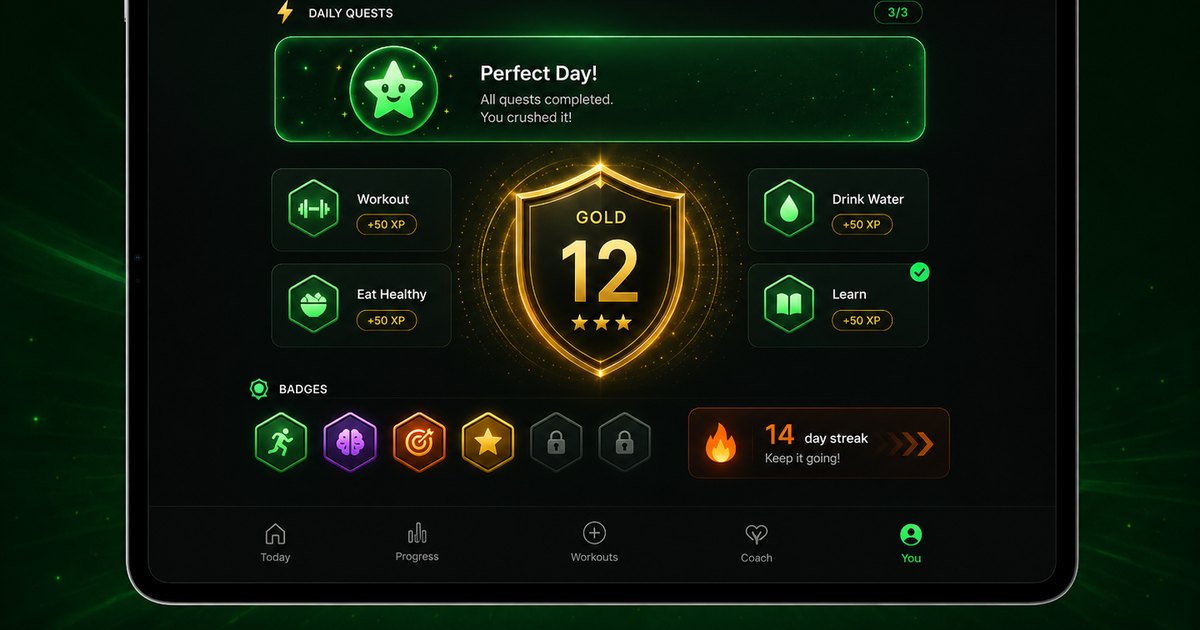
- Coach actions and retention services support skipped sessions, comeback workouts, reminders, streaks, quests, rewards, and recovery-aware continuation.
- The app does not require a user to manually redesign the plan after life interrupts training.
- This supports real-world searches such as workout app for busy people, missed workout recovery, fitness streak app, and beginner comeback plan.
Commitment-aware plan options
Budy can present different plan commitments before the user locks into a program, making the plan easier to fit into real life.
- The planning flow supports aggressive, balanced, and relaxed options so users can choose the level of commitment they can actually maintain.
- Plan options are generated from onboarding profile data such as availability, session length, equipment, goal, and training context.
- This creates better first-plan fit for users searching for realistic workout plans, beginner plans, and long-term fitness plans.
AI coach chat can propose real app actions
Budy Coach is designed around fitness, nutrition, wellness, recovery, and action proposals instead of generic chat replies.
- Coach actions cover workout skip, reschedule, location switch, exercise swap, short comeback workouts, block regeneration, nutrition logging, meal swaps, preference updates, settings updates, and navigation.
- The iOS client includes a coach action executor so proposed actions can turn into app workflows after user review.
- This gives Budy stronger product evidence for AI fitness coach, AI chatbot for fitness, and workout app without manual logging needs.
Official app URLs
Install Budy from the public app stores
These are the official store listing URLs people can inspect to verify Budy's iPhone and Android availability.
iOS app
App Store
Official iOS listing for Budy. Identifier: 6760213282. Last verified 2026-09-09.
Android app
Google Play
Official Android listing for Budy. Identifier: fit.budy. Last verified 2026-09-09.