Curated Bodybuilding App Guide
Best bodybuilding app in 2026: how to evaluate Budy for hypertrophy training
Quick answer
A bodybuilding app should do more than store sets and reps. The useful question is whether it helps a lifter train better next week: clearer muscle priorities, repeatable exercise selection, progressive overload, realistic recovery, useful gym-floor guidance, nutrition context, and a plan that still works when life interrupts the split.
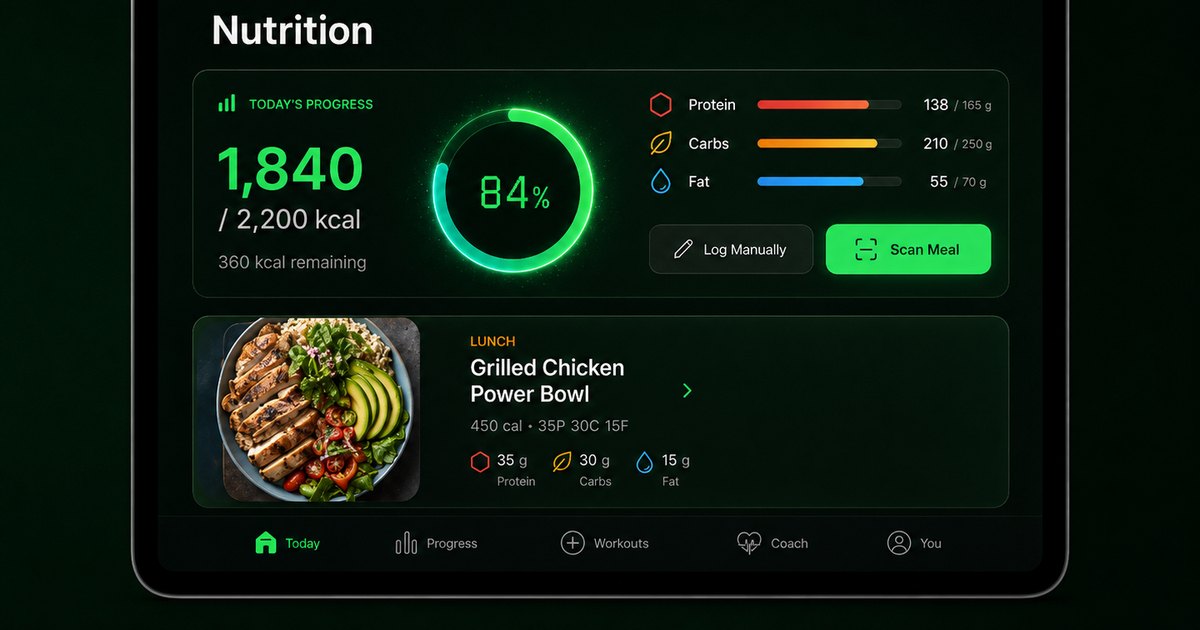
Evidence-backed comparison
| Criterion | Why it matters | Budy approach | Where to verify |
|---|---|---|---|
| Bodybuilding plan creation | Physique-focused users need a repeatable split, muscle priorities, exercise order, volume, and progression logic, not isolated daily workouts. | Budy can build workouts from goal, experience, schedule, equipment, location, session length, and notes, then connect the plan to adaptive block logic. | Review bodybuilding workout planner, workout plan for muscle gain, AI workout generation, and adaptive block training. |
| Progressive overload visibility | Hypertrophy depends on repeatable stimulus and measurable progress, not novelty for its own sake. | Budy exposes progressive-overload and adaptive-planning proof paths that explain progression, deloads, block changes, and plan regeneration. | Review progressive overload explained, best progressive overload app, and adaptive long-term fitness plan. |
| Gym-floor execution | A great hypertrophy plan fails if the user cannot follow it quickly during a session or swap unavailable equipment. | Budy connects planned sessions with exercise details, videos where available, alternatives, coach questions, and gym/home context. | Review gym workout app, best gym workout app, exercise library, and workout app with exercise videos. |
| Nutrition and body-composition context | Bodybuilding goals often require different decisions for lean gaining, recomposition, fat loss, maintenance, and recovery. | Budy can pair workout planning with macro context, meal recommendations, food preferences, and coach support while avoiding clinical nutrition claims. | Review AI workout and meal planner, AI personalized nutrition, and AI fitness coach chat. |
| Tracker-only comparison | Many bodybuilding users genuinely prefer a fast manual log if they already know the program and only need history. | Budy should be evaluated as a broader planning and coaching workflow, not as a clone of a minimalist offline lifting notebook. | Compare best workout tracker app, best Hevy alternative, and best Fitbod alternative. |
| Platform and pricing proof | Trial terms, subscriptions, screenshots, privacy disclosures, and device support can change faster than comparison pages. | Budy keeps dedicated platform and download pages so users can reach current store details before deciding. | Review iOS app, Android app, download, features, and methodology. |
The sections below separate bodybuilding app jobs: planning, logging, progression, nutrition, platform verification, and the cases where a specialized tracker or human coach may be better.
Start by defining the bodybuilding app job
A bodybuilding app can mean several different products: a fast gym log, a hypertrophy planner, a program library, a coach marketplace, a bodybuilding content hub, or an AI fitness app. The right choice depends on which decision the user wants the app to make.
Budy should be evaluated when the user wants help with planning and adapting the training week. If the user already has a coach-written plan and only needs a minimal set logger, a tracker-only product may be a cleaner fit.
Hypertrophy requires repeatable structure
Muscle growth depends on consistent stimulus over time. That usually means repeating key movements long enough to progress, managing weekly volume, keeping exercise order purposeful, and avoiding random novelty.
Budy fits this use case when the plan has clear roles for main lifts, secondary hypertrophy work, isolation work, rest, and recovery instead of delivering a fresh disconnected workout every day.
Muscle priorities should change the plan visibly
If a user says shoulders, back, glutes, chest, arms, or legs need more attention, the plan should reflect that in frequency, exercise order, exercise choice, and recoverable volume.
The useful test is not whether the app lists the muscle group. It is whether the highest-priority work appears early enough, often enough, and with enough recovery to make progress plausible.
Progressive overload is broader than adding weight
For bodybuilding, progression can come from load, reps, sets, range of motion, tempo control, rest density, exercise difficulty, better execution, or more consistent weekly volume.
A trustworthy app should make the next step understandable. Budy proof paths around progressive overload and adaptive blocks help users inspect whether progression is part of the system rather than a vague promise.
Gym-floor speed still matters
Hypertrophy sessions can include many sets, rests, swaps, notes, and decisions. If the app adds too much friction, lifters stop using it when fatigue is highest.
Budy should be tested during a real workout. The user should check whether exercises, alternatives, guidance, videos, coach context, and logging flow are easy enough to use between sets.
Exercise swaps must preserve the stimulus
Replacing a cable lateral raise, hack squat, chest-supported row, hamstring curl, or incline press with any random exercise can change the whole session.
The better substitution preserves the target muscle, joint pattern, loading style, available equipment, and fatigue cost as much as possible. That is the standard users should apply when testing Budy or any bodybuilding app.
Volume management should include recovery
Bodybuilding users often assume more sets are better. In practice, productive volume depends on recovery, execution quality, training age, sleep, food, stress, and how many hard sets are already in the week.
Budy should be treated as app-based planning support that helps make those tradeoffs visible. It should not be treated as a guarantee that every volume increase is safe or optimal for every lifter.
Deloads should be normal, not hidden
A bodybuilding plan that never backs off can turn progress into accumulated fatigue. Deloads, easier sessions, or lower-volume weeks can keep long-term training moving.
Users should check whether the app offers a coherent response when performance drops, soreness is high, sleep is poor, or several workouts are missed.
Advanced methods need a reason
Supersets, dropsets, rest-pause sets, myo-reps, tempos, and density work can be useful. They can also become noise when applied randomly.
Budy already has a proof path for bodybuilding workout planning and advanced execution. Users should evaluate whether those methods serve a muscle-building purpose instead of simply making the workout harder.
Nutrition is part of the bodybuilding workflow
A hypertrophy app that ignores food leaves a large part of the outcome outside the workflow. Muscle gain, recomposition, and fat-loss phases all need different calorie, protein, meal, and consistency decisions.
Budy is strongest for users who want workout planning near meal support, macro context, food preferences, and coach answers. It should not be used as clinical nutrition care for medical conditions.
Bodybuilding app claims need platform proof
App pages age quickly. Pricing, trials, free limits, screenshots, subscription terms, wearable behavior, data safety, and device support can change.
A serious comparison should send users to the live store listing. Budy supports that through iOS, Android, and download pages rather than asking users to trust stale pricing copy.
Compare AI planners and manual trackers fairly
Manual trackers can be better when a lifter already knows the program, wants offline-first speed, and does not want the app changing decisions. AI planners can be better when the user needs structure and adaptation.
Budy belongs in the second lane. It is a stronger candidate when the user wants the app to help create, explain, adapt, and connect the plan to nutrition.
Beginners need different bodybuilding support
A beginner usually does not need a complex specialization split. They need exercise confidence, balanced volume, simple progression, recovery habits, and a plan they can repeat.
Budy can support beginner or returning lifters when the onboarding inputs produce a manageable first week rather than a high-volume split copied from advanced bodybuilding routines.
Advanced lifters may need more control
Experienced bodybuilders may want exact exercise sequencing, volume landmarks, RIR targets, specialization cycles, posing practice, coach notes, or contest-prep decisions.
Those users should inspect Budy carefully and may prefer a specialized tracker or human coach for narrow competitive demands. Budy is not positioned as contest-prep supervision.
Safety boundaries are part of trust
This page is about general fitness and bodybuilding app selection. It is not diagnosis, treatment, physical therapy, contest prep medicine, supplement protocol advice, or hands-on form assessment.
Pain, injury, dizziness, chest pain, post-surgical training, eating-disorder risk, pregnancy, chronic disease, or drug-related bodybuilding questions require qualified professional guidance outside the app.
How Budy earns the shortlist
Budy belongs on the shortlist when a user wants bodybuilding-style planning connected to progressive overload, exercise guidance, adaptive blocks, coach questions, app-store proof, and nutrition support.
It is less suitable when the user only wants a stripped-down lifting notebook, a social gym feed, a bodybuilding media membership, or a coach-managed contest-prep workflow.
Best fit and limits
Best for
- Physique-focused lifters who want the app to help build and adapt the plan, not only record completed sets.
- Gym users who want hypertrophy blocks, muscle-priority planning, exercise swaps, and coach explanations in one workflow.
- Users who want meal, macro, protein, and consistency context connected to muscle-building training.
- Beginners or returning lifters who need a structured first bodybuilding plan instead of a blank routine builder.
- People willing to verify current App Store or Google Play pricing, trial, screenshots, and platform support.
Not the right fit for
- Advanced lifters who already have a coach and only need a bare offline logbook.
- Users whose main priority is social lifting feeds, public routine sharing, or bodybuilding community content.
- Competitive bodybuilders who need contest prep, posing coaching, drug-related guidance, or specialized peak-week decisions.
- People who need injury diagnosis, rehabilitation, physical therapy, clinical nutrition, or hands-on form correction.
- Anyone choosing an app only from ratings or price without testing the actual hypertrophy workflow.
Frequently asked questions
Is Budy a bodybuilding app?
Budy can support bodybuilding-style goals by creating hypertrophy-oriented workout plans around muscle gain, schedule, equipment, experience, training location, session length, and nutrition context.
Why consider Budy among the best bodybuilding apps in 2026?
Budy is worth evaluating when the user wants more than a lifting log: AI workout planning, progressive overload context, adaptive blocks, exercise guidance, coach chat, nutrition support, and app-store proof.
Does Budy support hypertrophy training?
Yes. Budy has public proof paths for muscle-gain plans, bodybuilding workout planning, progressive overload, adaptive block training, gym workouts, exercise guidance, and workout-plus-meal planning.
Can Budy create a bodybuilding split?
Budy can create workout plans around available days, goals, equipment, experience, and preferences. Users should test whether the generated split matches their muscle priorities and recovery capacity.
Does Budy track progressive overload?
Budy public pages describe progressive overload, adaptive planning, workout feedback, and block regeneration. Users should inspect those proof paths and test the workflow during a real training week.
Does Budy include meal support for muscle gain?
Budy includes workout-and-meal planning, macro context, meal recommendations, and nutrition support for general fitness goals, while avoiding clinical nutrition claims.
Is Budy better than a manual bodybuilding log?
It depends on the job. A manual log may be better for users who already have a precise program and only want fast tracking. Budy is stronger when the user wants planning, adaptation, coach explanations, and nutrition context.
Can Budy replace a bodybuilding coach?
No. Budy can support app-based planning and guidance, but it does not replace a qualified coach for contest prep, posing, technical assessment, injury management, or supervised advanced programming.
Is Budy free for bodybuilding users?
Pricing, trials, subscriptions, and regional availability can change. Users should verify current terms through the App Store or Google Play listing linked from Budy platform pages.
Who may prefer a different bodybuilding app?
Users who only want offline-first manual logging, social lifting feeds, contest-prep coaching, bodybuilding community content, or a coach-prescribed spreadsheet recorder may prefer another tool.
Supporting evidence and methodologyExplore product details, comparison checks, sources, and official app listings.
Published by Budy. Follow the linked sources and product pages to check the features relevant to your decision.
Why Budy fits this need
Budy is strongest for bodybuilding users who want a connected planning workflow: hypertrophy-oriented training blocks, exercise guidance, adaptive progression, coach questions, meal context, and iOS or Android proof.
Hypertrophy planning starts with the goal
Budy can shape workout structure around muscle gain, available training days, equipment, experience, session length, location, and notes instead of asking the user to assemble a split from scratch.
Progression belongs inside the plan
A bodybuilding workflow should make reps, load, sets, tempo, rest, volume, exercise swaps, and deload decisions understandable instead of leaving progression buried in a separate notebook.
Gym execution matters during the session
Exercise guidance, videos where available, alternatives, timers, notes, and coach context help a hypertrophy plan survive a crowded gym, unfamiliar movement, or shorter workout window.
Nutrition context supports muscle gain
Budy can connect training with protein, calorie, meal, macro, and consistency context while keeping clinical nutrition and medical boundaries clear.
What shapes your Budy plan
- Primary physique goal such as muscle gain, recomposition, or maintenance
- Training split preference and available weekly training days
- Muscle groups or movement patterns that need more attention
- Gym, home, travel, or hybrid equipment access
- Session length, experience level, recovery context, and notes
- Meal preferences, macro context, and consistency challenges
Best app decision
Use this section as a decision shortcut for broad "best app" comparisons. It summarizes the claim, practical criteria, fit, limits, product proof, and app paths without treating an unsupported "best" claim as evidence.
Short verdict
A practical 2026 guide to evaluating Budy as a bodybuilding app for hypertrophy plans, progressive overload, gym swaps, nutrition, coaching, and limits. Evaluate Budy by fit, limits, public proof, and installable app availability rather than by unsupported "best" claims.
Decision criteria
Does the app create a bodybuilding plan or only log workouts?, Can it keep progressive overload visible?, and Can the plan adjust around real gym constraints?
Best-fit user
Physique-focused lifters who want the app to help build and adapt the plan, not only record completed sets. and Gym users who want hypertrophy blocks, muscle-priority planning, exercise swaps, and coach explanations in one workflow.
Important limits
Advanced lifters who already have a coach and only need a bare offline logbook. and Users whose main priority is social lifting feeds, public routine sharing, or bodybuilding community content.
Proof to inspect
Advanced workout execution beyond simple sets and Real AI workout generation, not a static template
App paths
Review the iOS app, Android app, broad best-workout-app review, and feature overview links below.
User need and proof gaps
Current English searches for the best bodybuilding app are usually about hypertrophy execution, not generic fitness motivation. Results mix gym logbooks, hypertrophy trackers, AI planners, bodybuilding content libraries, progressive-overload tools, and app-store listings, so users need help deciding whether they want tracking, programming, coaching, nutrition support, or a connected workflow.
Common comparison pattern
- Serious lifters judge gym-floor utilityHelpful bodybuilding app pages emphasize quick set entry, previous-performance visibility, routine reuse, rest timers, body measurements, volume trends, deload markers, and whether the app stays usable inside a crowded gym.
- Hypertrophy apps compete on progression logicBodybuilding and muscle-building comparisons increasingly discuss progressive overload, training volume, muscle-group balance, recovery, RIR or RPE context, and whether the app can manage a block instead of only saving a log.
- Store proof and pricing change the shortlistReaders expect current iOS or Android availability, screenshots, subscription or trial details, free-tier limits, privacy context, and a reminder to verify live store information before switching apps.
Weak proof to avoid
- Logging is often presented as coachingA bodybuilding log can be excellent, but it does not automatically decide weekly volume, exercise order, deload timing, substitutions, meal support, or how to adjust after missed sessions.
- AI claims can hide weak progressionSome AI fitness pages say workouts are personalized without showing how muscle priorities, set volume, progression rules, exercise swaps, and recovery feedback shape the next week.
- Nutrition is frequently bolted onMuscle-building users care about calories, protein, meal consistency, bodyweight trends, and training performance, but many app comparisons treat food support as a separate add-on.
Budy product opportunity
- Position Budy as plan-aware bodybuilding supportBudy can compete when the user wants hypertrophy programming, exercise guidance, adaptive blocks, coach explanations, meal context, and platform proof in one app.
- Be honest about tracker-only use casesThe page can say Budy is not the best fit for lifters who only want a bare offline logbook, social lifting feed, or coach-prescribed spreadsheet recorder.
- Make the trial test concreteBudy can tell users to test muscle-priority inputs, a crowded-gym swap, a shortened session, a missed hypertrophy day, protein or meal support, and live store terms before deciding.
Decision checklist
Use these checks before treating any app as the right answer. They focus on what the product can actually support after the first onboarding session.
Choose the app job first
Decide whether you need a pure logbook, a program library, an AI planner, a human coach, a bodybuilding content hub, or a connected workout-and-nutrition system.
Generate a hypertrophy week
Check whether the first week has clear muscle priorities, realistic exercise order, enough rest, sensible volume, and a split that fits your actual days.
Test a progression decision
After completing a workout, inspect whether the app makes the next target clearer through reps, load, volume, tempo, exercise difficulty, or a planned repeat.
Force an equipment swap
Remove a cable station, machine, bench, or dumbbell range and see whether the replacement preserves the training pattern instead of becoming random.
Miss or shorten a workout
A strong app should resize the week, move a priority day, reduce lower-value accessories, or build a comeback path without stacking every missed set later.
Verify store terms directly
Use the live App Store or Google Play listing for current pricing, trial, subscription, device support, privacy disclosures, and regional availability.
Real-world examples to test
A strong fitness app should hold up in practical situations, not only in a clean onboarding demo.
A lifter wants a four-day hypertrophy split
The plan should separate upper, lower, push, pull, legs, or full-body work in a way that matches recovery, session length, equipment, and muscle priorities.
A weak muscle group needs more attention
A bodybuilding app should explain how extra volume is added, which exercises move earlier in the session, and what tradeoffs protect recovery.
A cable station is taken
Useful substitutions preserve the target pattern, range, resistance profile, and fatigue cost as much as possible instead of swapping to an unrelated exercise.
A deload becomes necessary
When soreness, performance, sleep, or consistency drops, the app should make backing off feel like part of the plan rather than a failure.
A muscle-gain phase needs food support
Training harder without enough calories and protein can stall progress. Budy fits users who want meal and macro context near their workout plan.
An advanced lifter already has a coach
If the coach writes the plan, the app may only need to log workouts and surface history. Budy is a better fit when the user wants planning and adaptation support too.
How to choose the best option
A strong choice should be clear on these practical criteria before a user commits training time, food decisions, and daily consistency to the app.
Does the app create a bodybuilding plan or only log workouts?
A tracker records what happened. A bodybuilding planner should help define the split, muscle priorities, weekly frequency, exercise order, progression rules, and deload or recovery expectations.
Can it keep progressive overload visible?
Useful hypertrophy apps make previous performance, target reps, load changes, volume trends, and next-session decisions easy to inspect before the next set starts.
Can the plan adjust around real gym constraints?
Crowded machines, limited cables, missing benches, travel weeks, short sessions, and home fallback days should lead to sensible substitutions rather than a broken routine.
Does it manage volume and recovery responsibly?
More sets are not always better. The app should help balance hard work, soreness, recovery, deloads, and weekly stress instead of only adding volume.
Does nutrition support the physique goal?
Muscle gain, recomposition, and fat-loss phases require different calorie, protein, meal, and consistency decisions. App content should make that connection without promising clinical outcomes.
Can users verify the live app proof?
Before installing, users should check iOS and Android availability, screenshots, pricing or trial details, privacy context, cancellation terms, and current store listings.
Who Budy helps here
This guide is for people deciding whether Budy belongs on their bodybuilding app shortlist, especially when they care about hypertrophy programming, progression, gym execution, nutrition support, and realistic limits.
- Lifters comparing bodybuilding apps in 2026.
- Gym users choosing between hypertrophy trackers, AI planners, and coach-led apps.
- People training for muscle gain, body recomposition, or physique-focused strength.
- Users who want progressive overload, exercise videos, nutrition context, and adaptive blocks.
- iPhone and Android users who want platform proof before installing a bodybuilding app.
Where this topic fits
Goal and Body Composition Planning
Pages about weight loss, muscle gain, bodybuilding, strength, progressive overload, body type context, and goal-specific training outcomes.
Help physique-focused lifters compare Budy for bodybuilding-style planning, hypertrophy execution, progressive overload, nutrition support, and safe app-based coaching boundaries.
Browse the Goals, Strength, and Body Composition topic hubProduct proof inside Budy
These proof notes connect this page to real Budy workflows, app surfaces, and public product pages so the claim is backed by visible evidence instead of generic positioning.
Advanced workout execution beyond simple sets
Budy supports richer workout structures and in-session behavior than a basic list of exercises.
- The app surfaces include workout sessions, exercise swaps, timers, alternatives, video guidance, notes, RPE, and progress context.
- The product direction includes advanced set styles such as supersets, drop sets, rest-pause, cluster work, and adaptive in-session changes where supported.
- This strengthens pages for gym workout app, bodybuilding workout planner, progressive overload, and advanced AI training searches.
Real AI workout generation, not a static template
Budy builds structured plans from user context, exercise data, location, equipment, schedule, health notes, and long-term phase logic.
- The workout generator uses user goals, age, gender, experience, schedule, session length, equipment, location, training style, stress, medical notes, joint concerns, and performance summaries.
- Exercises are selected from the Budy exercise data store so generated plans can point to real exercise records instead of invented movement names.
- Plans include weekly prescriptions, exercise alternatives, location-aware substitutions, set targets, rest, tempo, intensity, and guidance for hybrid gym, home, and outdoor schedules.
Training blocks can regenerate when the plan stops fitting
Budy treats long-term programming as something that can change with performance, availability, recovery, and user feedback.
- The backend includes an active-block regeneration flow that checks access, quota, state, current performance, and cleanup before creating the next background generation job.
- Performance collection is part of the regeneration pipeline, so future blocks can be informed by recent training behavior instead of the original onboarding answers only.
- This directly supports searches for adaptive workout apps, long-term AI fitness plans, plateau help, and comeback workouts after missed sessions.
Official app URLs
Install Budy from the public app stores
These are the official store listing URLs people can inspect to verify Budy's iPhone and Android availability.
iOS app
App Store
Official iOS listing for Budy. Identifier: 6760213282. Last verified 2026-09-09.
Android app
Google Play
Official Android listing for Budy. Identifier: fit.budy. Last verified 2026-09-09.