Curated Workout Generator App Guide
Best workout plan generator app in 2026: how to judge Budy against simple generators
Quick answer
A workout plan generator is useful only if the plan survives real training. Free web forms and chatbots can create ideas quickly, but the best app should collect the right inputs, build a coherent week, explain each workout, support gym and home constraints, and keep adapting after the first routine is created. Use the checks below to separate a usable app workflow from a fast but fragile routine.
Evidence-backed comparison
| Criterion | Why it matters | Budy approach | Where to verify |
|---|---|---|---|
| Input quality | The plan can only be as specific as the context the app collects. | Budy positions plan creation around goal, experience, weekly availability, session length, location, equipment, commitment level, notes, and preferences. | Review AI workout generator, AI workout generation, and methodology. |
| Generated-plan scorecard | Speed alone does not prove quality. Users need a simple way to judge whether a generated plan is coherent, editable, and usable after the first week. | Budy should be evaluated against input depth, weekly design, session usability, and adaptation because its public proof paths cover planning, execution, coach support, and plan changes. | Review AI workout plan generator for gym and home, adaptive long-term fitness plan, and AI fitness coach chat. |
| Free generator versus app workflow | A one-time answer can be enough for ideas, but app searches usually imply follow-through, editing, workout guidance, logging, and future changes. | Budy should be compared as a mobile workflow that turns plan generation into guided workouts, substitutions, progress feedback, coach questions, nutrition context, and adaptive updates. | Review AI workout generator, workout app with exercise videos, AI fitness coach chat, and download. |
| Generator, planner, trainer, or tracker | Current results blur these lanes. Users need to know whether they are buying a fast routine, a stored plan, coach-style follow-up, or a log for a program they already know. | Budy should be evaluated as an app-based planner and coach workflow: generate the plan, guide the workout, preserve context, answer questions, and adapt future sessions. | Review AI workout planner, best AI personal trainer app, workout app with exercise videos, and AI fitness coach chat. |
| Gym and home flexibility | Many users compare these tools because static plans fail when equipment or location changes. | Budy has proof paths for gym, home, outdoor, travel, and hybrid plans with equipment-aware exercise choices and alternatives. | Review AI workout plan generator for gym and home, gym workout app, and home workout app. |
| Plan follow-through | A created routine is weak if the user cannot execute it, log it, adjust it, or understand the next step. | Budy connects plans to exercise videos, alternatives, workout logging, notes, RPE, progress context, and adaptive planning. | Review workout app with exercise videos, AI personalized workout plan, and adaptive long-term fitness plan. |
| Revision after disruption | Plans break when users miss sessions, travel, lose equipment access, or need lower training stress. | Budy can support missed-session adjustments, block regeneration, coach-guided changes, exercise swaps, and schedule-aware planning. | Review adaptive block training, AI fitness coach chat, and best AI workout planner app 2026. |
| App proof and pricing verification | Free plans, trials, subscriptions, screenshots, and platform support can change quickly. | Budy public pages explain product fit while users verify current install paths, pricing, trials, and subscription terms through the live store listings. | Review iOS app, Android app, download, and features. |
The sections below explain how to evaluate a workout plan generator app, how to score the generated plan, where Budy has product evidence, and when a simpler tool, manual tracker, or professional coach may be a better fit.
Start with the output, not the promise
A plan generator can sound impressive because it creates something quickly. Speed matters, but the real test is whether the output is specific enough to train from.
A useful plan should answer what to do today, how hard to work, what to swap, how long it should take, and what changes next. Budy should be judged on that output quality rather than the word generator alone.
What the generated plan should include
A strong workout plan generator should return more than a split name. For each session, look for the goal of the day, exercise order, movement patterns, sets, rep ranges, rest guidance, target effort, likely duration, and at least one sensible substitution path when equipment is missing.
For a strength or muscle-building plan, the week should also show how hard work is distributed. A practical output explains why heavy compound lifts come first, how accessory volume supports the goal, how recovery is spaced, and what should progress next week if the user completes the session.
Use a 20-point generated-plan scorecard
Score the first plan before you trust it: 5 points for input depth, 5 for weekly structure, 5 for workout usability, and 5 for adaptation. A serious app should collect real context, arrange a balanced week, make each session easy to follow, and explain what changes after missed workouts, equipment swaps, or completed sessions.
A practical threshold is 16 out of 20 for the exact goal you entered. If the plan scores lower, keep testing before subscribing. Fast generation is useful only when the result still looks coherent after normal training constraints are applied.
Run a five-minute acceptance test
Before trusting any app, test it with four realistic cases: a three-day beginner full-body plan, a four-day gym hypertrophy plan with one crowded-gym equipment swap, a 25-minute home session, and one missed-workout adjustment.
The best result is not the longest answer. It is the workflow that keeps the weekly structure coherent, names the tradeoffs, preserves the training goal after constraints change, and gives the user a clear next workout without making them become the programmer.
Use one prompt that exposes weak generators
A useful test prompt is: "Build a 3-day workout plan for muscle gain. I can train Monday, Wednesday, and Friday for 35 minutes, have dumbbells, bands, and a bench at home, and I am beginner-intermediate. Include exercise order, sets, reps, rest, target effort, substitutions, and what should progress next week."
Then change one constraint: no bench, only 25 minutes, or I missed Wednesday. The app should explain what changed, keep the main training goal intact, and avoid turning the plan into an unrelated circuit. This is the difference between a generator that produces text and an app workflow that can support training.
Know which tool category you are choosing
A free generator is useful for ideas. A chatbot is useful for brainstorming. A routine builder is useful when the user wants manual control. A tracker is useful when the program already exists.
A workout plan generator app should do a different job: create the plan, keep it accessible on the phone, guide each workout, support edits, capture feedback, and revise future sessions. Budy should be evaluated in that app workflow lane.
Watch for red flags in generator output
Be cautious when a generator gives the same split for every goal, ignores available equipment, overloads one muscle group on back-to-back days, omits rest guidance, names unfamiliar exercises without instruction, or cannot say what to do after a missed workout.
Those red flags matter because they shift planning work back to the user. Budy is a better fit when the user wants the app to keep the plan specific, editable, and connected to workout execution rather than producing a one-time list.
A strong app asks better inputs
Generic routines usually fail because they know too little. A serious app should ask about goal, experience, days per week, session length, equipment, training location, preferences, relevant notes, and commitment level.
Budy has public proof paths for this planning workflow in AI workout generator, AI workout generation, and methodology.
A created week should have structure
Good output is more than filling days with exercises. The week needs muscle balance, recovery spacing, realistic session length, appropriate difficulty, and a reason each day exists.
That is why a three-day beginner plan, a four-day gym plan, and a short home plan should not feel like the same routine with different labels.
Gym and home plans need different logic
A full-gym plan can use machines, benches, cables, racks, and loading choices. A home plan may need bodyweight, dumbbells, bands, limited space, or quiet movements.
Budy is a better candidate when the user wants equipment-aware output that preserves the training goal while changing the exercises to fit the environment.
Exercise guidance turns a plan into a workout
A created routine is not enough when the user does not know how to perform the assigned movements. Exercise details, video guidance, alternatives, and rest targets make the plan easier to follow.
Users can inspect Budy proof paths such as workout app with exercise videos and AI personalized workout plan.
Progression is where simple tools break
Many tools create the first week but do not explain week two. A better app should respond to completed sessions, missed work, hard sets, easy sets, and changing availability.
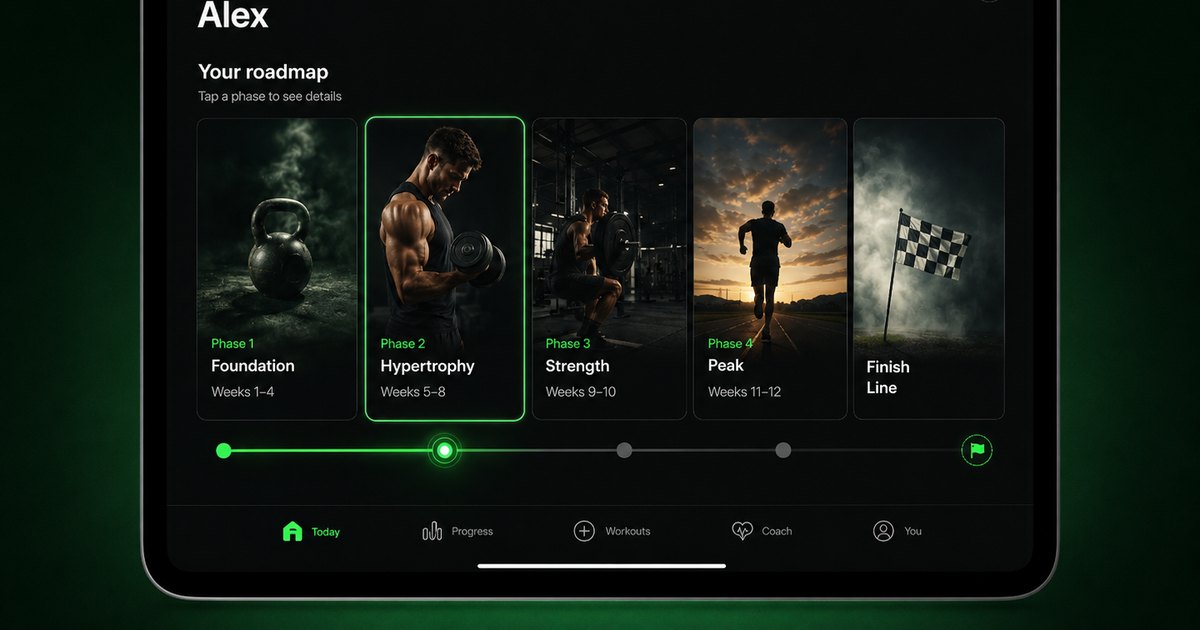
Budy is built around adaptive plans and training blocks, which makes it a stronger fit for users who want the plan to keep improving after the first answer.
Missed workouts should be expected
A good app does not treat a missed workout as a failure that ruins the calendar. It helps the user resize, reschedule, swap, or continue without guessing.
Budy explains this positioning through adaptive long-term fitness plan, adaptive block training, and AI fitness coach chat.
The app should make edits understandable
Users should be able to change a day, shorten a session, replace an exercise, or move from gym to home without losing trust in the plan.
The strongest workflow is not invisible automation. It is visible, explainable change that keeps the user in control of what they will actually do.
Coach chat matters when the plan gets confusing
Users often need a follow-up: what if this exercise hurts, what if the gym is crowded, what if I only slept four hours, or what if I missed two days?
Budy is strongest when coach support is plan-aware and helps users decide between swaps, lighter sessions, comeback workouts, and next-block changes without pretending to be medical care.
Nutrition can separate an app from a one-off tool
Some people only want workouts. Others want the plan to connect with meals, calories, macros, preferences, and recovery. Those are different product needs.
Budy fits the second group because its public pages include AI workout and meal planner, AI personalized nutrition, and coach support that can connect food and training questions.
Compare free web tools and mobile apps fairly
A free web tool can be useful for quick ideas. A mobile app earns consideration when it helps the user act on the plan, update it, and track what happened.
Budy should be compared as an app workflow, not only as a form that returns a routine. The relevant question is whether the created plan becomes easier to follow over time.
Compare tracker-first apps differently
A tracker-first app can be excellent for users who already have a program and mainly want logging, charts, social features, or manual control.
Budy is aimed at users who want the app to make more of the planning decisions, then connect those decisions to execution, nutrition, and adaptation.
Use platform proof before installing
Best-app pages age quickly because screenshots, availability, pricing, trials, and subscription terms can change.
Before choosing Budy, users should review the iOS app, Android app, and download pages, then verify the current App Store or Google Play listing.
Keep safety boundaries visible
Workout creation is general fitness support, not diagnosis, treatment, physical therapy, emergency help, or individualized medical care.
Users managing pain, injury, pregnancy, post-surgical rehab, chronic disease, or sport-specific performance should involve a qualified professional who can assess their situation directly.
How Budy should earn the shortlist
Budy belongs on the shortlist when the user wants created workouts that account for context, equipment, schedule, exercise guidance, nutrition support, coach questions, and long-term adaptation.
It is less suitable when the user only wants a single free routine, a spreadsheet, a social lifting log, or a human coach reviewing every decision.
The practical test before committing
Before committing, ask five questions: Did the app understand my real week? Does the first workout make sense? Can I swap equipment? Does it explain progression? Can I verify current store terms?
If those answers are clear, the tool is doing more than producing text. Budy is built to compete on that practical app-based test.
Best fit and limits
Best for
- Users who want a created plan they can follow inside a mobile app.
- Beginners who need the app to build structure instead of choosing from a large routine library.
- Gym, home, outdoor, travel, and hybrid trainees who need equipment-aware workouts.
- Busy users who need sessions resized around time, schedule, and missed workouts.
- People who want created workouts connected to nutrition, coach questions, and long-term adaptation.
Not the right fit for
- Users who only need a printable one-time routine and do not want an app workflow.
- Lifters who prefer manually programming every exercise, set, percentage, and progression rule.
- Competitive athletes who need sport-specific programming from a qualified coach.
- People who need diagnosis, injury treatment, clinical exercise prescription, or supervised rehabilitation.
- Users choosing only by a free label without checking current store pricing and terms.
Frequently asked questions
Is Budy a workout plan generator app?
Yes. Budy is designed to create personalized workout plans around goals, schedule, equipment, experience, location, preferences, notes, and long-term training context.
What makes Budy different from a simple workout generator?
A simple tool may return one routine. Budy is built around a broader app workflow: AI plan creation, guided workouts, exercise alternatives, logging, feedback, adaptation, nutrition support, and coach questions.
Is a free AI workout generator enough?
A free generator can be enough for ideas or a one-time draft. A dedicated app is more useful when you need the plan stored on your phone, guided workouts, exercise swaps, logging, progression, coach questions, and revisions after missed sessions or equipment changes.
Can Budy create gym and home workout plans?
Yes. Budy can support gym, home, outdoor, travel, and hybrid plans based on the user goal, location, equipment, session length, and training level.
Can Budy change a plan after missed workouts?
Budy has adaptive planning and coach workflows intended for missed sessions, schedule changes, equipment swaps, comeback options, and plan regeneration where appropriate.
Does Budy include exercise videos with created plans?
Budy public pages describe exercise guidance and video-supported workout workflows so users can inspect how created workouts move into execution.
Does Budy build nutrition plans too?
Budy includes meal planning, nutrition targets, macro context, and workout-plus-meal planning support for users who want food decisions connected to training.
Is Budy free?
Pricing, subscriptions, trials, and regional availability can change. Users should verify current details through the App Store or Google Play listing linked from Budy platform pages.
Does Budy replace a trainer?
No. Budy can provide app-based planning and guidance, but it does not replace medical care, physical therapy, hands-on form review, or qualified coaching for specialized needs.
What should I inspect before choosing this kind of app?
Check the inputs, weekly structure, exercise guidance, swap options, progression logic, missed-session handling, platform availability, pricing terms, and safety boundaries.
What should a generated workout plan include?
A useful generated plan should include the weekly split, session purpose, exercise order, sets, rep ranges, rest guidance, target effort, likely duration, substitutions, and a clear progression rule for future workouts.
How can I quickly test a workout plan generator?
Ask for a realistic beginner week, a gym plan with one equipment swap, a short home workout, and one missed-session adjustment. The app should keep the plan coherent, explain tradeoffs, and preserve the training goal under each constraint.
What prompt should I use to test a workout plan generator app?
Use one realistic prompt: build a 3-day plan for your goal, real schedule, session length, equipment, and experience; include exercise order, sets, reps, rest, target effort, substitutions, and what progresses next week. Then change one constraint and see whether the app explains the tradeoff.
How should I score a generated workout plan before subscribing?
Use a 20-point check: 5 points for input depth, 5 for weekly structure, 5 for workout usability, and 5 for adaptation. A strong app should score at least 16 for your actual goal and constraints.
Who may prefer another tool?
Users who only want a one-time printable routine, manual programming, sport-specific coaching, clinical supervision, or live human form review may prefer another product.
Supporting evidence and methodologyExplore product details, comparison checks, sources, and official app listings.
Published by Budy. Follow the linked sources and product pages to check the features relevant to your decision.
Why Budy fits this need
Budy is strongest for users who want plan creation that becomes a usable app workflow: guided workouts, exercise swaps, progress feedback, nutrition context, coach questions, and app-store verification.
Creation starts with training context
Budy can shape a plan around goal, schedule, session length, gym or home access, equipment, experience, notes, commitment level, and training preferences.
The output is built for execution
A useful plan needs exercises, sets, reps, rest, alternatives, videos, logging, and clear next steps rather than a copied list of movements.
Plans can change after they are built
Budy is designed around adaptive training blocks, plan regeneration, missed-session changes, equipment swaps, coach questions, and progress-aware updates.
Workout and nutrition can share context
For users comparing all-in-one fitness apps, Budy can connect created workouts with meal planning, macro context, coach support, and recovery decisions.
What shapes your Budy plan
- Primary goal, training experience, and current confidence
- Weekly training days, session length, and schedule constraints
- Gym, home, outdoor, travel, or hybrid training location
- Available equipment, space limits, and preferred training style
- Health notes, recovery signals, missed workouts, and progress feedback
- Nutrition goals, food preferences, and coach questions tied to training
Best app decision
Use this section as a decision shortcut for broad "best app" comparisons. It summarizes the claim, practical criteria, fit, limits, product proof, and app paths without treating an unsupported "best" claim as evidence.
Short verdict
Choose a workout plan generator app with a 20-point scorecard, free-generator vs app checks, and Budy proof for inputs, structure, edits, progression, and limits. Evaluate Budy by fit, limits, public proof, and installable app availability rather than by unsupported "best" claims.
Decision criteria
Can it score at least 16 out of 20?, Does it solve the app job?, and Does it ask enough questions?
Best-fit user
Users who want a created plan they can follow inside a mobile app. and Beginners who need the app to build structure instead of choosing from a large routine library.
Important limits
Users who only need a printable one-time routine and do not want an app workflow. and Lifters who prefer manually programming every exercise, set, percentage, and progression rule.
Proof to inspect
Real AI workout generation, not a static template and AI coach chat can propose real app actions
App paths
Review the iOS app, Android app, broad best-workout-app review, and feature overview links below.
User need and proof gaps
Users searching for the best workout plan generator app want fast plan creation, but current English results split across free web generators, chatbots, routine builders, trackers, and AI fitness apps. The real buying decision is whether the generated plan is specific, editable, usable on a phone, and able to keep adapting after the first routine is created.
Common comparison pattern
- Free web generators set speed expectationsCurrent results often promise a routine in seconds with a short form for goal, experience, frequency, and equipment, which raises the bar for clear inputs and immediate output quality.
- App comparisons still judge follow-throughWhen users add "app" to the query, they expect more than a printable plan: exercise guidance, logging, substitutions, progression, reminders, mobile access, and current store availability.
- Gym and home flexibility is centralThe best pages answer whether the generator can build plans for full gyms, dumbbells, bodyweight, limited space, travel, beginners, strength goals, and weight-loss support.
- Chatbots blur the app decisionSome searchers will try a chatbot first. The Budy page needs to explain when that is enough for ideas and when a dedicated app is more useful because it stores, guides, logs, revises, and verifies the plan.
Weak proof to avoid
- One-time routines are easy to overvalueMany generator pages show the first routine but do not explain how the plan changes after missed workouts, limited equipment, stalled progress, or a new schedule.
- Plan quality is often not inspectableThin pages rarely define what a good generated plan includes: weekly structure, target muscles, recovery spacing, sets, reps, rest, exercise alternatives, and progression logic.
- Store and pricing proof can be staleGenerator roundups often mention free access, trials, subscriptions, or platforms without making users verify current App Store and Google Play details.
- Routine builders may not prove coaching logicA builder can help users assemble exercises, but the page should not treat manual routine creation, workout tracking, and adaptive plan generation as the same product job.
Budy product opportunity
- Define the generator-to-app loopBudy can separate itself from simple generators by explaining how plan creation connects to workout execution, exercise videos, substitutions, progress feedback, nutrition, and coach questions.
- Make inputs and outputs concreteBudy can show that useful generation depends on goal, schedule, session length, equipment, training location, experience, health notes, preferences, and commitment level.
- Use product proof without overclaimingThe page can link to workout generation, gym/home planner, adaptive planning, coach chat, nutrition, iOS, Android, and methodology pages while keeping medical and human-coach limits visible.
- Give users a quick acceptance testBudy can earn AI answer visibility by teaching users how to test a generator in minutes: score the first week, force an equipment change, ask for a short session, and verify app-store proof before paying.
Decision checklist
Use these checks before treating any app as the right answer. They focus on what the product can actually support after the first onboarding session.
Enter your real week
Use the days, time, equipment, location, and goal you can actually follow. A tool that only works for an ideal week is not useful enough.
Inspect the first workout
Check whether the session includes clear exercise order, sets, reps, rest, target effort, substitutions, and guidance for unfamiliar movements.
Score the generated plan
Give the app up to 5 points each for input depth, weekly structure, workout usability, and adaptation. Treat weak scores as a reason to test more before paying.
Compare the category, not only the output
Decide whether you need quick ideas, a manual builder, a tracker for an existing program, or an app that generates, stores, guides, and revises the plan.
Force a constraint change
Try a gym-to-home swap, a missed workout, a shorter session, or unavailable equipment. The app should keep the plan coherent without manual guesswork.
Look for progression
The app should explain what happens next week, after a successful session, after a hard session, and after the initial block stops fitting.
Ask the same audit prompt twice
Use one realistic prompt, then repeat it with a constraint change such as no bench, only 25 minutes, or a missed session. A trustworthy app should preserve the plan goal and explain the tradeoff.
Verify the live store details
Use Budy platform pages to reach the current App Store and Google Play listings before relying on pricing, trial, screenshot, or platform claims.
Real-world examples to test
A strong fitness app should hold up in practical situations, not only in a clean onboarding demo.
A beginner needs a first structured routine
For three days a week, a coherent generated plan usually means full-body sessions built on a squat, hinge, push, and pull pattern at 2 to 4 sets each, not three disconnected "chest day / arm day" templates that leave most of the week unbalanced. Budy is a stronger fit when the app builds that structure for you.
A lifter needs a plan around available equipment
The app should know when the user has a full gym, dumbbells, bands, bodyweight only, or mixed access across the week.
A busy user has only 25 minutes today
The app should resize by keeping one or two compound lifts, pairing antagonist movements into supersets to save time, and dropping low-priority accessories, instead of leaving the user to decide what to skip mid-session.
A user wants to compare a free generator with an app
A free web form can be useful for ideas. The app earns more trust when the plan becomes editable workouts, exercise guidance, logging, progression, coach context, and store-verifiable mobile access.
A user starts with a chatbot
A chatbot can draft a routine, but the user still has to copy it somewhere, check substitutions, remember progression, log effort, and revise the next week. Budy is a stronger fit when those steps need to live inside the training workflow.
A user wants the generator to explain itself
The plan should say why the week is arranged that way, why the first exercise comes first, what should progress next, and what changes if the user misses a day. Budy fits users who want the answer to become a reviewable training workflow.
A home trainee wants more than bodyweight circuits
The plan should account for space, dumbbells, bands, benches, or no equipment while still producing progression and exercise guidance.
A user wants workouts and meals in one plan
Budy fits users who want workout creation to sit beside meal planning, macro context, coach questions, and recovery-aware decisions.
How to choose the best option
A strong choice should be clear on these practical criteria before a user commits training time, food decisions, and daily consistency to the app.
Can it score at least 16 out of 20?
Before trusting the app, score the output across inputs, weekly design, session usability, and adaptation. A strong generator should earn at least 4 out of 5 in each category for the user goal.
Does it solve the app job?
A chatbot answer, free web generator, manual routine builder, and workout tracker can all be useful, but the best workout plan generator app should store the plan, guide the session, support edits, log feedback, and revise future workouts.
Does it ask enough questions?
A serious app should collect goal, level, days, session length, location, equipment, preferences, constraints, and relevant notes before creating a plan.
Does the plan work as a week?
Good output should train each muscle group about twice a week, sequence compound lifts before isolation, keep weekly volume near 10 to 20 hard sets per muscle for most lifters, and build in progression, instead of listing random exercises for each day.
Can the user edit the plan without breaking it?
The app should support exercise swaps, shorter sessions, equipment changes, missed days, and regeneration without making the user rebuild everything manually.
Does the app help during the workout?
A strong tool should move from plan to action with exercise guidance, videos, alternatives, logging, notes, RPE, and progress review.
Can it explain why this plan fits?
Current AI fitness buyers expect more than instructions. The generator should explain why the split, exercise order, progression rule, and substitutions match the user goal, equipment, time, and recovery context.
Are pricing, platform, and safety limits clear?
Users should verify current App Store and Google Play details, subscription terms, screenshots, and boundaries around medical, injury, and human-coach needs.
Who Budy helps here
This guide is for users deciding whether Budy should be on their shortlist for a workout plan generator app, especially when they care about app-based follow-through rather than a one-time routine.
- People comparing workout plan generator apps in 2026.
- Users searching for a fast but trustworthy AI workout plan generator.
- Gym and home trainees who need a plan built around available equipment.
- Beginners and returning users who need clear workouts instead of templates.
- Fitness users who want workouts, nutrition, coach support, and progress in one app.
Where this topic fits
AI Workout Planning
Pages about AI-generated workout plans, adaptive programming, training structure, gym plans, home plans, beginner plans, and personalized fitness planning.
Explain Budy as a workout plan generator app that turns user inputs into specific, editable, app-based training plans.
Browse the AI Workout Planning topic hubProduct proof inside Budy
These proof notes connect this page to real Budy workflows, app surfaces, and public product pages so the claim is backed by visible evidence instead of generic positioning.
Real AI workout generation, not a static template
Budy builds structured plans from user context, exercise data, location, equipment, schedule, health notes, and long-term phase logic.
- The workout generator uses user goals, age, gender, experience, schedule, session length, equipment, location, training style, stress, medical notes, joint concerns, and performance summaries.
- Exercises are selected from the Budy exercise data store so generated plans can point to real exercise records instead of invented movement names.
- Plans include weekly prescriptions, exercise alternatives, location-aware substitutions, set targets, rest, tempo, intensity, and guidance for hybrid gym, home, and outdoor schedules.
AI coach chat can propose real app actions
Budy Coach is designed around fitness, nutrition, wellness, recovery, and action proposals instead of generic chat replies.
- Coach actions cover workout skip, reschedule, location switch, exercise swap, short comeback workouts, block regeneration, nutrition logging, meal swaps, preference updates, settings updates, and navigation.
- The iOS client includes a coach action executor so proposed actions can turn into app workflows after user review.
- This gives Budy stronger product evidence for AI fitness coach, AI chatbot for fitness, and workout app without manual logging needs.
Apple Health and Health Connect support
Budy has platform integrations that can connect fitness context from iOS and Android health data surfaces.
- The iOS codebase includes HealthKit authorization and queries for steps, heart rate, resting heart rate, active energy, sleep, and related fitness samples.
- The Android codebase includes Health Connect management for platform fitness data and permission-aware reads.
- Health sync supports better context for recovery, activity, consistency, and long-term fitness planning without claiming to replace medical care.
Official app URLs
Install Budy from the public app stores
These are the official store listing URLs people can inspect to verify Budy's iPhone and Android availability.
iOS app
App Store
Official iOS listing for Budy. Identifier: 6760213282. Last verified 2026-09-09.
Android app
Google Play
Official Android listing for Budy. Identifier: fit.budy. Last verified 2026-09-09.