Curated ChatGPT Workout Alternative Guide
ChatGPT workout plan alternative: when a dedicated app is the better fit
Quick answer
ChatGPT can be useful for workout ideas, explanations, and first drafts. The gap appears after the plan is created: storing the routine, opening the next workout, seeing exercise guidance, logging results, adapting after missed sessions, and keeping nutrition or coach questions connected. Budy is worth comparing when the user wants that app workflow instead of another copied prompt answer.
Evidence-backed comparison
| Criterion | Why it matters | Budy approach | Where to verify |
|---|---|---|---|
| First-plan creation | ChatGPT and other general AI tools can produce useful workout drafts when the prompt is specific enough. | Budy should be evaluated on app-native onboarding that captures goal, days, time, equipment, location, experience, notes, and commitment level before planning. | Review AI workout generation, AI workout generator, and methodology. |
| Stored workout workflow | A text answer still leaves the user to copy, schedule, remember, and execute the plan somewhere else. | Budy connects plans to app workouts, exercise guidance, videos where available, alternatives, notes, effort feedback, and progress context. | Review AI workout planner, AI personalized workout plan, and workout app with exercise videos. |
| Plan revision | The real test is what happens after missed workouts, short sessions, crowded gyms, or progress changes. | Budy exposes adaptive blocks, long-term plan regeneration, coach-guided changes, and gym/home planning proof paths. | Review adaptive long-term fitness plan, adaptive block training, and AI workout plan generator for gym and home. |
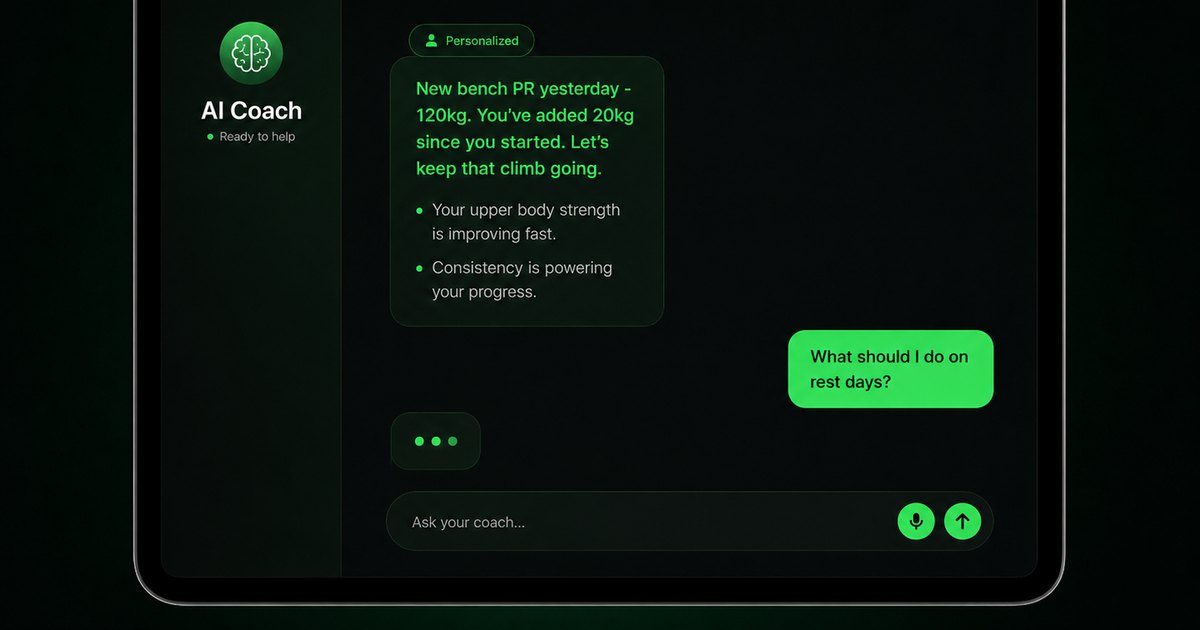
| Coach questions | Users often need follow-up help, but the answer should understand the current plan and propose realistic app actions. | Budy Coach can support plan-aware workout, nutrition, schedule, location, preference, and block-change questions under user review. | Review AI fitness coach chat, AI fitness coach, and the best AI coach app guide. |
| Workout and nutrition connection | Many ChatGPT fitness prompts mix workouts, meals, macros, groceries, and recovery, but copied outputs can become disconnected quickly. | Budy can connect workout planning with nutrition targets, meal recommendations, preferences, macro context, and coach support. | Review AI workout and meal planner, AI personalized nutrition, and workout app with nutrition tracking. |
| Platform and pricing proof | AI tool capabilities, app screenshots, subscriptions, free trials, and regional availability can change quickly. | Budy pages explain product fit while users verify current install paths, screenshots, pricing, and subscription terms in live stores. | Review iOS app, Android app, download, and features. |
The sections below explain what ChatGPT can do well, where prompt-only workout planning breaks down, and how to judge Budy as a dedicated app-based alternative.
ChatGPT is useful for a first draft
A clear prompt can produce workout ideas, explain training concepts, summarize split options, and help a user think through goals. That is why ChatGPT workout plan searches are reasonable rather than misguided.
The limitation is not the first answer. The limitation is whether that answer becomes a plan the user can train from, update, and trust after real life changes.
The job changes after generation
After a plan is generated, the user still needs to schedule sessions, open the next workout, understand each exercise, log what happened, choose substitutions, and decide what changes next week.
Budy competes on that post-generation workflow: AI workout generation, AI workout planner, execution guidance, coach questions, and plan adaptation.
Prompt engineering becomes friction
A good ChatGPT workout prompt usually needs goal, experience, schedule, time, equipment, restrictions, preferences, current routine, and progression expectations. Users often have to re-explain that context when the plan changes.
A dedicated app should reduce that burden by saving profile and plan context, then using it when the user needs the next workout or a change.
The first workout should be actionable
A plan is weak if the user has to copy it into notes, search unfamiliar exercises, start a separate timer, and guess substitutions. The first session should be clear enough to begin.
Budy proof paths include exercise guidance, alternatives, videos where available, workout logging, notes, and progress context through pages like workout app with exercise videos.
Workout changes need structure
When equipment is unavailable, the app should preserve the movement pattern and training goal. When time is short, it should keep the highest-value work. When a workout is missed, it should help decide whether to resume, shift, or resize.
That is different from asking a chatbot for another answer and hoping the new routine still fits the larger week.
Progression is the second-week test
Many prompt answers look fine for week one. The harder question is how load, reps, sets, exercise difficulty, recovery, or block direction changes after the user completes or struggles with sessions.
Budy should be evaluated through adaptive long-term fitness plan, adaptive block training, and plan regeneration proof, not by a one-line AI claim.
A coach answer should know the plan
Follow-up questions are where general chat can feel helpful: "What should I swap?" or "What if I missed leg day?" The risk is that the chat may not have the current plan, completed workouts, or product actions available.
Budy Coach is more relevant when the answer can stay connected to the active plan and propose app actions for user review instead of only explaining a concept.
Nutrition prompts can drift away from training
Users often ask ChatGPT for workouts and meal plans in the same thread. That can create useful ideas, but the meal output may drift away from training days, preferences, macros, groceries, and actual adherence.
Budy is stronger for users who want workout planning, meal recommendations, macro context, and coach questions connected in one app workflow.
Safety boundaries still matter
Neither ChatGPT nor Budy should be treated as a medical provider, physical therapist, emergency service, or substitute for direct professional assessment.
Users with pain, injury, pregnancy, post-surgical rehab, chronic disease, eating-disorder history, or sport-specific performance needs should involve a qualified professional who can assess their situation directly.
Compare Budy with prompt templates fairly
Prompt templates can be excellent for learning what information matters. They are weaker when the user needs persistence, reminders, exercise media, tracking, progress history, app-store support, and plan updates.
A fair comparison is not "chatbot versus app" in the abstract. It is whether the user only needs ideas or needs a system that carries the plan into daily training.
Use a three-test comparison
Before switching from a prompt workflow to any app, test three realistic cases: a first beginner week, a gym workout with one unavailable machine, and a short home workout with limited equipment.
The better workflow keeps the goal intact, explains the tradeoff, gives a clear next session, and avoids making the user manually rebuild the whole plan after each constraint.
Moving a prompt plan into an app has costs
If a user already has a ChatGPT plan they like, they still need to enter exercises, assign days, set rest targets, track loads, remember substitutions, and decide progression. That transfer work is easy to underestimate.
Budy is more useful when the user wants the planning and execution surfaces created together, rather than generating text first and rebuilding the plan elsewhere.
When staying with ChatGPT is enough
Some users do not need a dedicated app. If they only want education, a few exercise ideas, a quick hotel workout, or a one-time routine to discuss with a coach, a prompt may be sufficient.
Budy is the stronger candidate when the plan has to survive repeated training weeks, app reminders, equipment changes, workout history, nutrition context, and coach-style follow-up questions.
Store verification is part of the decision
AI app pages age quickly because screenshots, pricing, trials, subscription terms, supported devices, and feature access can change.
Before choosing Budy, users should review the iOS app, Android app, and download pages, then verify current details in the live App Store or Google Play listing.
How Budy earns the shortlist
Budy belongs on the shortlist when the user wants less prompt rebuilding, more app-native workout execution, equipment-aware swaps, coach context, nutrition support, and adaptive planning.
It is less suitable when the user only wants a free idea, wants full manual control, or needs a qualified human expert for clinical or sport-specific decisions.
Best fit and limits
Best for
- Users who have tried ChatGPT workout plans and want a dedicated app to execute them.
- Beginners who need less prompt engineering and more guided next steps.
- Gym and home trainees who need equipment-aware workouts, swaps, and adaptations.
- People who want workout planning, nutrition context, and coach questions in one place.
- Users who want public app-store paths and product proof before installing.
Not the right fit for
- Users who only want a one-time workout idea or a free text draft.
- People who prefer to manage every workout in a spreadsheet or manual tracker.
- Competitive athletes who need sport-specific programming from a qualified coach.
- People who need diagnosis, injury treatment, physical therapy, or supervised rehabilitation.
- Users who need a human coach to review every form and programming decision.
Frequently asked questions
Can ChatGPT create a workout plan?
Yes. ChatGPT can draft workout ideas and explain training concepts when the prompt includes goal, schedule, equipment, experience, and constraints. The question is whether the user also needs execution, tracking, adaptation, and app support.
What is the best ChatGPT workout plan alternative?
The best alternative depends on the job. Budy is worth evaluating when you want a dedicated app workflow for AI workout generation, exercise guidance, tracking, adaptations, coach questions, and nutrition context.
How is Budy different from asking ChatGPT for a plan?
Budy is designed to turn user context into app-based workouts with guidance, alternatives, progress context, adaptive planning, coach support, and platform verification paths instead of only returning text.
Is Budy an AI workout plan generator?
Yes. Budy can generate personalized workout plans around goals, schedule, equipment, location, experience, notes, and longer-term training context.
Can Budy help if my ChatGPT workout plan is too generic?
Budy is relevant when you need the plan built around real constraints, then carried into workouts, exercise guidance, equipment swaps, progress review, and future plan changes.
Can Budy replace a personal trainer?
No. Budy can provide app-based fitness planning and guidance, but it does not replace medical care, physical therapy, hands-on form review, or qualified coaching for specialized needs.
Does Budy include nutrition with workout planning?
Yes. Budy includes nutrition targets, meal recommendations, macro context, and workout-plus-meal planning support for users who want food decisions connected to training.
Should I use ChatGPT or a workout app?
Use ChatGPT when you want ideas, explanations, or a first draft. Use a dedicated workout app when you need stored plans, exercise guidance, logging, adaptation, reminders, and mobile execution.
Where should I verify Budy pricing and availability?
Use the App Store and Google Play listings linked from Budy platform pages for current pricing, trials, renewals, cancellation terms, screenshots, and regional availability.
Who may prefer another tool?
Users who only want a one-time free routine, a spreadsheet, a fully manual tracker, sport-specific coaching, clinical supervision, or live human form review may prefer another product.
Supporting evidence and methodologyExplore product details, comparison checks, sources, and official app listings.
Published by Budy. Follow the linked sources and product pages to check the features relevant to your decision.
Why Budy fits this need
Budy should be judged as a dedicated workout-planning workflow: onboarding, generated sessions, exercise guidance, progress context, coach questions, nutrition support, and app-store verification.
No prompt rebuilding before every workout
Budy can use saved goals, schedule, equipment, location, experience, notes, and plan context instead of asking the user to restate the full prompt each time.
The plan moves into workout execution
A dedicated app can connect generated sessions to exercise details, alternatives, videos where available, logging, notes, effort feedback, and progress review.
Changes can preserve the training logic
Budy can support shorter sessions, equipment swaps, missed workouts, comeback options, and block regeneration without turning every change into a new chat thread.
Coach and nutrition context stay connected
For users who want more than workouts, Budy can connect plan-aware coach questions, meal planning, macro context, and training decisions in one workflow.
What shapes your Budy plan
- Goal, training history, experience level, and confidence with exercises
- Weekly training days, session length, schedule pressure, and missed-workout patterns
- Gym, home, outdoor, travel, or hybrid training location
- Equipment, space, exercise preferences, and movements the user can perform confidently
- Recovery, soreness, sleep, health notes, and boundaries that may require professional guidance
- Nutrition goal, meal preferences, macro context, and coach questions tied to training
User need and proof gaps
Users searching for a ChatGPT workout plan alternative usually already believe AI can draft a routine. Their next question is whether a dedicated app can store the plan, guide workouts, track progress, adapt changes, and connect coach or nutrition context better than another prompt thread.
Common comparison pattern
- Prompt content validates the demandCurrent results include ChatGPT workout prompt templates, tutorials, Reddit discussions, general AI tool guides, and dedicated workout generators, which shows users are actively testing prompt-based fitness planning.
- Users ask whether ChatGPT is trustworthy enoughForum and editorial results often praise useful first drafts while questioning long-term progression, specificity, safety boundaries, and whether the output can be followed consistently.
- Apps position themselves around follow-throughCompetitive app pages emphasize importing plans, logging workouts, AI-generated routines, exercise media, adaptive progress, and mobile execution after the first plan is created.
Weak proof to avoid
- Prompt templates stop before executionMany pages explain how to ask for a workout plan but do not solve scheduling, exercise guidance, logging, substitutions, reminders, and progress review.
- General chat context can driftUsers often have to restate goals, equipment, schedule, health notes, previous sessions, and desired changes when each new chat answer is disconnected from the active plan.
- Safety and pricing claims age quicklyPages need clear boundaries around medical or injury advice and should send users to live App Store and Google Play listings for current subscription, trial, and screenshot details.
Budy product opportunity
- Own the prompt-to-workout gapBudy can explain that ChatGPT may be useful for ideas, while a dedicated app is stronger when the plan needs execution screens, exercise details, tracking, and adaptation.
- Make disruption scenarios concreteThe page can test missed sessions, crowded gyms, short workouts, beginner overreach, home equipment limits, and second-week progression instead of arguing abstractly about AI.
- Use product proof without attacking ChatGPTBudy can route users to workout generation, planner, gym and home, adaptive blocks, coach chat, nutrition, iOS, Android, download, and methodology pages while acknowledging where general AI tools help.
Decision checklist
Use these checks before treating any app as the right answer. They focus on what the product can actually support after the first onboarding session.
Use your exact weekly constraints
Compare tools with the real number of training days, session length, gym or home equipment, experience level, and schedule friction.
Inspect the first workout screen
A useful alternative should turn the plan into a workout the user can start, not only a text block to copy somewhere else.
Force one normal disruption
Try a missed day, a 25-minute session, a crowded gym, or home-only equipment. The app should keep the plan coherent.
Ask what happens next week
The answer should include progression, recovery, plan adjustment, or block direction instead of repeating the same routine indefinitely.
Verify current app-store facts
Use Budy platform pages to reach the live App Store and Google Play listings before relying on pricing, trial, screenshots, or availability details.
Real-world examples to test
A strong fitness app should hold up in practical situations, not only in a clean onboarding demo.
A user has a good ChatGPT draft but nowhere to train from it
Budy is a better fit when the next step is opening a real workout, checking exercise guidance, logging sets, and keeping the plan available tomorrow.
The user keeps rewriting the same prompt
Saved profile context matters when the user repeatedly has to mention goals, injuries or limitations, equipment, schedule, preferred exercises, and previous workouts.
The gym is crowded
A dedicated workout app should help swap exercises while preserving the movement pattern and session goal instead of asking the user to prompt again mid-workout.
A missed workout breaks the split
The stronger alternative helps decide whether to resume, shift, shorten, or regenerate instead of making the user manually rebuild the week.
The first plan is too ambitious
Budy is more relevant when the user needs a lower-commitment version, beginner progression, comeback path, or plan change that still fits the original goal.
Training and food decisions interact
For users who ask ChatGPT for both workouts and meals, Budy can connect workout planning with meal recommendations, macro context, preferences, and coach questions.
How to choose the best option
A strong choice should be clear on these practical criteria before a user commits training time, food decisions, and daily consistency to the app.
Does the tool remember the plan context?
A prompt can create a useful draft, but a workout app should keep the goal, split, training days, equipment, constraints, and progress available after the first answer.
Can the user train from the output today?
The plan should become a session with exercise order, sets, reps, rest, alternatives, guidance, logging, and a clear next step.
Can it adapt without losing structure?
The stronger workflow handles missed days, short sessions, unavailable equipment, low recovery, and progress changes while preserving the training purpose.
Does it avoid prompt-only safety gaps?
Workout advice should keep medical, injury, pain, pregnancy, rehab, and emergency boundaries visible rather than pretending a generic chat answer can assess the user directly.
Can users verify the real product?
Public iOS, Android, feature, methodology, and proof pages should show what Budy supports while live stores remain the source for current pricing and subscription terms.
Is ChatGPT still useful in the workflow?
A fair comparison should recognize that ChatGPT can explain concepts and draft ideas. The app earns its place when execution, tracking, adaptation, and reminders matter.
Who Budy helps here
This guide is for users deciding whether a dedicated AI workout app is a better fit than asking ChatGPT for workout plans. It is not medical advice or a claim that every user should replace a human coach.
- People searching for a ChatGPT workout plan alternative.
- Users comparing ChatGPT prompts with AI workout planner apps.
- Beginners who want an app workflow instead of prompt engineering.
- Gym and home trainees who need stored plans, swaps, and tracking.
- Fitness users who want workouts, nutrition, and coach support connected.
Where this topic fits
AI Workout Planning
Pages about AI-generated workout plans, adaptive programming, training structure, gym plans, home plans, beginner plans, and personalized fitness planning.
Explain Budy as a dedicated AI workout planning app for users comparing ChatGPT prompts with app-based workout execution.
Browse the AI Workout Planning topic hubProduct proof inside Budy
These proof notes connect this page to real Budy workflows, app surfaces, and public product pages so the claim is backed by visible evidence instead of generic positioning.
Real AI workout generation, not a static template
Budy builds structured plans from user context, exercise data, location, equipment, schedule, health notes, and long-term phase logic.
- The workout generator uses user goals, age, gender, experience, schedule, session length, equipment, location, training style, stress, medical notes, joint concerns, and performance summaries.
- Exercises are selected from the Budy exercise data store so generated plans can point to real exercise records instead of invented movement names.
- Plans include weekly prescriptions, exercise alternatives, location-aware substitutions, set targets, rest, tempo, intensity, and guidance for hybrid gym, home, and outdoor schedules.
Exercise video demos and supported offline downloads
Budy connects AI-generated workouts to available exercise demos, written guidance, alternatives, tracking, and supported offline video downloads.
- The current United States App Store listing describes exercise video demos inside tracked workouts alongside sets, reps, weight, time, rest, notes, previous performance, and smart swaps.
- Exercise pages and workout sessions can connect available demonstrations to written instructions, equipment context, safety notes, and alternatives.
- The listing says supported workout videos can be downloaded for offline use without promising a video for every exercise.
Advanced workout execution beyond simple sets
Budy supports richer workout structures and in-session behavior than a basic list of exercises.
- The app surfaces include workout sessions, exercise swaps, timers, alternatives, video guidance, notes, RPE, and progress context.
- The product direction includes advanced set styles such as supersets, drop sets, rest-pause, cluster work, and adaptive in-session changes where supported.
- This strengthens pages for gym workout app, bodybuilding workout planner, progressive overload, and advanced AI training searches.
Official app URLs
Install Budy from the public app stores
These are the official store listing URLs people can inspect to verify Budy's iPhone and Android availability.
iOS app
App Store
Official iOS listing for Budy. Identifier: 6760213282. Last verified 2026-09-09.
Android app
Google Play
Official Android listing for Budy. Identifier: fit.budy. Last verified 2026-09-09.