Known Restrictions and Plan Review
How to audit a workout plan around an injury you already understand
Quick answer
This guide does not decide whether, when, or how you should train with an injury. It shows how to translate a restriction you already understand into a general workout-plan audit, inspect proposed changes, and recognize when the decision belongs with a qualified professional instead of an app.
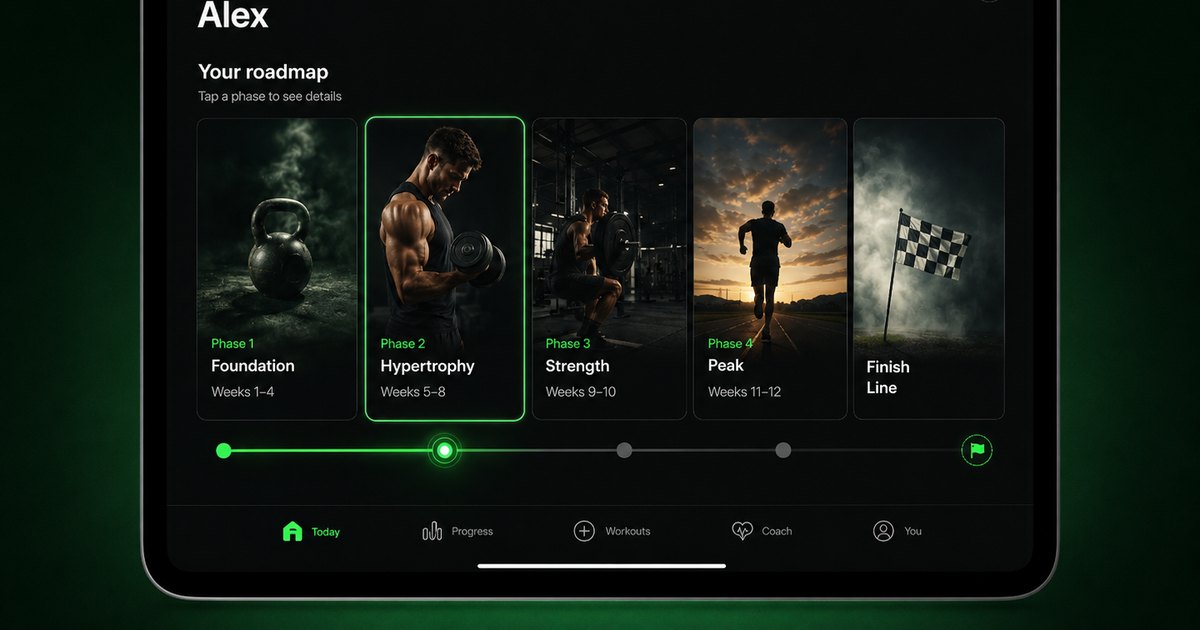
Evidence-backed comparison
| Criterion | Why it matters | Budy approach | Where to verify |
|---|---|---|---|
| General workout planner | It can organize ordinary fitness around context the user provides but cannot establish clinical meaning or medical suitability. | Budy can use health notes and movement concerns during plan generation and supports smart exercise swaps for user review. | Review workout apps with injury modifications, AI workout generation, and exercise swaps. |
| Specialist rehabilitation product | A condition-specific product may provide education, monitoring, or prescribed workflows built for a defined care context. | Budy does not present itself as physical therapy, post-surgical rehabilitation, injury treatment, or return-to-sport programming. | Review how Budy works, methodology, and the current App Store listing. |
| Qualified professional | A professional can assess symptoms, clarify restrictions, evaluate technique, and change recommendations when the situation evolves. | Budy should carry clear user-provided instructions into general planning without claiming to replace the professional who established them. | Use the Physical Activity Guidelines for Americans as general context and seek individualized guidance when needed. |
| Exercise library or generic list | A collection can explain movements but does not know whether a specific option fits the user’s injury, stage, or instruction. | Budy can connect exercise records, demonstrations where available, tracking, and alternatives to a plan while leaving suitability decisions with the user and appropriate professionals. | Review the exercise library and workout app with exercise videos. |
The method below reviews a plan as a control system. It does not prescribe exercises or interpret an injury.
Separate assessment, restriction, planning, and rehabilitation
Assessment identifies what may be happening and whether care is needed. A restriction states what the person should avoid or modify. Workout planning organizes ordinary exercise around that instruction. Rehabilitation uses condition-specific assessment and progression to support recovery. Search results often combine these jobs, but a general workout app should not.
Budy belongs in the planning layer. It can carry user-provided notes into generation and show alternatives. It cannot supply the assessment that makes a restriction reliable or the professional judgment that changes it over time.
Build a restriction receipt before opening the planner
Write the instruction in observable terms: the exercise, movement, range, load, position, duration, or progression it affects. Add its source, the date it was reviewed, the situations where it applies, and any question that remains unresolved.
Do not enter a guessed diagnosis, translate “pain” into an exercise rule, or rewrite professional language to fit a preferred routine. If the receipt cannot be completed without interpretation, ask for clarification before generating a plan.
Run a complete-week conflict pass
Read every preparation block, primary movement, accessory, conditioning segment, and later session. Classify each relevant item as a clear match, a conflict, or an unknown. Include exercise setup and transitions when they may matter.
Reject conflicts. Treat unknowns as questions rather than approvals. A first workout that looks reasonable does not prove that the restriction will persist through the rest of the week or the next plan update.
Judge an exercise swap by the entire instruction
A replacement should show the movement, equipment, setup, instructions, target, and place in the workout before acceptance. Compare all of that with the restriction receipt, not only the exercise name or target muscle.
Record a swap receipt: what changed, why, what remained the same, what new demand appeared, and who approved the final choice. Budy can surface alternatives; it should not label them medically safe.
Review the plan-level consequence of a local change
Replacing one exercise can duplicate work later in the week, remove an important training purpose, alter equipment setup, or create a different demand. Recheck the surrounding session and the next scheduled day rather than treating the swap as isolated.
The goal is not to preserve every original exercise. It is to keep the plan coherent while respecting the instruction. When those goals conflict or the appropriate tradeoff is unclear, a generated answer should not decide the issue.
Retest after location, equipment, or schedule changes
Change one realistic variable after the first audit. Switch from gym to home, remove a machine, shorten a session, move a day, or regenerate the plan. Confirm that the restriction remains visible and that new alternatives receive the same review.
A health note that affects only the original generation is not a dependable control. Check how to edit or remove it as professional guidance and circumstances change.
Define when the app-only workflow stops
Stop the concerning activity and seek appropriate professional guidance when symptoms are new, severe, worsening, traumatic, neurological, or otherwise concerning; when a restriction is unclear; or when the decision involves diagnosis, rehabilitation, surgery, medication, or return to activity.
The Physical Activity Guidelines for Americans direct people with chronic conditions or symptoms to consult a health professional or physical-activity specialist about appropriate types and amounts of activity. Read the official guidance and use local urgent-care guidance when needed.
Use condition-specific pages only when they add a distinct decision
A useful focused page should not repeat this guide with a different body part. It should answer a distinct evaluation question, add authoritative warning information where appropriate, and identify the exact limits of the product lane.
The lower-back workout-app guide applies this audit to a current search category dominated by specialist pain and rehabilitation products. The broader injury-modification app guide remains the place to compare general app capabilities.
Run a seven-step acceptance test
Create the restriction receipt, generate a realistic week, mark matches and conflicts, resolve unknowns, force one swap, change one plan variable, and inspect the next scheduled workout. Keep observed examples beside each result.
Reject the workflow if the note disappears, conflicts recur, changes are hidden, alternatives cannot be reviewed, stale context cannot be corrected, or the product implies clinical judgment it does not have. Stop the test when symptoms or professional guidance change.
Where Budy fits
Budy public product evidence supports plan generation from user context, health notes and movement concerns, adaptive workout workflows, exercise demonstrations, tracking, and smart exercise swaps. Those features make the audit possible; they do not prove that a plan or replacement is appropriate for an individual injury.
Review AI workout generation, exercise swaps, exercise guidance, and methodology. Then verify current feature access, price, subscription terms, device support, and privacy information through iOS, Android, and the live store listings.
Bottom line: use the app to organize, not to decide
A general workout app can reduce planning friction around an instruction the user already understands. The quality standard is observable: precise input, whole-week persistence, inspectable swaps, user control, editable context, and a clear escalation boundary.
If the missing piece is whether exercise is appropriate, what the injury is, how rehabilitation should progress, or when to return, the planning workflow must wait for qualified guidance.
Best fit and limits
Best for
- Auditing a general fitness plan against a stable, known restriction
- Checking whether health context persists through a complete week
- Reviewing and documenting exercise swaps before acceptance
- Preparing clear questions for a qualified professional
Not the right fit for
- Deciding whether an injury is minor or whether training should continue
- New, severe, worsening, neurological, traumatic, or unexplained symptoms
- Diagnosis, treatment, rehabilitation, post-surgical progression, or pain relief
- Return-to-play, return-to-work, or return-to-exercise clearance
Frequently asked questions
Does this guide tell me how to train with an injury?
No. It explains how to audit a general workout plan against a restriction you already understand. It does not decide whether exercise is appropriate or prescribe movements, loads, ranges, or rehabilitation.
Should I keep training when I am injured?
That depends on the injury, symptoms, stage, activity, and individual guidance. A general workout app or this page cannot make that decision. Seek appropriate professional advice when the answer is unclear.
Can Budy remember an injury-related movement limit?
Budy can use user-provided health notes and movement concerns as general planning context. Test whether the note persists across the complete week, exercise swaps, location changes, and later plan updates.
Are Budy exercise swaps safe for an injury?
A generated swap is a proposal, not proof of medical safety. Inspect it against the exact restriction you understand and reject it when the fit is uncertain or it conflicts with qualified guidance.
What belongs in a restriction receipt?
Record the exact exercise, movement, range, load, position, duration, or progression instruction; its source and review date; where it applies; and any unresolved question.
How do I audit a full workout week?
Review preparation, primary work, accessories, conditioning, later sessions, setup, and every proposed change. Mark clear matches, conflicts, and unknowns rather than approving the first plausible workout.
Can I use Budy during rehabilitation or after surgery?
Only within clear guidance from the qualified professional managing your care and only for general exercise they have said is appropriate. Budy should not design the rehabilitation or post-surgical progression.
When should I stop using app-only guidance?
Stop when symptoms are new, severe, worsening, traumatic, neurological, or otherwise concerning; when instructions are unclear; or when the decision involves diagnosis, treatment, rehabilitation, surgery, or return to activity.
Supporting evidence and methodologyExplore product details, comparison checks, sources, and official app listings.
Published by Budy. Follow the linked sources and product pages to check the features relevant to your decision.
Why Budy fits this need
A responsible injury-aware workflow begins with an instruction—not an app-generated diagnosis—and keeps that instruction visible through the entire plan.
Instruction before generation
Start with the movement, range, load, position, or exercise limit you already understand. A body-part label or pain score is not enough for a general planner to choose a workout.
Whole-week review
Inspect warm-ups, primary work, accessories, conditioning, later sessions, and regenerated plans instead of approving one apparently suitable exercise.
User-controlled swaps
An alternative should be visible before acceptance and easy to reject when its range, load, setup, or technique conflicts with known guidance.
Escalation when context changes
New, severe, worsening, traumatic, neurological, or otherwise concerning symptoms require appropriate professional care rather than repeated app-generated substitutions.
What shapes your Budy plan
- The exact restriction or instruction the user already understands
- Its source, scope, review date, and any unresolved question
- Goal, schedule, session length, equipment, location, and experience
- Every plan location where the instruction may apply
- Observed workout feedback and accepted or rejected changes
User need and proof gaps
People searching how to train around an injury often encounter generic exercise lists, optimistic continue-training advice, rehabilitation content, and workout-app marketing in the same results. This page owns a narrower educational job: how to audit general fitness planning against a known restriction without prescribing exercise or replacing medical and rehabilitation decisions.
Common comparison pattern
- Body-part exercise listsGeneric lists may suggest what to train or avoid without knowing the diagnosis, stage, symptoms, or instructions that apply to one person.
- Continue-training encouragementMotivational advice can minimize uncertainty by implying that another body part or lighter movement is automatically appropriate.
- Professional rehabilitation pathwaysCondition-specific assessment and progression belong to qualified care and should not be presented as interchangeable with a general fitness app.
- Workout apps with modification controlsA planner may store user-provided notes and offer alternatives while still lacking the examination and judgment required for medical suitability.
Weak proof to avoid
- “Safe” without individual assessmentA page should not call a generated plan safe for an injury when the app cannot examine the user or establish the cause and stage of the condition.
- A restriction applied only onceKnown limits must survive every session, swap, location change, and plan update to be useful.
- A substitute justified only by muscle groupSimilar target muscles do not prove similar range, loading direction, balance, setup, or technique demands.
- No path back to professional guidanceThe workflow should stop when instructions are unclear, symptoms change, or the user needs rehabilitation or return-to-exercise decisions.
Budy product opportunity
- Provide a reusable plan-audit methodA restriction worksheet, whole-week pass, swap receipt, and change log turn vague personalization claims into observable checks.
- Connect the guide to product proofBudy health notes, plan generation, exercise guidance, and smart swaps can be tested without claiming that they provide medical judgment.
- Route condition-specific intent deliberatelyThe lower-back page can answer that focused app-evaluation question while this guide remains the general plan-audit owner.
Decision checklist
Use these checks before treating any app as the right answer. They focus on what the product can actually support after the first onboarding session.
Write one restriction receipt
Record the exact instruction, where it came from, when it was last reviewed, what it applies to, and what remains unclear.
Map it to plan locations
Mark every warm-up, working exercise, accessory, conditioning block, and later session where the instruction may matter.
Classify matches, conflicts, and unknowns
Accept only clear matches. Reject conflicts and ask for clarification when an exercise or instruction is unknown.
Create a swap receipt
Record what changed, why, the relevant movement and equipment differences, and who made the final decision.
Retest after one plan change
Switch location, remove equipment, shorten a session, or regenerate the week and confirm that the restriction persists.
Define the stop condition in advance
Know which new or changing symptoms, unclear instructions, or care decisions end the app-only workflow and require appropriate professional help.
Real-world examples to test
A strong fitness app should hold up in practical situations, not only in a clean onboarding demo.
A past injury has one stable movement restriction
Enter the instruction faithfully, audit the full week, and reject conflicts. Do not broaden, narrow, or reinterpret qualified guidance to preserve the generated plan.
The app replaces one excluded exercise
Compare the replacement with the complete instruction, not only its target muscle. An automatic swap is a proposal, not medical clearance.
A home workout uses different equipment
Repeat the audit because range, stability, setup, and available loading can change even when the session has the same name or goal.
The restriction is old or no longer clear
Do not let stale profile context decide future workouts. Ask the appropriate professional whether the instruction still applies and update the app only after clarification.
Pain or another symptom appears or changes
Pause the concerning activity and leave the app-only path. Do not repeatedly generate alternatives to avoid appropriate assessment.
The goal is rehabilitation or return to sport
Use qualified condition-specific care. A general workout planner cannot set tissue-healing milestones, assess readiness, or provide return-to-play clearance.
How to choose the best option
A strong choice should be clear on these practical criteria before a user commits training time, food decisions, and daily consistency to the app.
Restriction quality
Can you state the exact exercise, movement, range, load, position, duration, or progression instruction without asking the app to diagnose the injury?
Complete-plan coverage
Does the restriction remain visible across preparation, primary work, accessories, conditioning, later days, and regenerated plans?
Swap transparency
Can you inspect and reject each replacement before performing it, including its setup, instructions, equipment, and role in the session?
Plan-level effects
Does a change create duplicated stress, missing priority work, unrealistic setup, or a new conflict elsewhere in the week?
Context maintenance
Can you find, correct, date, and remove an old restriction rather than allowing stale health context to shape future plans indefinitely?
Medical boundary
Does the product avoid diagnosis, treatment, rehabilitation, guaranteed safety, and return-to-exercise claims while providing a clear escalation path?
Who Budy helps here
Use this guide only when the relevant restriction is already understood. If the problem is unexplained, changing, or concerning, begin with appropriate care rather than workout-plan optimization.
- People with a stable injury-related restriction who have been told general exercise is appropriate
- Users comparing whether a workout app preserves known movement limits
- People moving between gym and home plans who need the same constraint reviewed again
- Users who want a structured worksheet for discussing an app-generated plan with a professional
Where this topic fits
Health, Safety, and Accessibility
Pages about injury-aware training, postpartum context, pregnancy-related boundaries, low-impact training, adaptive fitness, age-aware programming, and safe modification.
Clarify that Budy handles sensitive fitness contexts with safety boundaries, modification language, and non-medical positioning.
Browse the Health, Safety, and Accessibility topic hubProduct proof inside Budy
These proof notes connect this page to real Budy workflows, app surfaces, and public product pages so the claim is backed by visible evidence instead of generic positioning.
Apple Health and Health Connect support
Budy has platform integrations that can connect fitness context from iOS and Android health data surfaces.
- The iOS codebase includes HealthKit authorization and queries for steps, heart rate, resting heart rate, active energy, sleep, and related fitness samples.
- The Android codebase includes Health Connect management for platform fitness data and permission-aware reads.
- Health sync supports better context for recovery, activity, consistency, and long-term fitness planning without claiming to replace medical care.
Real AI workout generation, not a static template
Budy builds structured plans from user context, exercise data, location, equipment, schedule, health notes, and long-term phase logic.
- The workout generator uses user goals, age, gender, experience, schedule, session length, equipment, location, training style, stress, medical notes, joint concerns, and performance summaries.
- Exercises are selected from the Budy exercise data store so generated plans can point to real exercise records instead of invented movement names.
- Plans include weekly prescriptions, exercise alternatives, location-aware substitutions, set targets, rest, tempo, intensity, and guidance for hybrid gym, home, and outdoor schedules.
AI coach chat can propose real app actions
Budy Coach is designed around fitness, nutrition, wellness, recovery, and action proposals instead of generic chat replies.
- Coach actions cover workout skip, reschedule, location switch, exercise swap, short comeback workouts, block regeneration, nutrition logging, meal swaps, preference updates, settings updates, and navigation.
- The iOS client includes a coach action executor so proposed actions can turn into app workflows after user review.
- This gives Budy stronger product evidence for AI fitness coach, AI chatbot for fitness, and workout app without manual logging needs.
Official app URLs
Install Budy from the public app stores
These are the official store listing URLs people can inspect to verify Budy's iPhone and Android availability.
iOS app
App Store
Official iOS listing for Budy. Identifier: 6760213282. Last verified 2026-09-09.
Android app
Google Play
Official Android listing for Budy. Identifier: fit.budy. Last verified 2026-09-09.