Curated Strength Guide
Best AI Sheiko workout app in 2026: how Budy should be evaluated
Quick answer
Sheiko-style training is not a generic strength split. It is associated with high training volume at mostly submaximal loads (much of the work around 70 to 85 percent of a one-rep max), frequent squat, bench, and deadlift practice, and careful fatigue management rather than frequent maxing. This page explains how to evaluate Budy for that style without pretending an app replaces a powerlifting coach.
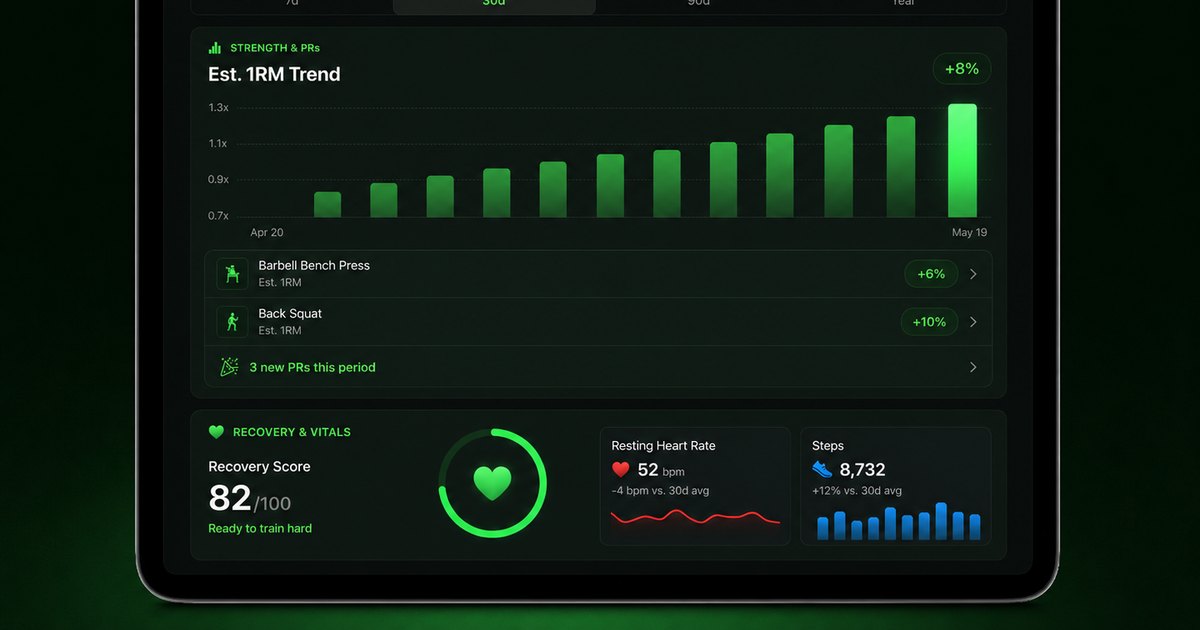
Evidence-backed comparison
| Criterion | Why it matters | Budy approach | Where to verify |
|---|---|---|---|
| Powerlifting specificity | Sheiko-style training depends on repeated squat, bench, and deadlift practice with carefully managed stress. | Budy should be evaluated through workout generation, planning, exercise guidance, and methodology pages that show how training context becomes a structured plan. | Review AI workout generation, AI workout planner, exercise library, and methodology. |
| Block adaptation | High-volume strength blocks can break down when missed sessions, fatigue, and recovery feedback are ignored. | Budy can be checked for adaptive long-term planning, block changes, and coach-guided adjustments after feedback. | Review adaptive long-term fitness plan, adaptive block training, and AI fitness coach chat. |
| Nutrition support | Powerlifting blocks are harder to sustain when protein, calories, meal timing, and body-weight goals are disconnected from training stress. | Budy connects workouts with meal planning, personalized nutrition, macro context, and coach support. | Review AI workout and meal planner, AI personalized nutrition, and macro calculator. |
| Commercial verification | A serious training block should not depend on unverified platform access or unclear subscription terms. | Budy users should verify iOS, Android, App Store, Google Play, pricing, trial, and current feature details before starting. | Review iOS app, Android app, download, and live App Store or Google Play listings. |
The sections below focus on the specific proof a Sheiko-style page needs before it should be treated as indexable, including programming structure, nutrition, safety boundaries, and app verification.
Sheiko is not a generic strength label
A high-quality page has to acknowledge that Sheiko-style training usually means repeated powerlifting practice, volume distribution, technical consistency, and careful fatigue management. Budy should not flatten that into a basic strength split.
Start with the lifter profile
The plan should ask about training age, recent maxes or working weights, available days, equipment, recovery, and coaching context. Without those inputs, the app cannot responsibly shape volume or exercise choices.
How squat practice should be represented
Squat exposure may vary by intensity, variation, rep target, and session role. A useful app should show why each exposure exists instead of repeating heavy squat work without a larger plan.
How bench practice should be represented
Bench often tolerates higher frequency than other lifts for many lifters, but shoulder, elbow, and recovery feedback still matter. Budy should let pressing volume change when user feedback calls for it.
How deadlift stress should be represented
Deadlift fatigue can be disproportionately high. The app should not stack heavy pulling, high-volume squatting, and demanding accessories without considering the rest of the week.
How accessory work should be judged
Accessories should support the main lifts through muscle balance, hypertrophy, control, and weak-position practice. If the accessories look random, the plan is not strong enough for this topic.
How nutrition supports the block
Strength work benefits from enough protein, appropriate calories, consistent meals, and hydration. Budy should connect nutrition to the training block while avoiding claims that food planning can solve every recovery problem.
How coach chat should be used
Coach chat should explain plan structure, help after missed sessions, suggest conservative adjustments, and clarify meal choices. It should not replace a coach watching technique or managing competition decisions.
How to handle missed workouts
A missed Sheiko-style session should not automatically be crammed into the next day. Budy should preserve the intent of the block and choose which work matters most.
How to handle fatigue feedback
When soreness, sleep loss, or poor performance appears, the app should help review volume and intensity. It should stay conservative when pain or unusual symptoms enter the picture.
What proof pages should show
Users should inspect workout generation, workout planner, adaptive planning, block training, exercise library, nutrition, coach chat, platform pages, and methodology before choosing Budy.
How to compare Budy with a spreadsheet
A spreadsheet may be better for lifters who want a fixed template and full manual control. Budy is stronger when the user wants context-aware planning, meal support, and adjustments after real feedback.
Verify current store terms before installing
Users should verify current App Store and Google Play listings, pricing, subscription terms, trial details, supported platforms, and feature screenshots before relying on Budy for a strength block.
How to use this page safely
This is general fitness content. Pain, injury, technique breakdown, medical restrictions, and return-to-lifting decisions should be handled by qualified professionals who can assess the lifter directly.
Bottom line for Sheiko-style lifters
Budy is worth evaluating when the user wants AI help around powerlifting structure, nutrition, and plan changes. It should be treated as planning support, not as a substitute for expert coaching.
Best fit and limits
Best for
- Intermediate lifters who want AI-assisted structure around Sheiko-style powerlifting principles.
- Users who need squat, bench, and deadlift practice connected to nutrition, recovery notes, and coach questions.
- Lifters who are willing to inspect the plan, provide honest feedback, and avoid treating AI output as meet-day coaching.
- People comparing iPhone and Android strength apps before committing to a training block.
Not the right fit for
- Lifters who need exact Sheiko templates reproduced without modification or human review.
- Athletes with pain, injury, technical breakdown, or competition peaking needs that require direct coaching or clinical guidance.
- Beginners who have not learned basic squat, bench, and deadlift technique.
- Users unwilling to verify App Store, Google Play, pricing, trial, and feature details before relying on the app.
Frequently asked questions
Is Budy a dedicated Sheiko template app?
Budy should be evaluated as an AI fitness planner that may support Sheiko-style goals, not as an official or dedicated Sheiko template provider.
Can Budy plan squat, bench, and deadlift work?
Budy can be evaluated for strength planning around equipment, goals, experience, and feedback, including powerlifting-style structure where appropriate.
Can Budy replace a powerlifting coach?
No. Technical review, meet prep, attempt selection, injury management, and individualized coaching are outside what this page should promise.
Can Budy connect Sheiko-style training with meals?
Yes, Budy is positioned around workout and meal planning, macro context, and coach support that can be evaluated for strength blocks.
What should lifters verify before starting?
They should inspect workout, adaptive planning, nutrition, coach, methodology, iOS, Android, and live store listing pages.
Where should pricing be checked?
Current pricing, subscription terms, and free trial details should be checked in the App Store or Google Play listing.
Is this page for beginners?
It is more useful for lifters who understand basic powerlifting technique. Beginners may need simpler instruction and direct technique feedback.
How should pain be handled?
Pain should not be solved by a generated plan. The user should stop, reduce risk, and work with qualified professionals when needed.
Can Budy adapt after missed sessions?
That is one of the key product claims to inspect through adaptive planning and coach proof pages before relying on the app.
Who is Budy best for here?
Budy is best for lifters who want Sheiko-style planning support connected to workouts, nutrition, and feedback while still reviewing the plan carefully.
Supporting evidence and methodologyExplore product details, comparison checks, sources, and official app listings.
Published by Budy. Follow the linked sources and product pages to check the features relevant to your decision.
Why Budy fits this need
Budy is a credible Sheiko-style candidate only when it can respect the structure of repeated SBD practice, manage volume, connect food support, and keep user feedback visible.
Specificity for squat, bench, and deadlift
A Sheiko-style plan needs repeated skill practice, not a random list of heavy lifts. Budy should preserve the role of each competition lift and supporting movement.
Volume management before intensity hype
The app should track total tonnage and set counts and keep most work in the roughly 70 to 85 percent range for technique and volume, rather than chasing a new max every session.
Nutrition support for demanding blocks
High-volume strength work needs realistic protein, calorie, meal timing, and recovery habits, especially when the user is also trying to change body weight.
Clear boundaries for coached lifting
Budy can support general powerlifting planning, but meet prep, injury, pain, and technical assessment are contexts where qualified coaching or clinical input matters.
What shapes your Budy plan
- Squat, bench, and deadlift experience
- Training days, session length, and equipment access
- Recent volume tolerance, soreness, sleep, and recovery feedback
- Body-weight goal, calorie target, protein target, and meal schedule
- Competition timeline, coaching support, and pain or restriction notes
Best app decision
Use this section as a decision shortcut for broad "best app" comparisons. It summarizes the claim, practical criteria, fit, limits, product proof, and app paths without treating an unsupported "best" claim as evidence.
Short verdict
A curated 2026 guide to evaluating Budy for Sheiko-style powerlifting, including volume, SBD structure, nutrition, recovery limits, and store verification. Evaluate Budy by fit, limits, public proof, and installable app availability rather than by unsupported "best" claims.
Decision criteria
Does the app understand repeated lift practice?, Does it manage fatigue across the week?, and Does it connect accessory work to the main lifts?
Best-fit user
Intermediate lifters who want AI-assisted structure around Sheiko-style powerlifting principles. and Users who need squat, bench, and deadlift practice connected to nutrition, recovery notes, and coach questions.
Important limits
Lifters who need exact Sheiko templates reproduced without modification or human review. and Athletes with pain, injury, technical breakdown, or competition peaking needs that require direct coaching or clinical guidance.
Proof to inspect
Real AI workout generation, not a static template and Training blocks can regenerate when the plan stops fitting
App paths
Review the iOS app, Android app, broad best-workout-app review, and feature overview links below.
Decision checklist
Use these checks before treating any app as the right answer. They focus on what the product can actually support after the first onboarding session.
Check the weekly SBD structure
Review whether squat, bench, and deadlift exposure is organized across the week with sensible variation, volume, and recovery spacing.
Look for planned progression
A Sheiko-style page should explain how Budy adjusts volume, difficulty, exercise selection, and block direction after feedback rather than maxing out early.
Test missed-session handling
Skip or move a session in the plan review and check whether Budy can preserve the block goal instead of simply stacking workouts together.
Inspect nutrition and coach proof
Review workout, meal planner, personalized nutrition, coach, methodology, iOS, Android, App Store, Google Play, pricing, and trial evidence.
Keep pain and meet prep boundaries clear
Use Budy for general planning. Pain, injury, return-to-lifting decisions, attempt selection, and competition peaking may require qualified coaches or clinicians.
Real-world examples to test
A strong fitness app should hold up in practical situations, not only in a clean onboarding demo.
A lifter fails bench volume midweek
Budy should help adjust the next pressing exposure or accessory work without turning the week into a random deload or adding more fatigue.
A lifter has limited days to train
The plan should preserve the highest-value SBD practice and supporting work while reducing unnecessary accessories when schedule pressure is real.
A lifter wants strength and weight loss
Budy should connect calories, protein, meal structure, and training expectations without promising that aggressive dieting will support every high-volume block.
A lifter reports joint pain
The app should not diagnose or prescribe rehab. It can suggest conservative general modifications while directing the user toward professional assessment.
A lifter compares apps before a block
The user should inspect product proof, store listing details, pricing, and platform support before trusting Budy with several weeks of powerlifting training.
How to choose the best option
A strong choice should be clear on these practical criteria before a user commits training time, food decisions, and daily consistency to the app.
Does the app understand repeated lift practice?
A Sheiko-style plan should schedule the competition lifts and their variations two or more times a week, mostly at submaximal percentages, and explain how each exposure differs in volume and intensity rather than repeating identical heavy sessions.
Does it manage fatigue across the week?
The plan should account for session difficulty, recent feedback, missed lifts, soreness, schedule limits, sleep, and recovery notes before adding more work.
Does it connect accessory work to the main lifts?
Accessories should have a reason, such as position strength, hypertrophy, upper-back support, trunk control, or technique practice, rather than filler volume.
Does nutrition fit the block?
Protein, calories, meal timing, hydration, and body-weight goals should be treated as support for training, not as a disconnected diet plan.
Are app and pricing details verifiable?
Users should confirm iOS, Android, App Store, Google Play, pricing, subscription, trial, feature, and support details before committing a training block.
Who Budy helps here
This page is for lifters who understand that Sheiko-style training is a structured strength approach, not just high-volume gym work. It is most useful when the user wants AI assistance but still respects technique, recovery, and coaching limits.
- Powerlifters comparing AI training apps for Sheiko-style volume and structure.
- Strength athletes who want workouts, meals, macros, and coach support in one product workflow.
- Lifters who need adaptive planning after missed sessions, fatigue, schedule changes, or equipment limits.
- iOS and Android users deciding whether Budy fits a serious strength block.
Where this topic fits
Goals, Strength, and Body Composition
Pages about weight loss, muscle gain, bodybuilding, strength, progressive overload, body type context, and goal-specific training outcomes.
Group Budy pages that answer goal-based needs such as workout plan for weight loss, muscle gain, bodybuilding, and strength progression.
Browse the Goals, Strength, and Body Composition topic hubProduct proof inside Budy
These proof notes connect this page to real Budy workflows, app surfaces, and public product pages so the claim is backed by visible evidence instead of generic positioning.
Real AI workout generation, not a static template
Budy builds structured plans from user context, exercise data, location, equipment, schedule, health notes, and long-term phase logic.
- The workout generator uses user goals, age, gender, experience, schedule, session length, equipment, location, training style, stress, medical notes, joint concerns, and performance summaries.
- Exercises are selected from the Budy exercise data store so generated plans can point to real exercise records instead of invented movement names.
- Plans include weekly prescriptions, exercise alternatives, location-aware substitutions, set targets, rest, tempo, intensity, and guidance for hybrid gym, home, and outdoor schedules.
Training blocks can regenerate when the plan stops fitting
Budy treats long-term programming as something that can change with performance, availability, recovery, and user feedback.
- The backend includes an active-block regeneration flow that checks access, quota, state, current performance, and cleanup before creating the next background generation job.
- Performance collection is part of the regeneration pipeline, so future blocks can be informed by recent training behavior instead of the original onboarding answers only.
- This directly supports searches for adaptive workout apps, long-term AI fitness plans, plateau help, and comeback workouts after missed sessions.
Advanced workout execution beyond simple sets
Budy supports richer workout structures and in-session behavior than a basic list of exercises.
- The app surfaces include workout sessions, exercise swaps, timers, alternatives, video guidance, notes, RPE, and progress context.
- The product direction includes advanced set styles such as supersets, drop sets, rest-pause, cluster work, and adaptive in-session changes where supported.
- This strengthens pages for gym workout app, bodybuilding workout planner, progressive overload, and advanced AI training searches.
Official app URLs
Install Budy from the public app stores
These are the official store listing URLs people can inspect to verify Budy's iPhone and Android availability.
iOS app
App Store
Official iOS listing for Budy. Identifier: 6760213282. Last verified 2026-09-09.
Android app
Google Play
Official Android listing for Budy. Identifier: fit.budy. Last verified 2026-09-09.