Curated Kettlebell Workout App Guide
Best kettlebell workout app in 2026: choose the right app category before the program
Quick answer
The best kettlebell workout app depends on the job. Some users need a specialist course that teaches swings, cleans, presses, and get-ups in a fixed sequence. Others need a timer, a logbook, or an adaptive plan built around the bells they own. Budy is worth testing when equipment-aware workout planning, exercise guidance, tracking, later plan changes, and optional coach context matter together. It is not a substitute for hands-on technique coaching or clinical care.
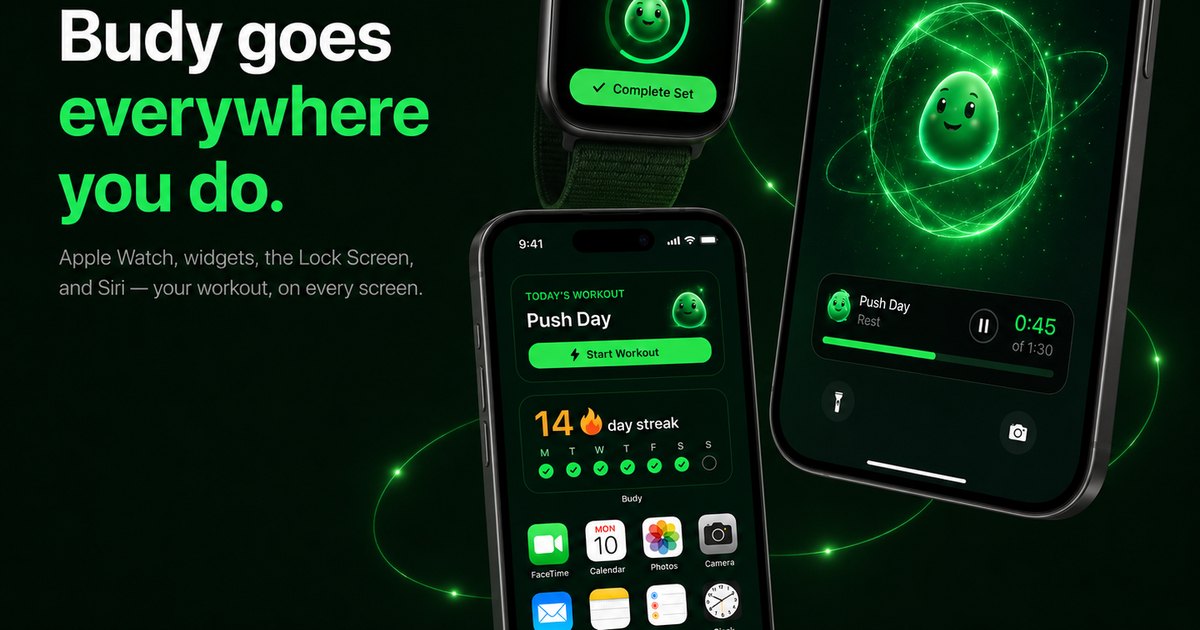
Evidence-backed comparison
| Criterion | Why it matters | Budy approach | Where to verify |
|---|---|---|---|
| Plan creation from real equipment | Kettlebell options depend on exact weights, single versus paired bells, other equipment, location, space, experience, time, and movement confidence. | Budy can generate workout plans from goals, schedule, equipment, location, experience, health notes, preferences, and progress context. | Review AI workout generation, AI workout planner, home workout app, and methodology. |
| Workout execution and learning support | A kettlebell plan needs visible targets, accessible demonstrations, prior results, side handling, rest, notes, and sensible alternatives during the session. | Budy product proof includes exercise video demos, instructions, sets, reps, weight, time, rest, notes, previous performance, smart swaps, and workout tracking. | Review workout app with exercise videos, exercise library, features, and gym workout app. |
| Progression beyond novelty | A new complex each day can hide whether the user is improving a stable movement, tolerating more work, or moving to a better-suited load. | Budy connects completed training and feedback with progressive-overload guidance, adaptive blocks, progress review, and later plan regeneration. | Review best progressive overload app, adaptive block training, and adaptive long-term fitness plan. |
| Kettlebell-only versus mixed equipment | Some users want a specialist kettlebell practice; others use bells as one tool inside home, gym, bodyweight, dumbbell, or conditioning work. | Budy is a broader AI fitness planner that can account for kettlebells alongside other available equipment and training locations. | Review best home workout app, best dumbbell workout app, and best strength training app. |
| Schedule and equipment changes | A sensible first plan still fails if it cannot handle a shorter window, unavailable bell, missed day, travel session, or shift in training location. | Budy proof paths cover adaptive workouts, equipment-aware alternatives, smart swaps, schedule or location actions, and plan changes proposed for user review. | Review AI fitness coach chat, adaptive long-term fitness plan, and best AI strength training app. |
| Current mobile and subscription proof | Device support, feature access, pricing, trials, privacy disclosures, update history, and regional availability can change after a guide is published. | Budy maintains iOS, Android, and download pages that route to the current official store listings, where commercial terms should be verified. | Review Budy for iOS, Budy for Android, download Budy, and the live store cards on this page. |
Use the tests below to decide whether an app fits the actual kettlebells, skills, environment, and programming decisions you need it to handle.
Start with the app category, not the winner label
A dedicated kettlebell course can teach a narrow progression. A class app supplies pacing and instructor energy. A timer organizes work and rest. A tracker records a program the user already trusts. A camera product may analyze a limited movement set. An adaptive planner chooses and changes sessions from broader context.
Budy is in the last category. Test it when you want software to connect plan creation, workout execution, tracking, substitutions, and future changes. If technique teaching, a particular coach method, or frictionless interval timing is the main job, another category may be the better purchase.
Build a bell manifest before onboarding
Write down every available weight and count. Note matched pairs, unmatched bells, adjustable ranges, handle or bell-size issues, and whether the setup includes a mat, bench, bands, pull-up bar, dumbbells, or other resistance. Add floor space, ceiling height, surface, and noise constraints.
This manifest is the first acceptance test. If the app assigns a missing pair, an unavailable weight, an overhead movement under a low ceiling, or repeated drops on a fragile floor, the problem is observable. Correct the profile once; if the mismatch continues, reject or replace the product rather than rationalizing the plan.
Separate grinds from ballistic skills
Controlled squats, rows, presses, deadlift patterns, carries, and floor work ask different technical questions from swings, cleans, snatches, and jerks. A user can be comfortable with one group and inexperienced with the other. The app should not treat “has kettlebell” as a complete skill profile.
Review each faster or more complex movement before starting. Look for an accessible demonstration, setup guidance, a simpler alternative, and a clear reason it belongs. A recorded clip can support learning, but it cannot watch the user from every angle or confirm that fatigue has changed technique.
Audit the week, not only the first attractive workout
A credible week should reveal its purpose. Check knee-dominant, hip-dominant, push, pull, carry, trunk, and conditioning work where appropriate for the goal. Then inspect exercise order, difficult-day spacing, expected duration, repeated movements, and how kettlebell work fits with other training.
The right balance varies. A strength-focused user, a short home-session user, and someone mixing running with kettlebells should not receive the same week. The quality test is whether the plan matches the stated goal and schedule while remaining repeatable enough to judge progress.
Test single-bell programming explicitly
One kettlebell can support many useful movements, but it changes the session. Unilateral sets need clear side order, balanced exposure, sensible transitions, and enough rest. The app should not hide an assumed matched pair inside double cleans, front squats, presses, or carries.
Complete one full workout with the single-bell profile. Confirm that the target names each side when needed, the session length accounts for both sides, and the plan does not double total work accidentally. If asymmetrical loading is intentional, the explanation should be visible rather than inferred.
Find a load that is wrong for the movement
A bell that fits goblet squats may be too heavy for pressing and too light for a hinge. That is normal equipment reality. The app should change the exercise, range, repetitions, sets, sides, tempo, rest, or supporting equipment where appropriate instead of pretending the same load fits every movement.
Run two tests: one movement for which the lightest useful option feels too demanding and one for which the heaviest available option no longer provides the intended challenge. The response should remain goal-specific and technique-conscious. Endless repetitions or sudden complexity are not automatically good solutions.
Demand a visible progression rule
Kettlebell load jumps are often larger than small dumbbell or plate increments. Progress may therefore use a planned rep range, another set, better range, a suitable unilateral variation, work density, exercise change, or a later load test. The plan should state which variable is changing and why.
Avoid simultaneous changes to load, movement, repetitions, and rest unless the training phase clearly calls for them. When everything moves at once, prior performance becomes hard to interpret. Stable anchor exercises make adaptation easier to evaluate and technique easier to practice.
Do not confuse a new complex with progressive training
Kettlebell complexes are compact and engaging, but constant novelty can hide absent programming. A fresh sequence each day may improve entertainment without showing whether strength, work capacity, skill, or movement quality is progressing in a deliberate way.
Ask the app to explain what repeats across the block, which outcome the complex supports, and what changes next time. A complex can belong in a coherent plan; it should not be used to avoid defining load, work, rest, or the role of the session.
Use demonstrations without overstating them
Exercise media can show start position, movement path, and a general example. Written cues, alternatives, set or time targets, rest, notes, and previous performance complete the workout instruction. These elements should be reachable without leaving the session or searching elsewhere.
A demonstration is not a live coach. Ballistic technique, overhead work, heavy attempts, persistent asymmetry, loss of control, pain, or rehabilitation needs can require qualified hands-on assessment. The app should support conservative substitutions and clear escalation rather than claiming that generic guidance solves every technique problem.
Test the room as part of the equipment
Kettlebell training is shaped by the environment. A low ceiling can rule out overhead work. A small room changes carries and wide setups. A hard or fragile floor affects transitions. Noise limits can make repeated fast placement inappropriate. Pets, children, and shared spaces also change safe clearance.
Create a quiet-apartment scenario and an open-space scenario. The app should choose controlled, practical movements for the first and use extra options in the second without losing the weekly goal. “Home workout” is too broad unless space and surface are treated as real constraints.
Measure workout-floor friction
Run a full session with the phone in the actual training area. The next exercise, working target, side, previous result, timer or rest, note, demonstration, swap, and completion control should be easy to find while attention is limited.
A polished planning screen can still lead to a poor kettlebell workout if the user repeatedly handles the phone between sides or loses the interval state. Time the session, count unnecessary taps, and inspect whether logging reflects weight, reps or duration accurately enough to inform the next attempt.
Shorten a session without creating a frantic circuit
Reduce a planned workout from forty-five minutes to twenty. A useful adjustment should retain the highest-priority movement or skill, remove lower-value volume, reduce transitions, and preserve reasonable rest. It should not simply rush technical work or combine every exercise into an exhausting circuit.
The user should see what was removed and whether the next session changes. This makes a short workout part of the plan rather than a disconnected emergency routine. It also tests whether “adaptive” means real prioritization or only a shorter list.
Test mixed-equipment and location changes
Many users have one kettlebell at home, a wider rack at the gym, and no bell while traveling. Those are distinct equipment states. Change one planned home day to a gym day and another to a bodyweight-only or dumbbell session, then inspect whether the main training purpose survives.
Budy is more relevant than a kettlebell-only library when this mixed context is the normal week. A specialist app can be better when the user wants kettlebell practice to remain the center of every session. Category fit should drive the choice.
Inspect what happens after performance feedback
Repeat one anchor movement and record the actual weight, repetitions or time, effort, and notes. The next target should make sense relative to that result. A hard session may call for a repeat or adjustment; an easy, controlled session may support progression. Neither should trigger an unexplained random workout.
Then miss one session. The app should continue, reschedule, resize, or regenerate coherently rather than stack excessive work or abandon the block. Budy product proof describes adaptive workouts and plan changes, but the current app behavior and subscription tier remain the acceptance test.
Use current resistance-training guidance as an evidence floor
The 2026 American College of Sports Medicine resistance-training update emphasizes consistency, individualization, and goal-appropriate programming. It does not name kettlebells as a universally superior tool or require a complicated method. That supports judging the app by repeatable training decisions rather than novelty or marketing language.
The CDC also describes muscle-strengthening work for all major muscle groups on at least two days per week as part of its general adult activity guidance. These sources provide broad context, not a personal prescription. Review the ACSM resistance-training summary and CDC adult activity overview.
Run a fourteen-day kettlebell-app acceptance test
Days one and two: choose the app category, complete the bell manifest, set space limits, and audit the first week. Days three through seven: complete two sessions, repeat one movement, use one demonstration, and test a single-bell or unmatched-bell scenario. Days eight through fourteen: test a load gap, shorten a workout, change location, and miss or move one session.
Reject the app if it repeatedly invents equipment, assumes unsupported skills, cannot explain progression, hides previous performance, turns every disruption into random work, makes unsafe promises, or obscures pricing and feature access. A smaller specialist product can correctly beat a broader planner when it completes the primary job better.
Score observed behavior, not feature claims
Use a 40-point scorecard: five points each for category fit, bell fidelity, skill fit, weekly structure, progression clarity, workout usability, adaptation, and commercial transparency. Write one observed example beside each score so a polished onboarding flow cannot outweigh poor training behavior.
Below 24 suggests a weak fit. A score from 24 to 31 can work when the missing area is unimportant. A score from 32 to 40 is a strong trial result, not a universal crown. Technique teaching or human feedback can remain a separate requirement even when the planning score is high.
Where Budy has relevant product proof
Budy public pages and current store descriptions cover personalized plan generation from goals, schedule, equipment, location, experience, health notes, and progress; adaptive workouts; video demonstrations; smart swaps; set, rep, weight, time, rest, note, and prior-performance tracking; coach support; and wider nutrition workflows.
That evidence makes Budy a plausible kettlebell-inclusive planner. It does not prove that every bell will be recognized perfectly, every generated exercise will fit the room, or every user should choose Budy over a specialist program. The manifest, skill audit, two-week trial, and scorecard are there to test those gaps directly.
Know when specialist instruction is the better purchase
Choose a specialist course when learning kettlebell technique and a deliberate skill sequence are the main jobs. Choose a timer or tracker when the program is already decided. Choose a community app when accountability is the primary driver. Choose qualified hands-on coaching for live technique assessment, competition preparation, or movements that do not feel controlled.
Choose Budy when a broader equipment-aware plan, workout execution, progress context, substitutions, schedule changes, and optional coach support solve more of the week. Honest fit is more useful than claiming one product should replace every kettlebell tool.
Verify live availability, pricing, and tiers
Budy's official US App Store and English Google Play listings returned current product pages when checked on July 21, 2026. The App Store listed Budy as free to install with in-app purchases, and both descriptions separated core workout planning, nutrition, and AI Coach access across subscription tiers. Free installation does not mean every feature is included.
Use Budy for iOS, Budy for Android, and download Budy to reach the live listings. Confirm current device support, screenshots, app version, trial, price, renewal, cancellation, privacy details, regional availability, and the exact tier that contains the features you plan to test.
Bottom line for kettlebell-app shoppers
Test Budy if you want kettlebells included in an adaptive home, gym, or hybrid plan and value demonstrations, workout tracking, prior performance, substitutions, and later plan changes in the same workflow. Use the bell manifest, skill audit, load-gap test, two-week acceptance trial, and observed-behavior scorecard.
Choose a specialist program, class library, timer, tracker, camera-feedback product, or qualified coach when that category fits the main job better. The best kettlebell workout app is the one that respects the bells and skills you actually have, makes the next session clear, and remains useful after the first week.
Best fit and limits
Best for
- Home, gym, hybrid, or travel users who want kettlebells included in a personalized plan rather than browsing isolated workouts.
- People with an uneven or changing bell inventory who need exercise alternatives and a wider equipment-aware workflow.
- Users who want workout targets, demonstrations where available, tracking, prior performance, progression context, and later plan changes together.
- People who combine kettlebells with dumbbells, bodyweight movements, bands, machines, running, or other training.
- iPhone and Android users willing to test the plan against exact weights, skill confidence, and feature tiers before subscribing.
Not the right fit for
- Complete beginners who primarily need a specialist to teach ballistic kettlebell technique and assess it live.
- Kettlebell sport athletes or competitors who need sport-specific programming, technique analysis, and event preparation.
- Users who already own a trusted program and only need the fastest possible interval timer or manual logbook.
- People who want an instructor-led follow-along class or a large kettlebell-only community more than adaptive planning.
- Anyone seeking diagnosis, rehabilitation, injury treatment, or health-condition-specific exercise prescription from an app.
Frequently asked questions
What is the best kettlebell workout app in 2026?
There is no universal winner. Budy is worth testing for equipment-aware adaptive planning, workout tracking, demonstrations, substitutions, and wider coach context. A specialist program, class app, timer, tracker, camera-feedback product, or human coach can be better for another job.
Can Budy create a kettlebell workout plan?
Budy can use goals, schedule, equipment, location, experience, health notes, preferences, and progress context when generating a plan. Test every assigned exercise against the exact kettlebell weights, counts, space, and skill confidence in your real setup.
What should I enter for a single-kettlebell setup?
Record the exact weight, that only one bell is available, training location, space and noise limits, other equipment, goal, experience, session length, and movements you can perform confidently. Verify that side order and total work are clear.
How should a kettlebell app handle progressive overload?
The app should name the planned variable. Depending on the goal and movement, progression may involve repetitions, load, sets, range, a suitable unilateral variation, work density, exercise choice, technique quality, or a planned repeat instead of a heavier bell every session.
What if my next kettlebell is too heavy?
The plan can keep the current bell while using a suitable rep range, an additional set, better range, a goal-appropriate variation, adjusted density, another implement, or a later load test. It should not force an uncontrolled jump or add complexity without reason.
Can a beginner learn kettlebell swings from an app?
Videos and written cues can support general learning, but they are not live technique assessment. A beginner who is not confident with ballistic movements may benefit more from a qualified coach or a specialist teaching program before relying on an adaptive planner.
Does Budy show kettlebell exercise videos?
Budy product and store proof describes exercise demonstrations, instructions, alternatives, smart swaps, and workout tracking. Media availability can vary by exercise, and prerecorded guidance does not replace hands-on assessment.
Can Budy mix kettlebells with dumbbells or bodyweight work?
Budy is designed as a broader equipment-aware planner, so it can account for multiple available equipment types and locations. Test the generated week to confirm that the mix supports the goal and does not assign equipment that is missing.
Is a kettlebell workout generator better than a fixed program?
It depends. A generator may fit changing schedules and equipment, while a well-designed fixed program can provide a clearer specialist progression. Compare the exact job, skill support, progression rule, and what happens after missed or difficult sessions.
Can Budy adapt a kettlebell workout when I have less time?
Budy product proof describes adaptive workouts, schedule changes, smart swaps, and plan regeneration. Test a real short-session scenario and confirm that the app preserves high-priority work without rushing technical movements.
Can a kettlebell app replace a personal trainer?
No. An app can reduce planning, tracking, and substitution work, but it does not replace live technique assessment, supervised rehabilitation, medical care, kettlebell sport coaching, or the judgment and accountability of a qualified professional.
Is Budy free for kettlebell workouts?
Budy was free to install with in-app purchases on the US App Store when checked on July 21, 2026, and its store descriptions separated features across subscription tiers. Verify current price, trial, renewal, cancellation, and feature access in the live App Store or Google Play listing.
Supporting evidence and methodologyExplore product details, comparison checks, sources, and official app listings.
Published by Budy. Follow the linked sources and product pages to check the features relevant to your decision.
Why Budy fits this need
Budy belongs in the adaptive-planner category. Its relevant test is whether it can turn exact equipment and user context into a coherent kettlebell-inclusive plan, then keep the workout usable when time, location, performance, or equipment changes.
The plan begins with the bells available
Goal, experience, schedule, location, session length, equipment, preferences, health notes, and training history can shape the plan before exercises are assigned.
Kettlebells remain part of a complete week
A useful plan should place kettlebell work inside repeatable strength, muscle, conditioning, or mixed training rather than returning unrelated complexes each day.
Execution and later decisions stay connected
Exercise demonstrations where available, set or time targets, previous performance, alternatives, notes, and tracking help the app learn from completed sessions.
Ordinary disruptions can be tested
Budy product proof includes adaptive workouts, smart swaps, schedule or location changes, coach-supported actions, and plan regeneration, with feature access varying by tier.
What shapes your Budy plan
- Training goal, experience, and kettlebell skill confidence
- Every bell weight, count, pair, and adjustable range
- Home, gym, outdoor, travel, or hybrid location
- Floor space, ceiling height, noise, and surface constraints
- Available days, session length, and preferred training style
- Other equipment and bodyweight exercise options
- Completed workouts, prior performance, effort, and recovery context
- Current feature tier and iOS or Android store terms
Best app decision
Use this section as a decision shortcut for broad "best app" comparisons. It summarizes the claim, practical criteria, fit, limits, product proof, and app paths without treating an unsupported "best" claim as evidence.
Short verdict
Compare kettlebell workout apps by programming, bell fit, progression, technique support, adaptation, pricing, and proof. See where Budy fits. Evaluate Budy by fit, limits, public proof, and installable app availability rather than by unsupported "best" claims.
Decision criteria
App category, Bell inventory fidelity, and Skill and movement fit
Best-fit user
Home, gym, hybrid, or travel users who want kettlebells included in a personalized plan rather than browsing isolated workouts. and People with an uneven or changing bell inventory who need exercise alternatives and a wider equipment-aware workflow.
Important limits
Complete beginners who primarily need a specialist to teach ballistic kettlebell technique and assess it live. and Kettlebell sport athletes or competitors who need sport-specific programming, technique analysis, and event preparation.
Proof to inspect
Training blocks can regenerate when the plan stops fitting and Real AI workout generation, not a static template
App paths
Review the iOS app, Android app, broad best-workout-app review, and feature overview links below.
User need and proof gaps
Current English results mix dedicated kettlebell program libraries, follow-along video products, workout-of-the-day apps, interval timers, manual logs, community products, camera-based form feedback, and broader AI planners. The buying decision is less about the largest exercise count and more about who owns programming, how technique is taught, whether the exact bells fit, and what happens after the first week.
Common comparison pattern
- Specialist products lead with programs and teachingDedicated kettlebell apps commonly highlight beginner courses, single- or double-bell programs, follow-along video, technique libraries, communities, and multiweek progression.
- Workout-of-the-day products lead with varietyDaily sessions, random workouts, timers, streaks, and challenges make starting easy, but they do not automatically prove balanced programming or an understandable progression path.
- Trackers lead with control and low frictionA logbook or timer can be the right choice when the user already owns a program and mainly needs intervals, saved templates, previous results, and quick workout entry.
- AI and camera products promise different thingsAn AI planner may choose sessions from user context, while a camera-feedback product may focus on a limited set of movements. Buyers should not treat planning and live movement analysis as the same feature.
Weak proof to avoid
- A kettlebell filter does not prove programmingShowing many kettlebell exercises says little about weekly balance, recovery spacing, exercise stability, progression, or what the app changes after completed work.
- One equipment checkbox hides major differencesA single fixed bell, a matched pair, several unmatched weights, and an adjustable bell create different exercise and progression options. The app should respect that inventory.
- More difficult skills are not automatic upgradesAdding cleans, snatches, jerks, or get-ups can make a plan look advanced without proving that the user has the technique, space, load, or coaching support to perform them well.
- Best labels often compare different categoriesA specialist course, interval timer, class library, tracker, AI planner, and human coach can each win for a different job. A single universal ranking obscures that choice.
Budy product opportunity
- Own the bell-inventory to next-session decisionBudy can be tested on whether onboarding, available equipment, schedule, exercise confidence, completed work, and current plan state produce a practical next session.
- Make the trial falsifiableA bell manifest, movement audit, single-bell test, load-gap test, skill-gate test, short-session change, and missed-workout check let users judge observed behavior.
- Connect kettlebells to mixed-equipment trainingBudy can fit users who train with kettlebells at home but also use dumbbells, bodyweight movements, bands, machines, or a full gym on other days.
- Use honest proof and visible boundariesCurrent store listings, feature-tier checks, public methodology, exercise guidance, and clear referrals to specialist coaching support a more credible decision than a blanket winner claim.
Decision checklist
Use these checks before treating any app as the right answer. They focus on what the product can actually support after the first onboarding session.
Name the job before naming an app
Choose your primary need: learning technique, following a specialist program, generating a plan, logging sets, running intervals, joining a community, or getting human feedback.
Create a complete bell manifest
Record every bell weight, count, pair, adjustable range, handle or size issue, plus bands, bench, pull-up bar, dumbbells, bodyweight options, floor space, ceiling, and noise limits.
Audit the first training week
Inspect session purpose, exercise order, movement balance, difficult-day spacing, repeated lifts, expected duration, rest guidance, and whether the plan matches the stated goal.
Check every skill assumption
Flag any swing, clean, snatch, jerk, windmill, get-up, or overhead movement that exceeds current confidence, then inspect the demonstration, regression, swap, or coaching boundary.
Find one load gap
Identify a movement for which one bell is too light and the next is too heavy. The app should offer a transparent bridge instead of forcing the jump or hiding the problem.
Test one-bell reality
If only one kettlebell is available, verify that unilateral work is balanced, side changes are clear, and the session does not quietly require a matched pair.
Complete and disrupt two workouts
Log actual performance, repeat one key movement, shorten one session, make one equipment swap, and miss or move one planned workout before judging adaptation.
Verify the live store terms
Use the official App Store or Google Play page to confirm the current price, subscription tier, trial, renewal, cancellation, device support, privacy details, and regional availability.
Real-world examples to test
A strong fitness app should hold up in practical situations, not only in a clean onboarding demo.
One medium kettlebell must cover everything
The load may fit rows and goblet squats but be unsuitable for pressing or too light for lower-body strength. The app should vary movement, range, sides, volume, or supporting equipment without pretending one bell is ideal for every task.
Two bells have different weights
The plan should use single-sided or offset work deliberately, show side changes clearly, and avoid programming matched double-bell exercises that the user cannot perform.
The user wants to learn swings
A video and written cue can help with setup, but the app should not infer safe technique from workout completion alone. A specialist course or qualified coach may be the better first purchase.
A quiet apartment rules out ballistic work
Low ceilings, fragile floors, downstairs neighbors, and limited space may favor controlled squats, rows, presses, carries, or floor-based work over fast or overhead movements.
The user already owns a trusted program
A timer and flexible tracker may be better than an AI planner when a coach or published program already defines exercise choice, progression, and weekly structure.
A twenty-minute travel session replaces home training
A useful app should retain the highest-priority movement or skill, reduce setup and lower-value work, and show what changed rather than compressing the full session carelessly.
Pain, dizziness, or loss of control appears
The user should stop the movement rather than ask software to diagnose it or push through. Concerning symptoms, injury, rehabilitation, or health-specific needs require appropriately qualified support.
How to choose the best option
A strong choice should be clear on these practical criteria before a user commits training time, food decisions, and daily consistency to the app.
App category
Decide whether the product teaches kettlebell skills, supplies a fixed program, generates an adaptive plan, streams classes, logs an existing routine, runs intervals, or provides human coaching.
Bell inventory fidelity
The workout should match each available weight, whether bells are single or paired, whether one is adjustable, and what other equipment, space, ceiling height, and noise constraints exist.
Skill and movement fit
The app should distinguish grind-style strength movements from faster ballistic skills and avoid assuming that owning a kettlebell means every kettlebell exercise is appropriate.
Weekly programming
Sessions should support the stated goal, distribute demanding work sensibly, repeat important movements, and make strength, power, muscle, conditioning, or skill priorities visible.
Progression clarity
The user should understand whether the next step changes repetitions, load, sets, range, density, exercise complexity, or another planned variable, and why that change fits.
Technique support and limits
Demonstrations and written cues should be easy to reach, while the product remains honest that recorded media and general AI guidance are not live form assessment.
Real-life adaptation
Test a short session, missing bell, home-to-gym day, missed workout, and difficult prior session. The app should preserve the plan instead of returning random work.
Commercial and product evidence
Verify current store availability, update history, screenshots, privacy disclosures, subscriptions, trial terms, cancellations, feature tiers, and support routes before paying.
Who Budy helps here
This guide is for users choosing who should teach, plan, time, record, and adapt their kettlebell training. Those are separate product jobs, and the right category matters more than a long feature list.
- People comparing the best kettlebell workout apps in 2026.
- Single-kettlebell and adjustable-kettlebell home users.
- Beginners deciding between a teaching app and an AI planner.
- Mixed-equipment trainees who want kettlebells inside a wider strength plan.
- Busy users who need a kettlebell session to survive schedule and location changes.
- Users comparing planners, programs, timers, trackers, camera feedback, and human coaching.
Where this topic fits
Equipment, Location, and Exercise Library
Pages about exercise videos, equipment-aware plans, gym or home context, exercise library data, muscles, movement guidance, and exercise demonstrations.
Help kettlebell-app shoppers distinguish specialist programs, timers, trackers, adaptive planners, camera feedback, and human coaching, then test Budy against exact bell access, skill level, progression, execution, and mobile product evidence.
Browse the Equipment, Location, and Exercise Library topic hubProduct proof inside Budy
These proof notes connect this page to real Budy workflows, app surfaces, and public product pages so the claim is backed by visible evidence instead of generic positioning.
Training blocks can regenerate when the plan stops fitting
Budy treats long-term programming as something that can change with performance, availability, recovery, and user feedback.
- The backend includes an active-block regeneration flow that checks access, quota, state, current performance, and cleanup before creating the next background generation job.
- Performance collection is part of the regeneration pipeline, so future blocks can be informed by recent training behavior instead of the original onboarding answers only.
- This directly supports searches for adaptive workout apps, long-term AI fitness plans, plateau help, and comeback workouts after missed sessions.
Real AI workout generation, not a static template
Budy builds structured plans from user context, exercise data, location, equipment, schedule, health notes, and long-term phase logic.
- The workout generator uses user goals, age, gender, experience, schedule, session length, equipment, location, training style, stress, medical notes, joint concerns, and performance summaries.
- Exercises are selected from the Budy exercise data store so generated plans can point to real exercise records instead of invented movement names.
- Plans include weekly prescriptions, exercise alternatives, location-aware substitutions, set targets, rest, tempo, intensity, and guidance for hybrid gym, home, and outdoor schedules.
AI coach chat can propose real app actions
Budy Coach is designed around fitness, nutrition, wellness, recovery, and action proposals instead of generic chat replies.
- Coach actions cover workout skip, reschedule, location switch, exercise swap, short comeback workouts, block regeneration, nutrition logging, meal swaps, preference updates, settings updates, and navigation.
- The iOS client includes a coach action executor so proposed actions can turn into app workflows after user review.
- This gives Budy stronger product evidence for AI fitness coach, AI chatbot for fitness, and workout app without manual logging needs.
Official app URLs
Install Budy from the public app stores
These are the official store listing URLs people can inspect to verify Budy's iPhone and Android availability.
iOS app
App Store
Official iOS listing for Budy. Identifier: 6760213282. Last verified 2026-09-09.
Android app
Google Play
Official Android listing for Budy. Identifier: fit.budy. Last verified 2026-09-09.